On this page
What chimney repair covers
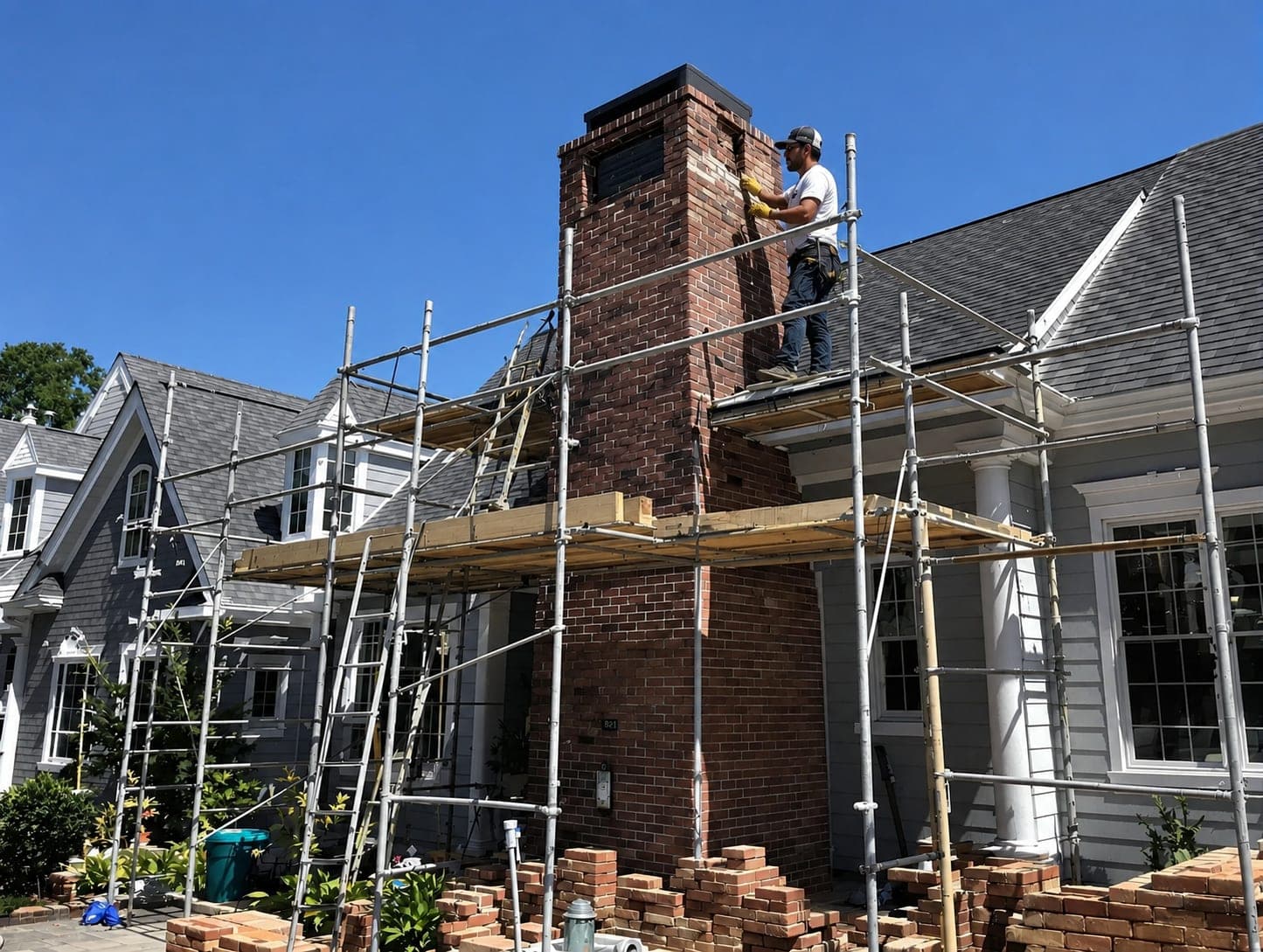
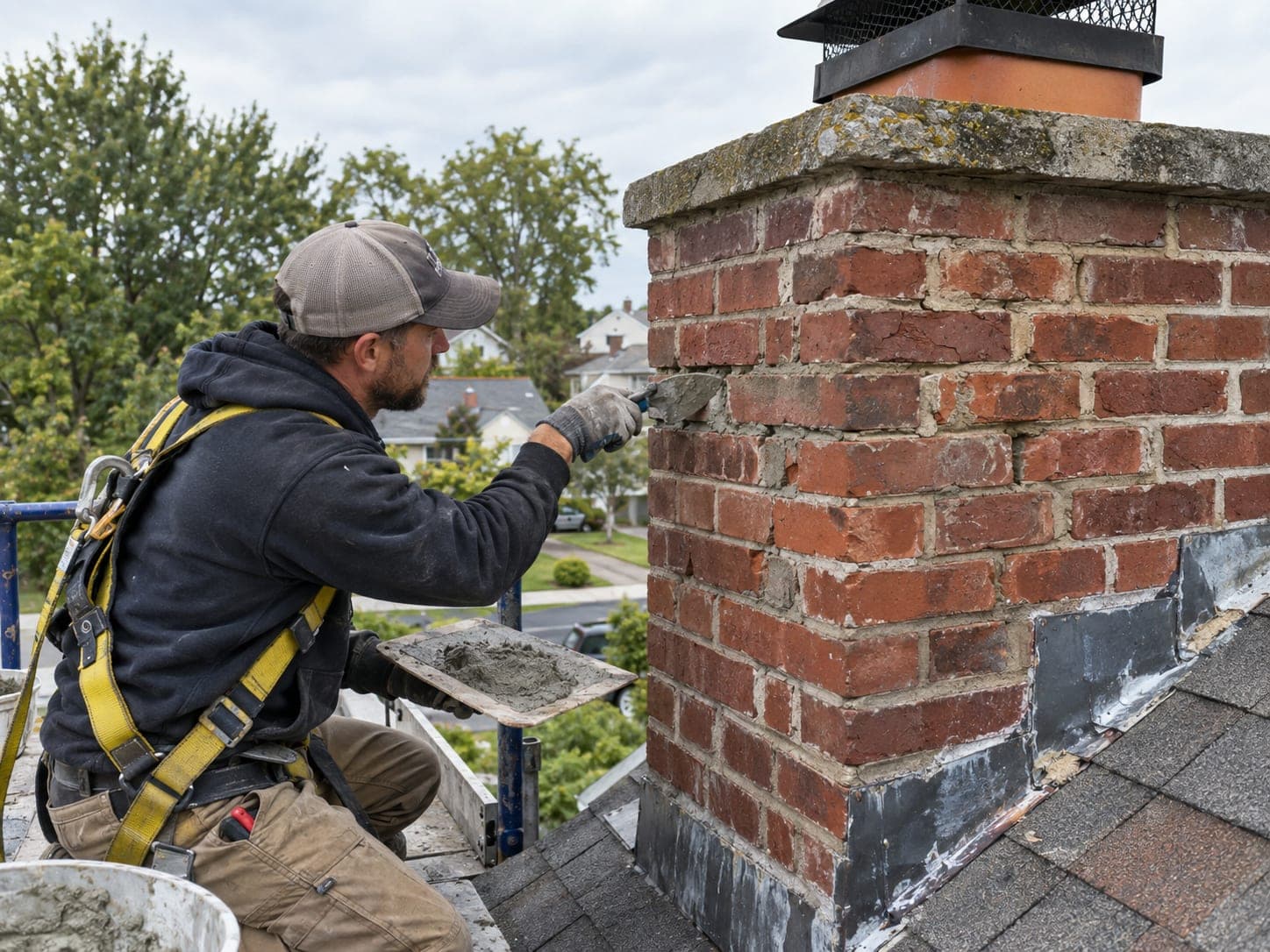
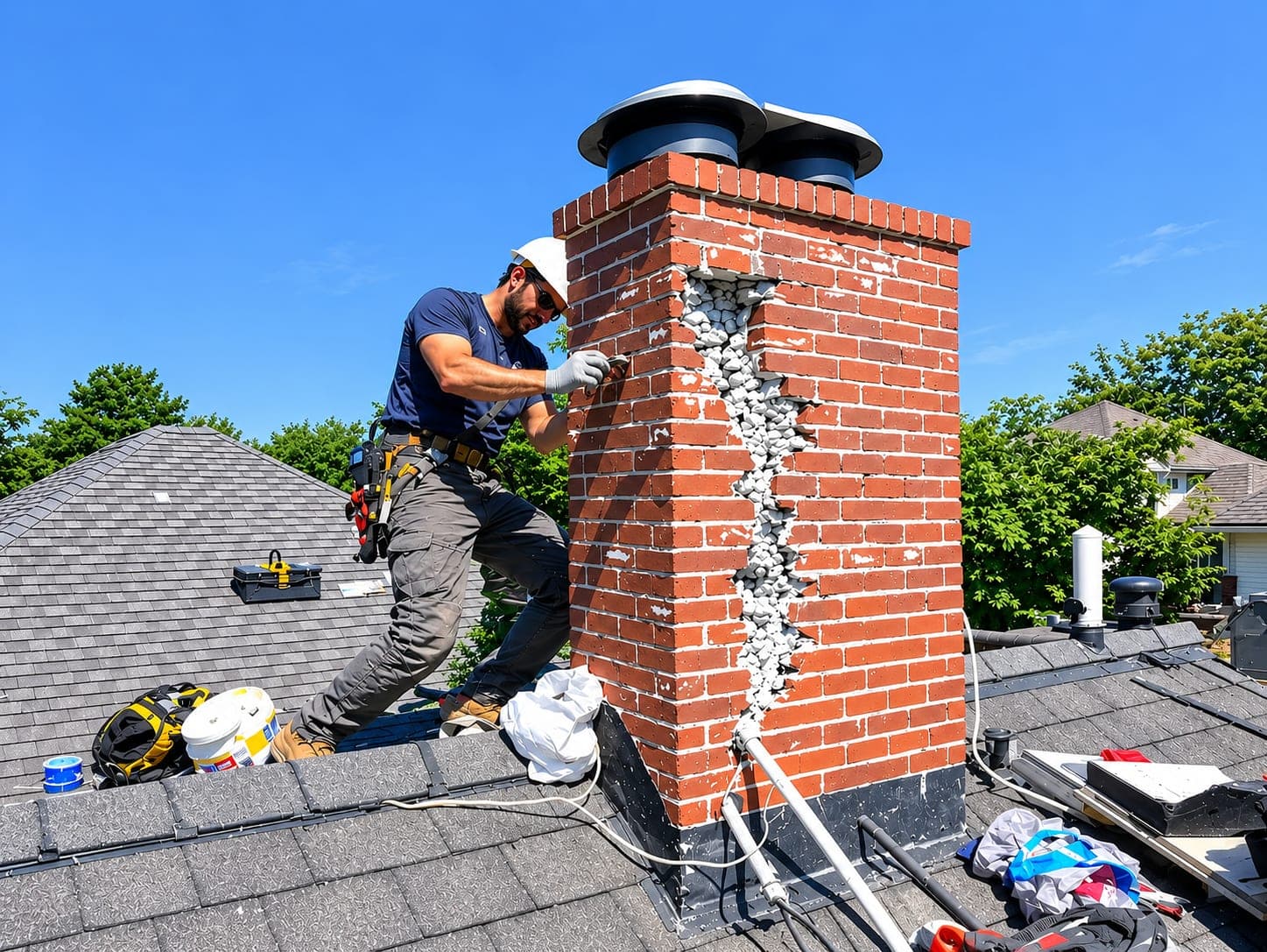
Chimney repair means fixing the parts of the chimney system that move smoke and heat out of the house and keep water out of it. That can be the masonry stack above the roof, the flue the smoke travels through, or the metal and concrete pieces that cap and seal the top. Most repairs are targeted. We fix the cracked crown, the open mortar joints or the leaking flashing rather than tearing down a chimney that still has years of life in it.
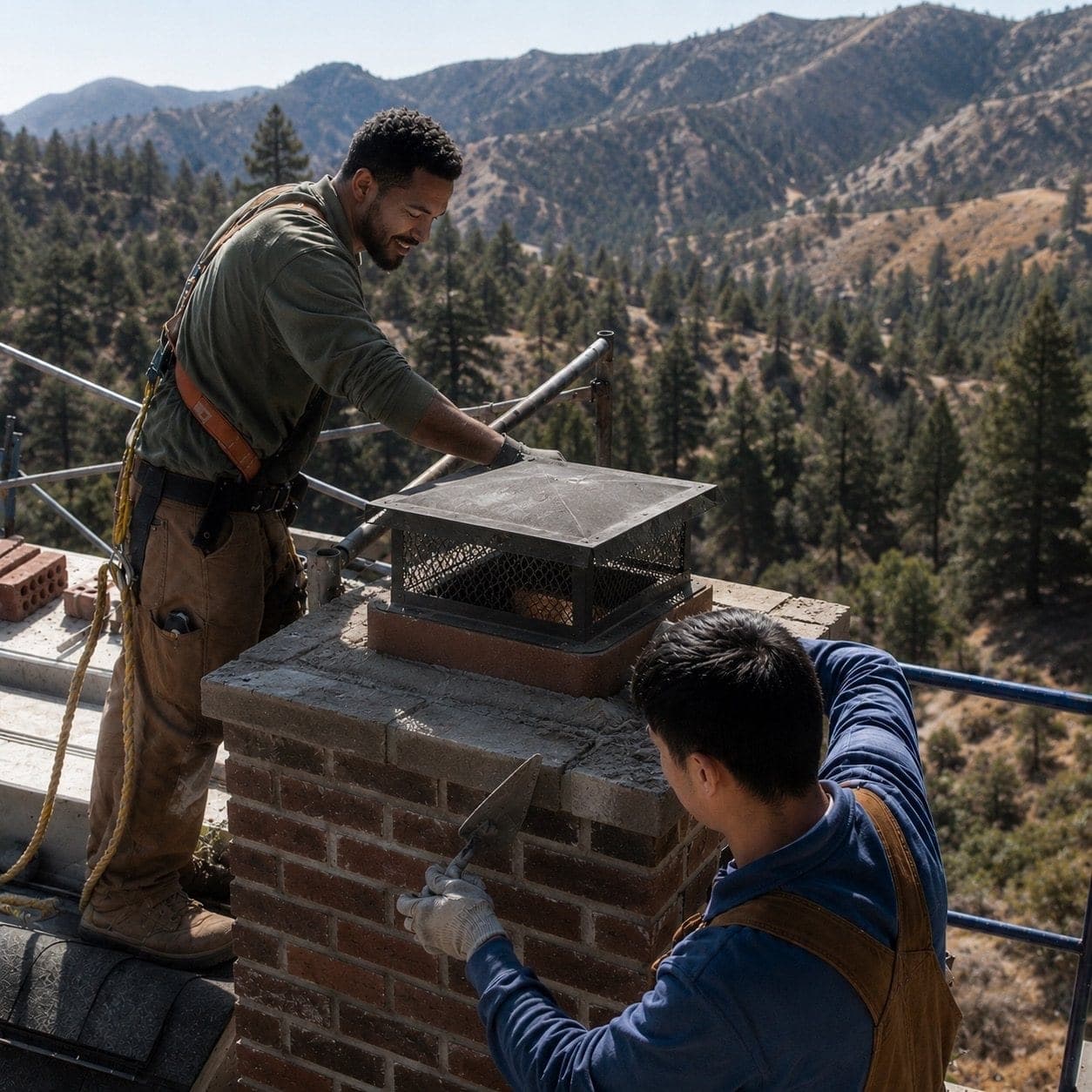
Sometimes the damage has gone far enough that patching no longer makes sense. If you're weighing the two options, our guide to chimney repair vs rebuild explains where the line usually falls.
Signs your chimney needs repair
Common warning signs
- Cracked, loose or missing bricks on the chimney stack
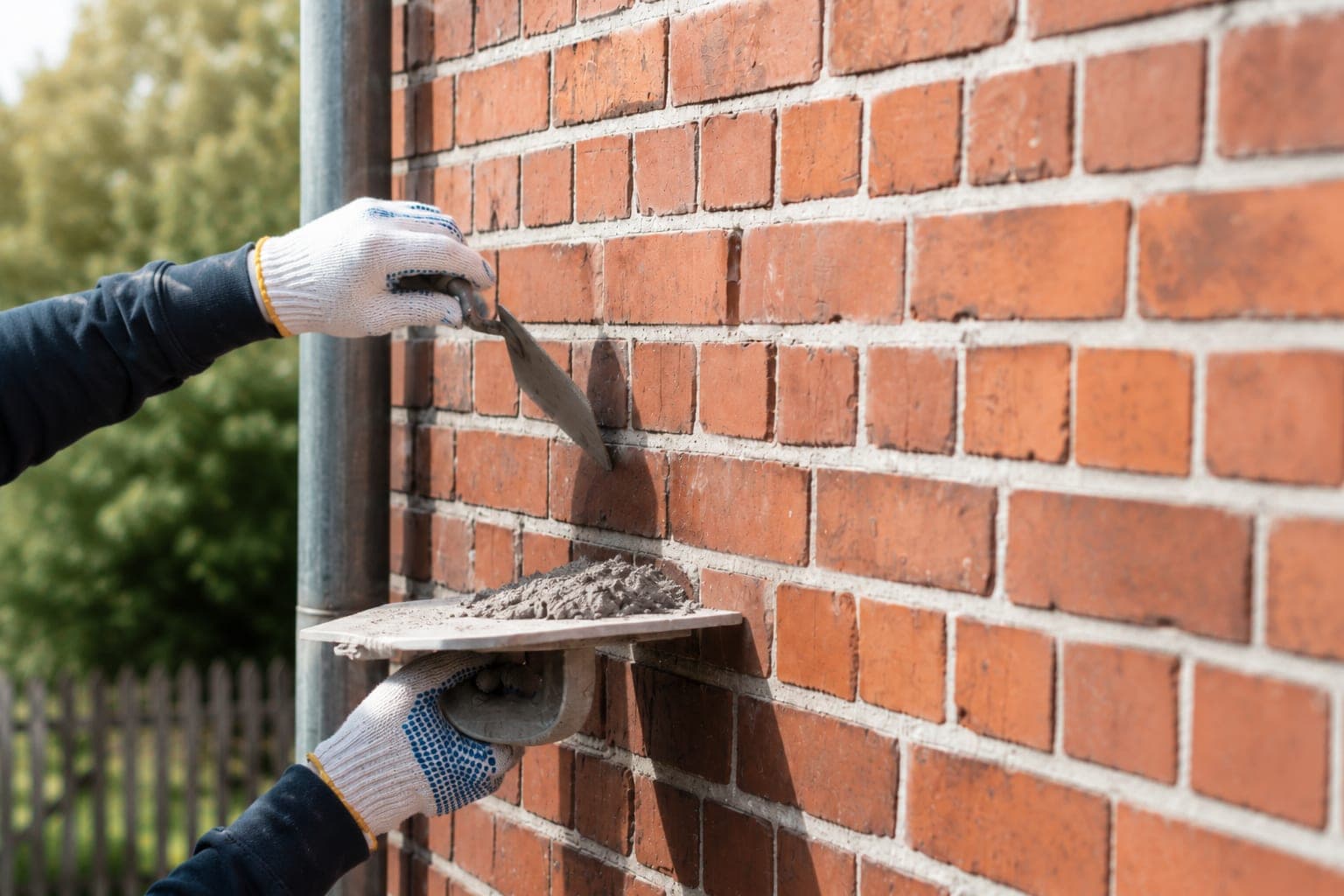
- Mortar joints that are recessed, sandy or crumbling
- A cracked or broken crown (the concrete slab on top of a brick chimney)
- Water stains on the ceiling or wall next to the fireplace
- White, chalky staining on the brick
- Rust on a metal chase cover or rust streaks down the siding of a prefab chimney
- Smoke coming back into the room, or a fire that won't draw
- A musty smell from the fireplace, especially after rain
- Pieces of tile, mortar or masonry falling into the firebox
Water is behind most of these problems. When it gets past the crown, flashing or chase cover, it soaks into masonry, rusts metal parts and loosens the flue. Leaks that show up indoors are often handled through our chimney leak repair service, which traces the water back to where it is actually getting in.
Blocked chimney
A blocked chimney stops smoke and combustion gases from leaving the house. Common causes include animal nests, leaves and twigs, heavy creosote buildup, and broken pieces of flue tile or crown that have dropped into the flue. Signs include smoke backing into the room, a fire that struggles to stay lit, odors, or sounds of animals in the chimney. Don't use the fireplace or a connected appliance until the blockage is cleared. We remove the obstruction, then check whether a damaged liner or a missing cap let it happen in the first place.
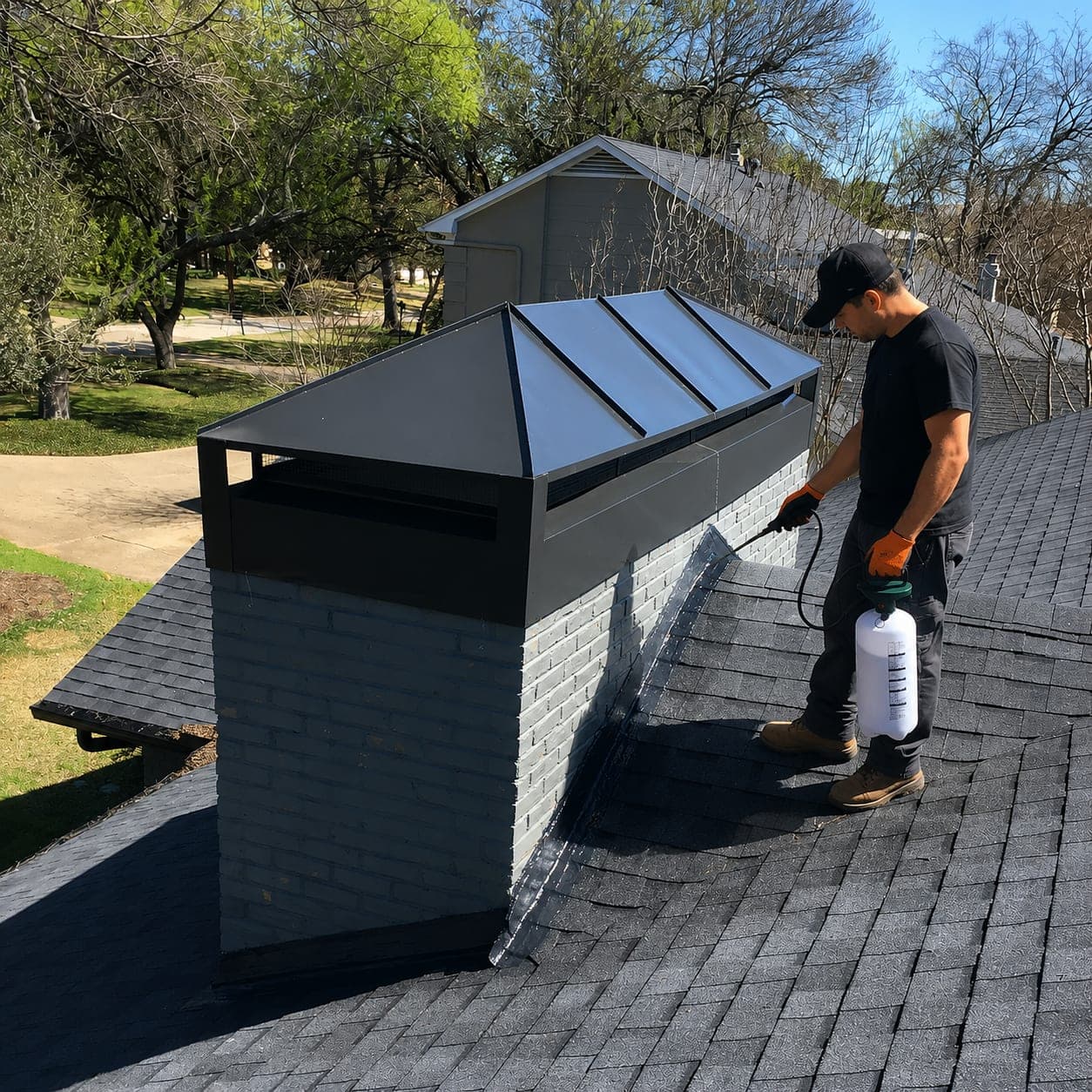
If animals were the cause, a screen at the top keeps them from coming back. Here's how chimney animal screen installation works. Whether a cap makes sense for your chimney is covered in do you need a chimney cap.
Mold in the chimney
Mold in a chimney is a moisture problem first. It tends to grow where water gets in through a cracked crown, failed flashing, a missing cap or a porous brick surface, then stays trapped in the flue or smoke chamber. You may notice a musty or damp smell from the fireplace, dark staining inside the firebox, or damp patches on nearby walls. Cleaning the surface alone won't stop it from coming back. We find the water entry point and repair it, whether that's the crown, the flashing, the cap or the masonry itself, so the chimney can dry out and stay dry.
Chimney flue repair
The flue is the passage that carries smoke and gases up and out. In masonry chimneys it is usually lined with clay tile. In other systems it's a metal liner. Flue repair addresses cracked or shifted tiles, gaps in the mortar between them, and liners that have corroded or come apart. A damaged flue can let heat reach the wood framing around the chimney and let gases leak into the house, so it is worth fixing before the fireplace is used again.
Depending on what we find, flue repair may mean repairing the existing liner or installing a new one. We show you the condition of the flue during the inspection so the choice is clear.
The parts of a chimney we repair
| Component | What it does | Typical problems |
|---|---|---|
| Brick and mortar stack | Forms the structure above and below the roof | Cracked or spalling brick, eroded mortar joints |
| Crown | Seals the top of a masonry chimney | Cracks that let water into the masonry |
| Flashing | Seals the joint between chimney and roof | Lifted, rusted or separated metal, causing leaks |
| Flue and liner | Carries smoke and gases out | Cracked tiles, gaps, corroded metal liners |
| Chase cover | Seals the top of a prefab or framed chimney | Rust, pooling water, holes |
| Cap and screen | Keeps out rain, debris and animals | Missing, bent or rusted caps |
| Damper | Closes the flue when not in use | Stuck, warped or not sealing |
| Firebox and smoke chamber | Contain the fire and guide smoke into the flue | Cracked firebrick, crumbling mortar, rough smoke chamber walls |
Brick chimneys and prefab chimneys
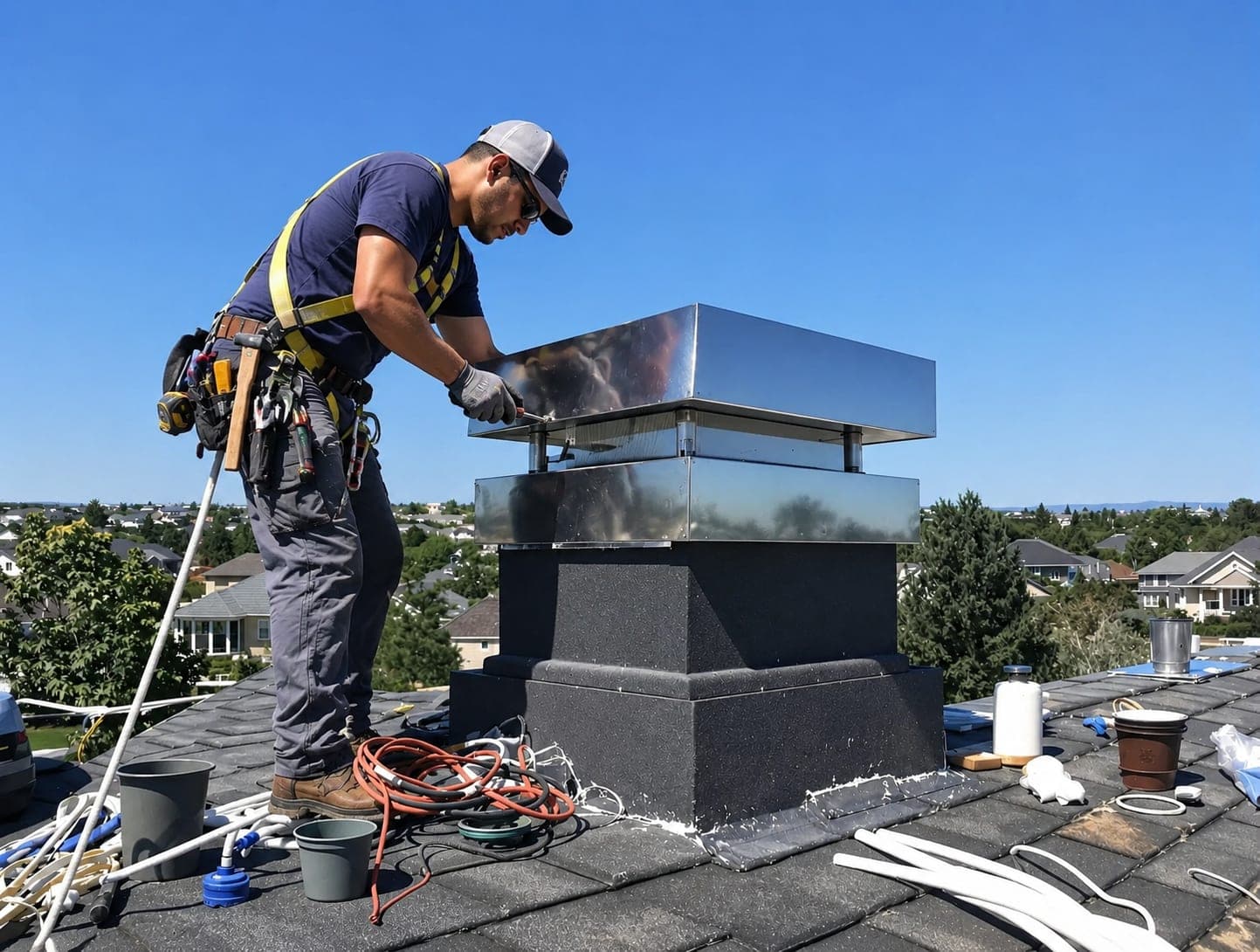
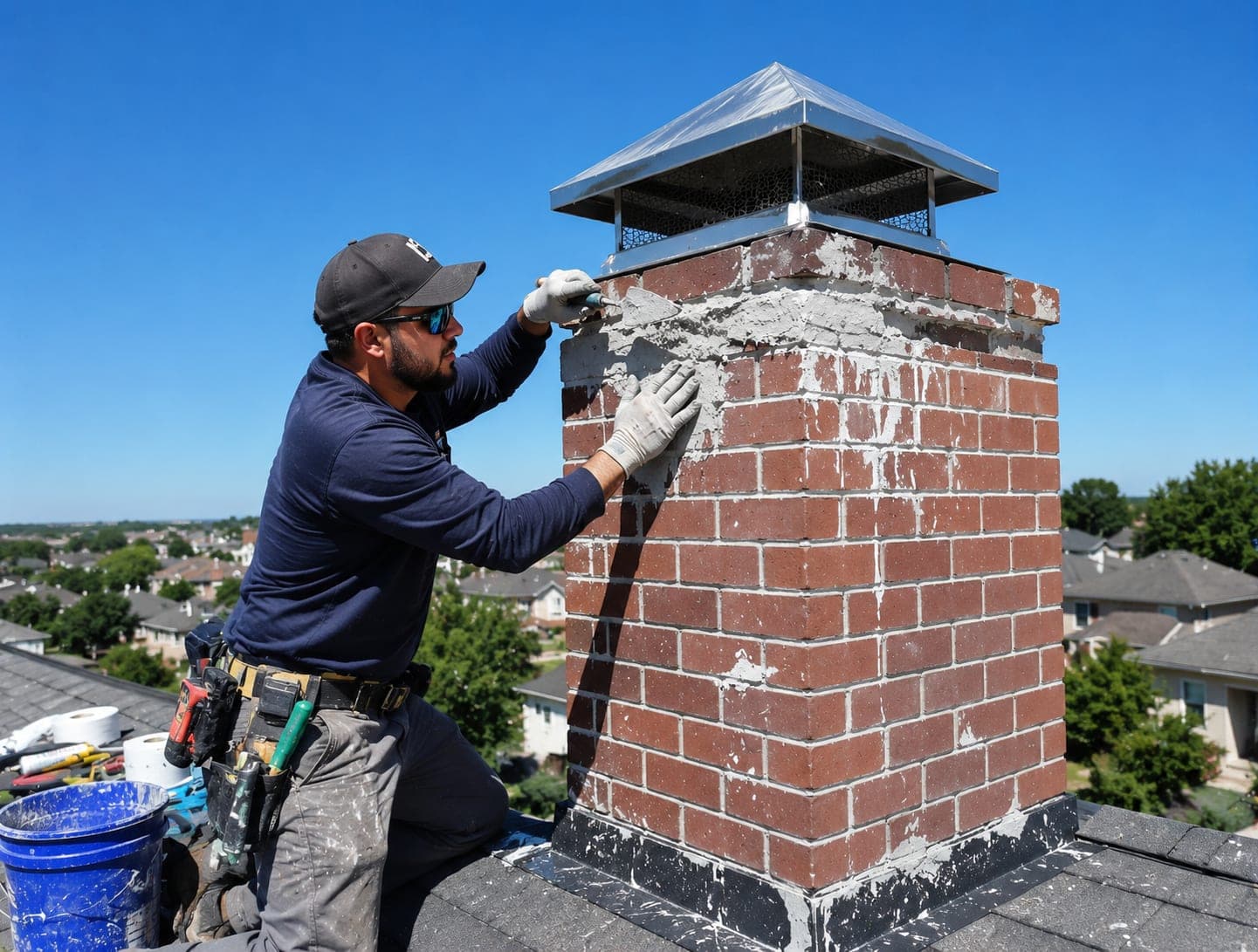
Brick chimney maintenance is mostly about mortar and water. Repointing worn joints, repairing the crown and keeping the flashing sealed keep a masonry stack sound for a long time. Prefab chimneys sit inside a framed chase, and the weak spot is usually the metal chase cover on top. Once a cover rusts, water runs straight down into the chase and the firebox. Our chase cover replacement work swaps a rusted or sagging cover for a new one shaped to shed water.
Wood-burning and gas systems
We repair chimneys serving both wood-burning fireplaces and gas appliances. Wood fires produce creosote and more heat at the flue, so liner and firebox damage is more common. Gas appliances need a flue that is intact and sized correctly for the appliance. Gas fireplace and gas appliance work is offered, and we work on all major brands.
What a repair visit involves
Step by step
Inspect
We look at the chimney from the roof, the attic where accessible, and the fireplace. Where the flue needs a closer look, we use a camera.
Explain what we found
You see the damage, hear what is causing it, and get our recommendation, including whether repair or larger work makes more sense.
Free estimate
You get a written estimate for the work before anything starts. Estimates are free.
Repair
We protect the area around the fireplace and roof, then make the repair, whether that's mortar, crown, flashing, flue, chase cover, cap or damper work.
Check the result
We confirm the repair is sealed and the flue is clear, and tell you what to watch for going forward.
Emergency chimney repair
Urgent chimney problems
Emergency calls are accepted, with 24-hour service Sunday–Friday.
Keeping repairs from coming back
- Have the chimney inspected and swept before heavy use, so problems are caught early.
- Keep a cap on top to keep out rain, debris and animals.
- Watch for new water stains, rust streaks or fallen masonry and call before they spread.
- Don't burn wet or treated wood, which builds creosote faster.
Book your chimney repair
Get in touch to request an estimate. Estimates are free. Same-day visits are available where the schedule allows, and 24-hour service runs Sunday–Friday. We also handle commercial and property-manager work.