On this page
If you smell gas
Leave the building right away and take everyone with you. Don't flip light switches, use phones or light any flame while you're inside. Once you're outside, call your gas utility or 911.
What gas fireplace service covers
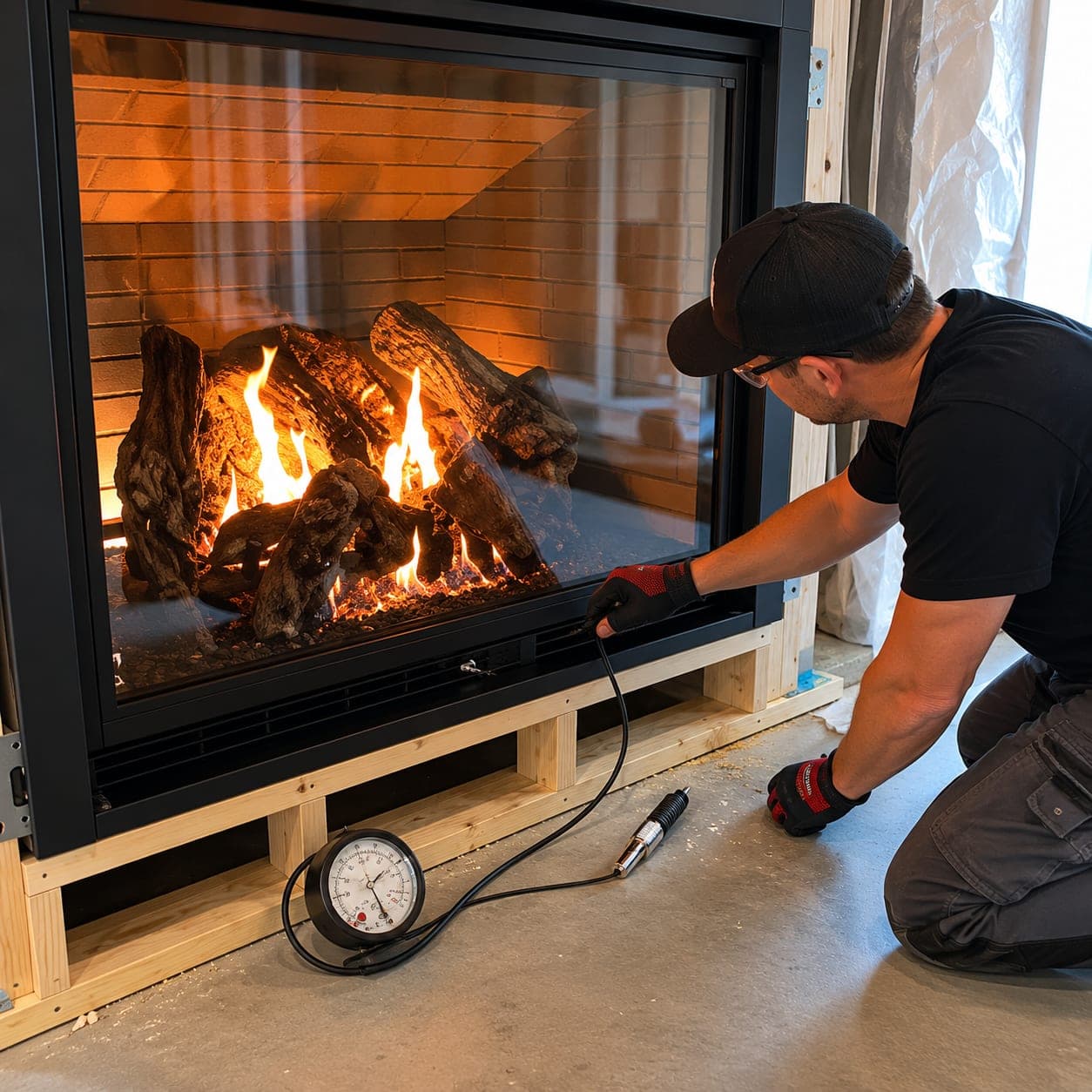
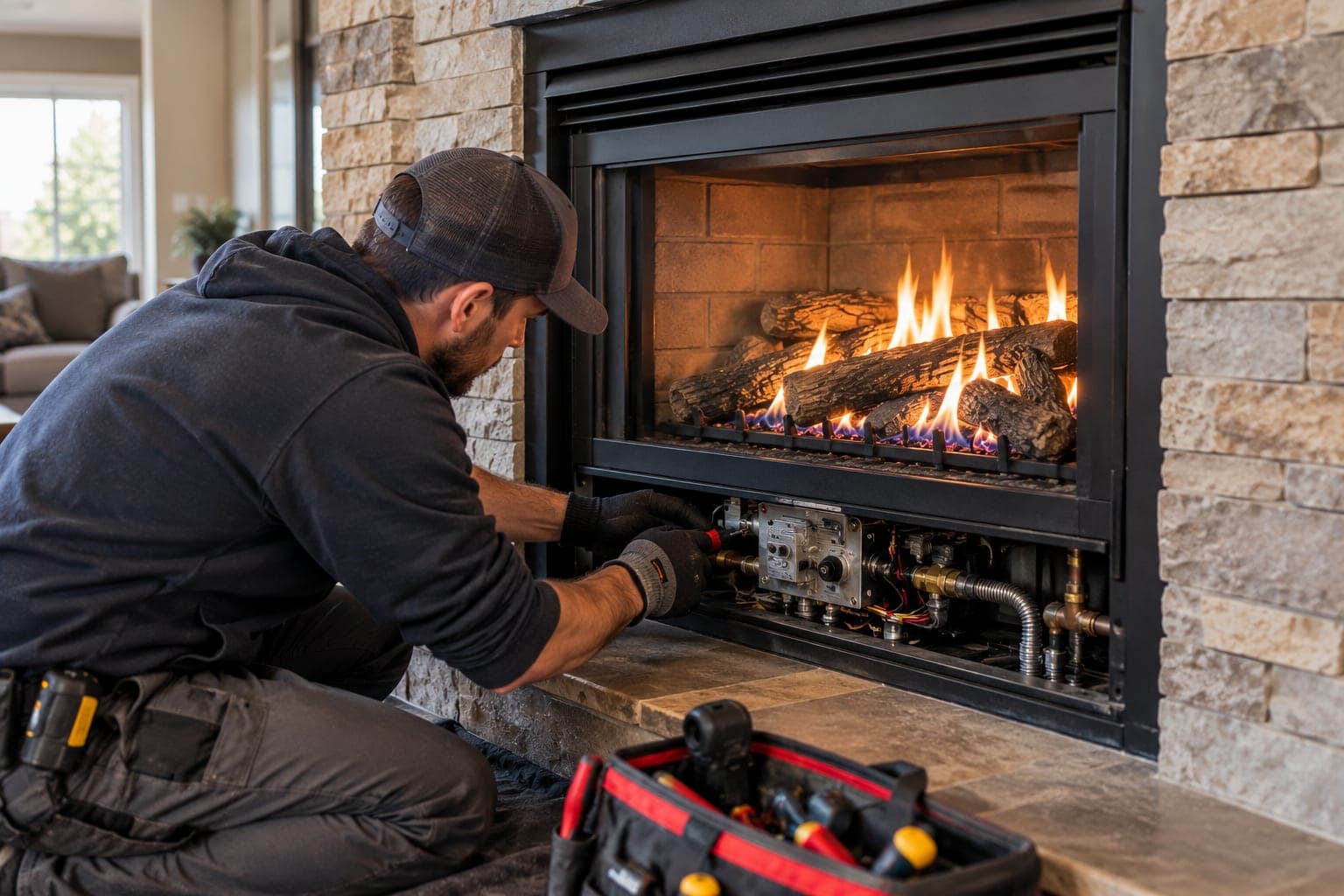
Gas fireplace service is a hands-on cleaning and safety check of the whole appliance. It covers the burner, the ignition system, the gas valve and controls, the glass and gaskets, the logs or media, and the venting that carries combustion gases outside. The goal is a fireplace that lights reliably, burns cleanly and vents the way it was designed to.
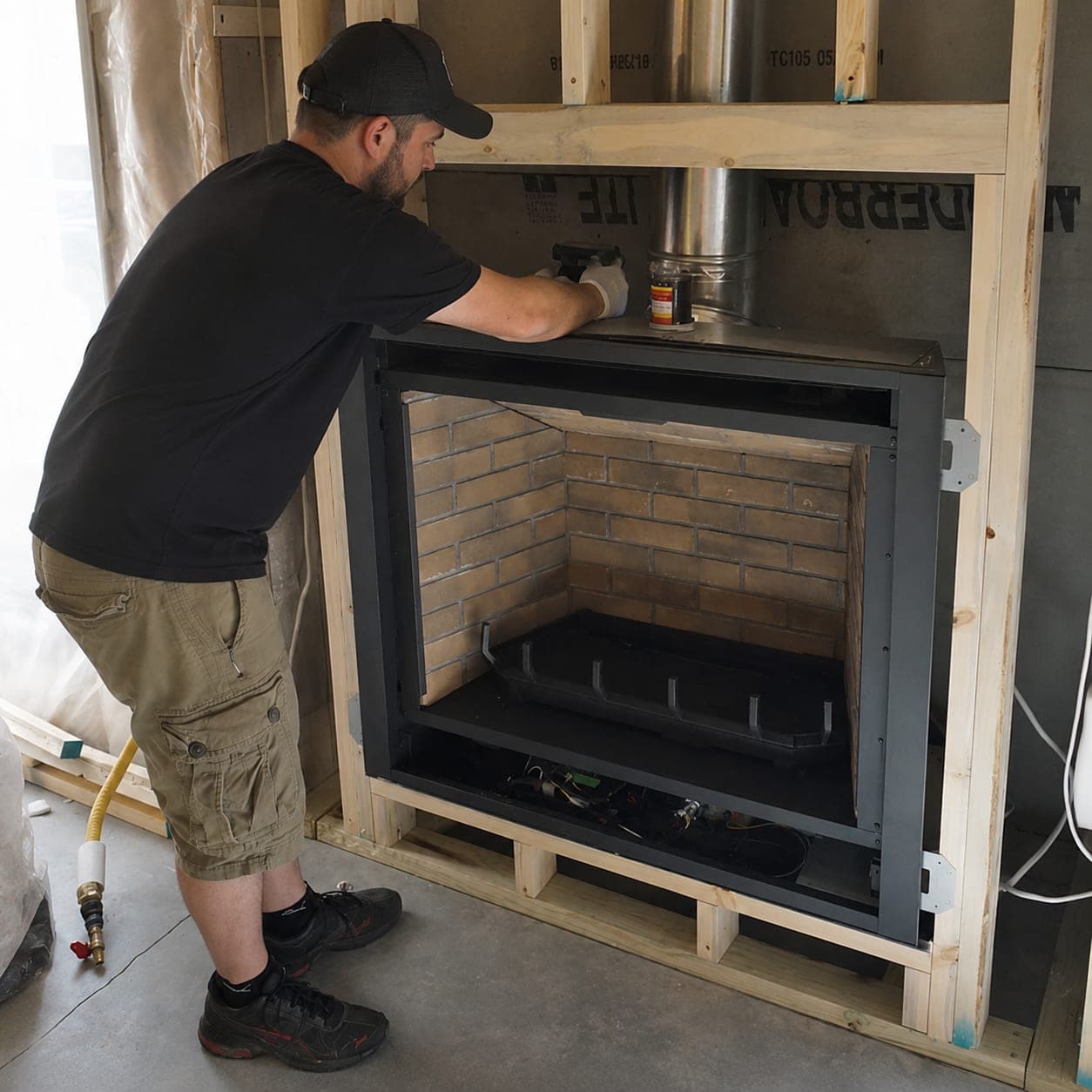
Routine maintenance and repair often happen at the same appointment. When a part such as a thermocouple, igniter or valve has failed, the visit becomes gas fireplace repair. We work on all major brands of gas fireplaces, inserts and gas log sets.
Signs your gas fireplace needs attention
- The pilot won't stay lit, or the main burner shuts off after a few minutes.
- The igniter clicks but nothing lights.
- The flame is tall, yellow and lazy, or it leaves soot on the glass or logs.
- There's a white or gray film on the inside of the glass.
- The fireplace smells odd when it runs. A gas smell is different: follow the safety steps above first.
- Flames lean, flicker hard or roll out of the opening.
- The remote, wall switch or thermostat no longer controls the fireplace.
- The blower is noisy or has stopped working.
- The fireplace hasn't been serviced in a long time, or you've just moved into the home.
Flames that misbehave or exhaust that won't move up the vent can point to a venting issue instead of a burner problem. In that case, fireplace draft repair may be part of the fix.
What happens during a service visit
A typical gas fireplace service visit
Talk through the problem
We ask how the fireplace has been behaving, when it was last serviced and what type of unit it is.
Shut off gas and power
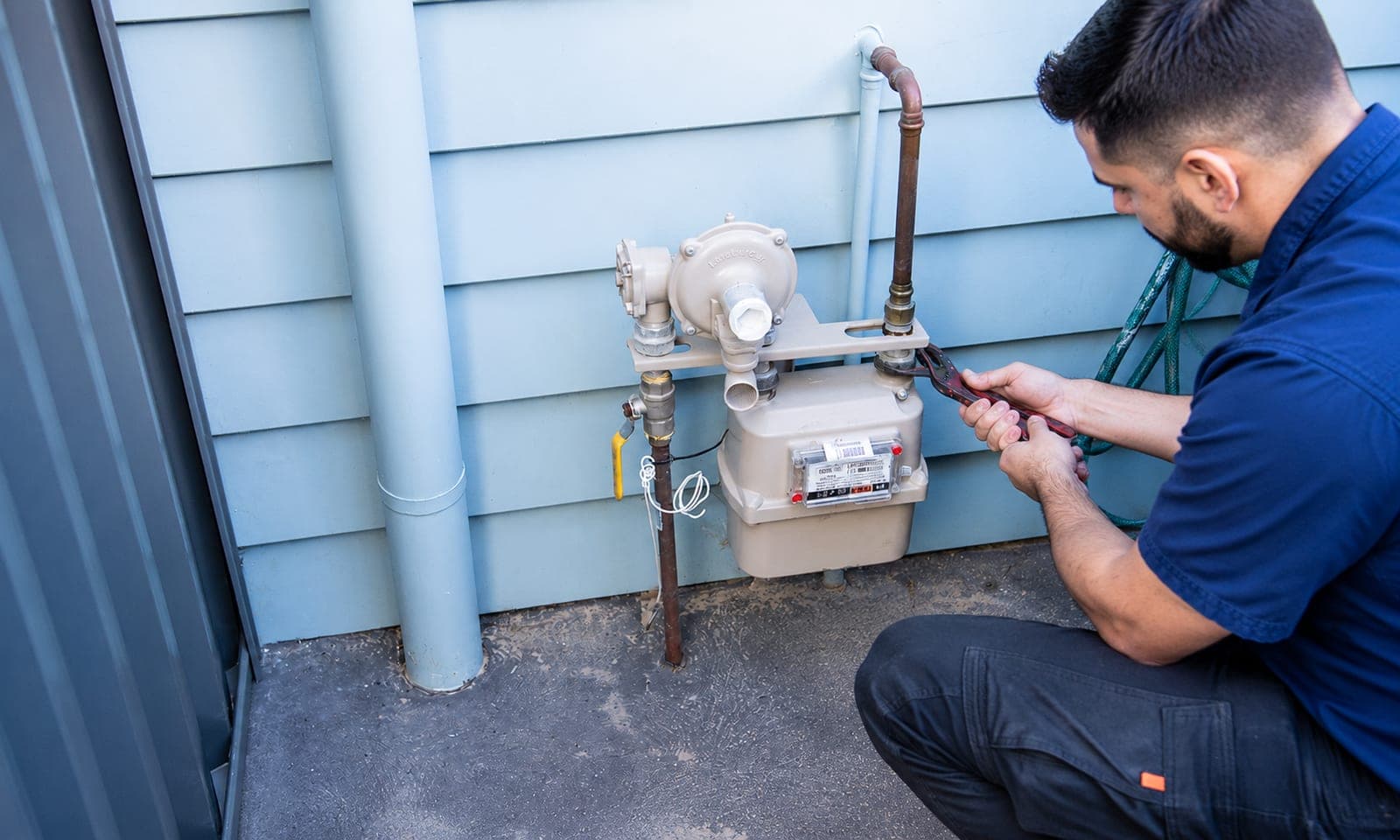
The gas valve to the fireplace is turned off before anything is opened. Power to any electronic ignition or blower is turned off too.
Open the unit
On sealed units, the glass front is removed. Logs, embers or other media come out so the burner can be reached.
Clean and inspect the burner and pilot
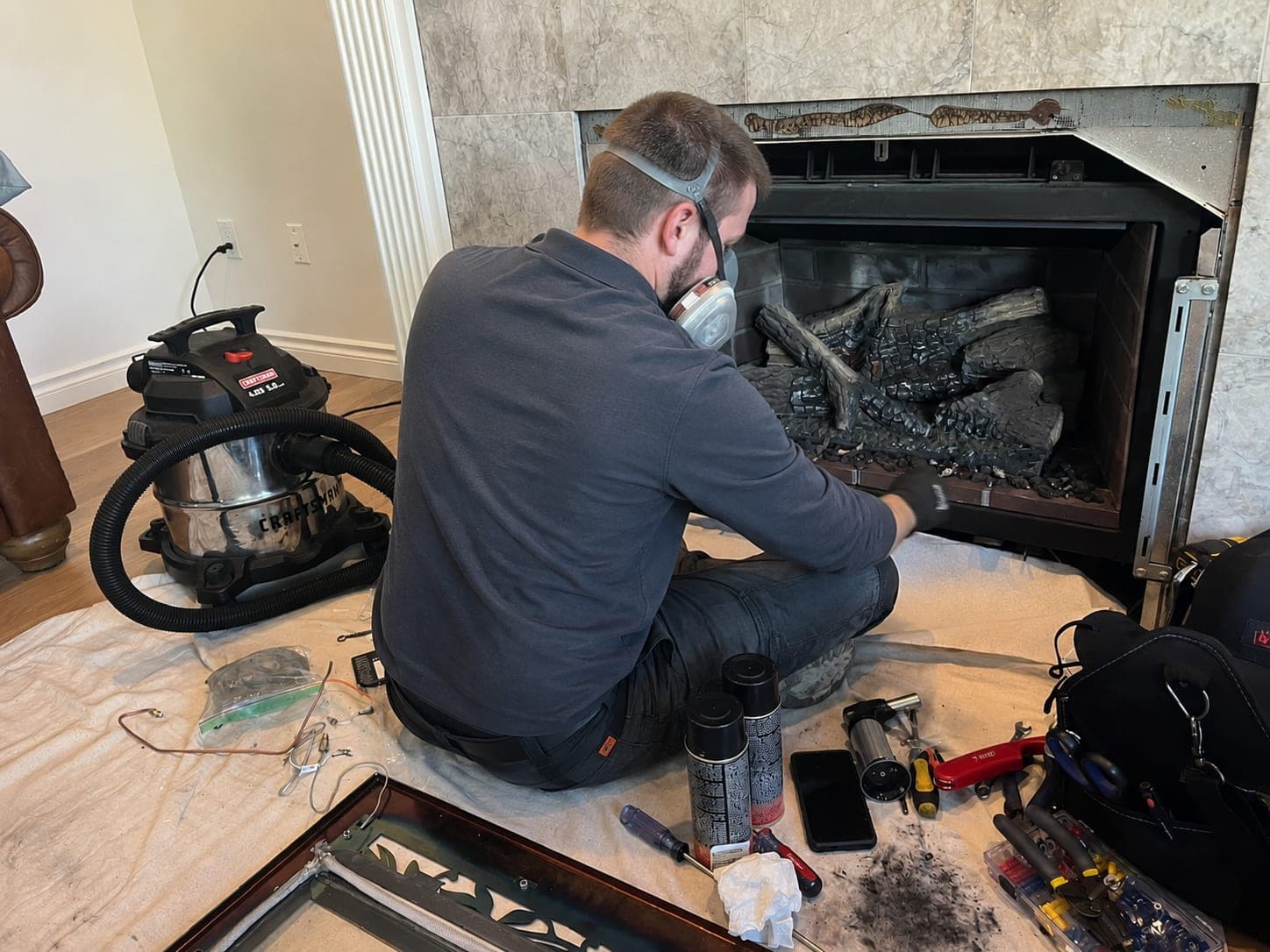
Dust, lint and debris are cleared from the burner ports, pilot assembly and air openings. The thermocouple or thermopile and the igniter are checked.
Check the valve, connections and controls
The gas valve and the remote, switch or thermostat are tested, and fittings are checked for leaks.
Inspect the glass, gaskets and venting
The glass is cleaned and checked for damage, and the gaskets are checked for a proper seal. The vent run and termination are checked for blockages and damage.
Reassemble and test-fire
Logs go back in their correct positions and the fireplace is lit. We watch the flame and the venting, then walk you through what we found and any repair needed.
Parts, fuel types and fireplace styles
Natural gas and propane
Gas fireplaces run on either natural gas or propane. Each fuel uses its own orifices and settings, so a unit set up for one fuel should not simply be connected to the other. We check that the appliance is set up correctly for the fuel your home uses.
The main components
- Burner and burner ports
- Pilot assembly, thermocouple or thermopile, and igniter
- Gas valve and control module
- Remote, wall switch or thermostat
- Ceramic logs, glass beads, embers or other media
- Glass front and gaskets
- Blower or fan, if the unit has one
- Vent pipe and outside termination
Common gas fireplace styles
- Direct-vent (sealed) fireplaces have a fixed glass front and draw combustion air from outside through a sealed vent.
- Natural-vent (B-vent) fireplaces use room air and vent upward through a pipe.
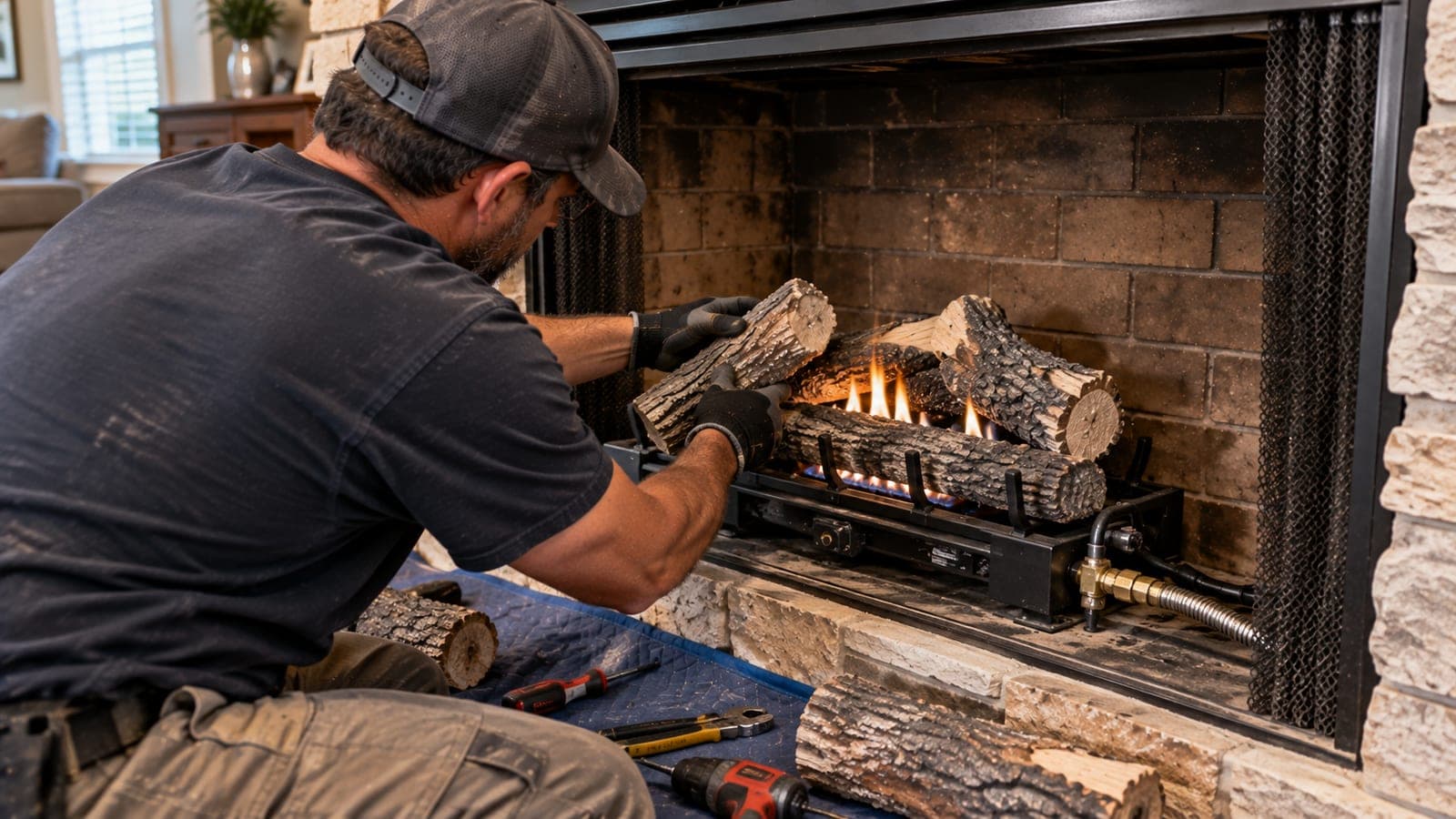
- Gas log fireplaces are gas log sets placed in an existing fireplace and vented through its chimney.
- Gas fireplace inserts are self-contained units set into an existing masonry fireplace, covered in more detail below.
Gas fireplace inserts
A gas fireplace insert is a closed unit that slides into an existing fireplace opening and vents through a liner run up the chimney. Inserts are serviced much like a built-in gas fireplace: the front and glass come off, then the burner, pilot, valve and blower are cleaned and checked. We also look at the liner and its connection, because an insert depends on that liner to carry exhaust out.
Gas fireplace insert installation is a separate job from servicing one. If you're weighing an insert for an existing fireplace, here's how gas fireplace installation works.
Gas versus wood: tradeoffs to know
| Feature | Gas fireplace | Wood-burning fireplace |
|---|---|---|
| Starting a fire | Switch, remote or thermostat | Kindling, logs and time |
| Day-to-day mess | No ash or wood to haul | Ash to remove and wood to store |
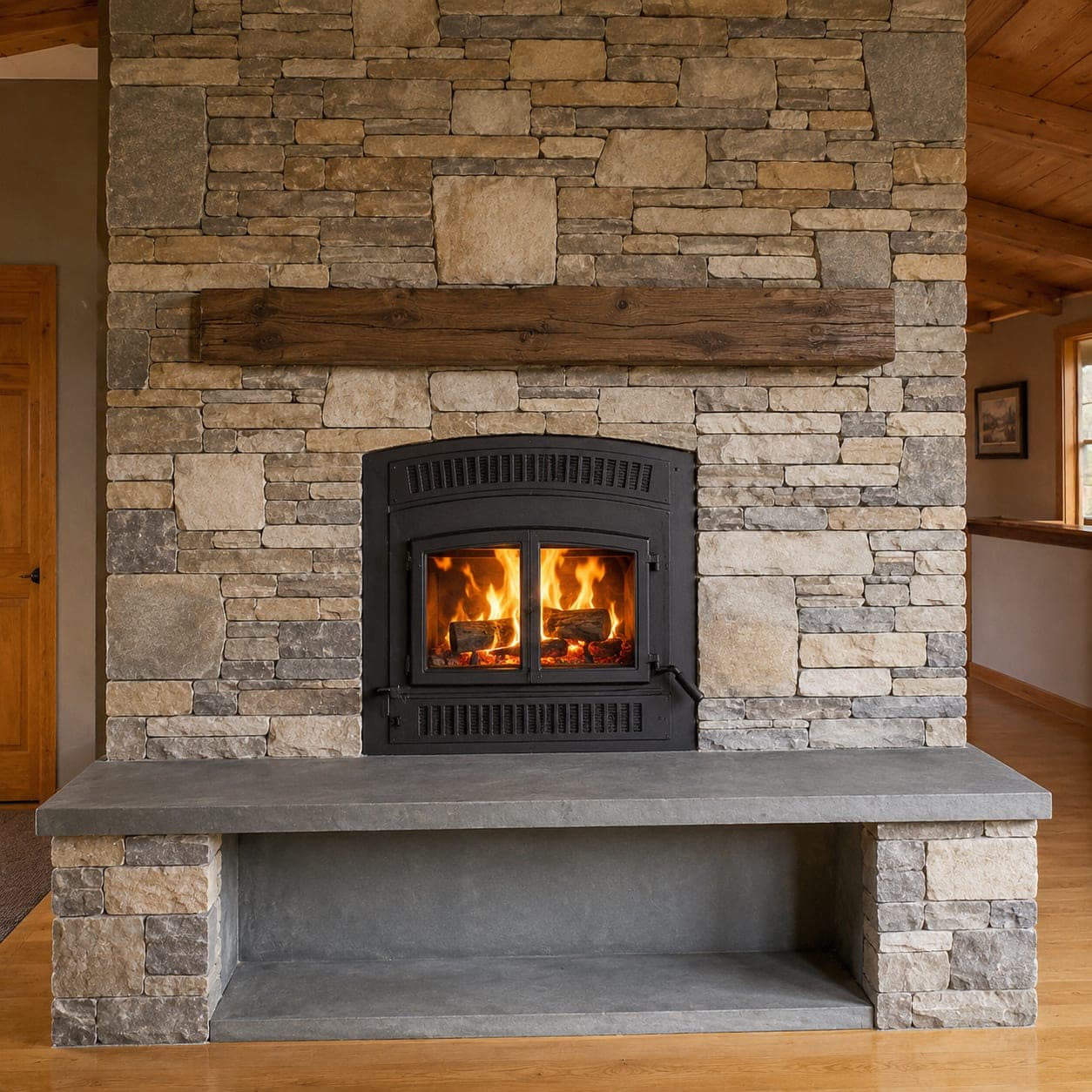
| Ambiance | Steady flame, no crackle | Real wood fire, sound and smell |
| Upkeep | Periodic cleaning and checks of burner, controls and venting | Regular sweeping and creosote control |
| If the gas or power is out | Depends on the ignition type | Can still burn wood |
Starting a fire
- Gas fireplace
- Switch, remote or thermostat
- Wood-burning fireplace
- Kindling, logs and time
Day-to-day mess
- Gas fireplace
- No ash or wood to haul
- Wood-burning fireplace
- Ash to remove and wood to store
Ambiance
- Gas fireplace
- Steady flame, no crackle
- Wood-burning fireplace
- Real wood fire, sound and smell
Upkeep
- Gas fireplace
- Periodic cleaning and checks of burner, controls and venting
- Wood-burning fireplace
- Regular sweeping and creosote control
If the gas or power is out
- Gas fireplace
- Depends on the ignition type
- Wood-burning fireplace
- Can still burn wood
For a longer look at the choice, read our guide to gas vs wood burning fireplace options.
Safety and maintenance habits
- Have the fireplace serviced periodically, and before first use if it has sat idle for a long stretch.
- Keep working carbon monoxide alarms in the home, especially near sleeping areas.
- Don't run a fireplace with cracked or missing glass. Book a repair instead.
- Keep the logs or media in the positions the manufacturer specifies. Moving them can cause sooting and poor combustion.
- Keep the outside vent termination clear of plants, debris and stored items.
- Keep furniture, décor and anything flammable a safe distance from the front and top of the unit.
Booking a visit
Call or request an estimate and tell us what the fireplace is doing and what type of unit you have. Commercial and property-manager work is offered, so landlords and managers with several units can book too.