When rain gets past your chimney
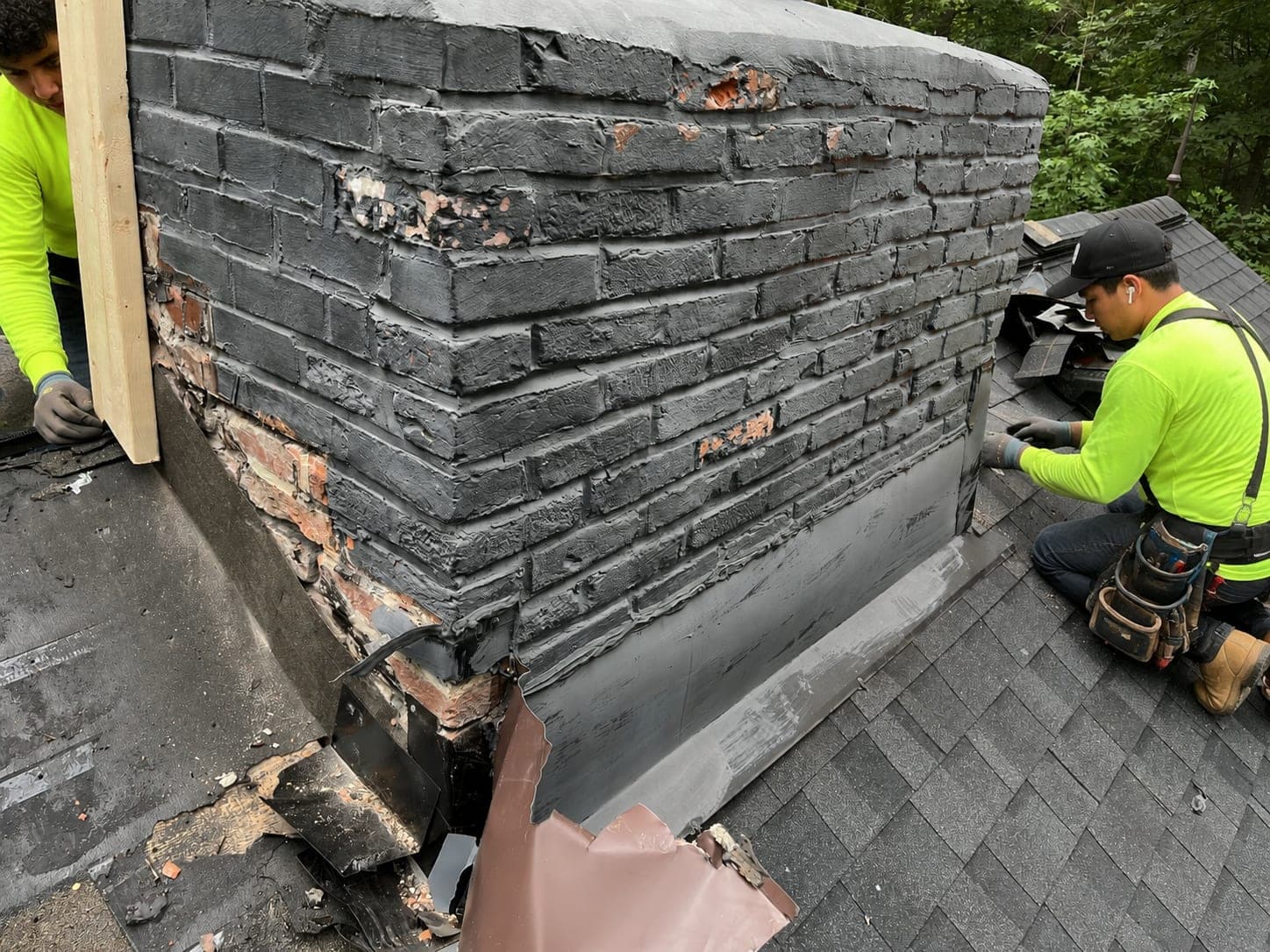
A chimney sits through every storm. It has a top, four sides and a joint where it meets the roof, and water can get in at any of them. When it does, the water often runs down inside the masonry, the flue or the chase framing before it shows up indoors. That's why a stain on the living room ceiling can come from a cracked crown several feet above it.
Most homeowners notice the problem in one of two ways. Either water appears during or right after rain, or a slow sign builds over weeks, such as peeling paint or a smell that won't go away. Both are worth dealing with before the next wet stretch.
Common signs of a chimney leak
Signs that rain is getting in
- Dripping or puddles in the firebox or on the hearth after rain
- Water stains, bubbling paint or soft drywall on the ceiling or walls next to the chimney
- A damp, musty or smoky smell that gets stronger in wet weather
- Rust on the damper, firebox doors, fireplace insert or gas logs
- White, chalky deposits (efflorescence) on brick inside or outside
- Crumbling mortar joints or brick faces flaking off
- Stains or rot on the wood chase siding of a prefab chimney
- Water marks in the attic around the chimney
Possible causes of a chimney leaking when it rains
Several weak points can let water in, and more than one is often involved. The list below covers the usual suspects. An inspection confirms which one is actually causing your leak.
Where the water may be getting in
01Cracked or deteriorated chimney crown
- What you may notice
- Water in the firebox or flue during steady rain; hairline or open cracks on the concrete slab at the top of the chimney.
- How it’s confirmed
- The crown is examined up close for cracks, gaps around the flue and a missing overhang that would shed water away from the brick.
02Failed or loose flashing
- What you may notice
- Stains on the ceiling or attic framing right where the chimney passes through the roof.
- How it’s confirmed
- The metal flashing and counterflashing are checked for lifted edges, gaps, rust and old sealant pulling away from the brick.
03Missing or damaged chimney cap
- What you may notice
- Water dripping straight down the flue into the firebox; debris or nesting material in the fireplace.
- How it’s confirmed
- The top of the flue is checked for a cap, and an existing cap is checked for damage and a poor fit.
04Porous brick or worn mortar joints
- What you may notice
- Damp patches on interior walls next to the chimney, efflorescence, spalling brick, a leak that gets worse after long rainy spells.
- How it’s confirmed
- The masonry is inspected for eroded joints, cracks and saturated brick, and a camera inspection can show water damage inside the flue.
05Rusted or failed chase cover (prefab chimneys)
- What you may notice
- Water around a factory-built fireplace, rust streaks down the chase siding, a cover that holds standing water.
- How it’s confirmed
- The metal cover on top of the wood or siding chase is checked for rust-through, sagging and failed seams.
Not every drip is rain
Condensation inside a flue can also cause moisture and stains, especially with some gas appliances. It looks a lot like a leak. An inspection can tell the two apart, and that matters because the fixes are different.
How urgent is it?
A small leak is rarely an emergency on the first day, but it shouldn't wait for the dry season. Water that keeps getting into masonry wears down mortar, rusts metal parts such as the damper and firebox doors, and can damage a flue liner. Once the water reaches ceilings, walls and framing, it can lead to rot and mold. A leak that gets fixed early usually needs a smaller repair.
When to stop using the fireplace or stove
- Stop using it if water is coming into the firebox, flue or insert, until the chimney has been inspected.
- Stop using a gas fireplace or gas insert if water has reached the burner, valve or logs, and have it checked before you light it again.
- Don't use the fireplace if you see falling mortar, loose brick or flue tile pieces in the firebox.
- If water is coming through a ceiling near light fixtures or outlets, keep clear of the wet area and treat it as an electrical hazard.
We accept emergency calls, and 24-hour service runs Sunday–Friday.
What normally fixes a leaking chimney
The repair matches the entry point, and that's why it starts with an inspection. After a heavy storm, a storm damage chimney inspection can also check for loosened caps, flashing or brick. These are the fixes we usually do:
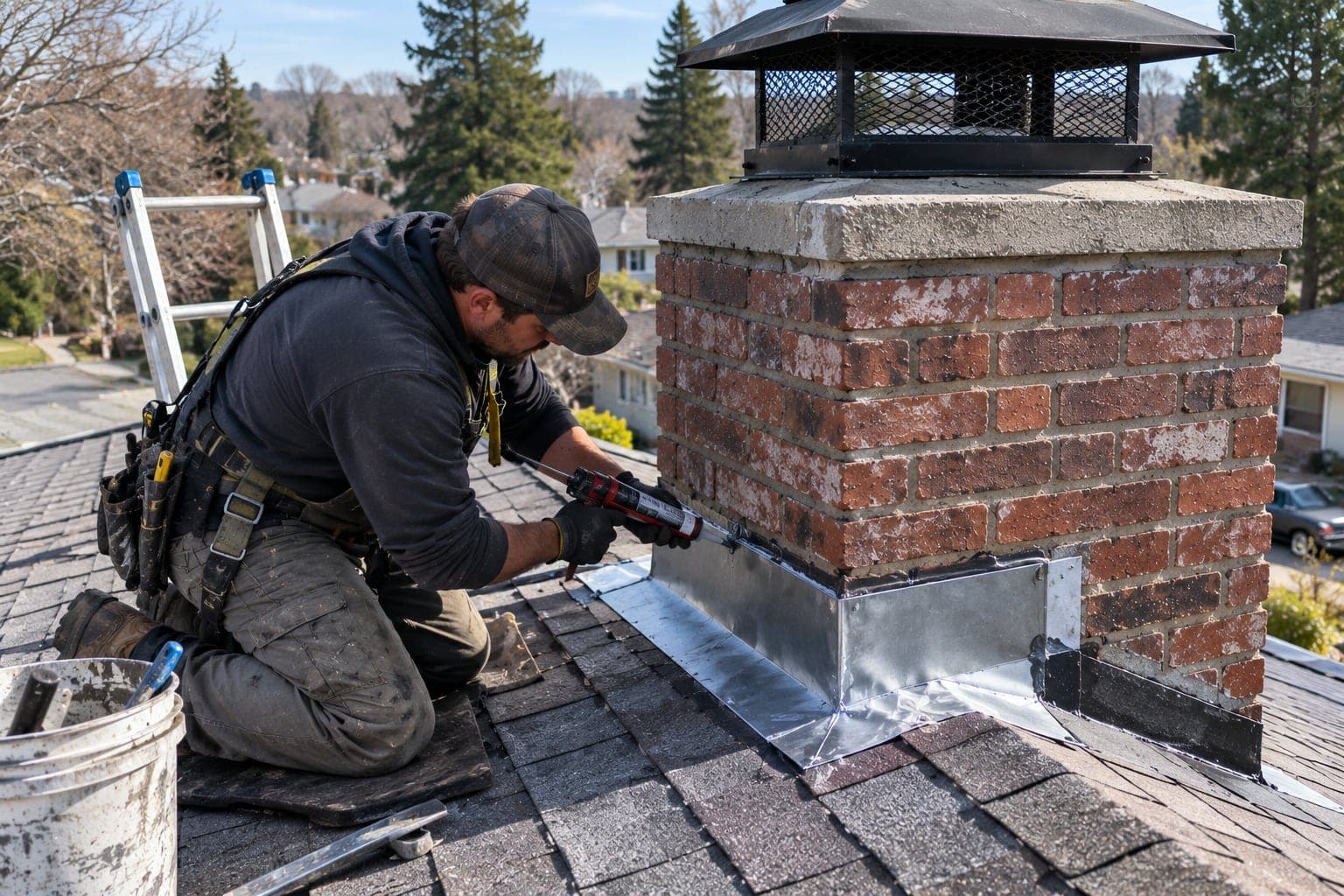
- Flashing repair or replacement where the chimney meets the roof
- Crown repair or rebuilding the concrete top.
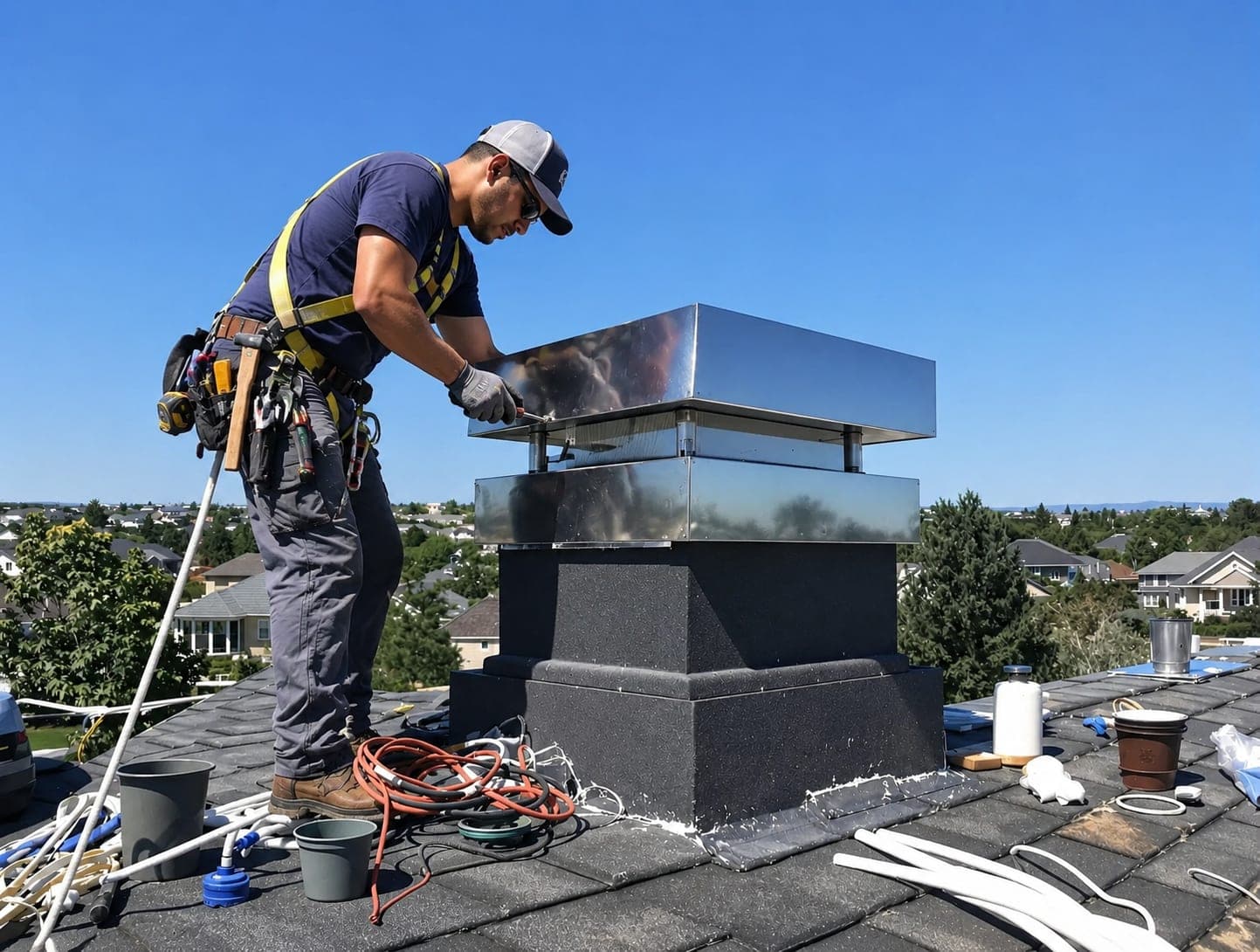
- Chimney cap installation or replacement to keep rain out of the flue
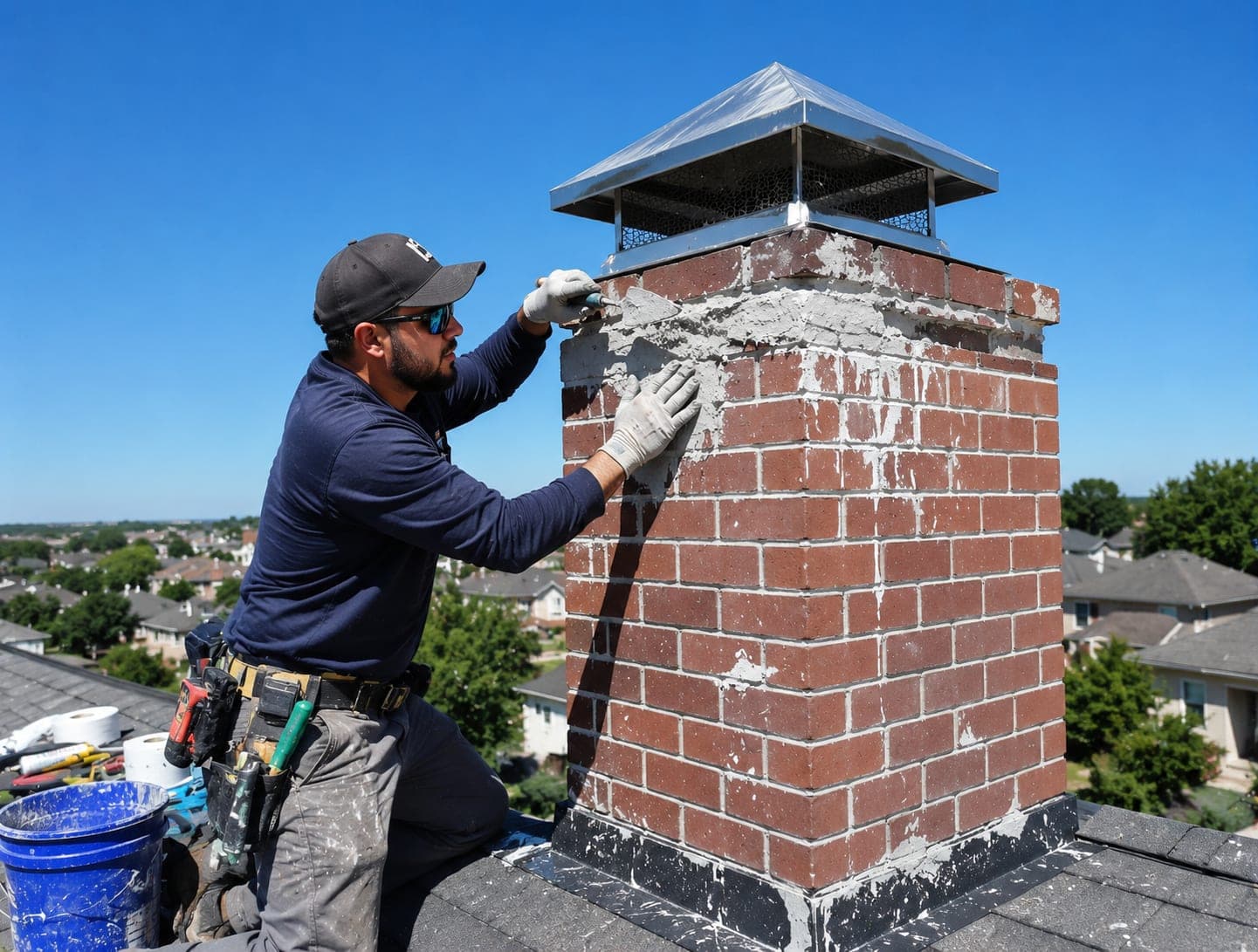
- Tuckpointing and masonry repair to replace worn mortar and damaged brick
- Chimney waterproofing with a breathable sealer once the masonry is sound
- Chase cover repair or replacement on prefab chimneys
- Repairs to rusted dampers, liners or fireboxes that water has already damaged
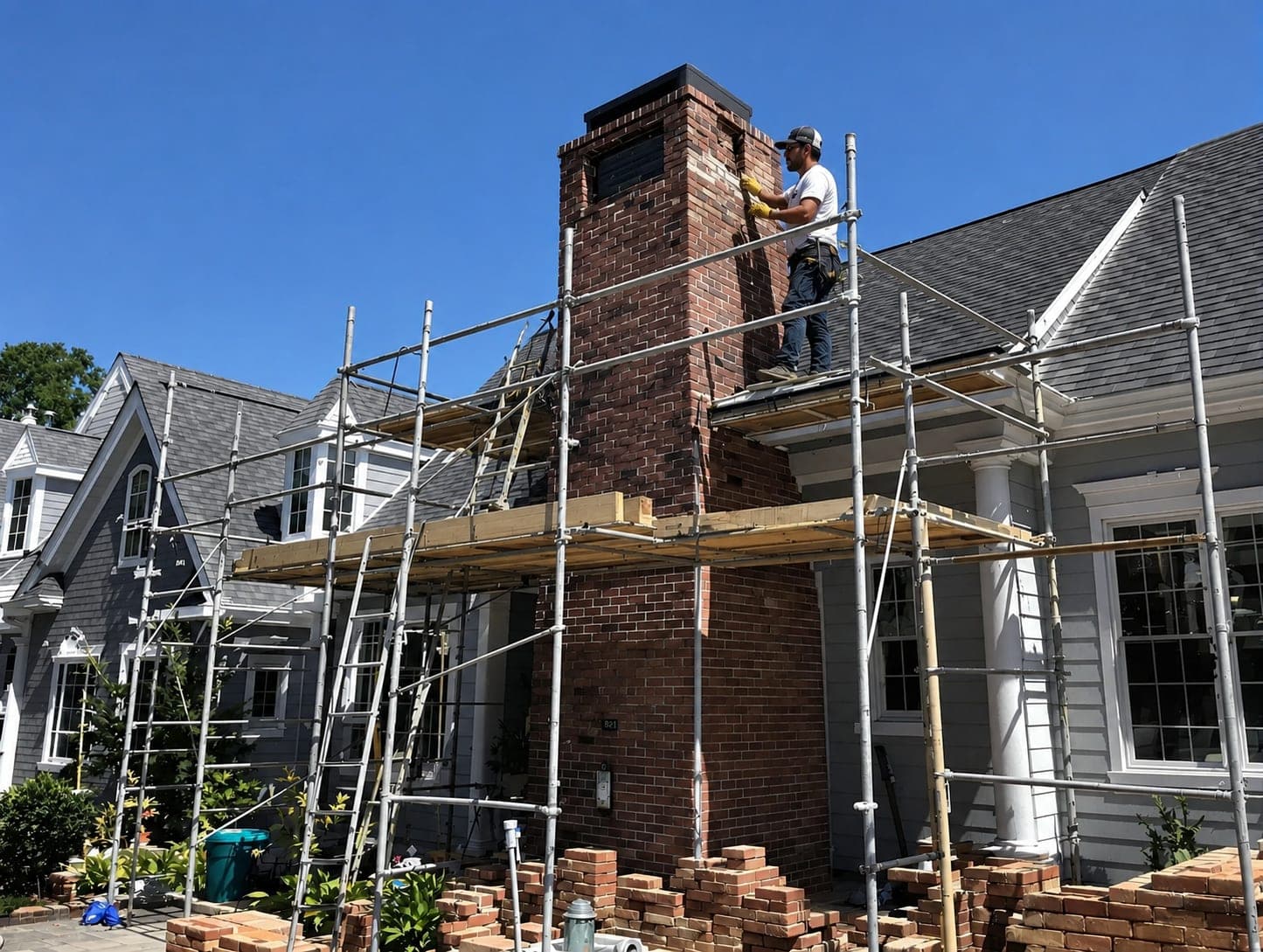
Our chimney leak repair service covers the whole process: finding the source, fixing it and repairing the parts the water damaged. If the masonry is badly deteriorated, the choice between patching and rebuilding comes up. Our guide to chimney repair vs rebuild explains how that decision is made.
How a leak repair usually goes
Inspection
We check the chimney from the roof and from inside, and look for water marks that show where the water travels.
Explaining the cause
You get a plain explanation of where the water is likely getting in and what we recommend. Estimates are free.
Repair
We fix the entry point first, then any parts the water has damaged.
Protection
Where it makes sense, we add a cap or waterproofing so the same weak spot doesn't open up again.
What not to do
- Don't climb onto a wet or steep roof to look at the chimney yourself.
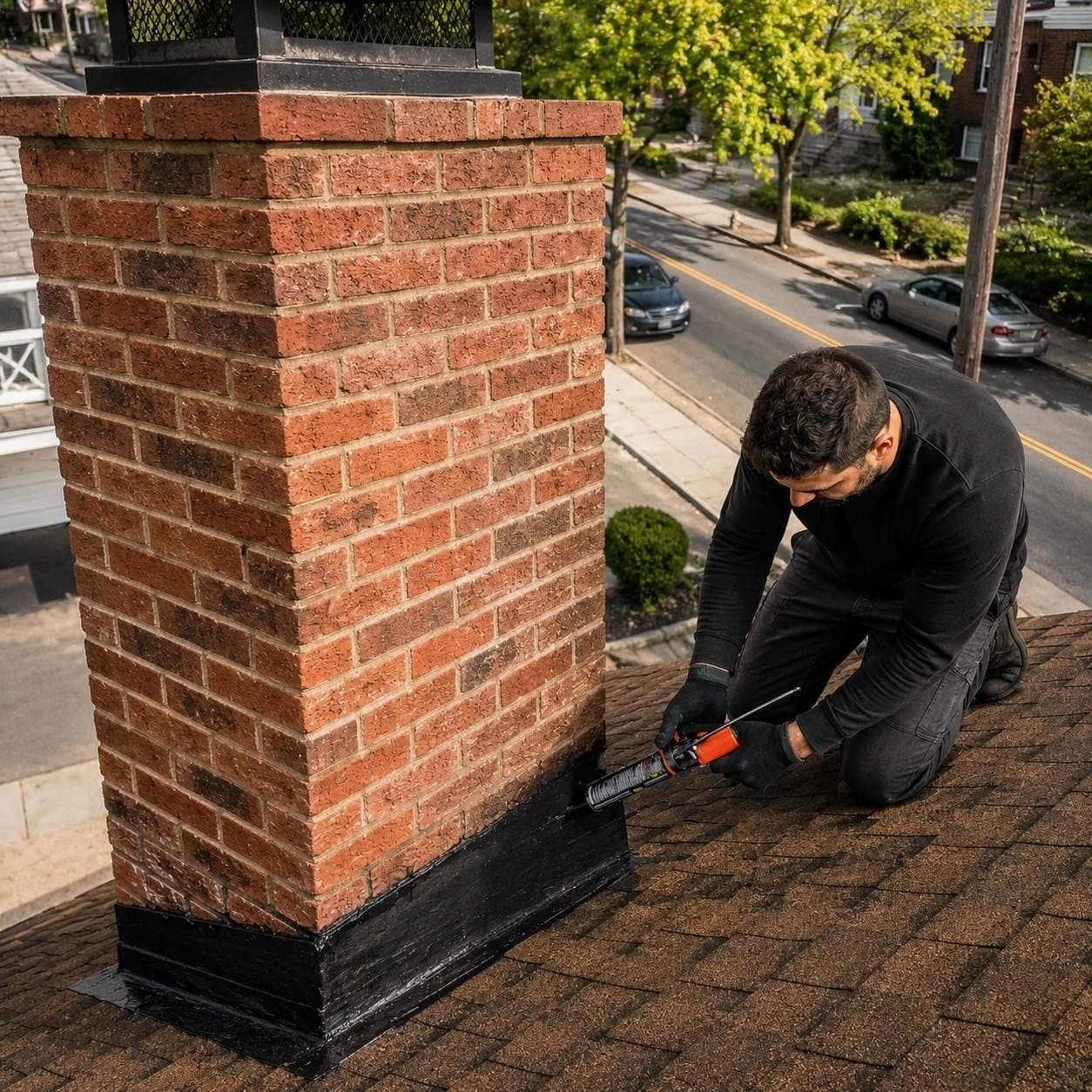
- Don't spread roofing tar or caulk over the flashing or crown as a lasting fix. It often traps water and makes the real repair harder.
- Don't seal brick with a paint or coating that isn't made for masonry. Brick needs to let moisture out.
- Don't keep burning fires in a chimney that is letting water into the flue.
- Don't just paint over ceiling stains. They will come back if the source isn't fixed.
Get the leak found before the next storm
Request an estimate and we'll inspect the chimney, explain what's letting the water in, and repair it. Free estimates.