On this page
- What a chimney sweep actually involves
- Signs your chimney needs cleaning
- The visit, step by step
- Chimney flue cleaning
- Stage 3 creosote and why it's different
- Do chimney sweeps remove bird nests?
- Wood stove chimney cleaning
- Safety and maintenance between cleanings
- How often to sweep a chimney
- Same-day chimney sweep
- Booking a chimney sweep
What a chimney sweep actually involves
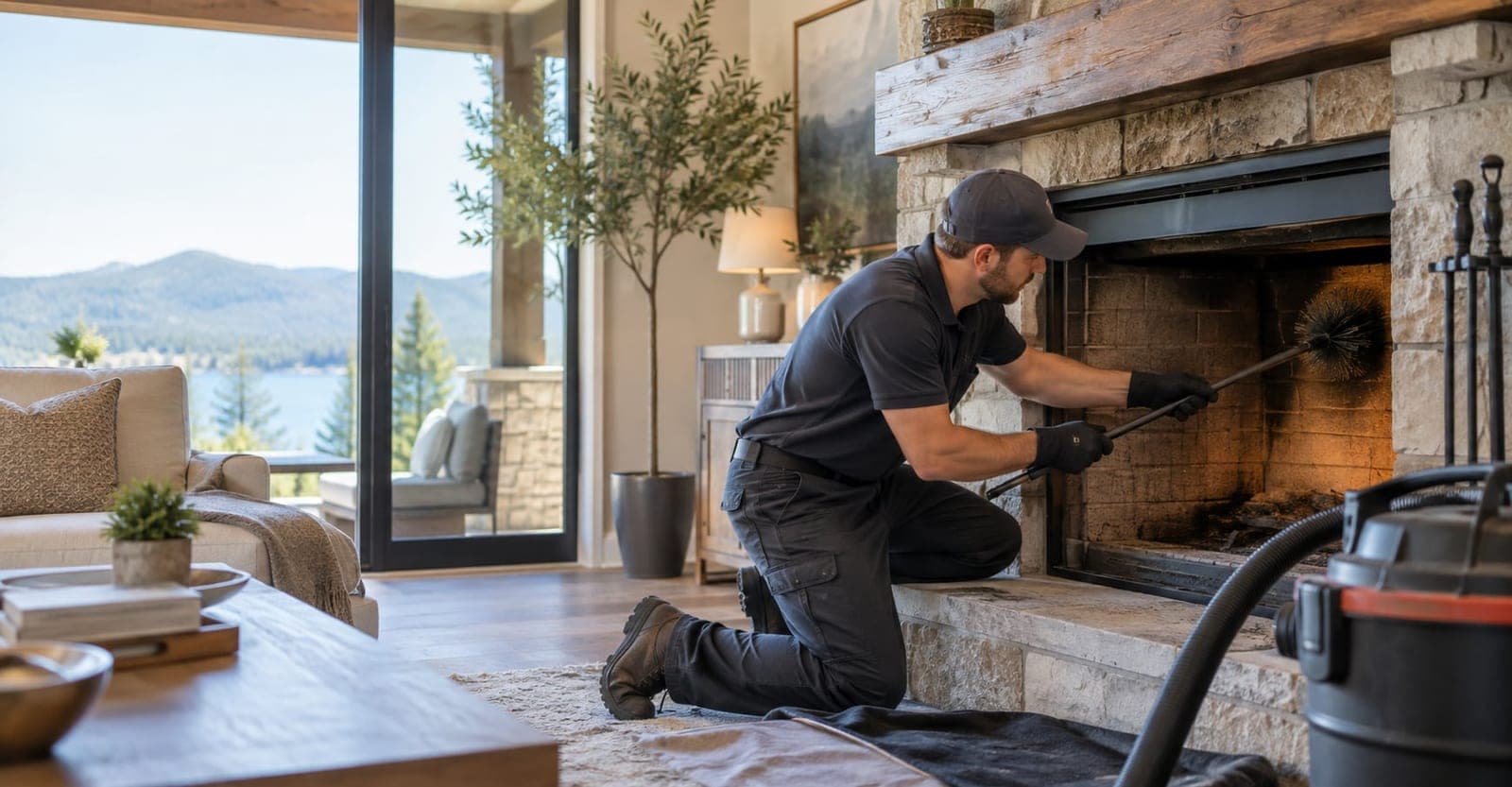
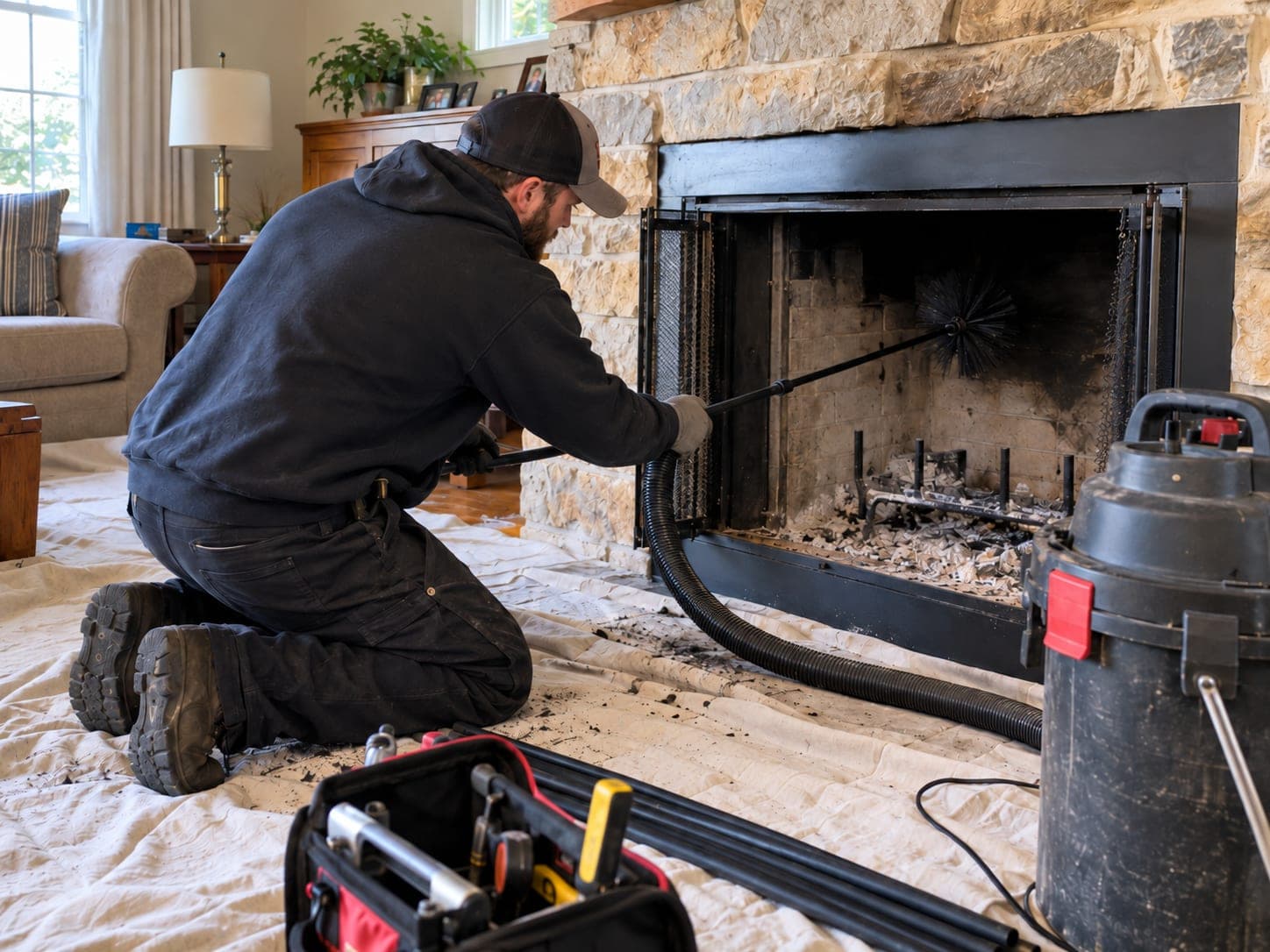
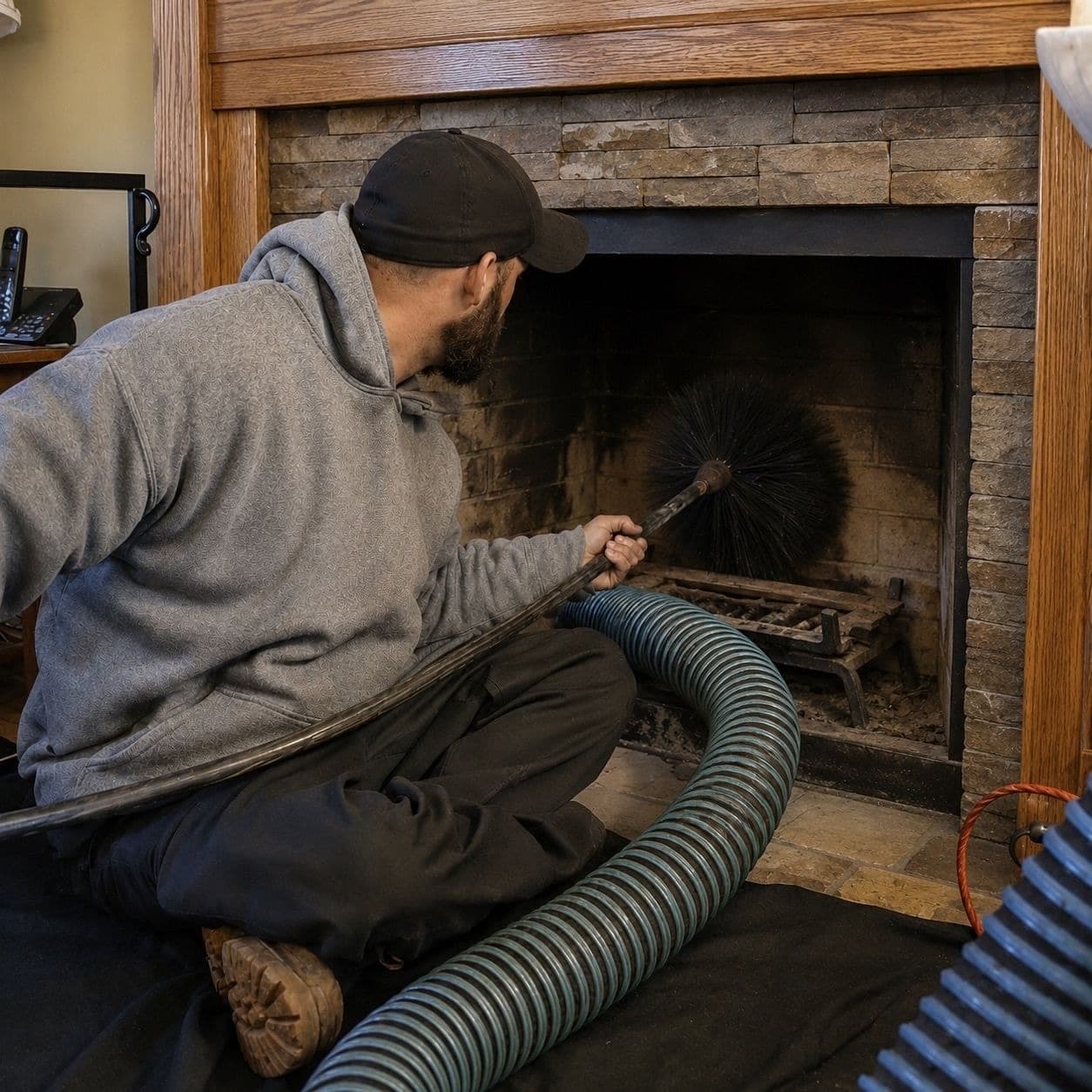
A chimney sweep is the physical cleaning of the venting system that carries smoke out of your home. That system includes the chimney flue, the smoke chamber and smoke shelf above the damper, the damper itself and the firebox. Brushes and rods sized to the flue scrape deposits off the walls, and a vacuum keeps the dust out of your living room.
The goal is to remove the material that burns: creosote is a fuel, and a chimney fire starts when it ignites. Sweeping also clears debris that blocks the draft, which is what pulls smoke up the chimney instead of into the room. For background on why this matters, read about creosote buildup dangers and prevention.
Signs your chimney needs cleaning
Common reasons homeowners call for a sweep
- Smoke drifts into the room when you light a fire, or the fire is hard to keep going
- A strong, smoky or tar-like chimney smell, often worse on humid days or when the air conditioning runs
- Black flakes or crumbly deposits falling into the firebox
- Visible soot buildup on the flue walls when you look up past the damper with a flashlight
- Scratching, chirping, or twigs and nesting material dropping down
- It has been a full burning season or longer since the last cleaning
- You've just bought the home and don't know when it was last swept
If something seems stuck in the flue rather than coated on it, such as leaves, fallen masonry or other debris, our chimney blockage removal service handles that alongside a routine sweep or instead of one.
The visit, step by step
How a chimney sweep visit runs
Protect the room
Drop cloths go down around the hearth and the fireplace opening is sealed off so soot stays contained.
Look before cleaning
We check the firebox, damper and flue from below and look at the top of the chimney where it's accessible, so we know what we're dealing with before brushing starts.
Brush the flue
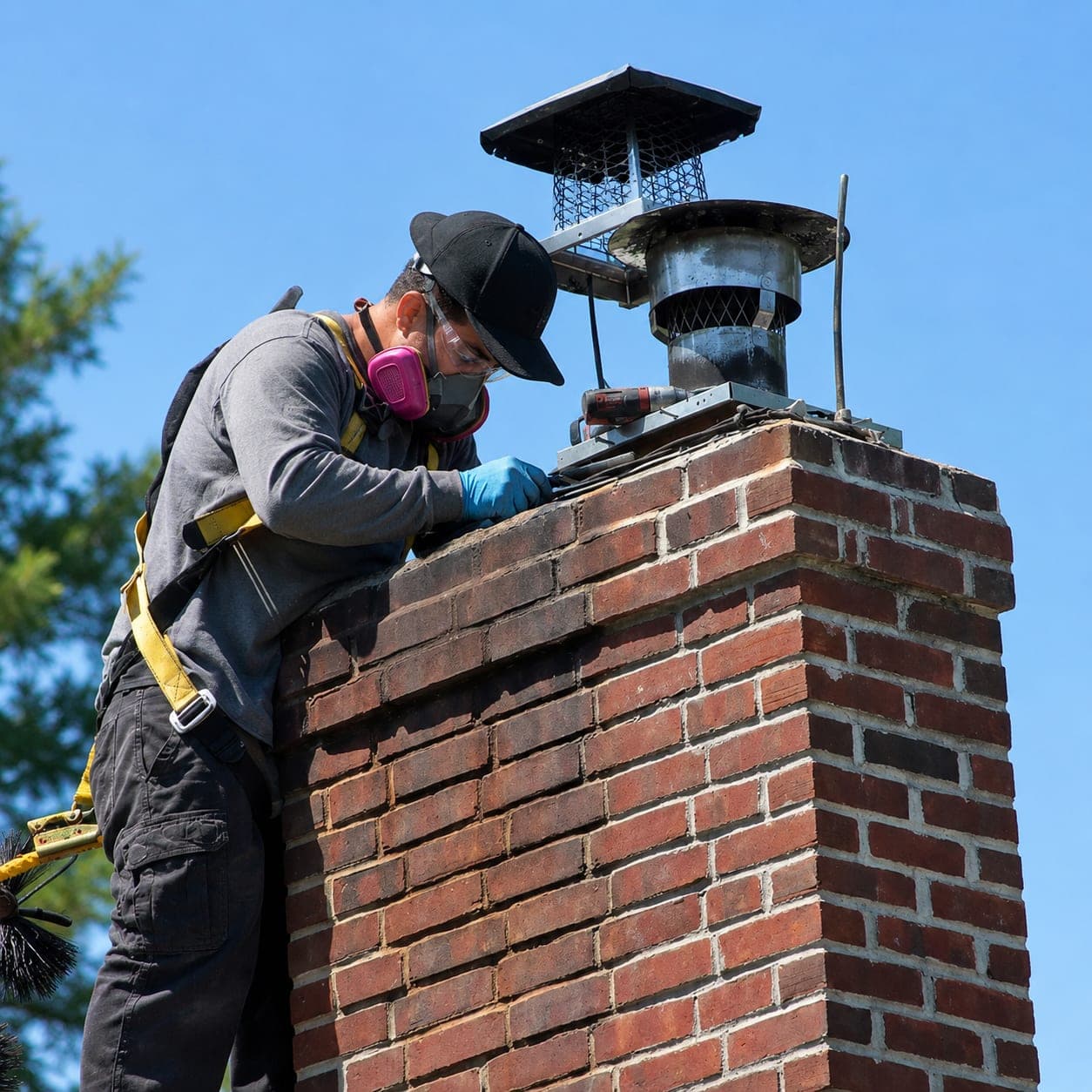
Rods and a brush matched to the flue's size and shape work the full length of the chimney, loosening soot and creosote from the walls.
Clean the smoke chamber and firebox
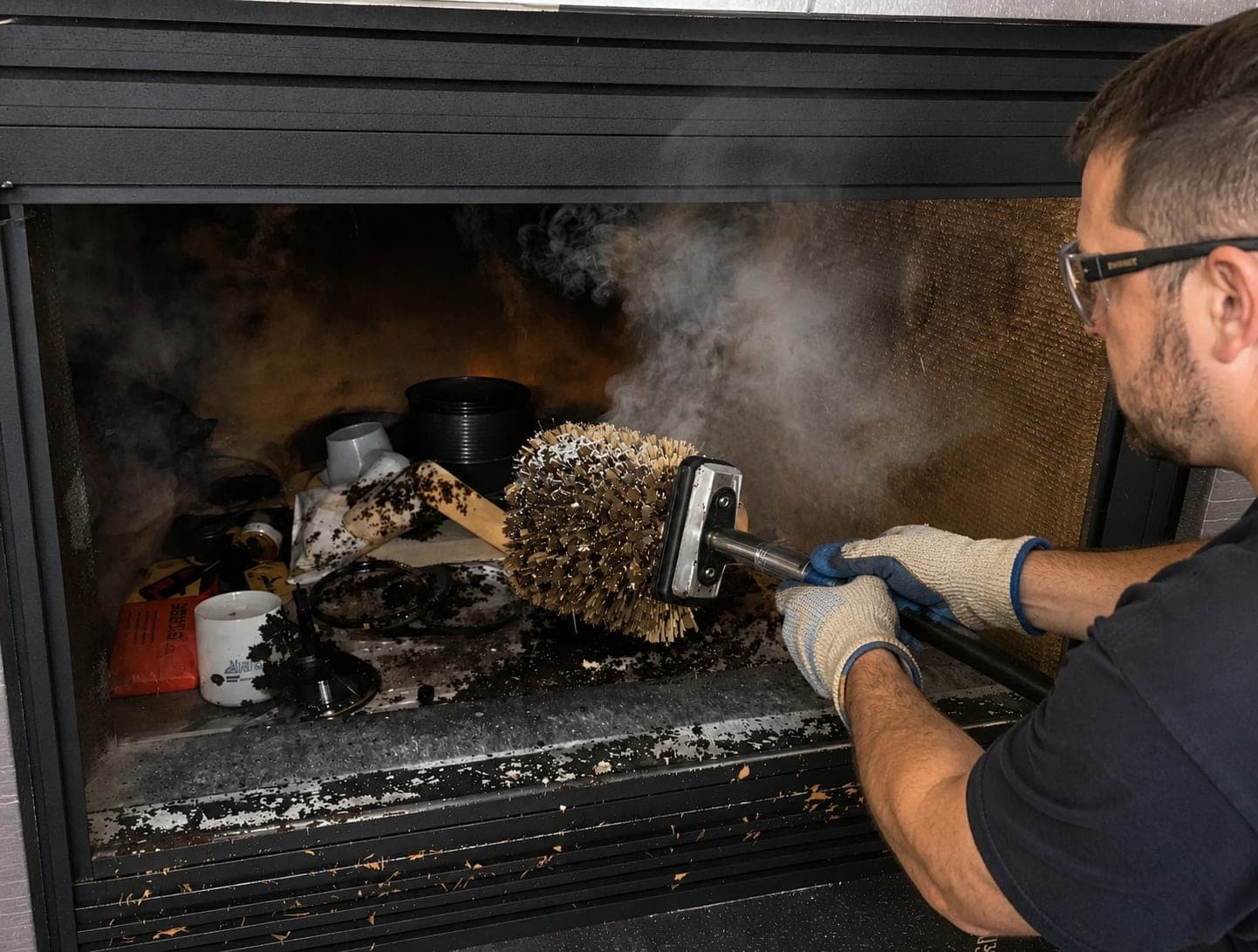
The smoke shelf, smoke chamber, damper and firebox are scraped and brushed, then the loosened material and ash are vacuumed out.
Check the result
We look again to confirm the flue is clear and note anything that needs attention, such as cracks, a damaged cap or a damper that doesn't seal.
Walk you through it
You get a plain explanation of what came out, what condition things are in and whether anything else is worth doing.
Chimney flue cleaning
The flue is the passage smoke travels through, and it's where most deposits collect. Chimney flue cleaning focuses on that passage specifically: brushing a masonry flue tile, a stainless steel liner or a prefab metal flue with tools that suit the material, so the lining isn't scratched or damaged. If the flue looks cracked or deteriorated, a closer look through our chimney inspection service shows whether the liner is still doing its job.
Stage 3 creosote and why it's different
Creosote is usually described in three stages. Stage 1 is a fine, powdery soot that brushes off easily. Stage 2 is flaky and crunchy, and still removable with standard sweeping. Stage 3 is a hard, shiny, tar-like glaze that coats the flue walls.
Glazed creosote forms when smoke cools too quickly in the flue, which is common with damp wood, smoldering fires or a flue that's too large for the appliance. It's highly flammable and difficult to remove, so it needs dedicated creosote removal with rotary tools or treatments that soften the glaze before it's taken off. If we find it during a sweep, we'll show you and explain the options before doing anything further.
Do creosote "self-cleaning" logs and powders work?
Sometimes, partly. Creosote-treatment logs and additives can dry out and loosen light deposits so they flake off more easily, but they don't remove buildup on their own and they don't clear anything already loose in the smoke chamber. They can be a useful step between cleanings, not a replacement for sweeping.
Do chimney sweeps remove bird nests?
Yes, chimney sweeps remove bird nests, and nests are one of the more common things found during a cleaning. Twigs, leaves and nesting material are dry and flammable, and they can block the flue enough to push smoke and fumes back into the house. When the nest is empty, it comes out as part of the sweep.
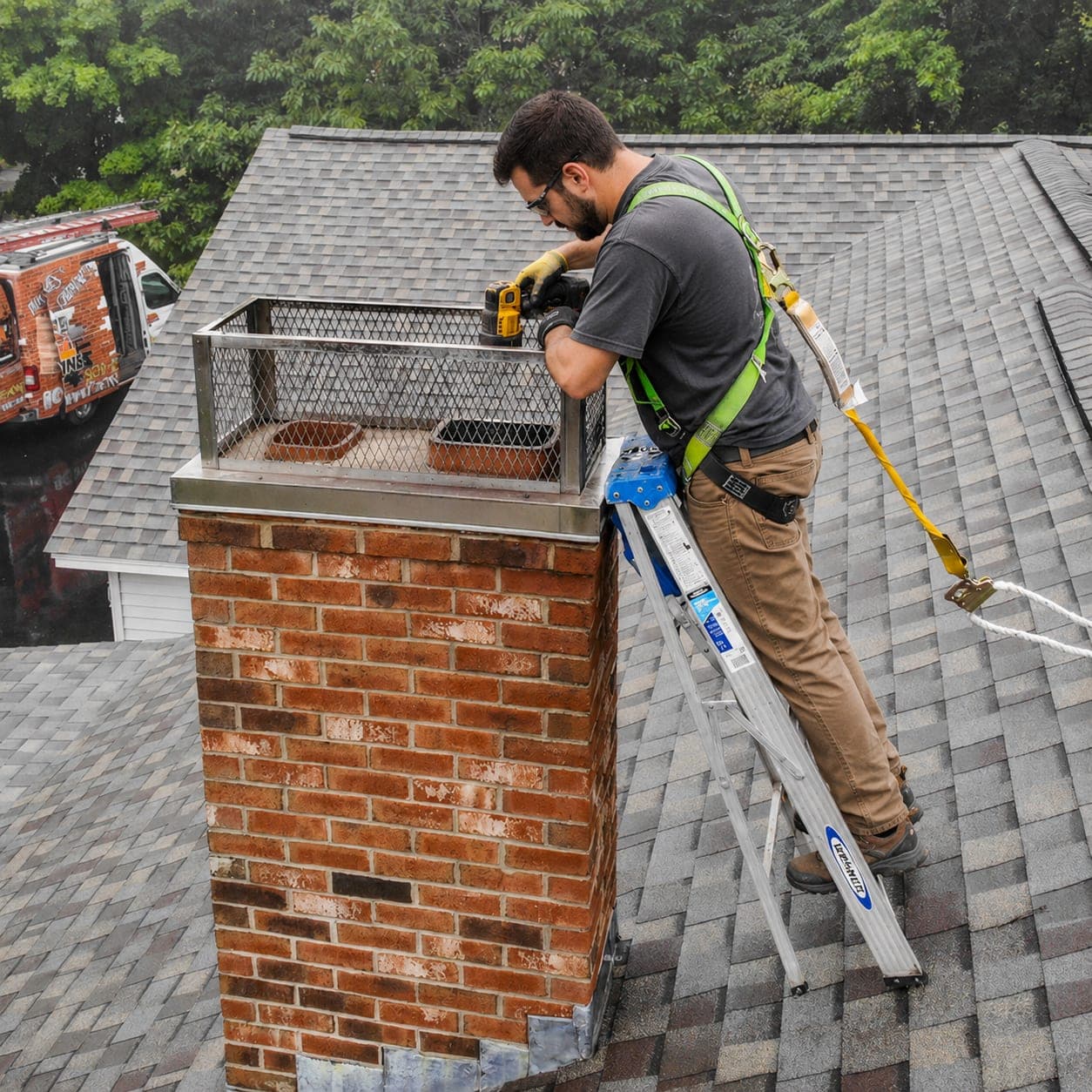
Where birds or other animals are still living inside, the job becomes chimney animal & nest removal, which deals with the animal and the nest first and the cleaning after. A chimney cap or animal screen afterward is the usual way to keep them from coming back.
Wood stove chimney cleaning
Wood stoves vent through a stovepipe and chimney, and because they're often run at lower, slower burns than an open fireplace, they can build creosote faster. Cleaning a wood stove chimney covers the connector pipe, the chimney flue, and the stove's own baffle and flue collar where deposits collect. If you burn a stove regularly through the cooler months, it's worth having the stovepipe checked more often than an occasionally used fireplace.
Safety and maintenance between cleanings
- Burn seasoned, dry wood. Wet wood smolders and produces far more creosote.
- Avoid long, low, smoky fires. A hotter, well-drafted fire leaves less residue.
- Don't burn trash, cardboard, painted lumber or wrapping paper in the fireplace.
- Make sure smoke and carbon monoxide alarms near the fireplace and bedrooms are working.
- Keep a fire screen or doors in place and keep combustibles away from the hearth.
- Gas fireplaces still need attention: they don't make creosote, but vents and logs need periodic service.
Knowing the warning signs of a chimney fire, like a loud roaring sound, dense smoke or flames shooting from the top, helps you act fast. If you hear roaring or see flames or sparks from the top of the chimney, get everyone out and call 911. Our guide covers chimney fire safety in more detail.
How often to sweep a chimney
A widely used guideline is an inspection once a year, with cleaning whenever it's needed. In practice, a fireplace used regularly through the burning season usually needs sweeping once a year, and a heavily used wood stove may need it more often. A common rule of thumb is to sweep once soot buildup reaches about an eighth of an inch. A fireplace that's rarely used still benefits from a yearly check, since nests and debris collect whether or not you light fires.
Same-day chimney sweep
Same-day visits are available where the schedule allows.
Booking a chimney sweep
Estimates are free. Call or request an estimate and tell us what you're seeing, whether that's a smell, smoke coming back into the room, falling debris or simply that it's been a while. We clean wood-burning fireplaces, fireplace inserts and wood stoves, and we also handle gas fireplace and gas appliance work. Commercial and property-manager work is offered too.
Free estimates
Emergency calls are accepted, and 24-hour service runs Sunday–Friday.
Related work covered on this page
- Chimney Flue Cleaning