On this page
What a storm damage chimney inspection covers
This inspection looks for the kinds of damage storms tend to cause. We check what was hit on the outside, and whether water, debris or a structural shift has reached the inside of the chimney. It differs from a routine checkup in what it looks for. Storm damage is often sudden and hidden, and a chimney can look fine from the ground while the crown is cracked or the flue is partly blocked.
Parts we check after a storm
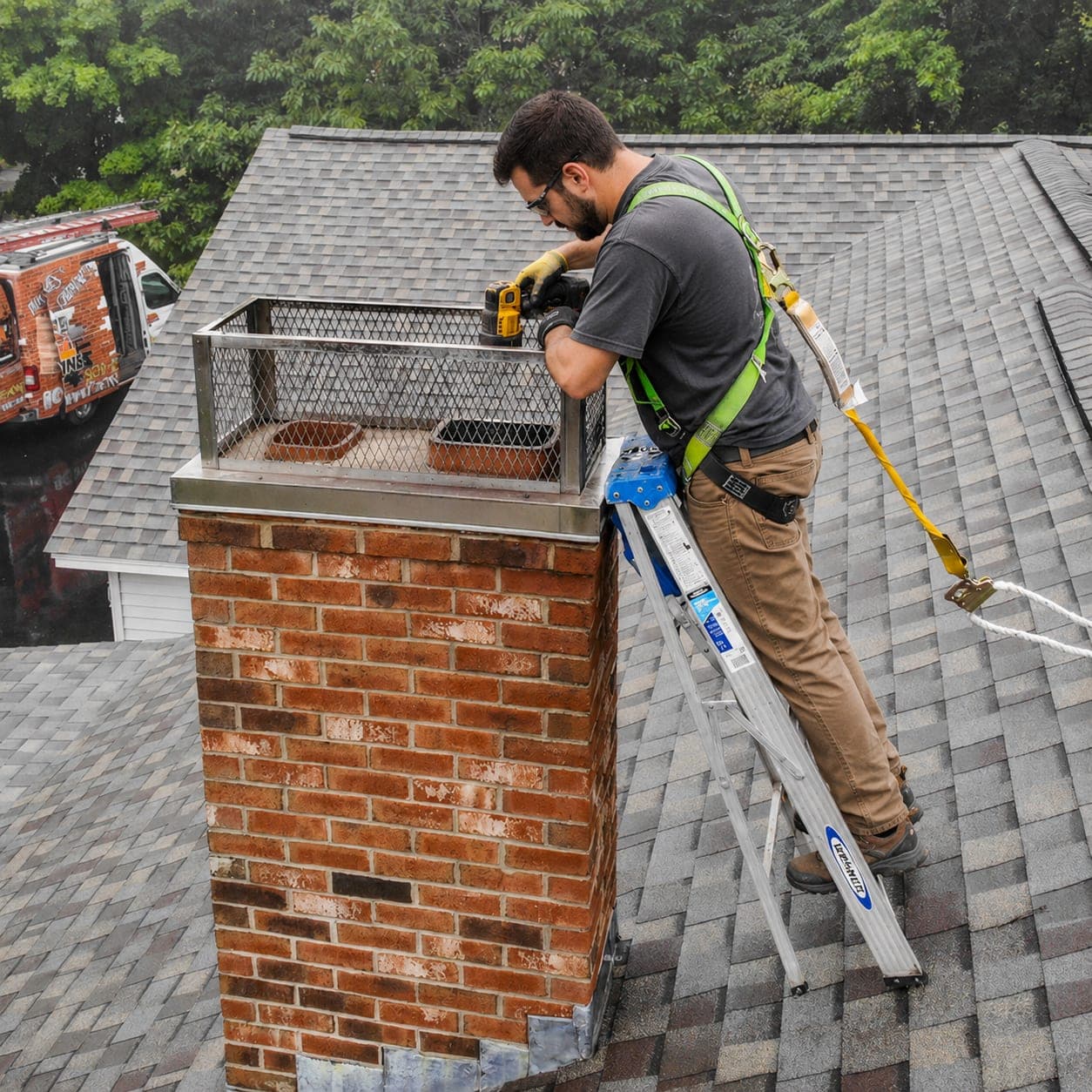
- Chimney cap — missing, bent or torn loose by wind
- Crown — new cracks or chips that let water into the masonry
- Brick and mortar — loose, shifted or fallen bricks and open joints
- Flashing — lifted or torn where the chimney meets the roof
- Chase and chase cover on prefab chimneys — dents, separation or rust-through
- Flue and liner — cracks, debris, nests or fallen material blocking the draft
- Damper, smoke chamber and firebox — water staining, rust or debris that came down the flue
- Gas fireplace venting — damaged termination caps or vent sections
Signs your chimney may need a storm check
Some storm damage is obvious. More often you'll notice only a small change. Any of these is a good reason to have the chimney looked at before you use the fireplace or stove again:
- The chimney cap is gone, tilted or lying in the yard or gutter
- Bits of brick, mortar or crown material on the roof or ground
- The chimney looks like it leans, or there's a gap where it meets the house
- New water stains on the ceiling or wall near the chimney, or water pooling in the firebox
- A tree limb hit the roof near the chimney
- Lightning struck the house or something close to it
- Smoke spilling into the room, a weak draft or a new smell from the fireplace
- Scratching or chirping in the flue after the cap blew off.
What the visit involves, step by step
How a storm damage chimney inspection works
Tell us what happened
When you call, describe the storm and anything you've noticed, such as missing parts, leaks, debris or a lightning strike. That tells us where to look first.
Exterior check
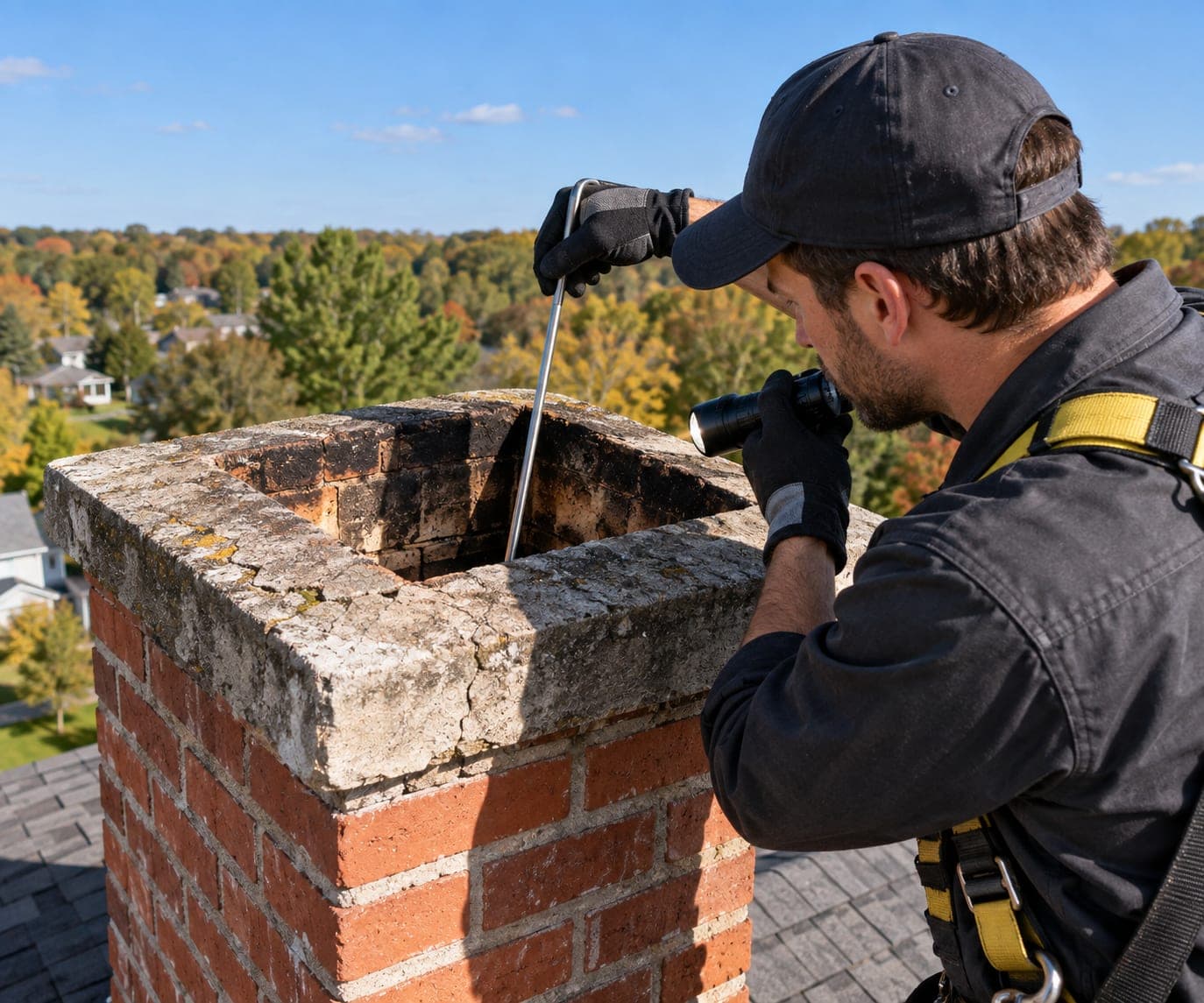
We inspect the cap, crown, masonry or chase, and flashing for impact damage, cracks and gaps that let water in.
Interior check
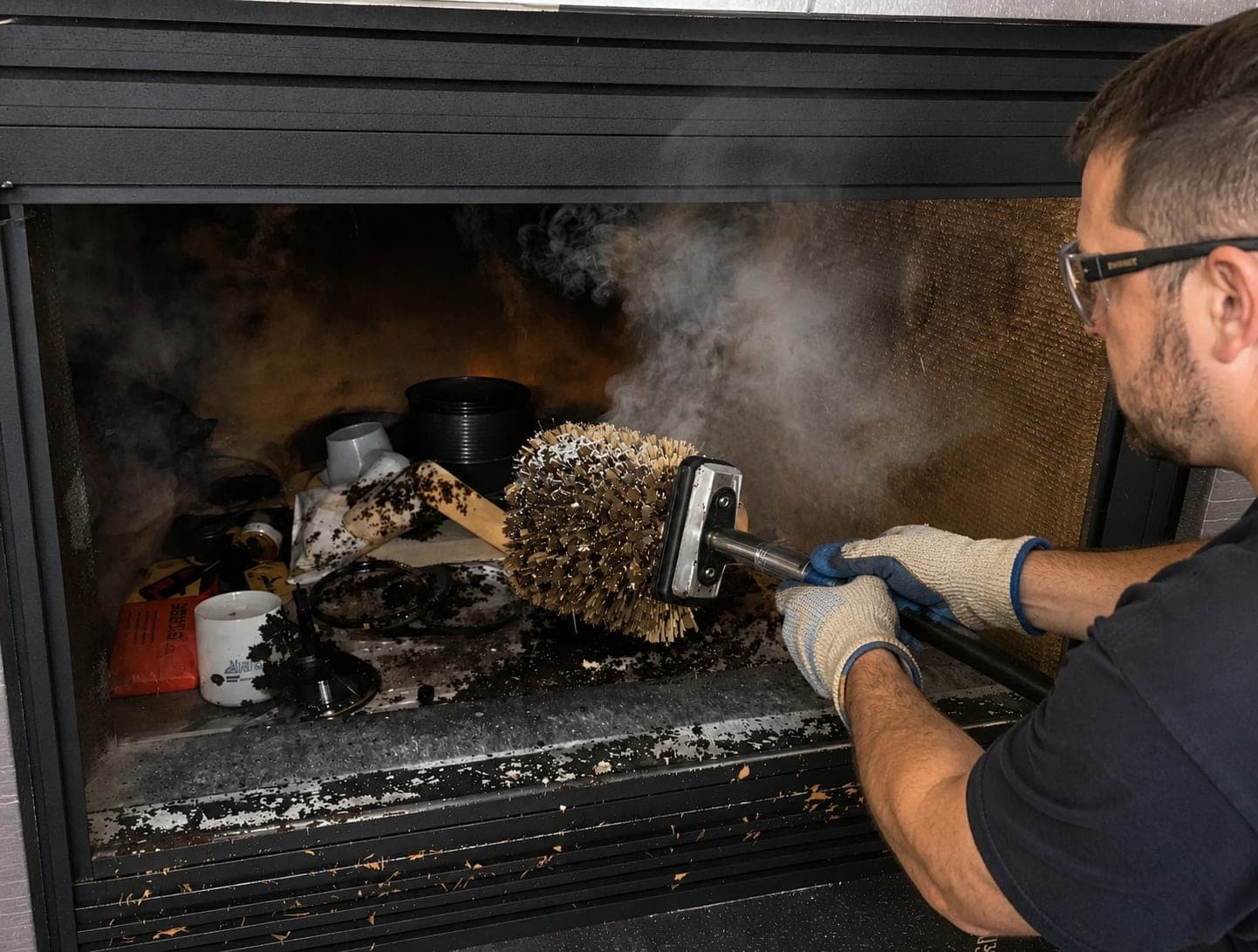
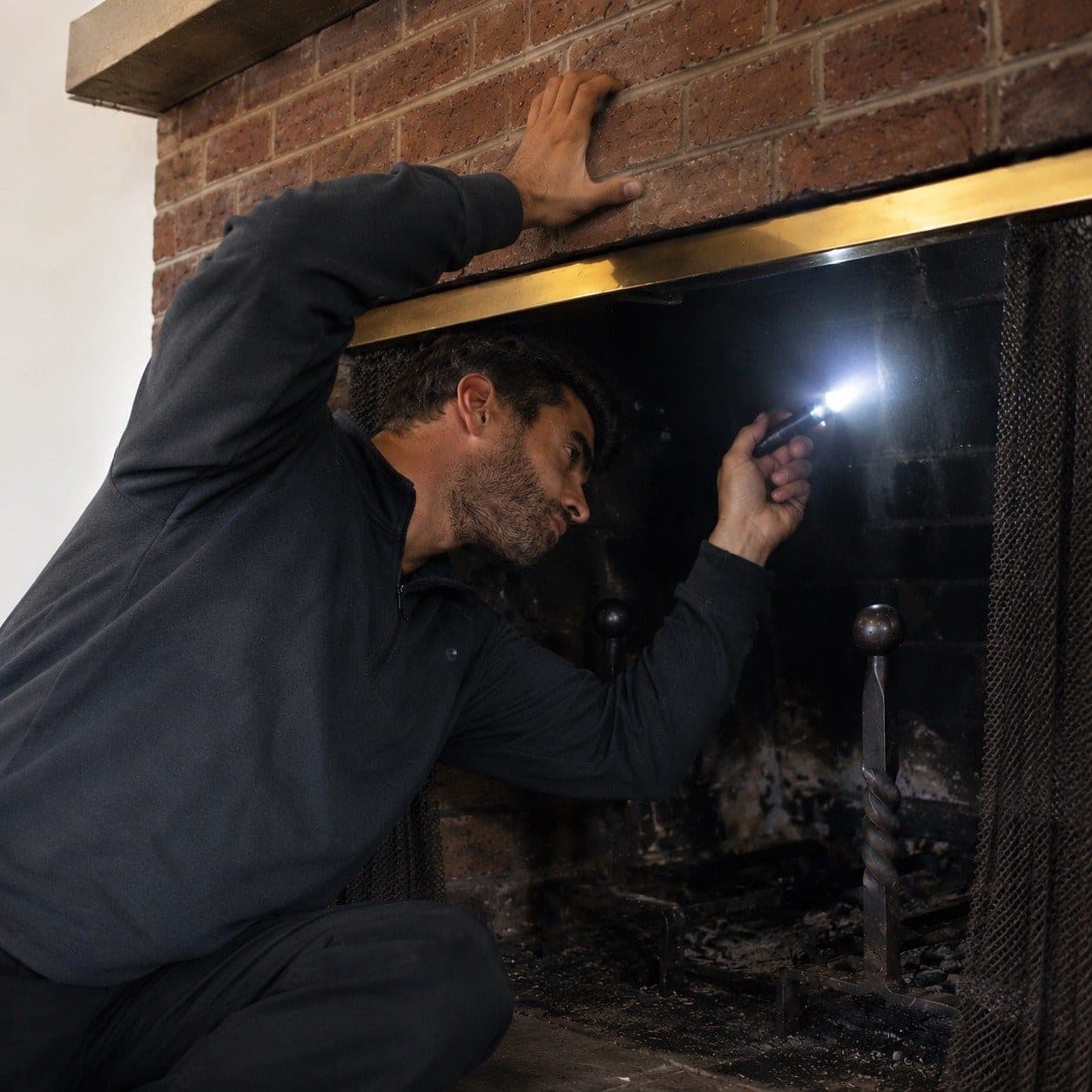
We look at the firebox, damper and smoke chamber for water, rust and fallen debris, and check the flue for blockages and cracks. When the flue needs a closer look, a camera inspection shows damage that can't be seen from either end.
Gas appliance venting
If you have a gas fireplace or other gas appliance venting through the chimney, we check that the vent is intact and clear.
Walk-through of findings
We explain what we found, what is safe to use, and what needs repair. Any repair comes with a free estimate before work starts.
Safety while you wait for the inspection
Hold off on fires until it's checked
A cracked flue liner or a partly blocked flue can send heat, smoke or carbon monoxide where they shouldn't go. If you see signs of storm damage, don't use the fireplace, wood stove or gas fireplace until the chimney has been inspected.
Stay off the roof, especially when it's wet or when bricks are loose. Keep people and pets away from any area where masonry could fall. If bricks are falling or it looks like it could come down, keep everyone away from the area below it and call 911. Many problems that start with a storm get worse with use. Debris and water in a flue can trap smoke and speed up deposits, which our guide on creosote buildup dangers and prevention explains. For warning signs to watch for once you're burning again, read our guide to chimney fire safety.
Storm check, routine inspection or home sale inspection?
| Feature | Storm damage inspection | Other inspections |
|---|---|---|
| When it's used | After wind, heavy rain, falling limbs or lightning | On a regular schedule, or when buying or selling a home |
| Main focus | Sudden damage: impacts, cracks, water entry, blockages | Overall condition and maintenance needs |
| Where to start | Book this inspection | Our standard chimney inspection service or a real estate chimney inspection |
When it's used
- Storm damage inspection
- After wind, heavy rain, falling limbs or lightning
- Other inspections
- On a regular schedule, or when buying or selling a home
Main focus
- Storm damage inspection
- Sudden damage: impacts, cracks, water entry, blockages
- Other inspections
- Overall condition and maintenance needs
Where to start
- Storm damage inspection
- Book this inspection
- Other inspections
- Our standard chimney inspection service or a real estate chimney inspection
Booking a storm damage chimney inspection
Call or request an estimate. 24-hour service runs Sunday–Friday, and emergency calls are accepted, which helps when a storm has left bricks loose or water coming in. We also take commercial and property-manager work, and we work on all major fireplace and stove brands, including gas fireplaces and gas appliances.