Your chimney went through a quake. Is it still safe?
A masonry chimney is a tall, heavy column of brick and mortar that sticks up above the roof with little to hold it sideways. When the ground moves, the house and the chimney don't always move together. The result can be anything from hairline cracks to a stack that leans, pulls away from the wall or, in the worst case, collapses.
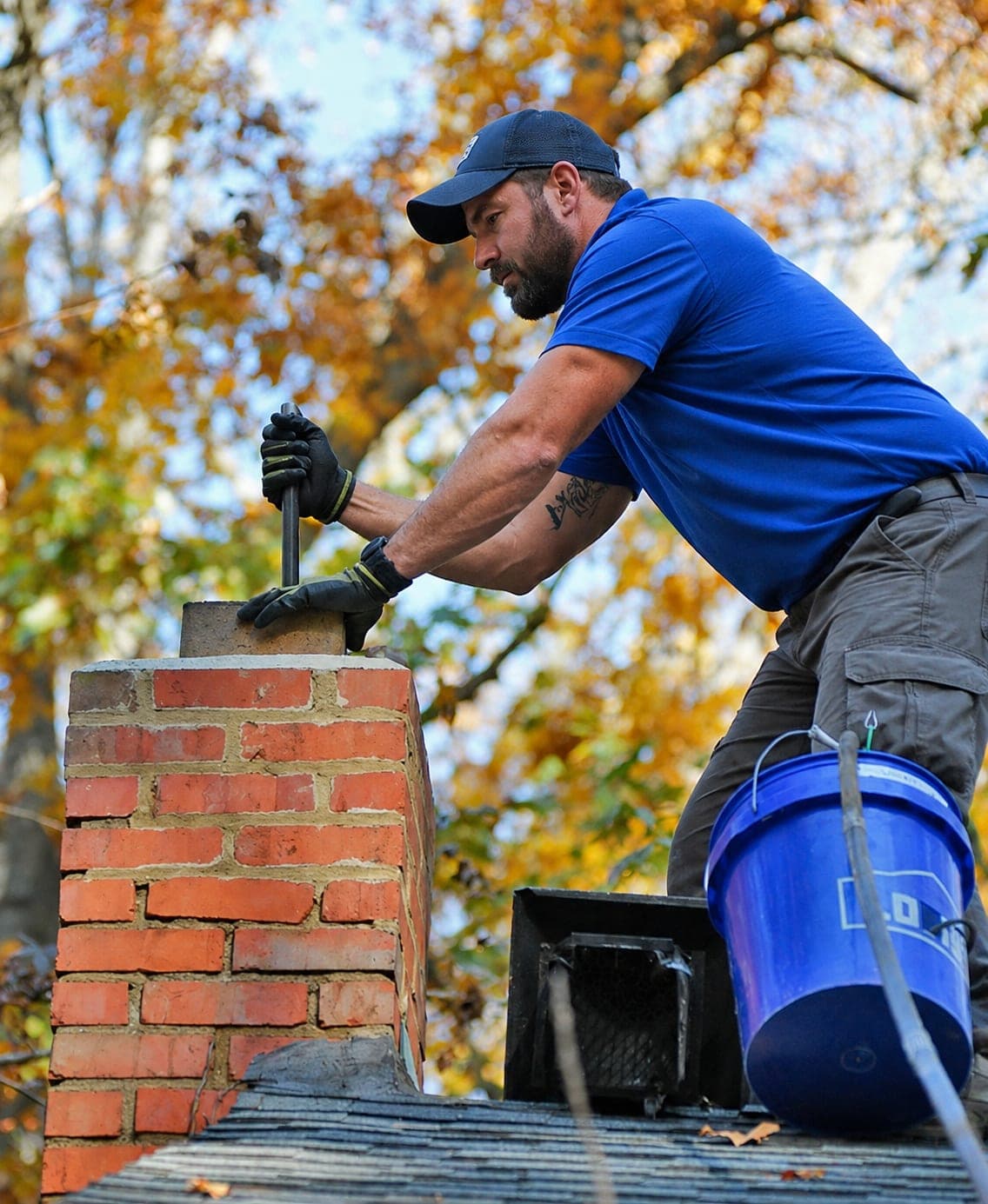
The hard part is that the most serious damage is often the part you can't see. A cracked flue liner or a shifted smoke chamber can let heat, sparks and smoke reach the wood framing around the chimney, even if the outside looks only slightly scuffed.
Common signs of chimney damage after an earthquake
Look for these from the ground and from inside the house
- Cracks in the brick or along mortar joints, especially stair-step cracks
- Loose, shifted or missing bricks, or brick pieces on the roof or ground
- A chimney that leans, twists or looks out of line with the roofline
- A gap between the chimney and the house wall
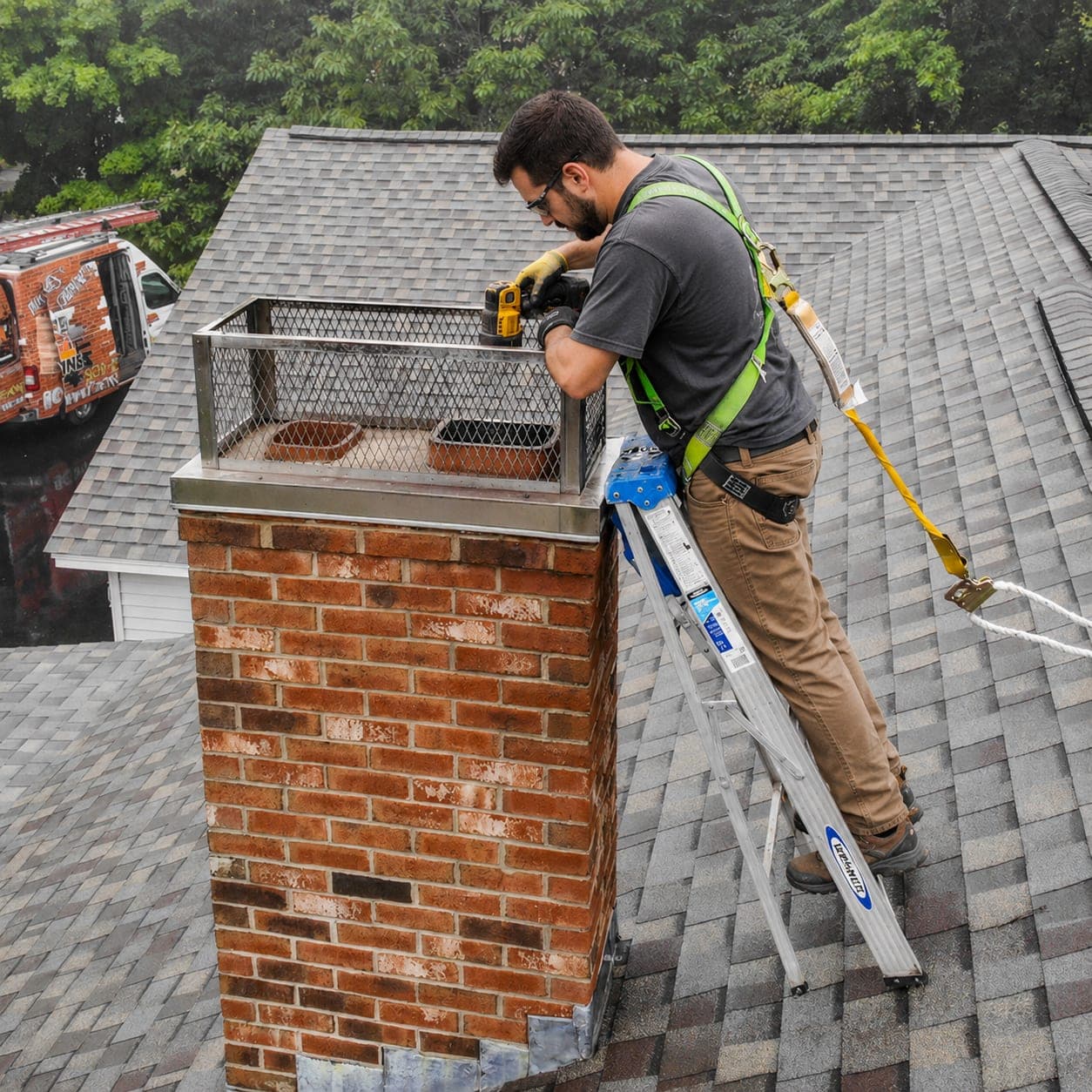
- A cracked or broken crown or chimney cap at the top
- Bent or pulled-loose flashing where the chimney meets the roof
- Cracks in the firebox, the hearth or the wall around the fireplace
- Mortar dust, brick chips or debris falling into the firebox
- A damper that sticks or no longer closes properly
- New water stains near the chimney or a draft and smoke problem that wasn't there before
Stay off the roof
Don't climb up to look at a damaged chimney. A weakened stack can shed bricks or give way, and aftershocks can make it worse. Check what you can from a safe distance on the ground.
What may have caused the damage
Each of these is a possibility, not a diagnosis. Only an inspection confirms which ones apply to your chimney.
Possible causes and how they're checked
01Cracked mortar joints and loose brick
- What you may notice
- Stair-step cracks, shifted or missing bricks, mortar dust
- How it’s confirmed
- Visual inspection of the exterior masonry from top to bottom
02Damaged crown or cap
- What you may notice
- Cracks or broken pieces at the top, a cap that has shifted
- How it’s confirmed
- Close inspection of the chimney top
03Cracked or separated flue liner
- What you may notice
- Often no outside sign; sometimes debris in the firebox or a change in draft
- How it’s confirmed
- A video scan of the flue from the inside
04Chimney separating from the house
- What you may notice
- A visible gap at the wall, a lean, or damaged flashing
- How it’s confirmed
- Inspection of the connection points, flashing and roofline
05Firebox or smoke chamber damage
- What you may notice
- Cracked firebrick, loose mortar inside the fireplace, smoke spilling into the room
- How it’s confirmed
- Inspection of the firebox, damper and smoke chamber
06Shifted prefab chimney or chase
- What you may notice
- Misaligned chase, loose chase cover, flue sections out of line
- How it’s confirmed
- Inspection of the chase, the cover and the metal flue sections
How urgent is it, and when to stop using the fireplace
Treat any chimney that went through noticeable shaking as out of service until it has been checked. Don't light a fire in a wood-burning fireplace or stove, and don't run a gas fireplace or gas insert until an inspection shows the chimney and venting are sound.
- Urgent: a leaning stack, missing or loose bricks, or a gap at the wall. Keep people and pets away from the area below the chimney and away from the fireplace wall.
- Soon: visible cracks in the brick, crown or firebox, or debris in the fireplace. Don't use the system until it's inspected.
- Still worth checking: no visible damage at all. Flue liner cracks often show no outside sign, and a cracked flue can let a chimney fire reach the house framing. The basics of chimney fire safety explain why that matters.
If you smell gas
Leave the house right away and call your gas utility or emergency services from outside. Don't switch lights or appliances on or off on the way out.
When a level 2 inspection applies
The standard recommends it at a property sale or transfer, after a chimney fire, and after a weather or seismic event such as an earthquake. It's a recommendation in that industry standard, not a code or legal requirement.
If you're buying or selling a home with a chimney that has been through a quake, a real estate chimney inspection covers the chimney as part of the transaction.
What normally fixes it
From inspection to repair
Inspect first
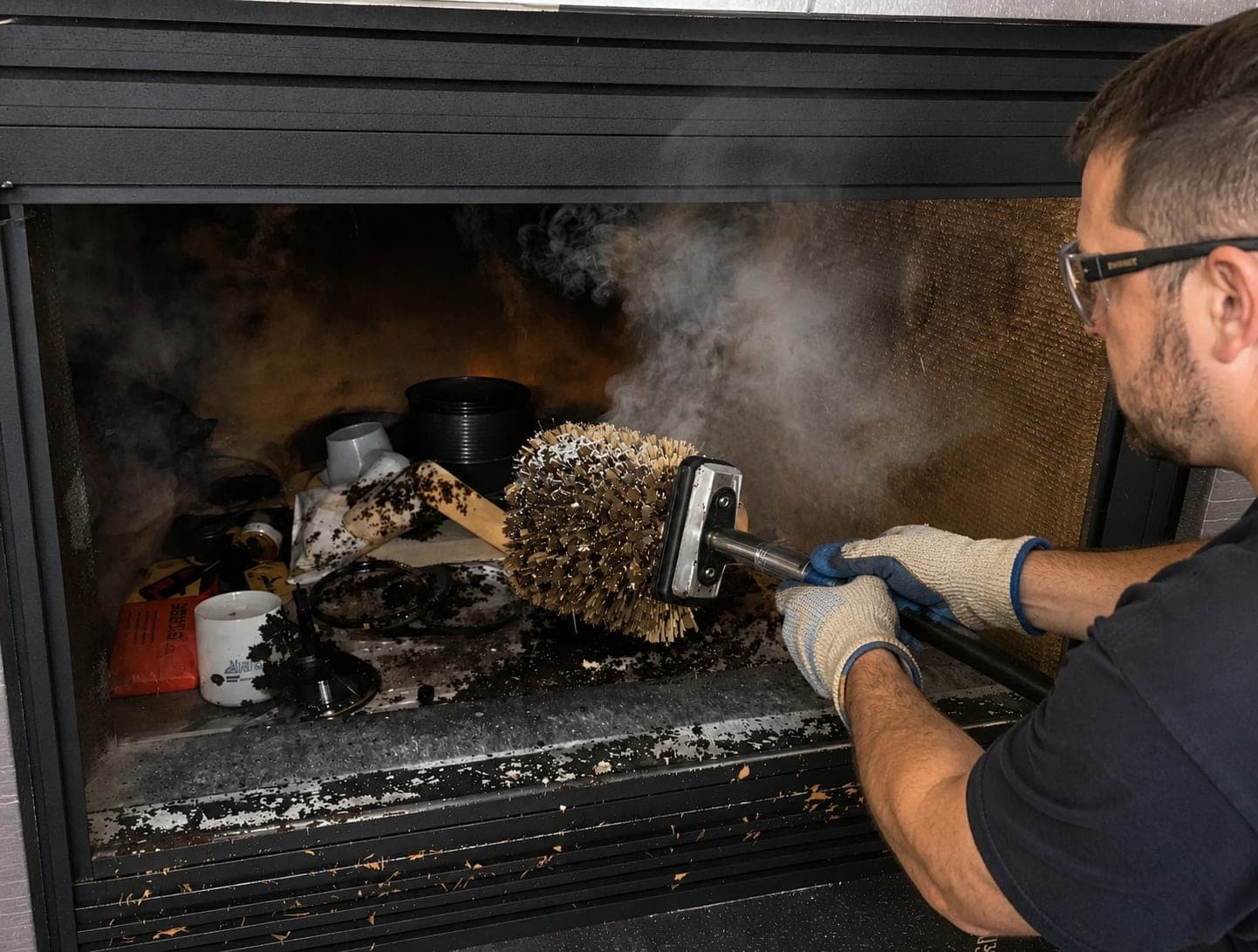
We start with a chimney and fireplace inspection, including a camera inspection of the flue, to see what moved, cracked or separated.
Make it safe
Where bricks are loose or the stack is unstable, the first job is to remove the hazard and keep the system out of use.
Repair what the inspection found
Depending on the findings, that can mean chimney masonry repair and tuckpointing, crown repair, flashing repair, chimney liner repair or a new liner installation, firebox or smoke chamber repair, damper repair, or prefab chimney and chase repair.
Rebuild when needed
A chimney that has shifted badly or partly collapsed may need a chimney rebuild above the roofline or further down.
Confirm before use
The system goes back into service only once the repairs are done and the flue checks out.
We also do storm damage chimney inspections, gas fireplace work, and commercial and property-manager jobs.
What not to do
- Don't light a fire "just to test it" after a quake.
- Don't climb onto the roof or lean a ladder against a damaged chimney.
- Don't push loose bricks back into place or patch cracks with caulk; that can hide damage an inspection needs to see.
- Don't stand or park under a leaning chimney.
- Don't assume a clean exterior means a sound flue. Old creosote in a cracked liner adds to the risk, and the guide to creosote buildup dangers and prevention explains why.