On this page
What chimney cap replacement involves
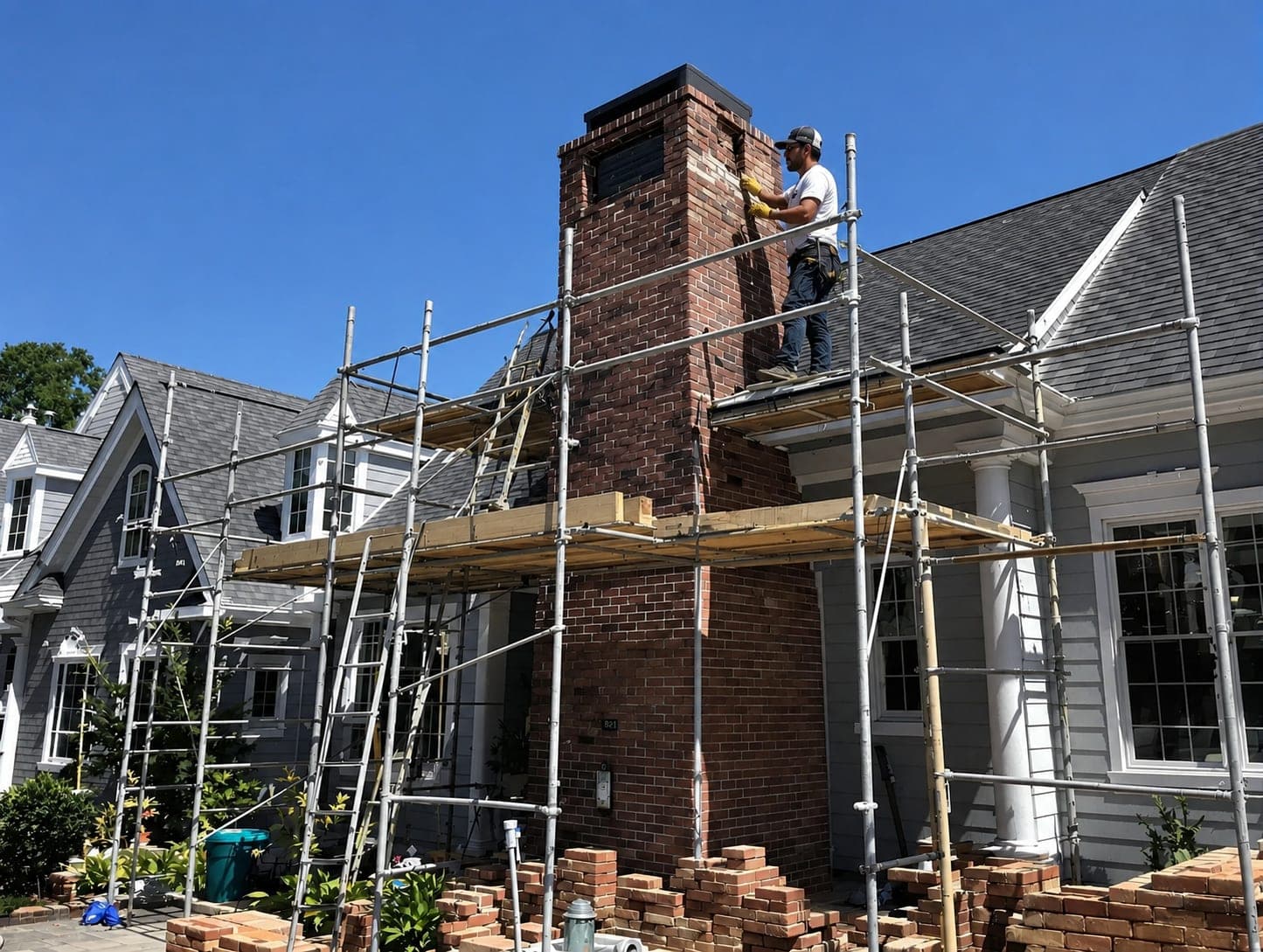
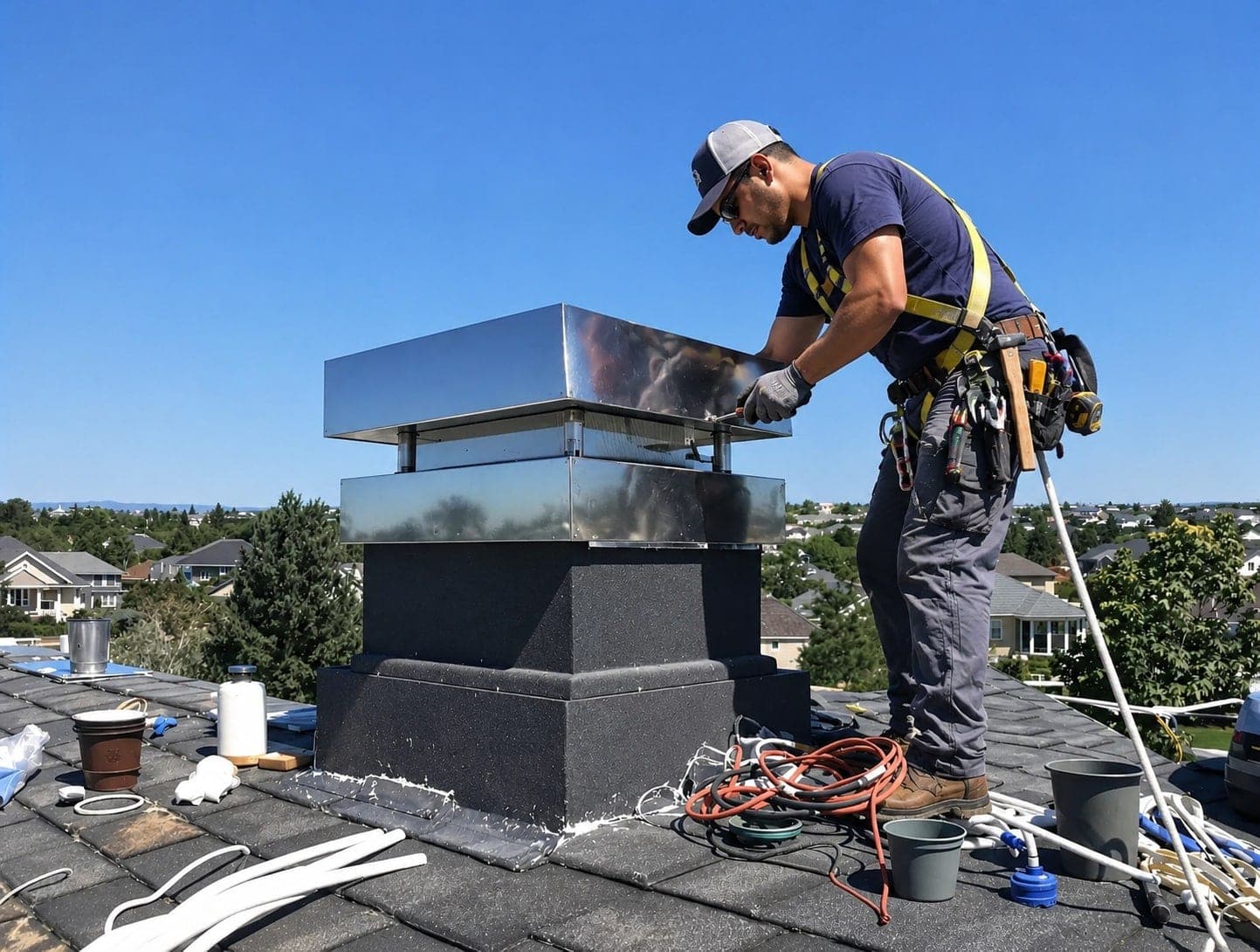
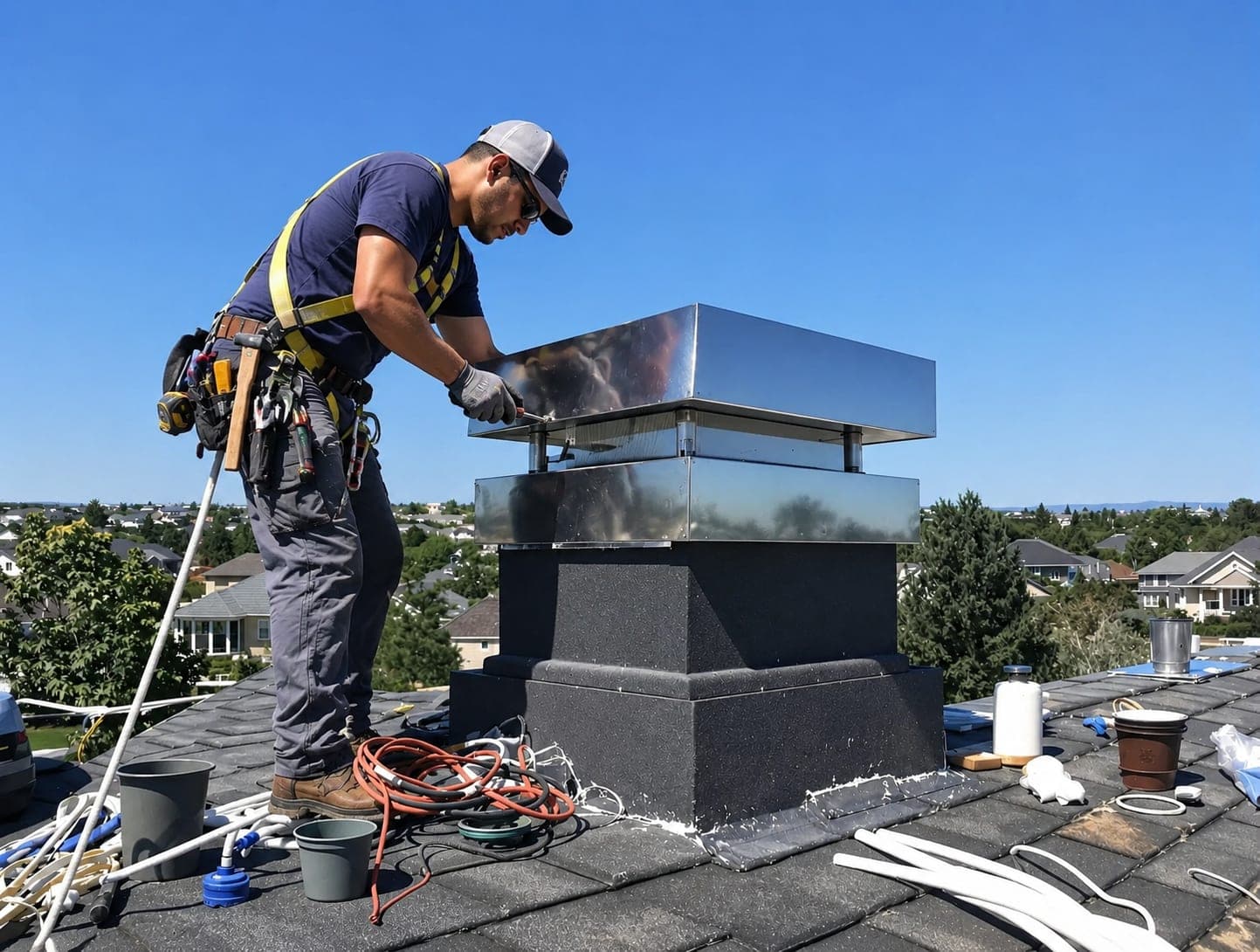
A chimney cap is the metal hood and mesh screen that sits over the top of the flue. It keeps rain out of the flue, stops animals from nesting inside, and holds back sparks and embers. Chimney cap replacement means taking off a cap that no longer does those jobs and installing a new one sized to the flue or crown it covers.
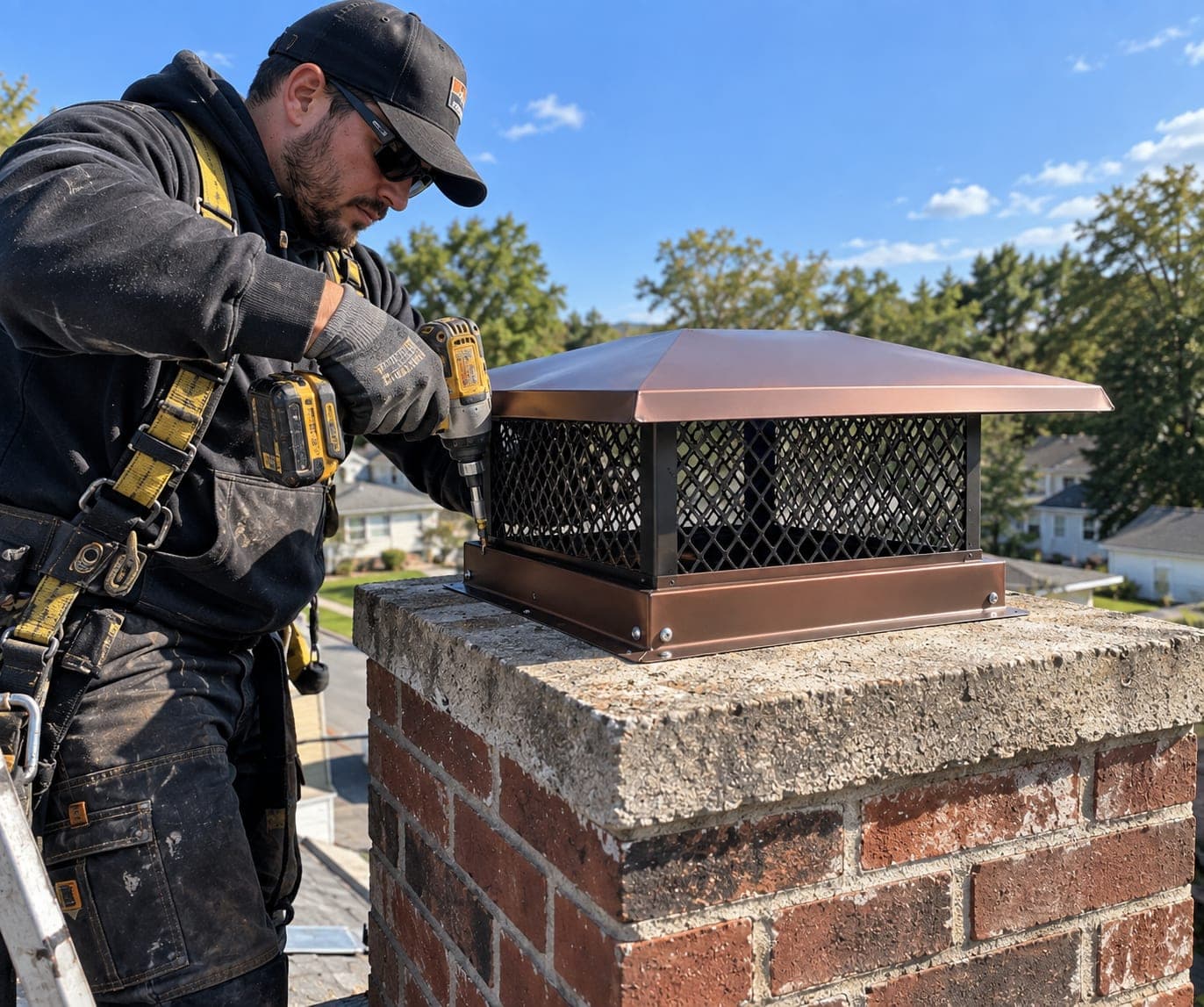
The job is usually straightforward, but it isn't just a swap. Old caps are often held on with fasteners that have rusted solid, and once the cap is off, the top of the flue and the crown are exposed for the first time in years. We look at both before the new cap goes on, because a new cap on a cracked crown or a damaged flue top won't solve a water problem.
Signs your chimney cap needs replacing
Most homeowners notice a cap problem from below, not from the roof. These are the signs that usually point to a failing cap:
Common signs
- Rust streaks running down the chimney below the cap
- A cap that is visibly tilted, loose or rattling in the wind
- Torn, corroded or missing mesh on the sides of the cap
- A cap that blew off entirely after a storm
- Water dripping into the firebox or a damp, musty smell from the fireplace
- Leaves, twigs or nesting material falling into the firebox
- Birds or animal sounds inside the flue
A rusted chimney cap is the most common reason for replacement. Once rust eats through the mesh or the hood, the cap stops keeping out water and animals, and rust flakes can fall into the flue. Painting or patching a rusted cap rarely lasts, so replacement is usually the practical fix.
If you're not sure a cap is worth having in the first place, our guide on whether your chimney needs a cap at all covers the reasons in more detail.
What the visit involves, step by step
Talk through what you've noticed
We start with what you've seen inside: water, debris, odors or animal noise. That tells us what to look for on the roof.
Inspect the cap and chimney top
We check the old cap, how it's attached, and the condition of the crown and the top of the flue around it.
Measure for the replacement
We measure the flue opening or the crown so the new cap fits properly and leaves enough clearance for the chimney to draft.
Remove the old cap
Old caps are unscrewed or, if the fasteners have rusted solid, cut free without damaging the flue tile or crown.
Fit and secure the new cap
The new cap is attached securely so it stays put in wind and weather, with the mesh fully closing off the opening around the flue.
Explain what we found
Before we leave, we tell you the condition of the crown, flue top and anything else we noticed, so you can decide whether anything else needs attention.
Cap types and materials
The right replacement depends on how your chimney is built and what burns in it.
| Feature | What it is | What to know |
|---|---|---|
| Galvanized steel | Zinc-coated steel, often found on older or builder-grade caps | Tends to rust sooner than other options once the coating wears off |
| Stainless steel | The most common replacement material | Resists rust well and holds up for many years |
| Copper | A decorative option for homes where the look matters | Doesn't rust; weathers to a darker patina over time |
Galvanized steel
- What it is
- Zinc-coated steel, often found on older or builder-grade caps
- What to know
- Tends to rust sooner than other options once the coating wears off
Stainless steel
- What it is
- The most common replacement material
- What to know
- Resists rust well and holds up for many years
Copper
- What it is
- A decorative option for homes where the look matters
- What to know
- Doesn't rust; weathers to a darker patina over time
Single-flue and multi-flue caps
A single-flue cap fits over one flue tile. A chimney with two or more flues often needs a larger cap that mounts on the crown and covers all of them at once. We match the replacement to how your chimney is laid out rather than forcing a standard size onto it.
Wood, gas and spark protection
Wood-burning fireplaces benefit from mesh that also works as a spark arrestor, and we offer spark arrestor installation if your current cap doesn't include one. Gas fireplaces and gas appliances often vent through a termination cap matched to the appliance, so we check that the replacement suits the fuel and the venting. Gas fireplace and gas appliance work is offered, and we work on all major brands.
Prefab chimneys and chase covers
On factory-built chimneys, the cap sits on top of a metal chase cover. If the chase cover itself is rusted or pooling water, a new cap alone won't help, and chase cover replacement is usually done at the same time.
Safety and maintenance
Stay off the roof
A loose or blown-off cap can tempt homeowners to climb up and fix it. Chimney tops are high, often steep, and the old cap may have sharp, rusted edges. Leave the removal and fitting to us.
If animals have already moved in, don't light a fire to drive them out. Smoke can trap them in the flue and nesting material can block it. We handle animal and nest removal before fitting the new cap, and if you only need better screening on an existing cap, installing a chimney animal screen may be enough.
Once a new cap is on, it needs little care. Having it looked at during routine chimney cleaning or inspection catches loose fasteners, clogged mesh or early rust before they turn into another replacement.
When the problem is below the cap
Removing the old cap sometimes reveals damage the cap was hiding. A cracked crown calls for chimney crown repair. A rusted or stuck damper calls for damper repair. A damaged flue may need chimney liner repair or a new liner installation. We'll explain what we see and what it means; you decide what to do next.
Water that keeps coming in after a new cap is installed usually points to flashing, masonry or the crown, and our chimney leak repair service tracks down the actual source. If the chimney itself is in poor shape, our guide comparing repairing versus rebuilding a chimney explains how that decision is usually made.
Booking a chimney cap replacement
Request an estimate and tell us what you've noticed: rust, a missing cap, water, debris or animals. Same-day visits are available where the schedule allows.
- Emergency calls are accepted.
- 24-hour service runs Sunday–Friday.
- Commercial and property-manager work is offered.
Get your cap replaced
Call or request an estimate to get started.