On this page
What a chase cover does and what replacing it involves
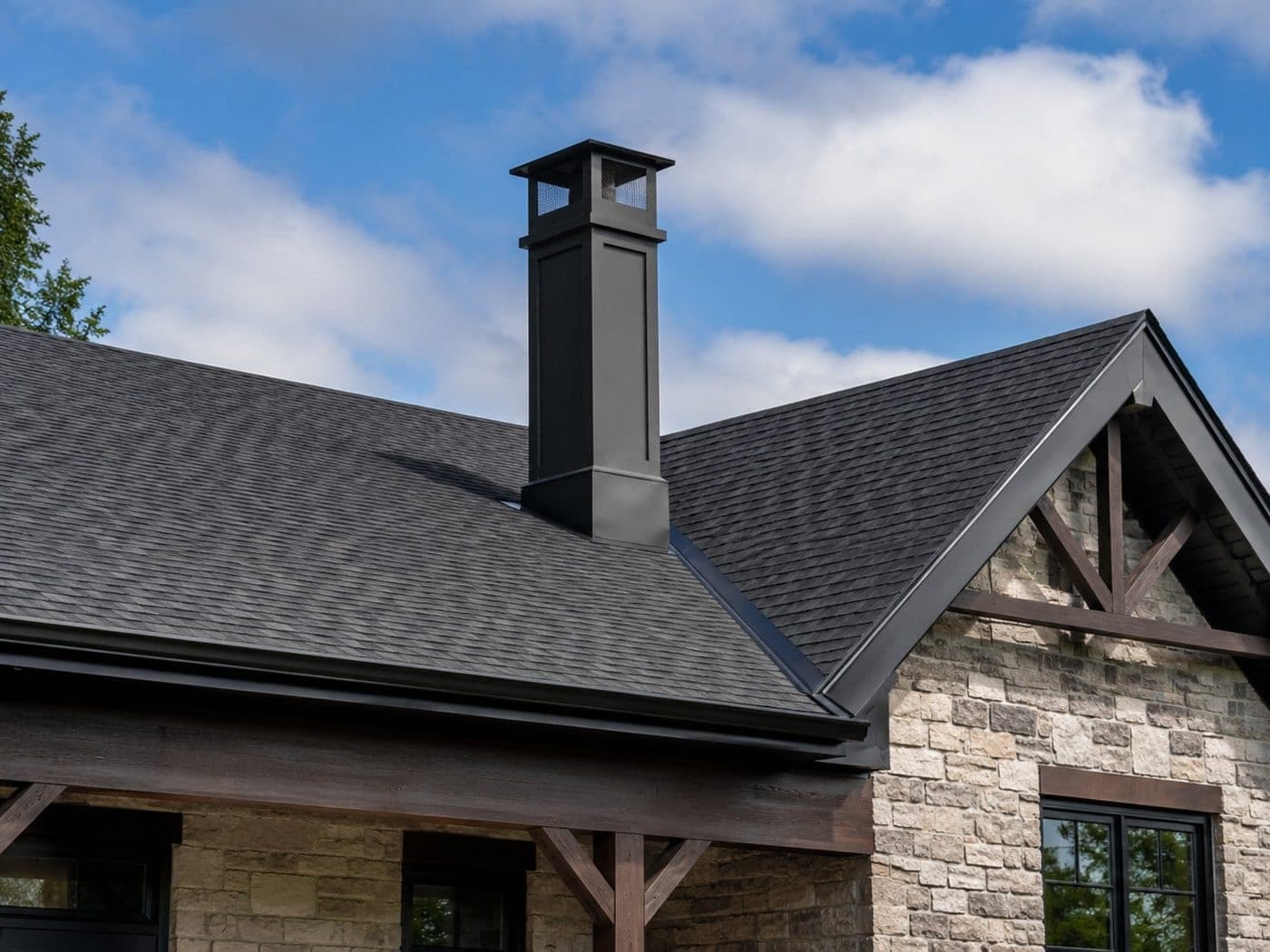
Many fireplaces are factory-built units, also called prefab fireplaces. Instead of a brick chimney, the metal flue pipe runs up through a framed box clad in siding or stucco. That box is the chase. The flat metal panel across its top is the chase cover. It keeps rain, snow and debris out of the chase and out of the space around the flue.
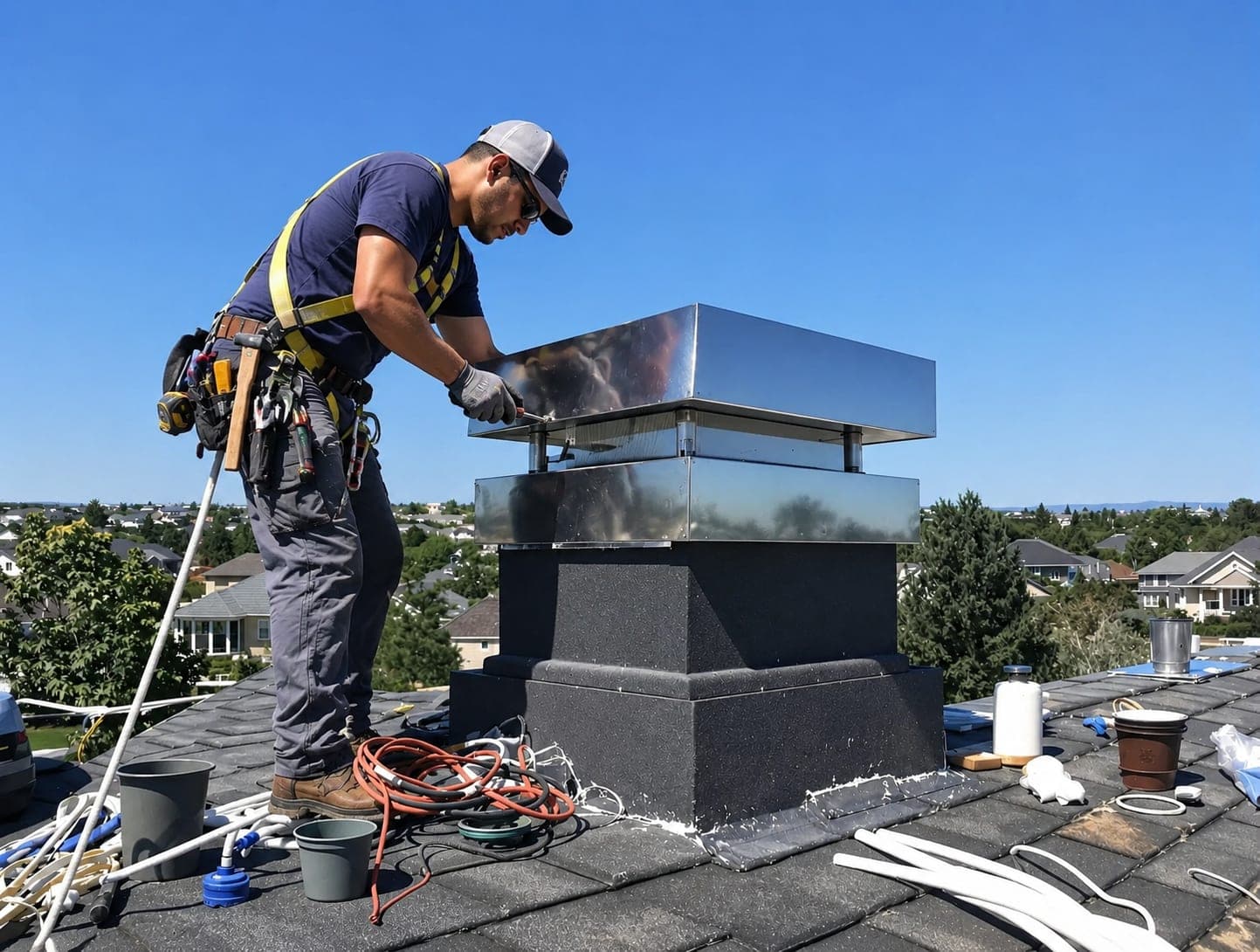
Replacement means taking off the old panel and installing a new one that matches the chase's exact outside dimensions and the flue opening. A well-made cover is not perfectly flat. It is shaped or cross-broken so water runs toward the edges. It has a skirt and drip edge that hang over the siding, and a collar where the flue passes through. The chimney cap sits on top of that collar.
Replacement or repair?
Small problems on an otherwise sound cover can often be fixed in place, such as a loose fastener, a failed sealant joint or a minor gap at the collar. Our chimney chase cover repair service handles those. Replacement makes more sense when the metal has rusted through, the panel has sagged into a dish that holds water, or the cover was never sized or shaped properly.
Signs your chase cover needs replacing
What homeowners usually notice first
- Orange or brown rust streaks running down the siding or stucco below the top of the chase
- Water dripping into the firebox, or damp spots on the wall or ceiling near the fireplace after rain
- A cover that looks dished or sunken, with standing water or debris sitting on it
- Visible holes, pinholes or flaking metal when the cover is seen from a ladder or upper window
- Edges that have lifted, bent or pulled away from the chase framing after wind
- A musty smell from the fireplace in wet weather
None of these signs proves the cover is the only cause. Leaks can also come from flashing, siding joints or a damaged chimney cap. That is why the visit starts with a look at the whole top of the chase.
Why a leaking cover shouldn't wait
A leaking chase cover sends water into wood framing and insulation, and onto the metal flue and fireplace unit below. Over time that can mean rotted framing, rusted fireplace parts and damaged interior finishes. These are much bigger jobs than swapping the metal top.
What the visit involves, step by step
From first look to finished top
Inspect the top of the chase
We check the existing cover, the collar, the chimney cap, the siding joints and any signs of water inside the chase, so the estimate addresses the real source of the problem.
Measure precisely
Chase sizes vary from house to house, so we measure the outside dimensions, the flue size and its position, and the overhang the skirt needs.
Go over the estimate with you
You get a free estimate that explains what we found and what we recommend, including whether repair would do the job instead.
Remove the old cover
We take off the cap and the failed cover, then check the top of the framing for soft or rotted wood that needs attention before anything new goes on.
Fit and fasten the new cover
The new cover is set with its slope or cross-break directing water outward, fastened through the skirt, and sealed at the flue collar.
Reinstall or replace the cap
The chimney cap goes back on, or a new one goes on if the old one is also worn out. Then we clear away the old material.
Chase cover materials
| Feature | Galvanized steel | Stainless steel |
|---|---|---|
| How it holds up to water | Protected by a zinc coating that wears away over time, after which it rusts | Resists rust much longer, especially when flat spots are avoided |
| Typical sign of failure | Rust streaks and pinholes | Usually dents or loose fastening rather than rust-through |
| Where it fits | Often found on original builder-installed chases | A common choice when replacing a cover that has already rusted out |
How it holds up to water
- Galvanized steel
- Protected by a zinc coating that wears away over time, after which it rusts
- Stainless steel
- Resists rust much longer, especially when flat spots are avoided
Typical sign of failure
- Galvanized steel
- Rust streaks and pinholes
- Stainless steel
- Usually dents or loose fastening rather than rust-through
Where it fits
- Galvanized steel
- Often found on original builder-installed chases
- Stainless steel
- A common choice when replacing a cover that has already rusted out
Copper is another option some homeowners choose for appearance. Whatever the metal, shape matters as much as material. A cover that drains away from the flue lasts longer than a flat panel that lets water pool.
Keeping the new cover working
- After big storms, look at the top of the chase from the ground or a window for bent edges or debris piled on the cover.
- Watch the siding below the chase for new rust streaks, which are an early warning.
- Keep a cap on the flue. If you're unsure why it matters, our guide to do you need a chimney cap explains what it keeps out. A worn one can be handled through our chimney cap replacement service.
- Have the chimney and fireplace inspected periodically so small leaks are caught before the framing is affected.
If you also have a masonry chimney and are weighing bigger work there, our guide to chimney repair vs rebuild walks through how that decision is usually made.
Booking chase cover replacement
Call or request an estimate to get started. 24-hour service runs Sunday–Friday, and emergency calls are accepted, which helps if a storm has torn a cover loose and water is coming in. Commercial and property-manager work is offered too, so landlords and managers with several units can arrange it.