On this page
What a chase cover does and what repairing it involves
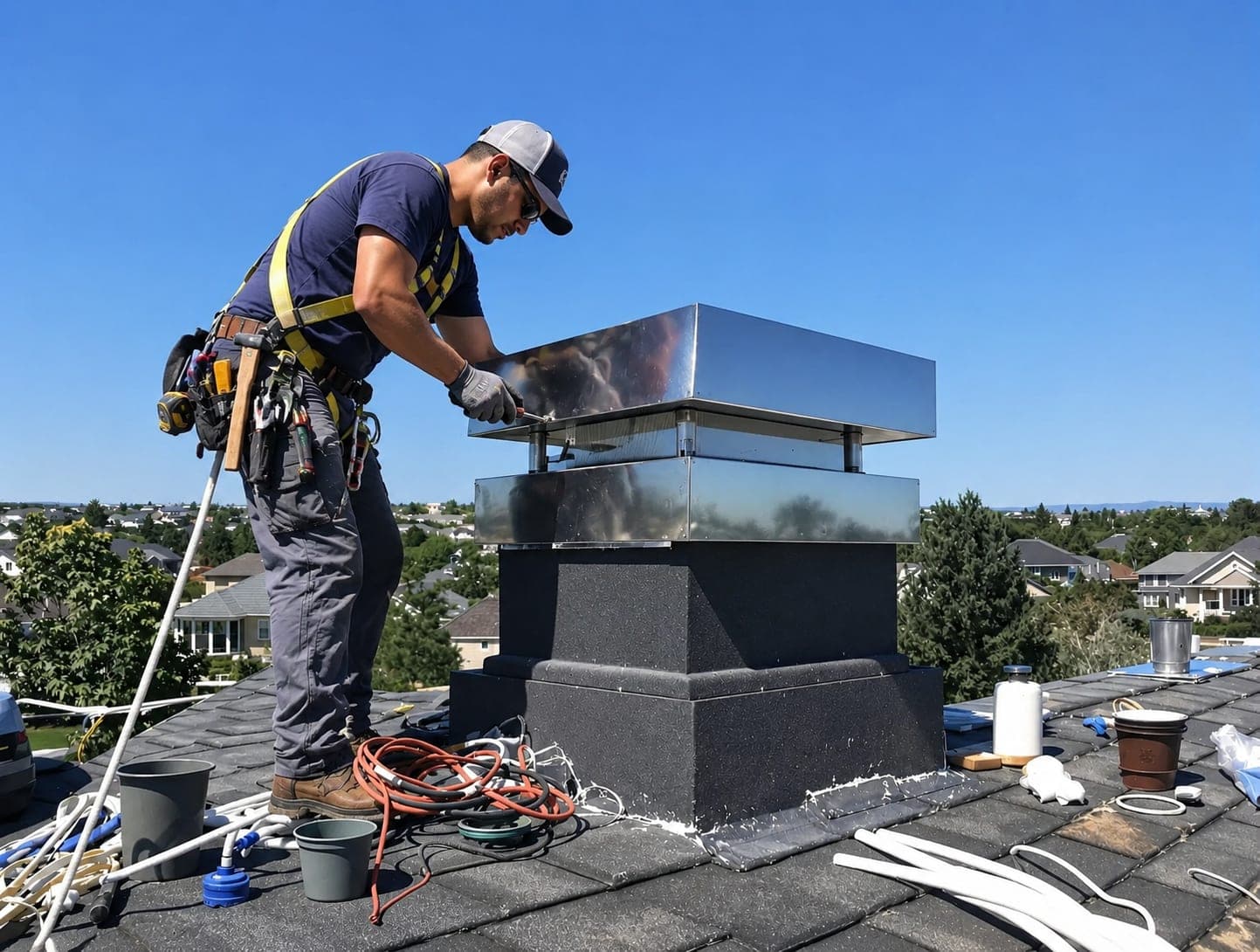
Many fireplaces built from factory-made parts run their metal flue pipe up through a wood-framed box clad in siding, called a chase. The chase cover is the metal pan that caps that box. The flue pipe passes through a hole in its center, and a chimney cap usually sits above it. The cover's job is simple: shed rain away from the framing, insulation and flue inside the chase.
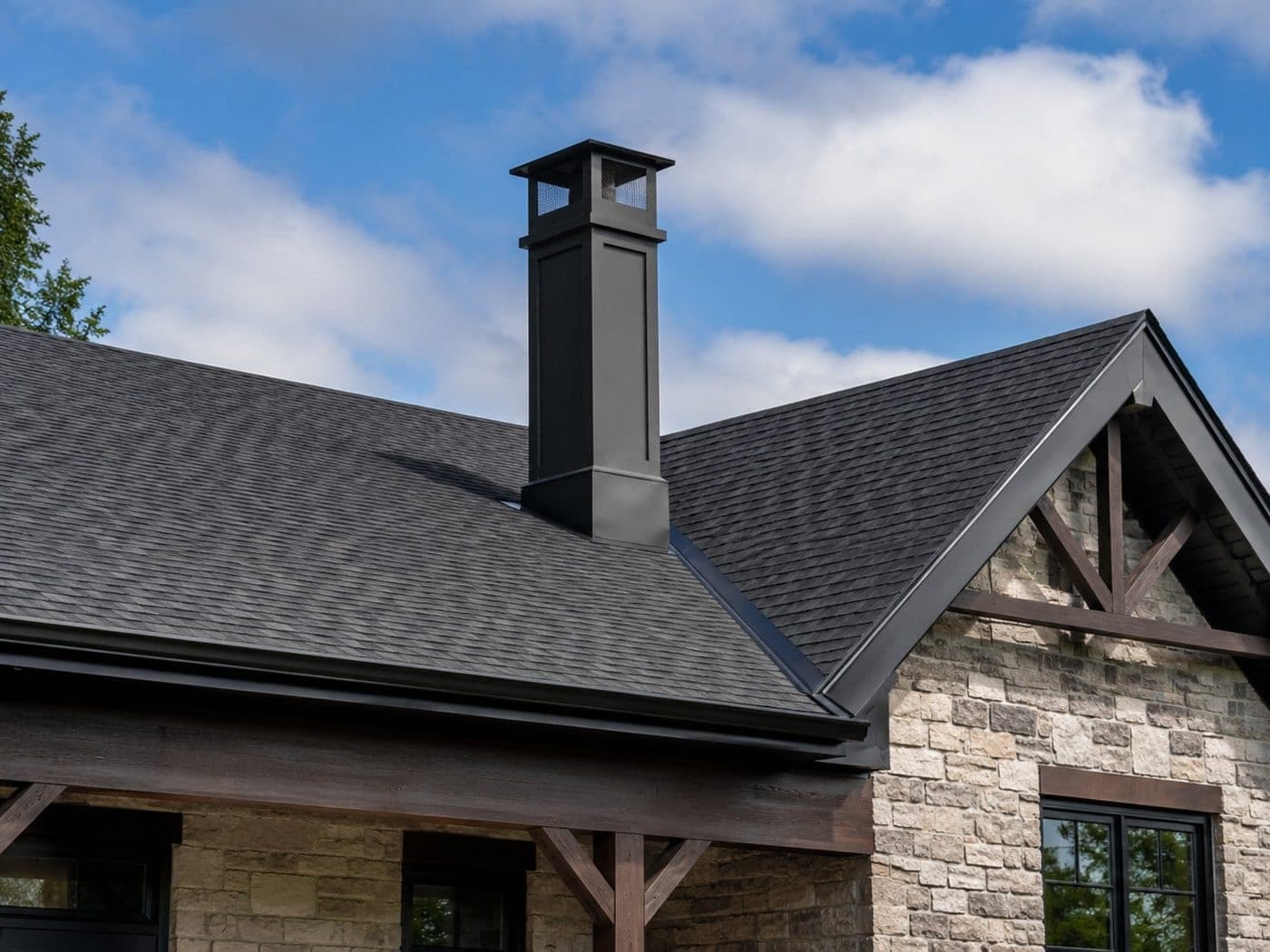
Chimney chase cover repair means fixing the cover you already have rather than replacing it. Typical work includes resealing seams and the joint around the flue, re-securing a cover that has worked loose, patching small corroded spots, resetting or resealing the storm collar where the flue passes through, and clearing debris that holds water on the surface. Repair suits a cover that is still sound overall. If the metal has rusted through in several places or the pan has sagged into a basin, our chase cover replacement service is the better fix.
Signs your chase cover needs attention
Common warning signs
- Rust streaks running down the siding below the top of the chimney
- Water stains on the ceiling or wall near the fireplace, or dampness inside the firebox
- A cover that dips in the middle and holds standing water after rain
- Visible holes, pinholes or flaking rust on the top of the pan
- Gaps or cracked sealant around the flue pipe or the storm collar
- Loose edges, missing fasteners or a cover that rattles in wind
- Rust or corrosion on the fireplace's metal parts, such as the damper or firebox panels
Some of these signs can also come from other problems. Leaks may start at the flashing or the siding, and rust inside the fireplace can point to a failing cap. That's why the visit starts with an inspection of the whole chimney top. If the trouble goes beyond the cover, our prefab chimney & chase repair work covers the chase framing, siding and flue system.
What the visit involves, step by step
How a chase cover repair visit runs
Look at the inside first
We check the fireplace, firebox and nearby ceiling and walls for water stains, rust or damp spots that show where water has been getting in.
Inspect the chimney top
On the roof we look at the cover's slope, seams, fasteners and metal condition, the storm collar, the sealant around the flue, and the chimney cap above it.
Explain repair versus replacement
We tell you whether the cover can be repaired or has reached the point where replacement makes more sense, and give you a free estimate before any work starts.
Make the repair
Depending on what we find, we clean the surface, seal seams and penetrations, re-fasten the cover, patch small damaged areas and reseal or reset the storm collar.
Check and walk you through it
We confirm water will shed off the cover and around the flue, then show you what was done and anything we noticed that should be watched.
Materials and how they wear
| Feature | Galvanized steel | Stainless steel or copper |
|---|---|---|
| How they usually fail | The protective coating wears off, then the steel rusts, often starting where water sits | Far more resistant to rust; problems tend to be loose fasteners, failed sealant or dents |
| Repair outlook | Good if rust is limited; widespread rust-through usually means replacement | Often repairable with resealing and re-securing |
| Shape matters | A flat pan pools water and rusts sooner | A cover sloped or crowned to shed water lasts longer |
How they usually fail
- Galvanized steel
- The protective coating wears off, then the steel rusts, often starting where water sits
- Stainless steel or copper
- Far more resistant to rust; problems tend to be loose fasteners, failed sealant or dents
Repair outlook
- Galvanized steel
- Good if rust is limited; widespread rust-through usually means replacement
- Stainless steel or copper
- Often repairable with resealing and re-securing
Shape matters
- Galvanized steel
- A flat pan pools water and rusts sooner
- Stainless steel or copper
- A cover sloped or crowned to shed water lasts longer
Keeping the chimney top in good shape
A sound cover and a good cap work together. The cap keeps rain, debris and animals out of the flue, and the cover keeps water out of the chase around it. If yours has no cap or a damaged one, our guide on do you need a chimney cap explains what it protects. Having the chimney top looked at during routine sweeping or inspection catches loose sealant and early rust while a repair is still enough.
Don't ignore a leaking chase
Water that gets past the cover can soak framing and insulation inside the chase and corrode the flue and fireplace parts. Damage there often goes unseen until stains show up indoors, so get a leak looked at early.
If your chimney is masonry rather than a framed chase, the top is protected by a crown instead of a metal cover. That falls under our chimney repair service. For bigger structural questions, our guide to chimney repair vs rebuild walks through the options.
Booking a chase cover repair
Call or request an estimate and tell us what you've noticed, such as rust streaks, a ceiling stain or a sagging top. If water is actively coming in, emergency calls are accepted, and 24-hour service runs Sunday–Friday. Commercial and property-manager work is offered too.