The short answer: repair first, rebuild when the structure fails
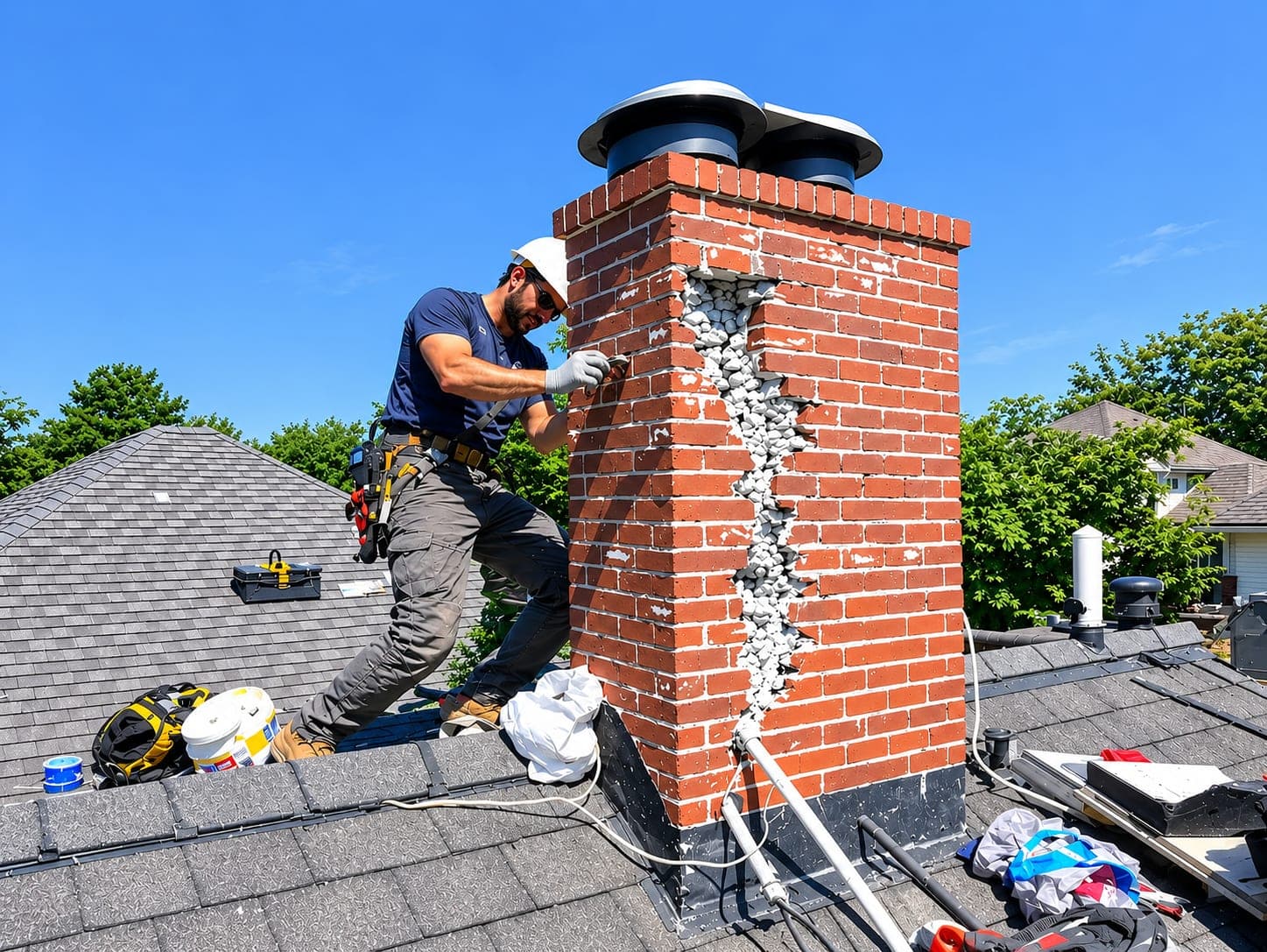
Repair fits when the damage is limited to specific parts: worn mortar joints, a cracked crown, failed flashing, a missing cap or a damaged liner. A rebuild fits when the brickwork can no longer hold itself together safely. Signs include a chimney that leans or has pulled away from the house, bricks that are loose across large areas, or mortar that has deteriorated deep into the wall rather than just at the surface.
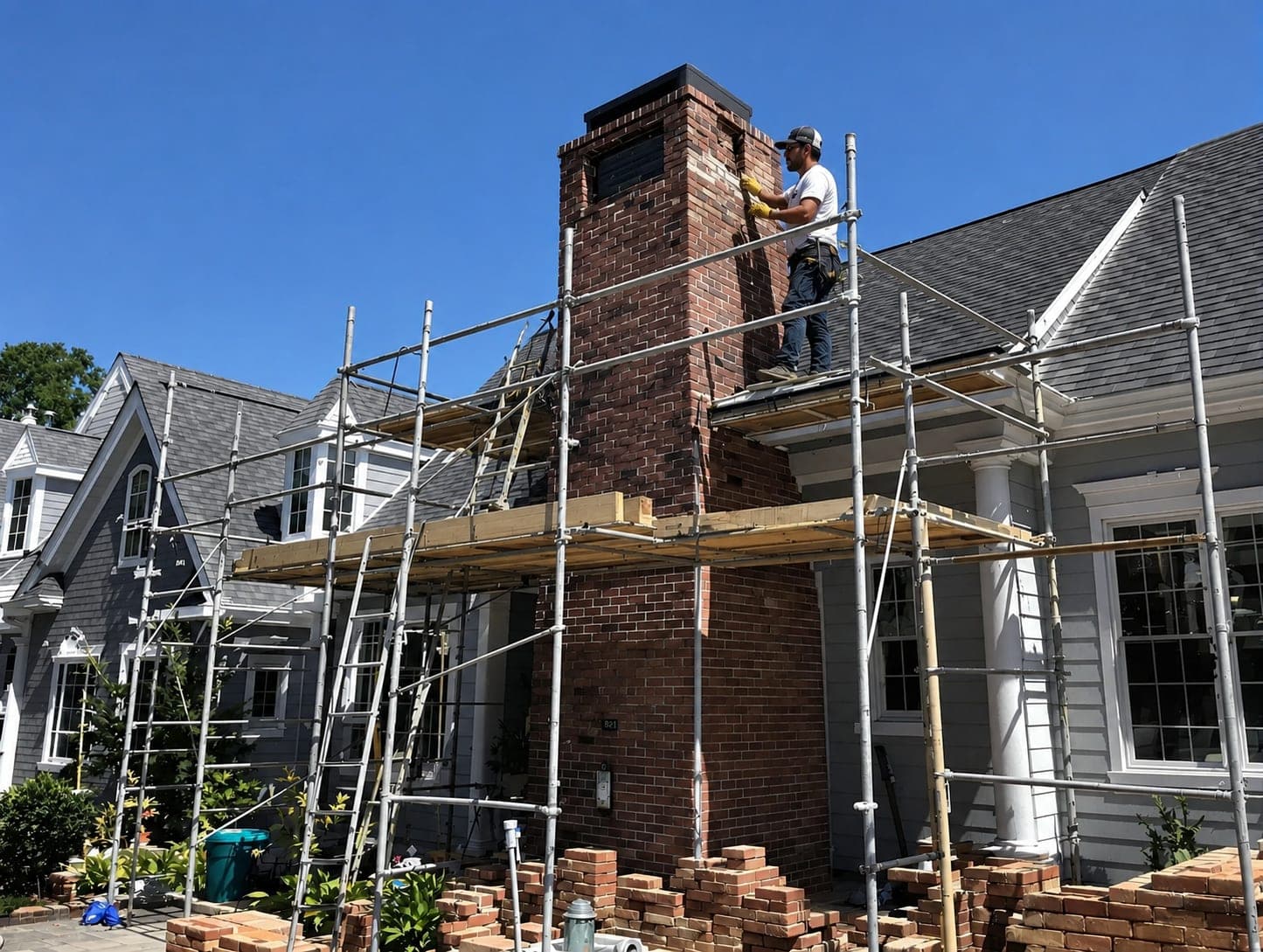
Many chimneys sit between the two. A partial rebuild takes the chimney down to sound masonry, often the section above the roofline, and relays it. The rest stays in place.
What chimney repair covers
Repairs target the parts that wear out first and leave the sound structure alone. Typical chimney repair work includes:
- Tuckpointing: grinding out failed mortar joints and packing in fresh mortar.
- Crown repair: sealing or recasting the concrete or mortar cap on top of the masonry, which sheds water away from the flue.
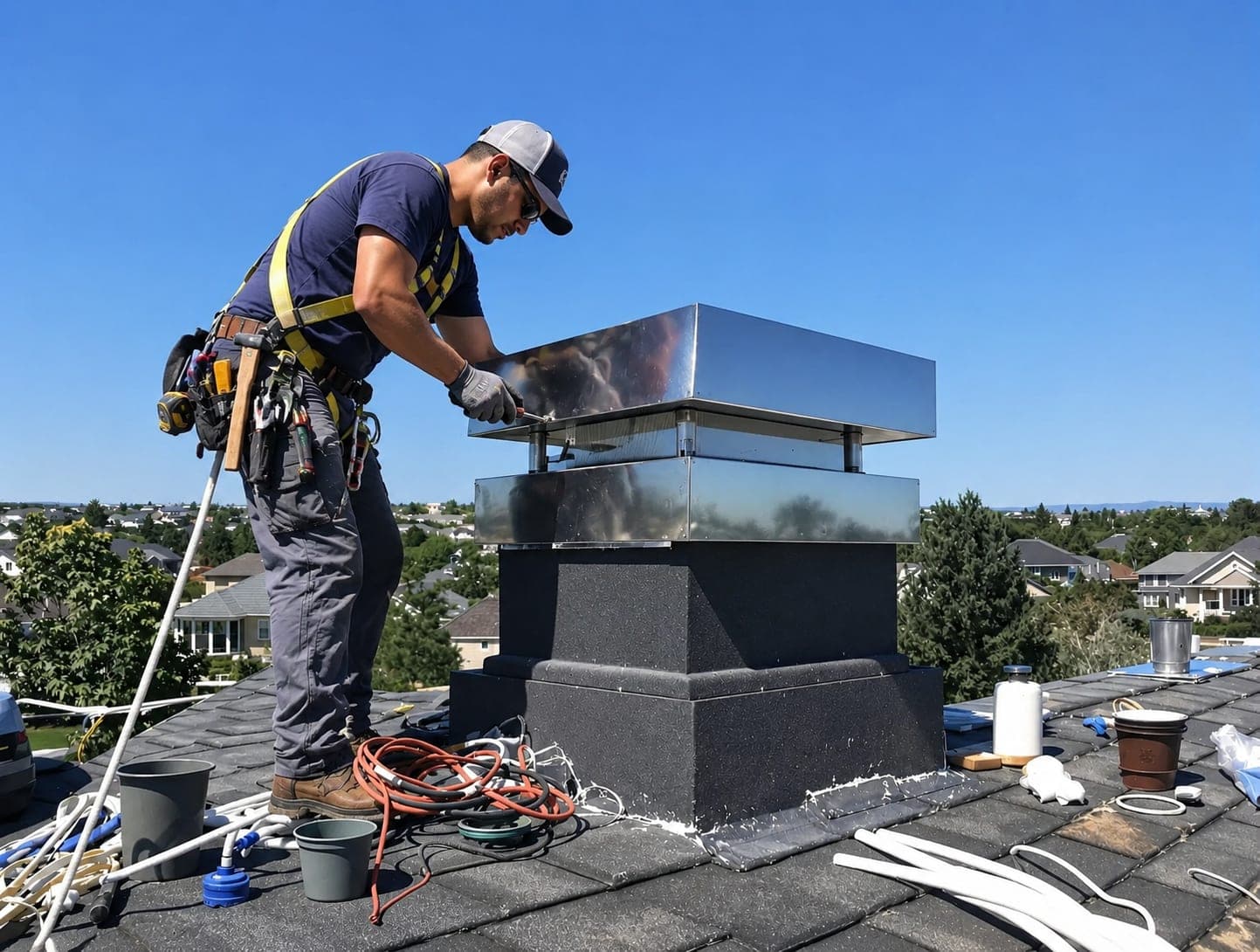
- Flashing repair: resealing or replacing the metal where the chimney meets the roof. This is a common source of leaks.
- Brick replacement: swapping out individual cracked or spalled bricks.
- Waterproofing: applying a breathable water repellent to sound masonry.
- Cap and liner work: keeping rain and animals out of the flue and protecting the inside of the chimney.
If water is the main complaint, the cause is often one of these smaller items. Knowing what causes chimney leaking when it rains helps narrow it down. A missing or damaged cap is one of the usual causes, so it's worth asking do you need a chimney cap before assuming the masonry is the problem.
What a chimney rebuild involves
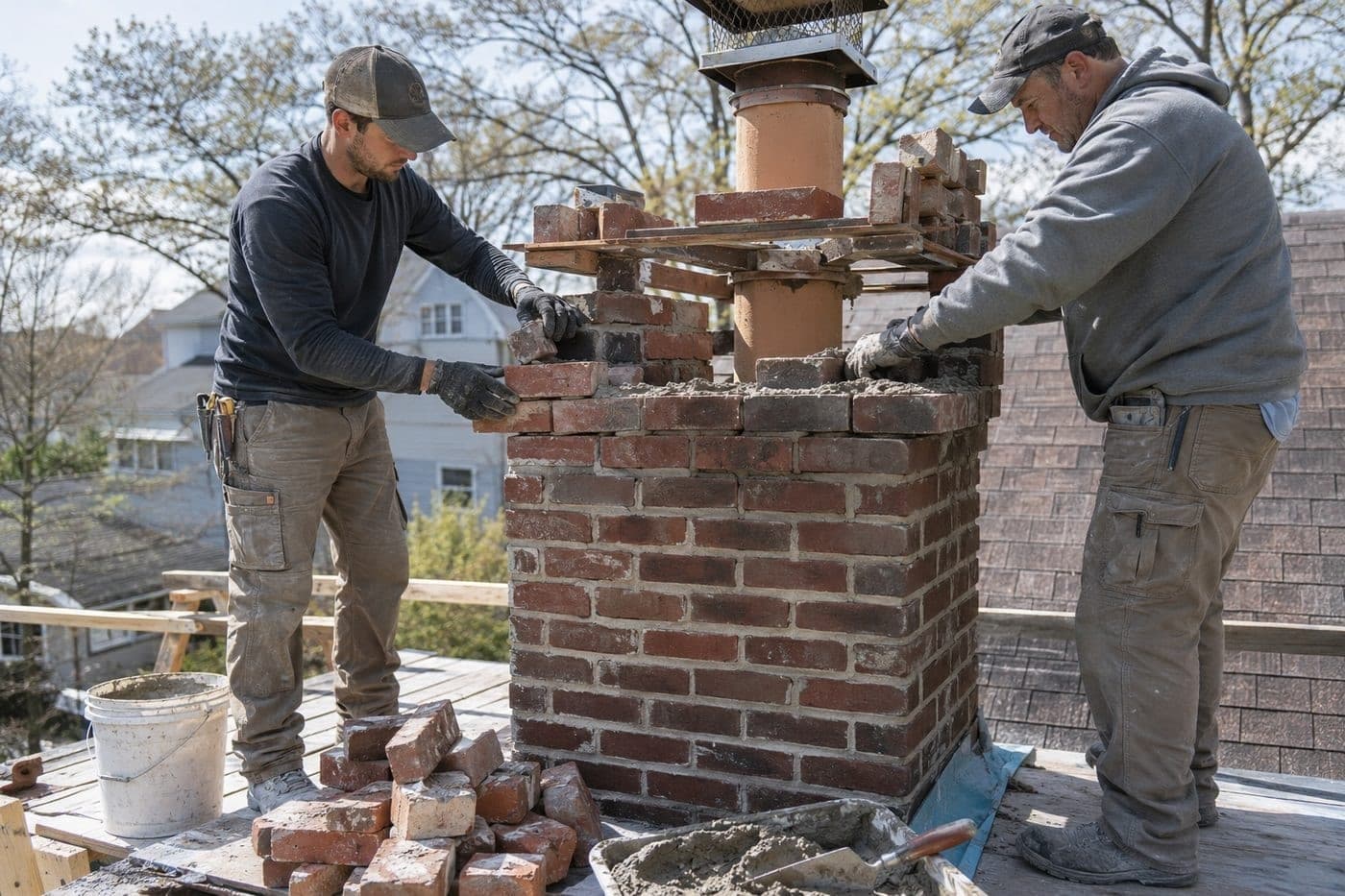
A rebuild means taking the masonry down brick by brick to a solid point and relaying it with new mortar. Depending on condition, the old bricks may be reused or replaced. A new crown is formed, and flashing is reinstalled where the chimney meets the roof. The scope varies:
| Feature | Partial rebuild | Full rebuild |
|---|---|---|
| How much comes down | Only the damaged upper section, often above the roofline | The chimney down to its foundation or firebox level |
| When it fits | Damage concentrated where weather exposure is highest | Damage runs through the whole stack, or the chimney is leaning or separating |
| What stays | Sound lower masonry and firebox | Usually little of the original structure |
How much comes down
- Partial rebuild
- Only the damaged upper section, often above the roofline
- Full rebuild
- The chimney down to its foundation or firebox level
When it fits
- Partial rebuild
- Damage concentrated where weather exposure is highest
- Full rebuild
- Damage runs through the whole stack, or the chimney is leaning or separating
What stays
- Partial rebuild
- Sound lower masonry and firebox
- Full rebuild
- Usually little of the original structure
The details of each stage are laid out in how a chimney rebuild works.
Signs that point to each option
| What you see | Usually points to |
|---|---|
| Crumbling or recessed mortar in some joints | Repair (tuckpointing) |
| Cracked crown or water stains near the fireplace | Repair (crown, flashing or cap) |
| A few cracked or flaking bricks | Repair (brick replacement) |
| Widespread spalling, with brick faces popping off over large areas | Partial rebuild |
| Loose bricks you can move by hand at the top of the stack | Partial rebuild |
| Chimney leaning, or a gap between chimney and house wall | Rebuild, after inspection |
| Cracks running through bricks, not just mortar, over a wide area | Rebuild, after inspection |
A leaning or separating chimney is a safety issue
If the chimney is visibly leaning, has pulled away from the wall, or is dropping bricks, keep people away from the area below it. Don't use the fireplace until it has been inspected.
What helps you decide
Questions to ask before choosing
- Is the damage in a few spots, or spread across most of the visible masonry?
- Is the problem water getting in, or the structure coming apart?
- Has the chimney been repaired many times, with problems returning each time?
- Does the inside of the flue match what you see outside? A camera inspection can show cracks you can't see from the roof.
- Would repeated repairs end up disturbing as much masonry as a partial rebuild?
An inspection settles most of these questions. Looking at the mortar depth, the crown, the flashing and the flue shows whether chimney masonry repair will hold or whether the section needs to come down and be relaid.
We handle inspections, chimney and masonry repair, crown work, tuckpointing and full or partial rebuilds, and estimates are free.