On this page
What chimney masonry repair involves
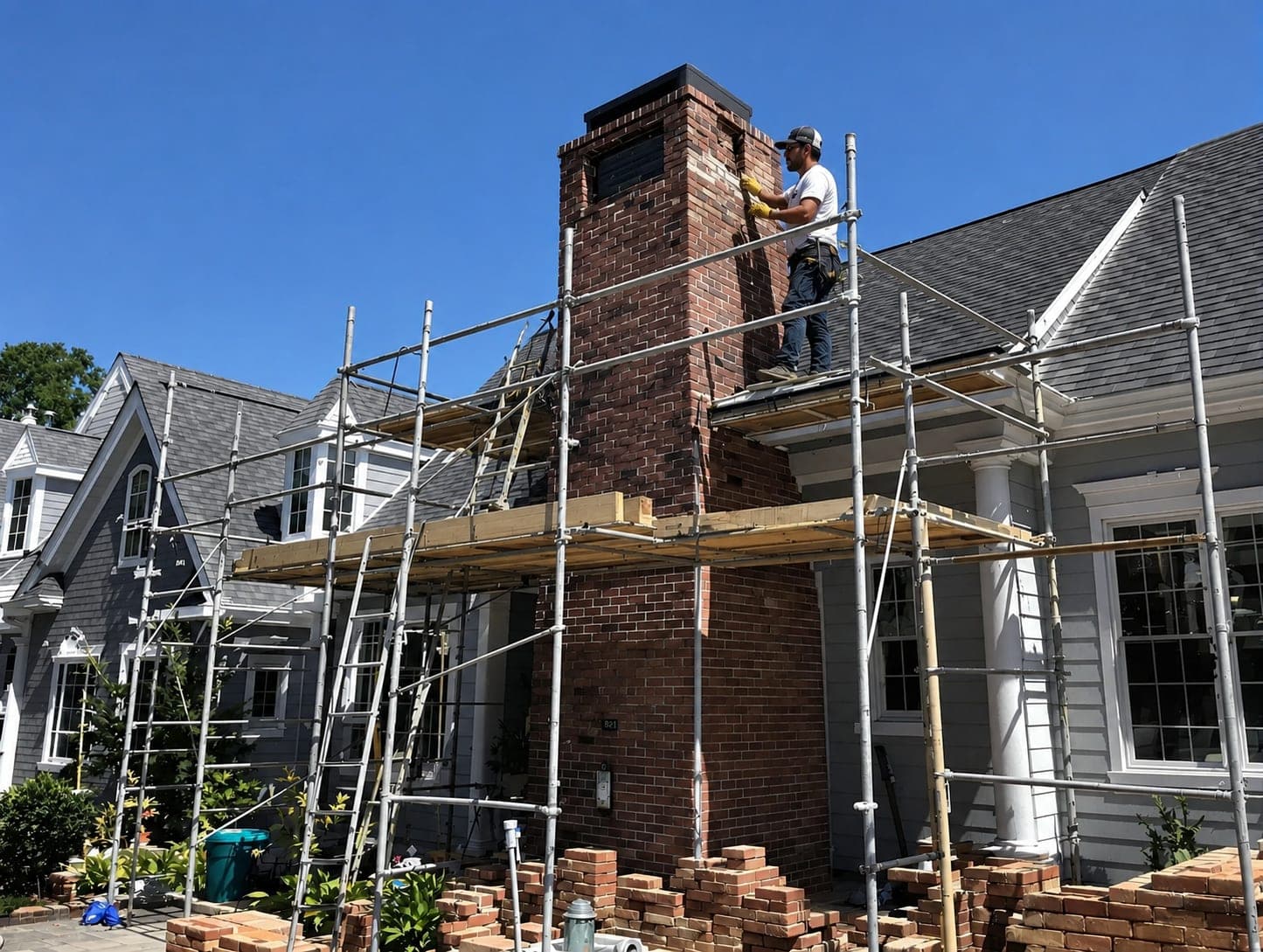
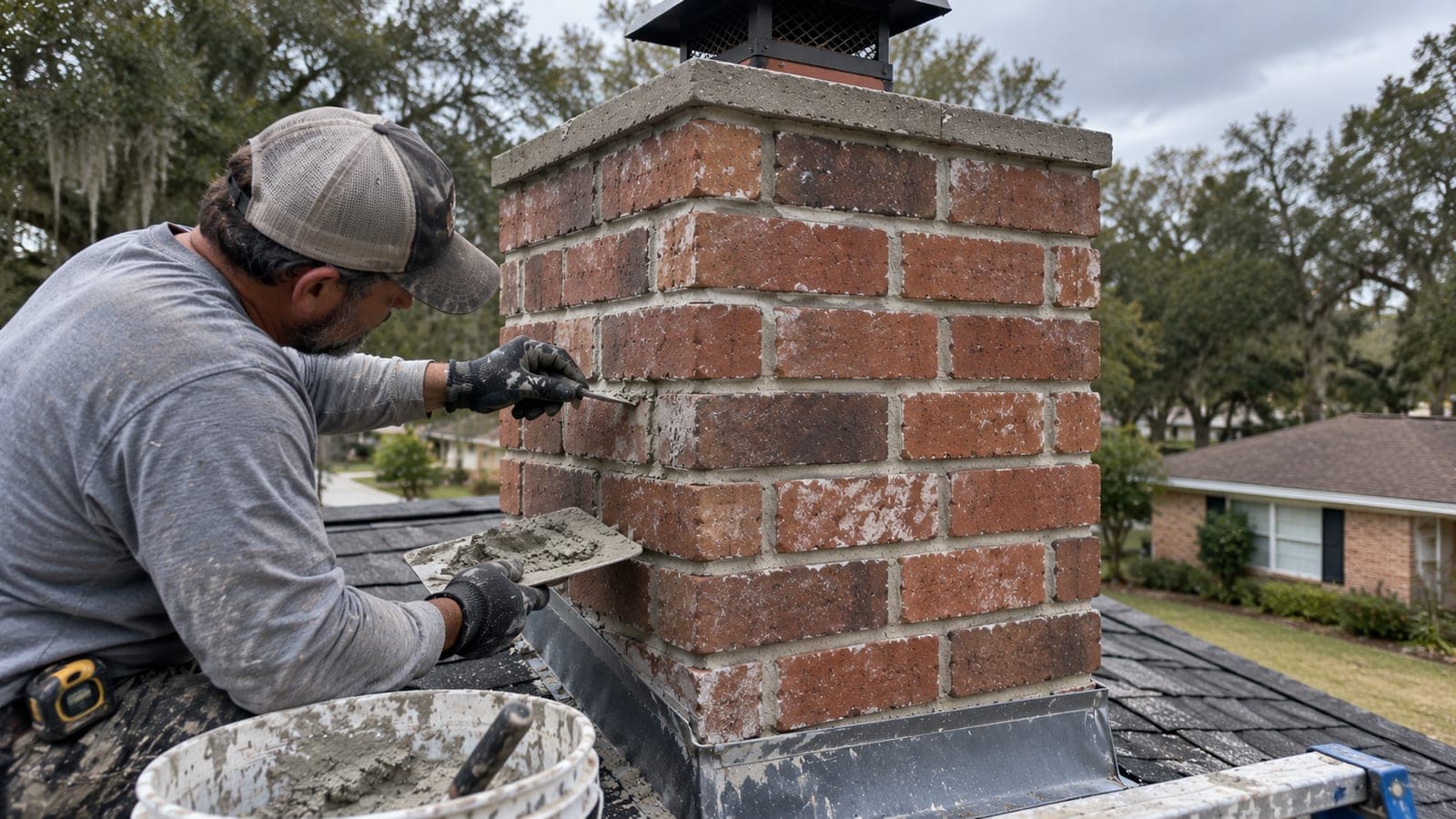
Chimney masonry repair fixes the brick, mortar and cement parts of a chimney. That can mean replacing cracked or spalling brick, cutting out and refilling worn mortar joints (tuckpointing), repairing or recasting the crown, or rebuilding a section that has loosened. The aim is a chimney that keeps water out and holds together, because most masonry damage starts with moisture getting into the brick and joints.
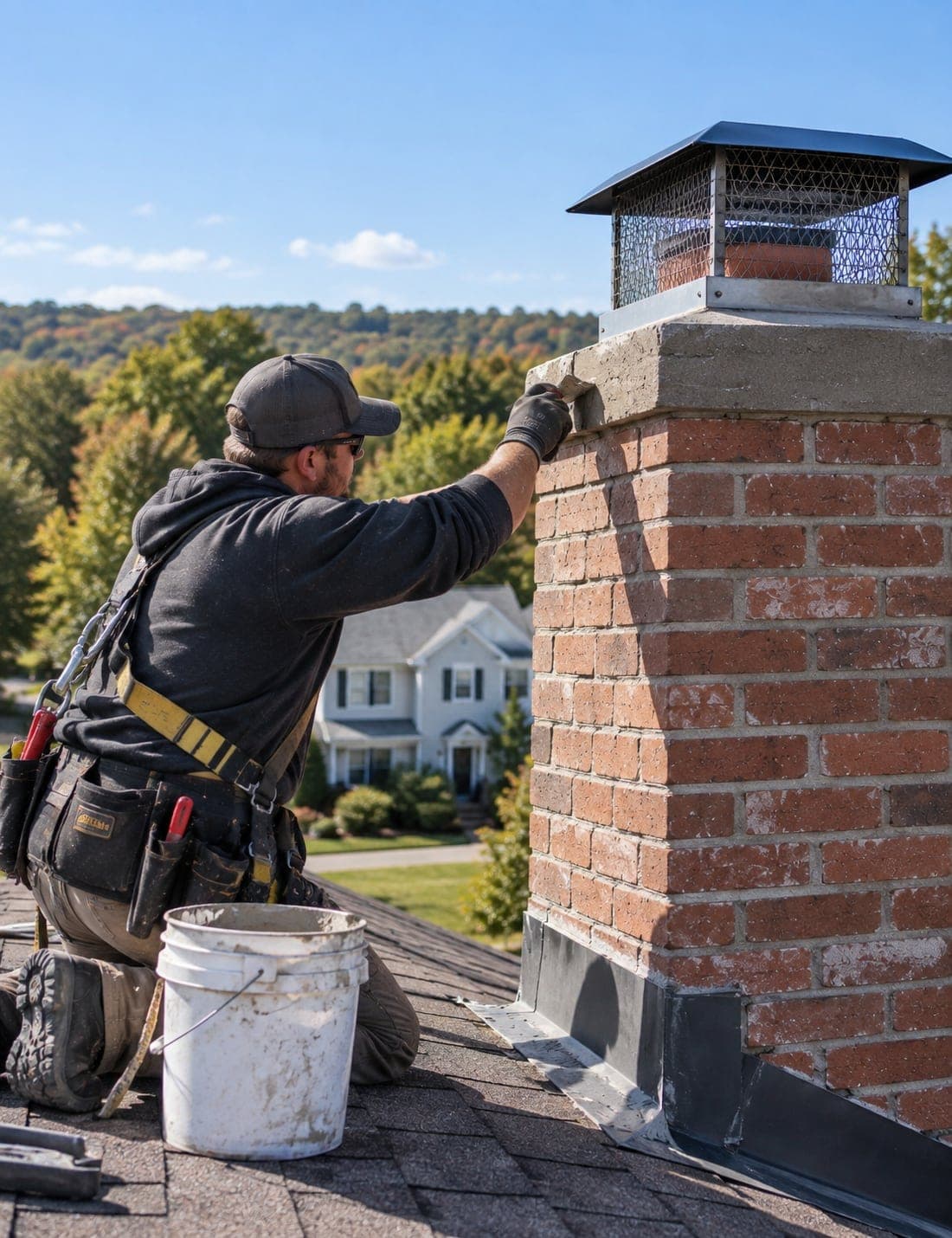
Repair suits damage that is limited to part of the stack. When large areas are loose, leaning or crumbling, rebuilding from the roofline up can be the more sensible fix. Our guide to chimney repair vs rebuild explains how that decision is usually made.
Signs your chimney needs masonry work
Common signs of masonry damage
- Mortar joints that are recessed, sandy or crumbling when touched
- Brick faces flaking, popping off or crumbling (spalling)
- Cracks running through bricks or along mortar lines
- A crown that is cracked, chipped or pulling away from the flue
- Pieces of brick, mortar or tile on the roof, in the firebox or at the base of the chimney
- White, powdery staining (efflorescence) on the brick
- Water stains on the ceiling or wall next to the chimney
- A chimney that looks like it is leaning or separating from the house
Cracked chimney repair
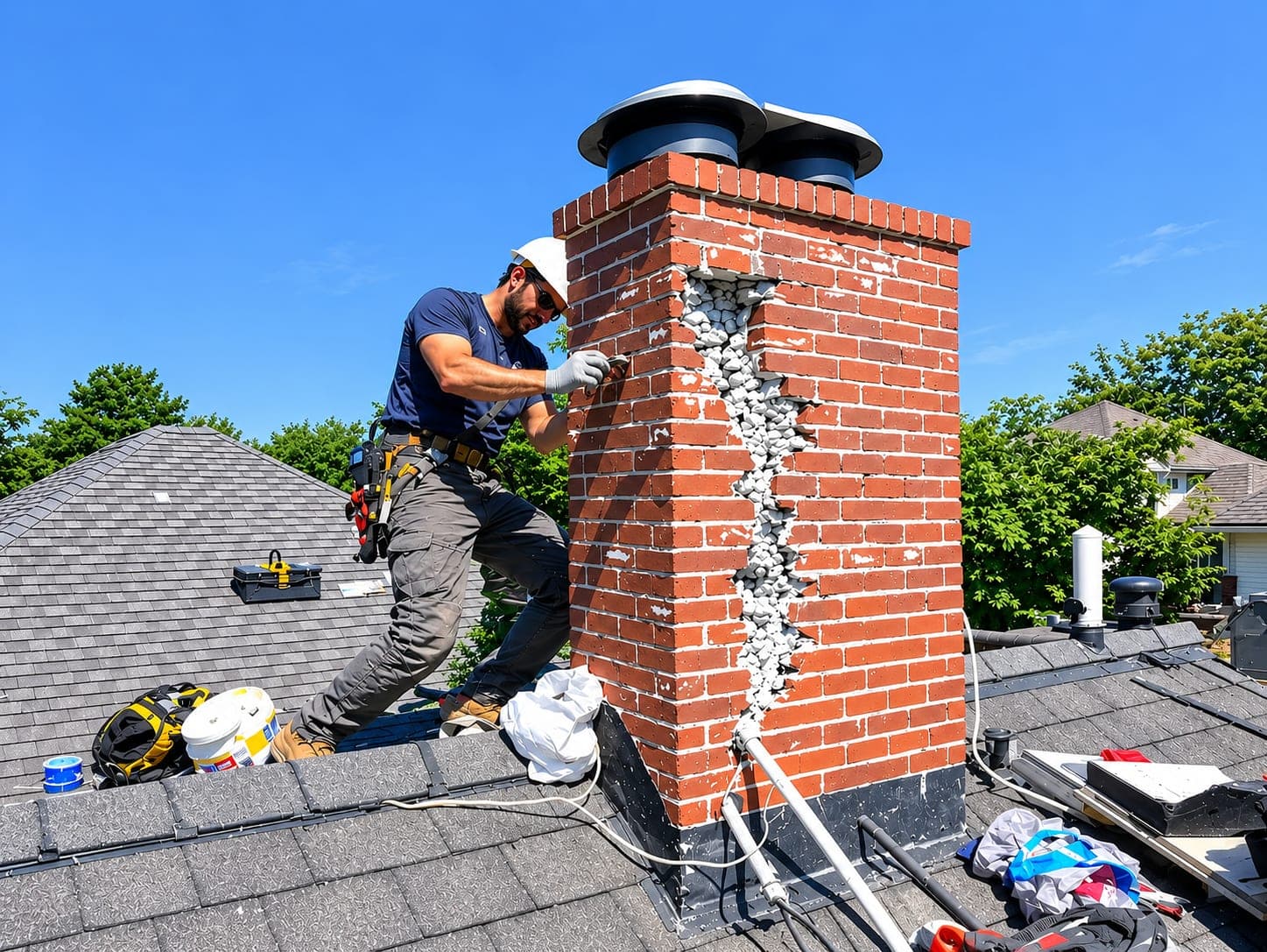
Cracks in chimney brick come from water freezing and expanding inside the masonry, from settling, from heat stress and from long-term moisture. Hairline cracks in mortar joints are often handled by tuckpointing. Cracked or broken bricks are cut out and replaced. Cracks that run up through many courses, or that come with movement or leaning, point to a structural problem and may need a partial rebuild. We check which kind of crack you have before recommending a fix.
Chimney crown damage
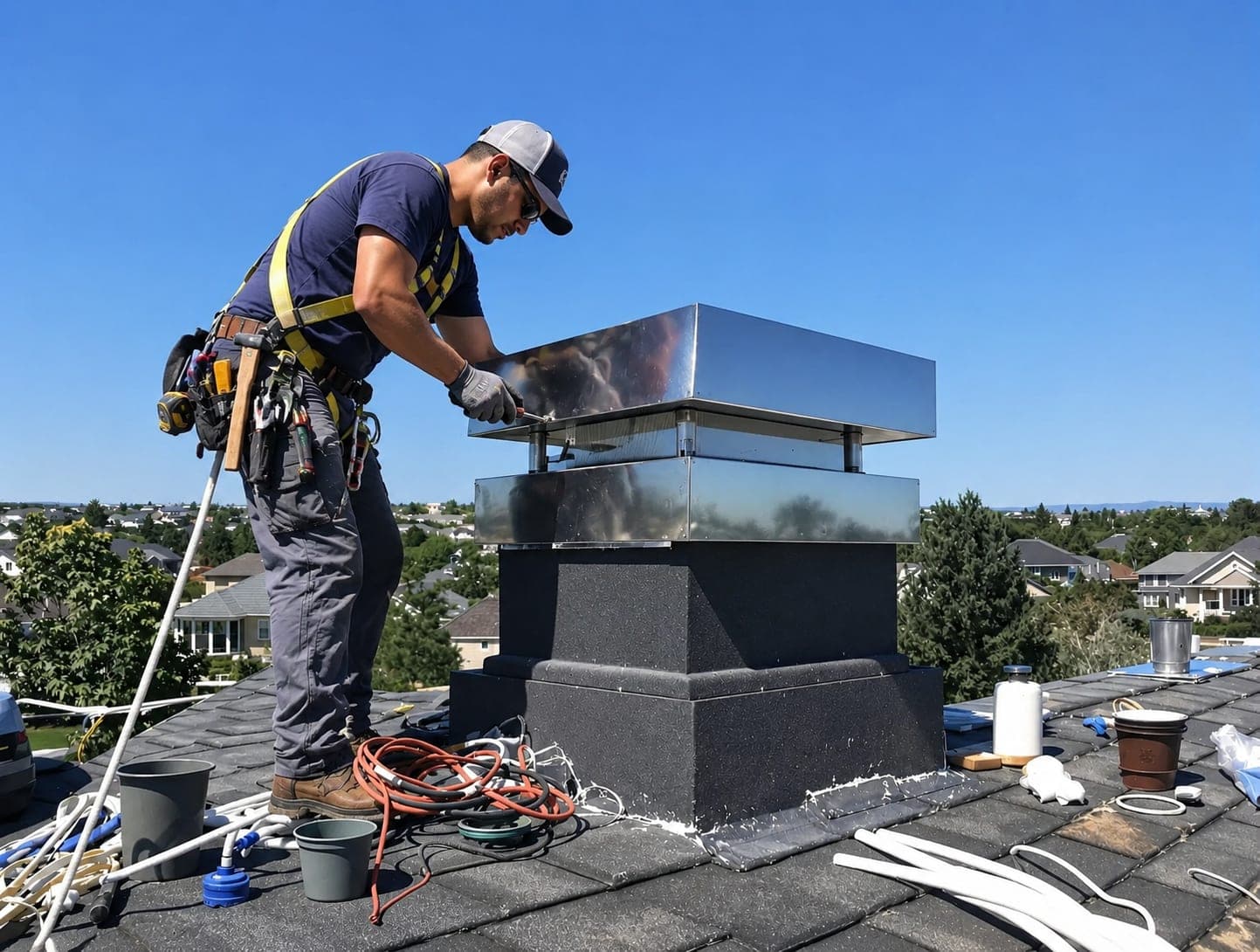
The crown is the cement slab that covers the top of a masonry chimney around the flue. Its job is to shed rain away from the brick. Crowns crack from age and weather, and many were built from ordinary mortar that was never meant for that exposure. Small cracks can be sealed. A crown that is broken up or has no overhang to drip water clear of the brick is usually removed and recast. Factory-built chimneys use a metal cover instead of a crown, and those are handled through our chase cover replacement service.
Chimney liner damage
The liner is the inner flue, often clay tile in a masonry chimney, that carries smoke and heat up and away from the brick. Cracked tiles, gaps in the joints between tiles, or a missing liner let heat and combustion byproducts reach the masonry and nearby framing. Liner damage is hard to see from the top or bottom of the flue, so we use a camera inspection to look along its length. Depending on what we find, the fix is liner repair or a new liner installation.
Chimney fire damage repair
A chimney fire can crack flue tiles, break down mortar joints inside the flue, and damage the crown, cap or damper. Some chimney fires are loud and obvious. Others burn quietly and are only found later. Signs include puffy or flaky creosote, warped metal parts, cracked tiles, or pieces of tile in the firebox. After a suspected chimney fire, we inspect the flue with a camera, then repair or replace the liner and rebuild any damaged masonry before the fireplace goes back into use.
After a chimney fire, stop using the fireplace
Don't light another fire until the flue has been inspected. A cracked liner can let heat reach the framing around the chimney, even if the outside brick looks fine.
The materials and components we work on
| Component | What goes wrong | Typical repair |
|---|---|---|
| Brick | Cracking, spalling, loose units | Cut out and replace damaged brick |
| Mortar joints | Erosion, crumbling, gaps | Tuckpointing: grind out and repoint |
| Crown | Cracks, chips, no drip edge | Seal small cracks or recast the crown |
| Flue liner | Cracked or missing tiles, open joints | Liner repair or new liner installation |
| Smoke chamber and firebox | Cracked or missing mortar, loose brick | Parge or rebuild with heat-rated material |
| Flashing and cap | Gaps at the roofline, missing cap | Reseal flashing, install or replace cap |
Brick masonry repair
Good brick masonry repair matches the materials to the chimney. Replacement brick should be close in size, color and hardness to the original. Mortar should be softer than the brick around it so that it, not the brick, takes the wear over time. Mortar that is too hard can crack the surrounding brick as the chimney expands and contracts. Inside the firebox and smoke chamber, we use heat-rated materials rather than standard mortar.
What the visit involves, step by step
How a masonry repair visit runs
Look at the whole chimney
We check the brick, joints, crown, flashing and cap from the roof, and the firebox and damper from inside.
Check the flue
Where cracking or fire damage is suspected, we run a camera up the flue to see the liner's condition.
Explain what we found
You get a plain explanation of the damage, what it's caused by, and the repair options, including whether repair or a rebuild makes more sense.
Free estimate
We give you a free estimate for the work before anything starts.
Do the repair
Damaged brick and mortar are cut out, new material is matched and set, and the crown is sealed or recast as needed.
Clean up and review
We clear debris from the roof and work area and walk you through what was done.
Keeping repaired masonry dry
Most masonry damage is water damage, so protecting the top of the chimney matters as much as the repair. A cap keeps rain out of the flue and off the inside of the crown. If you're unsure whether yours needs one, read do you need a chimney cap. If birds or animals have been getting in, a cap with mesh is worth adding, and how chimney animal screen installation works covers that job.
If water is already showing up inside the house, the leak may come from flashing, the crown or the brick itself. Our chimney leak repair service traces where it's getting in, and it's often done along with masonry work.
Booking chimney masonry repair
Get in touch to request an estimate. Commercial and property-manager work is offered as well.