On this page
What chimney tuckpointing involves
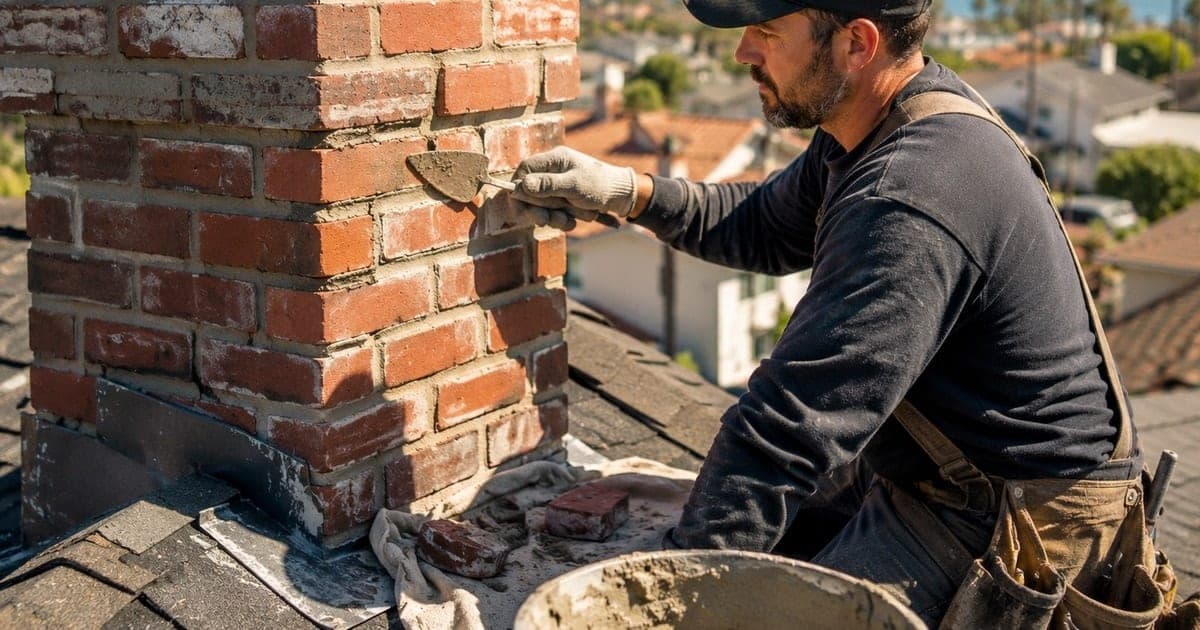
Brick lasts a long time, but the mortar holding it together wears out much sooner. Chimney tuckpointing, often called chimney repointing, means cutting out deteriorated mortar to an even depth and refilling the joints with new mortar. The bricks stay in place. Only the joints are renewed.
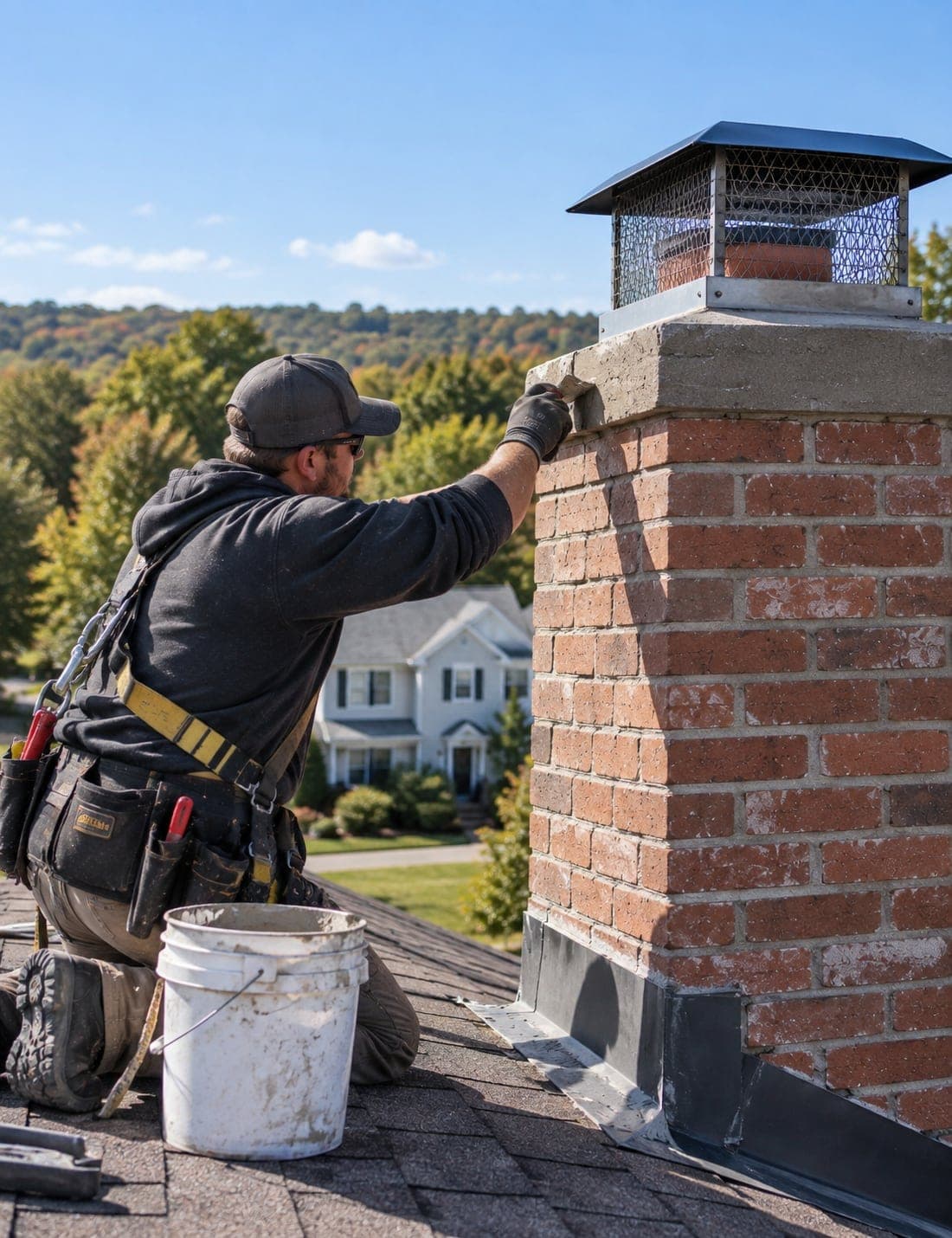
Done well, it does three jobs. It closes the gaps that let water soak into the masonry. It restores the bond that keeps bricks from shifting. It also gives the chimney a clean, uniform look again. Originally, tuckpointing included a thin contrasting line pressed into each joint. Today most people use the word for any repointing of worn joints, and that is the work described here.
Mortar choice matters
New mortar should suit the brick it sits against. As a general rule, repointing mortar should not be harder or less flexible than the surrounding brick. Mortar that is too hard can push stress into the bricks and cause their faces to crack or flake. We look at the existing brick and mortar before choosing a mix, and we match color and joint shape as closely as practical.
Signs your chimney needs repointing
Mortar breaks down gradually, so the early signs are easy to miss from the ground. Look for these from a safe vantage point or in photos:
Mortar warning signs
- Joints that have sunk back from the brick face, leaving visible ledges
- Mortar that crumbles, powders or rubs away when touched
- Hairline or open cracks running along the joints
- Small gaps or holes where mortar has fallen out entirely
- White, chalky staining (efflorescence) on the brick, which points to water moving through the masonry
- Water stains on ceilings or walls next to the chimney
- Bits of mortar or grit collecting on the roof, in gutters or in the firebox
When repointing is not enough
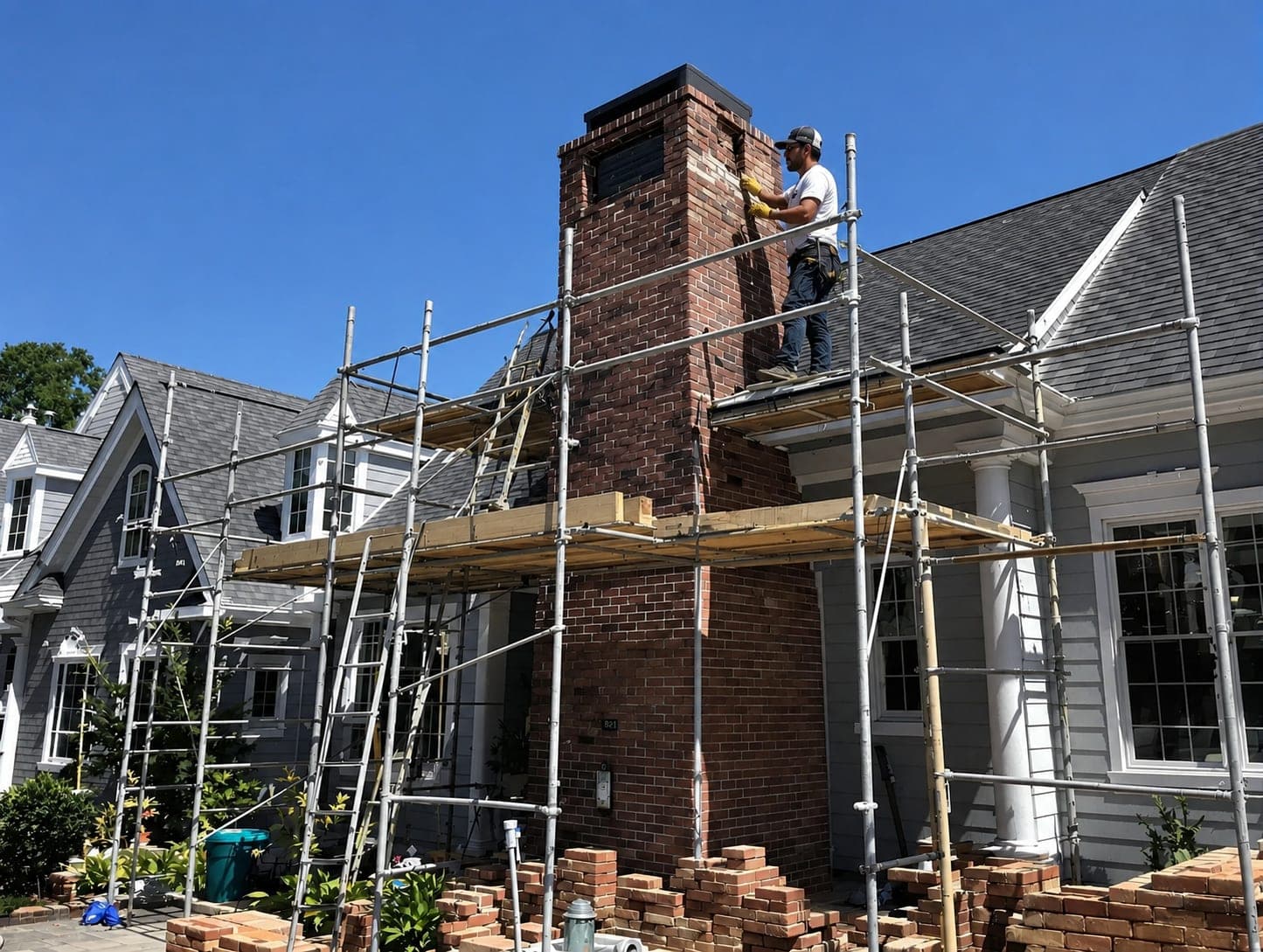
Tuckpointing fixes joints, not structure. If bricks are loose, leaning, cracked through or falling out, the chimney may need sections rebuilt. Our guide on chimney repair vs rebuild explains how that decision is made. After looking at your chimney, we will tell you plainly which one it needs.
Leaks do not always come from mortar. A cracked crown, failed flashing or an uncapped flue can let in just as much water. If your chimney is leaking, we check those areas too, and our chimney leak repair service covers the fixes that go beyond the joints.
What the visit involves, step by step
How a tuckpointing job is done
Look over the chimney
We inspect the brickwork, crown, flashing and top of the flue to confirm that the mortar is the problem and to see how many joints need work.
Protect the area
Roofing, landscaping and nearby surfaces are covered so mortar dust and debris stay contained.
Remove the worn mortar
Old mortar is cut or raked out to a consistent depth, without chipping the brick edges.
Clean the joints
Dust and loose material are cleared out so the new mortar bonds to sound surfaces.
Pack in new mortar
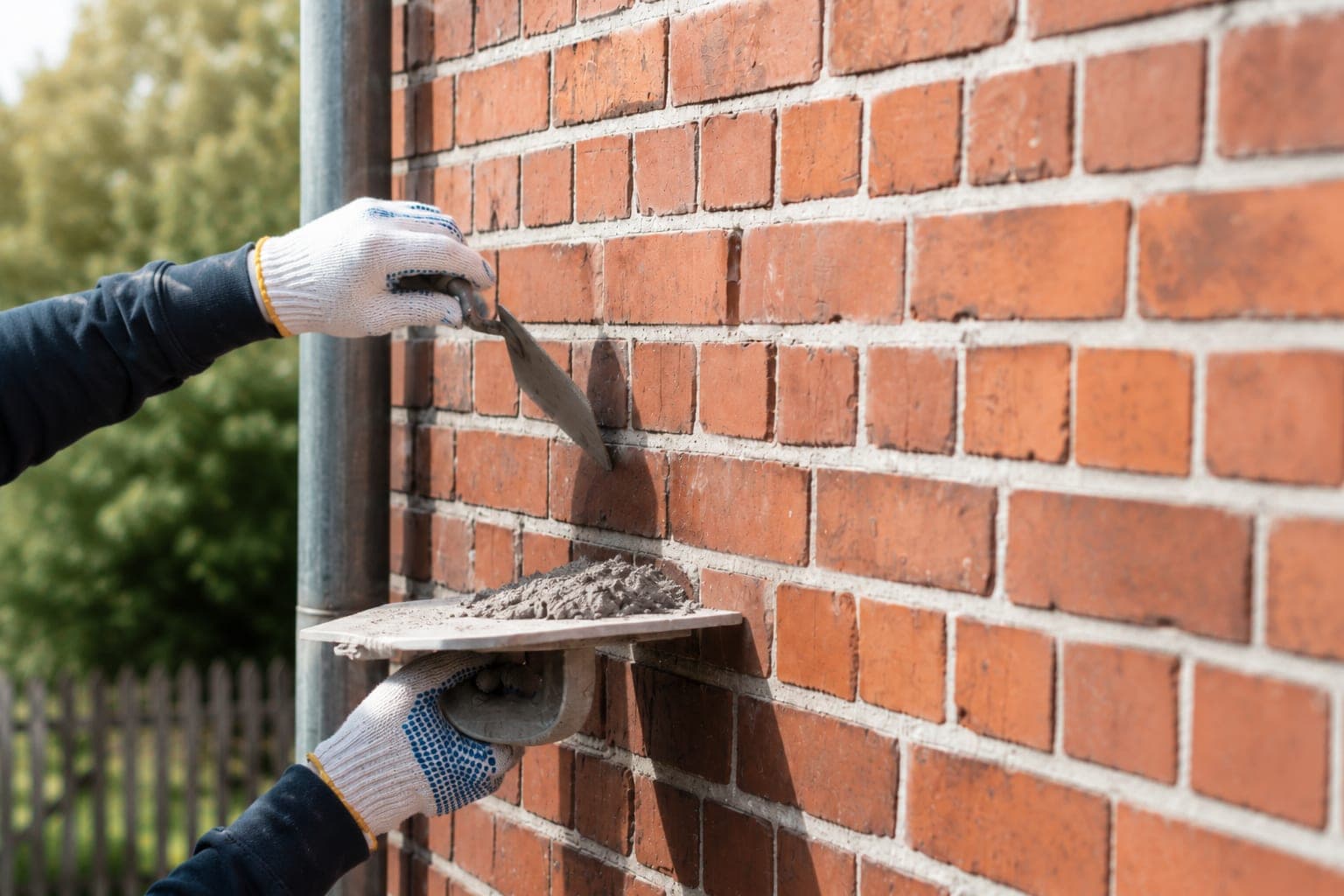
Mortar is pressed into the joints in layers, which helps it cure solid instead of leaving hollow pockets.
Tool and finish
Each joint is shaped to match the existing profile and to shed water, and excess mortar is cleaned off the brick faces.
Walk you through it
We show you what was done, point out anything else we noticed, and explain how the new mortar should be treated while it cures.
Keeping the mortar sound afterward
The best way to make repointing last is to limit how much water reaches the masonry. A properly sized cap keeps rain out of the flue and off the inner brickwork. If you are unsure whether yours is doing its job, read about whether you need a chimney cap. Where birds or animals are a concern, chimney animal screen installation can be handled on the same visit.
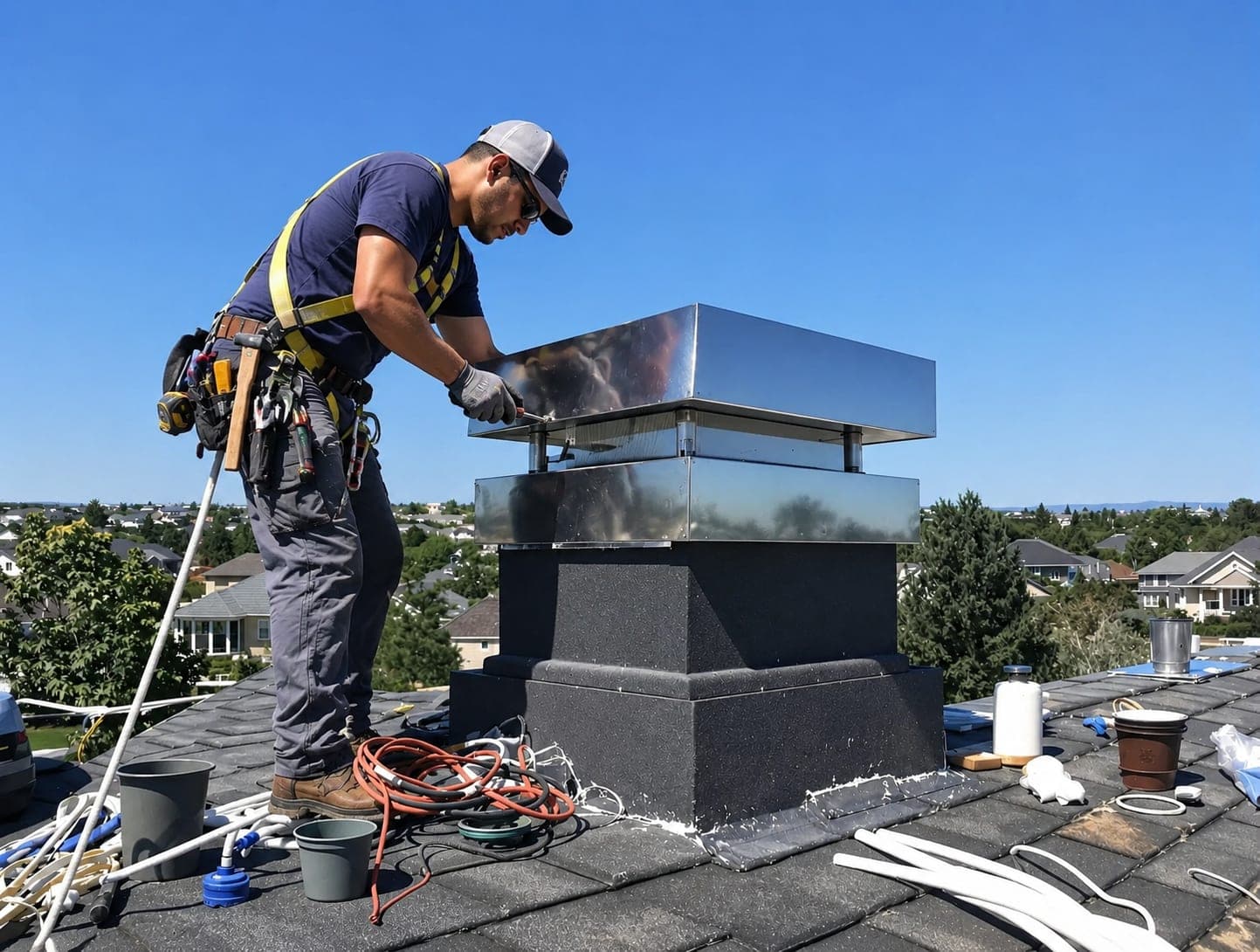
Not every chimney has mortar joints. Prefab chimneys are often enclosed in a framed chase with siding, and the part that keeps water out is a metal cover over the top. If that is what your home has, chase cover replacement is the more likely fix.
Booking chimney tuckpointing
We also take on commercial and property-manager work, so multi-unit buildings and rentals are welcome. Call or request an estimate, and tell us what you have noticed, such as crumbling joints, stains, debris or a leak. That helps us plan the visit.