On this page
What chimney waterproofing is and what it involves
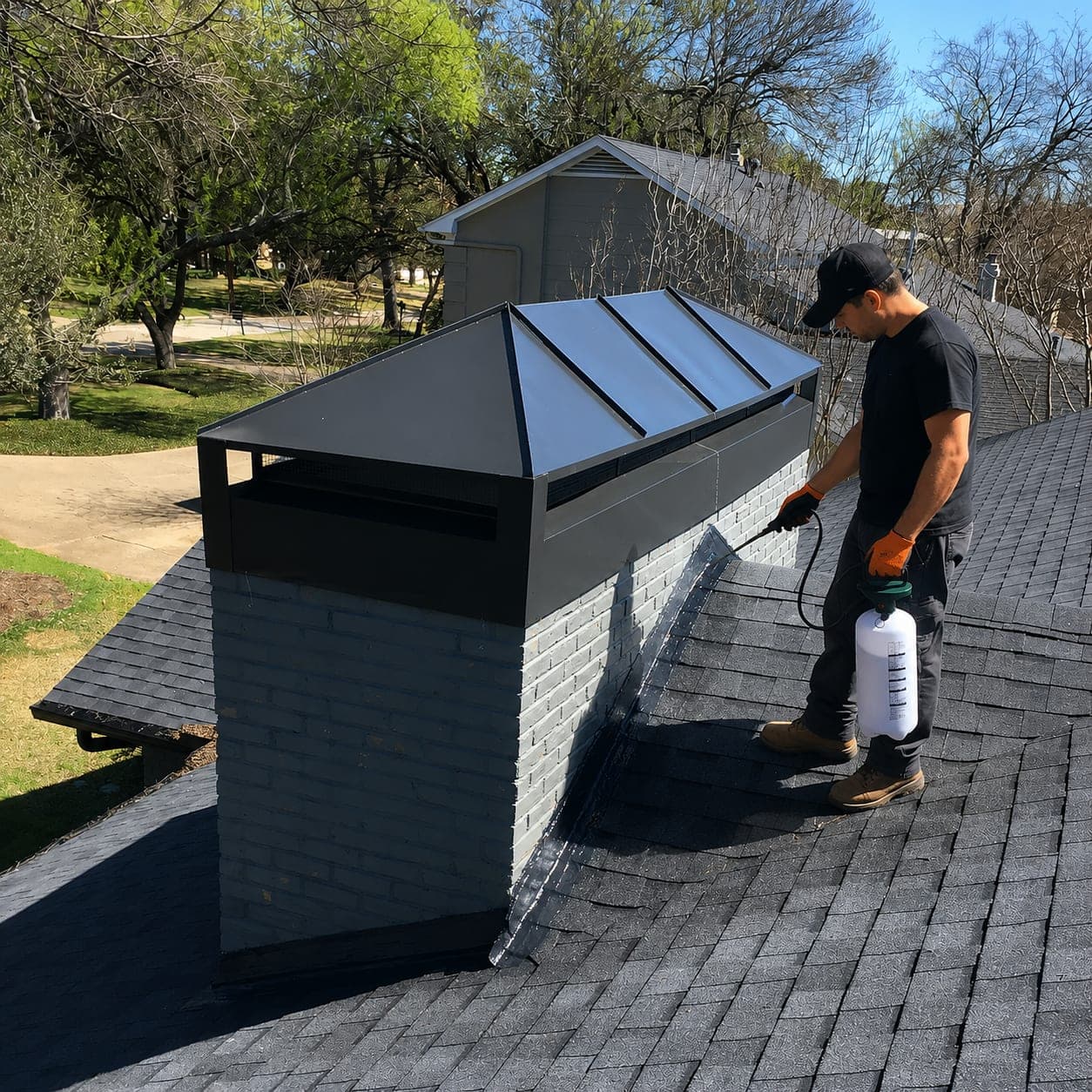
Chimney waterproofing means applying a breathable water repellent to the exterior masonry. The product keeps liquid water out of the brick and mortar but still lets water vapor escape from inside. That matters: a coating that traps moisture, such as ordinary paint or a non-breathable sealer, can cause the brick face to flake and pop off over time.
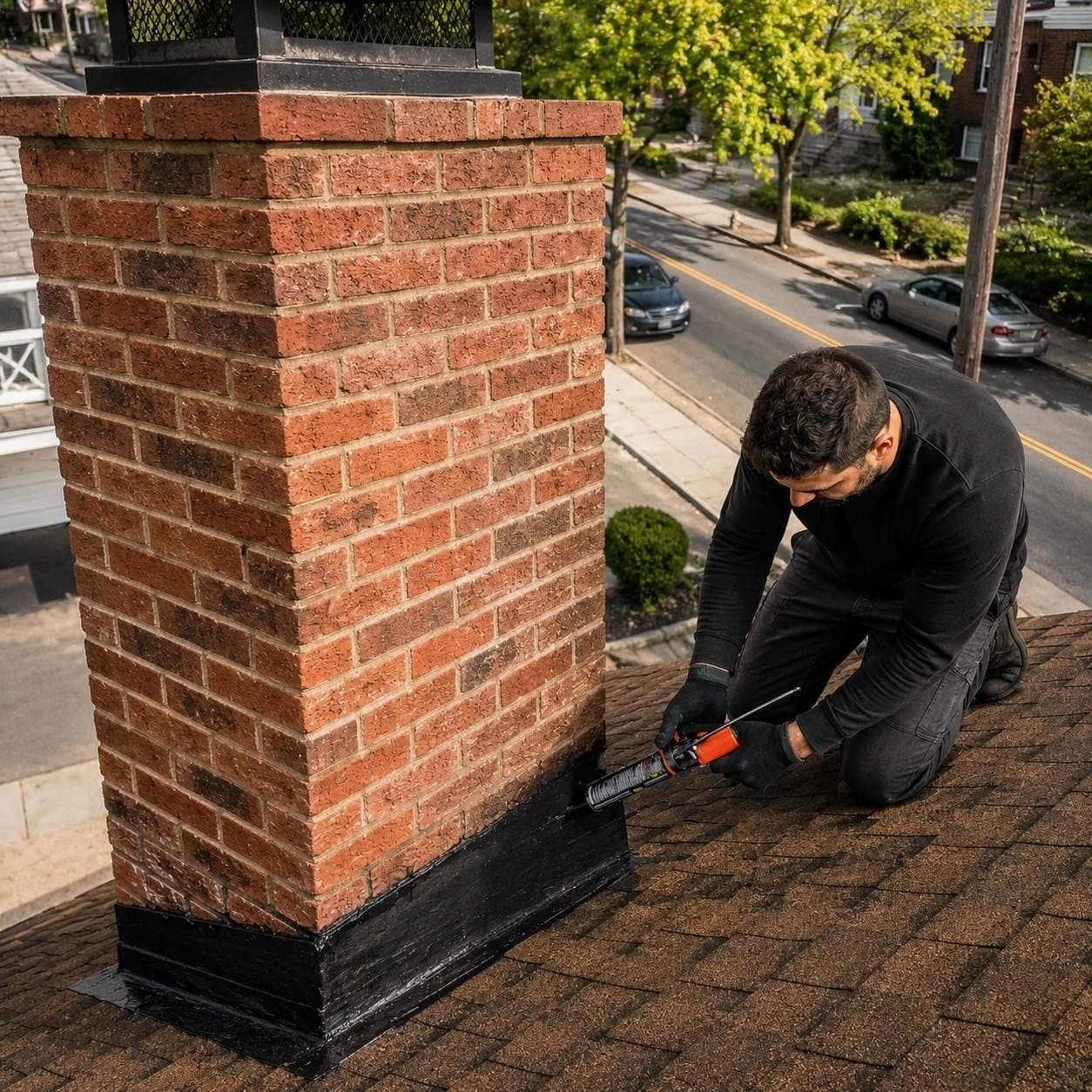
A sealer is only as good as the surface underneath it. Open mortar joints, a cracked crown or loose flashing will let water past any coating, so a proper waterproofing job looks at the whole chimney top to bottom and handles those weak points before anything is sprayed on.
The parts of the chimney involved
- Brick and mortar: the main surface that gets the water repellent.
- Crown: the concrete or mortar slab capping the top of the masonry, which sheds water away from the flue.
- Flashing: the metal where the chimney meets the roof, a very common entry point for leaks.
- Cap or chase cover: the cover over the flue opening that keeps rain from dropping straight down the chimney.
Signs your chimney may need waterproofing
Water problems in a chimney often show up inside the house before anyone notices them outside. These are the signs worth paying attention to:
Common signs of water getting in
- Water stains on the ceiling or wall next to the chimney
- White, powdery deposits (efflorescence) on the brick
- Brick faces flaking, chipping or crumbling
- Mortar joints that are soft, sandy or recessed
- Rust on the damper, firebox parts or the cap
- A damp, musty smell from the fireplace, especially after rain
- Water pooling in the firebox or dripping down the flue
- Cracks in the crown at the top of the chimney
An active drip into the house usually needs chimney leak repair service to find and fix the source first. Waterproofing is then the step that keeps the masonry from soaking up water again.
Chimney water damage repair
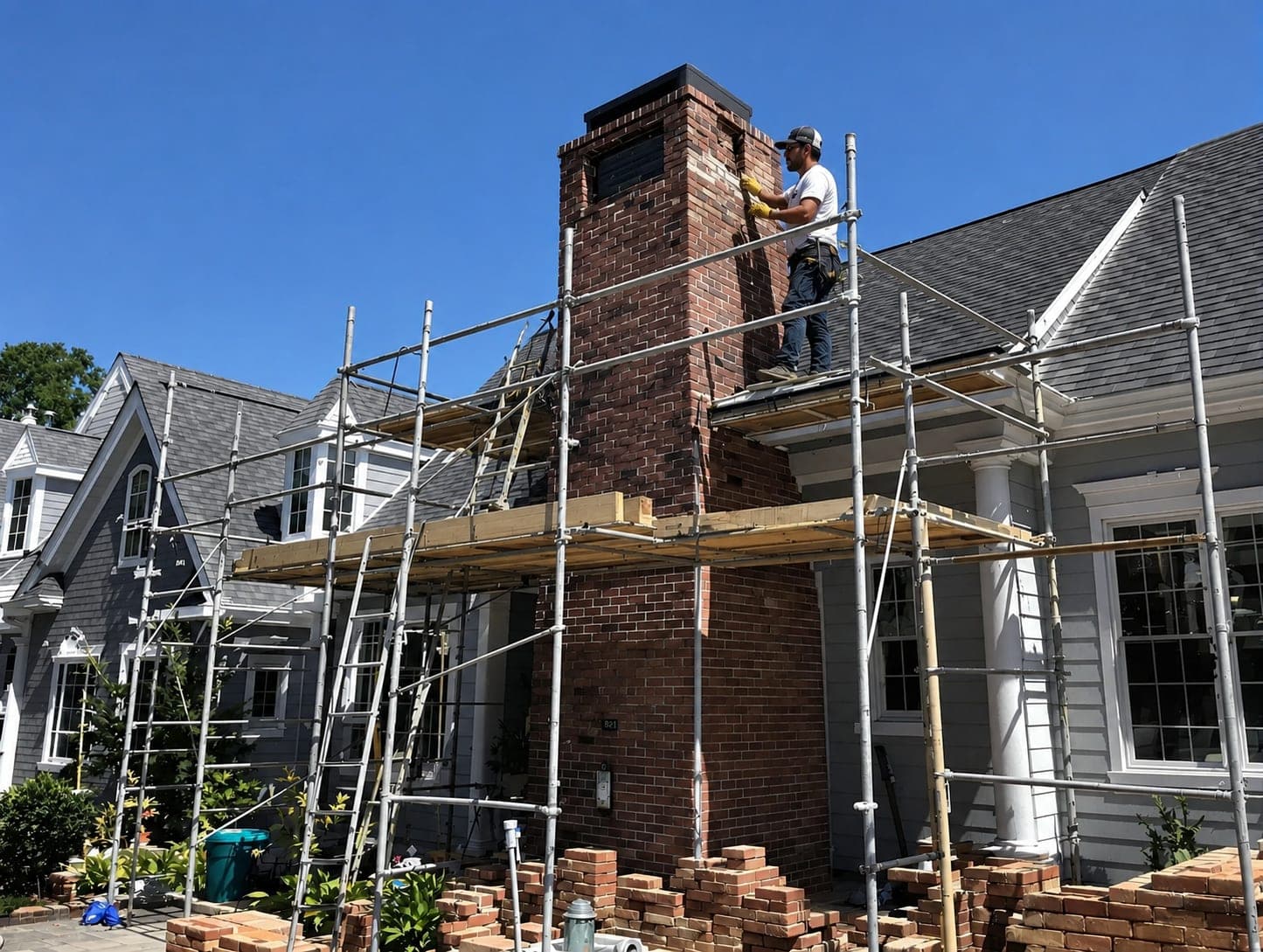
Sealing over damage only hides it. Before waterproofing, damaged areas are repaired: crumbling mortar joints are ground out and repointed, spalled or cracked bricks are replaced, and rusted components are addressed. If the water damage is extensive, with loose brick or a leaning stack, the conversation may shift toward larger masonry work. Reading up on chimney repair vs rebuild can help you understand where that line usually falls.
Chimney flashing leak repair
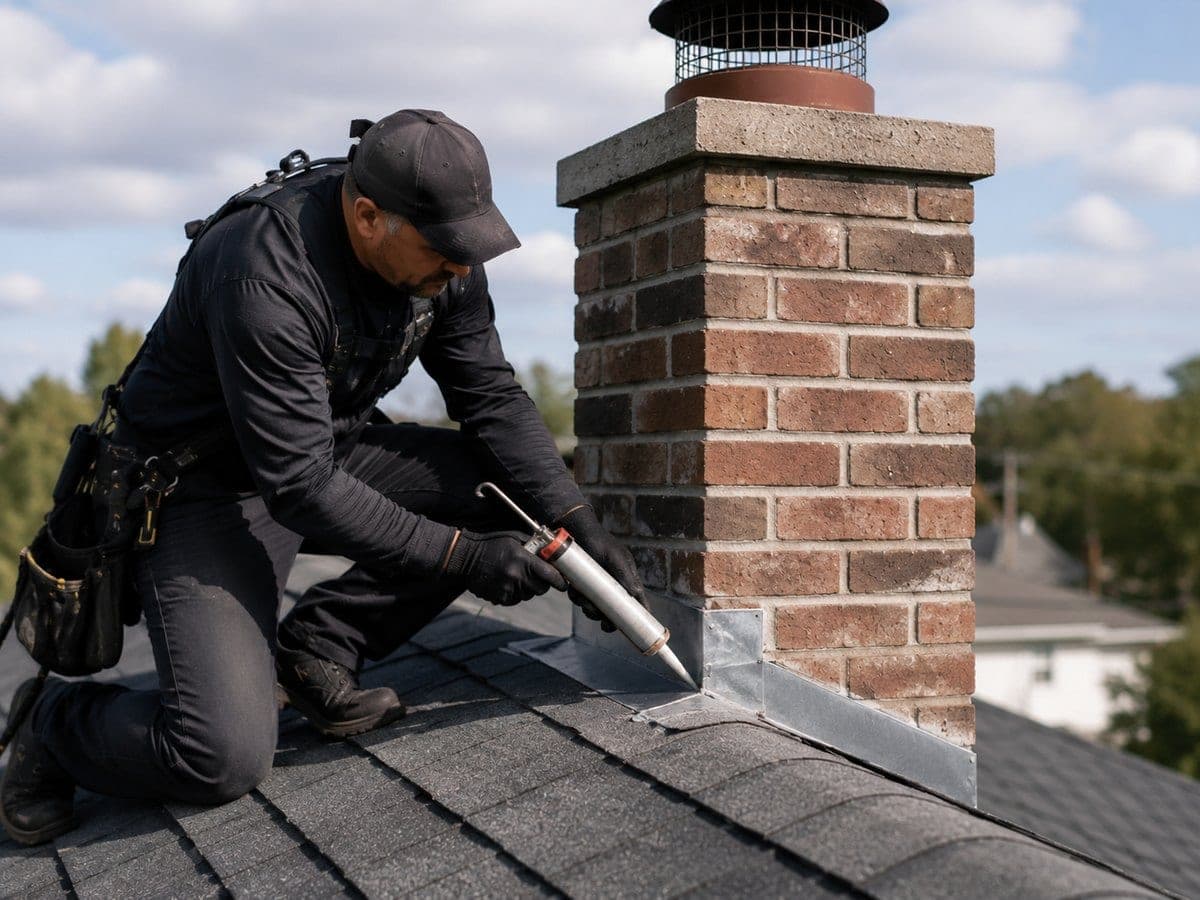
Flashing is the metal seal where the chimney passes through the roof. When it pulls away, corrodes or relies on old caulk that has dried out, water runs down the outside of the chimney and into the attic or ceiling. No masonry sealer can fix a flashing gap. As part of a waterproofing job, the flashing is checked and resealed or repaired so the joint between chimney and roof is watertight.
Chimney crown sealing
The crown takes the most direct exposure of any part of the chimney. Small hairline cracks let water into the masonry below, and freeze cycles or simple aging widen them. Minor cracks can be sealed with a flexible crown coating; a crown that is broken apart or badly built usually needs repair before it can be sealed.
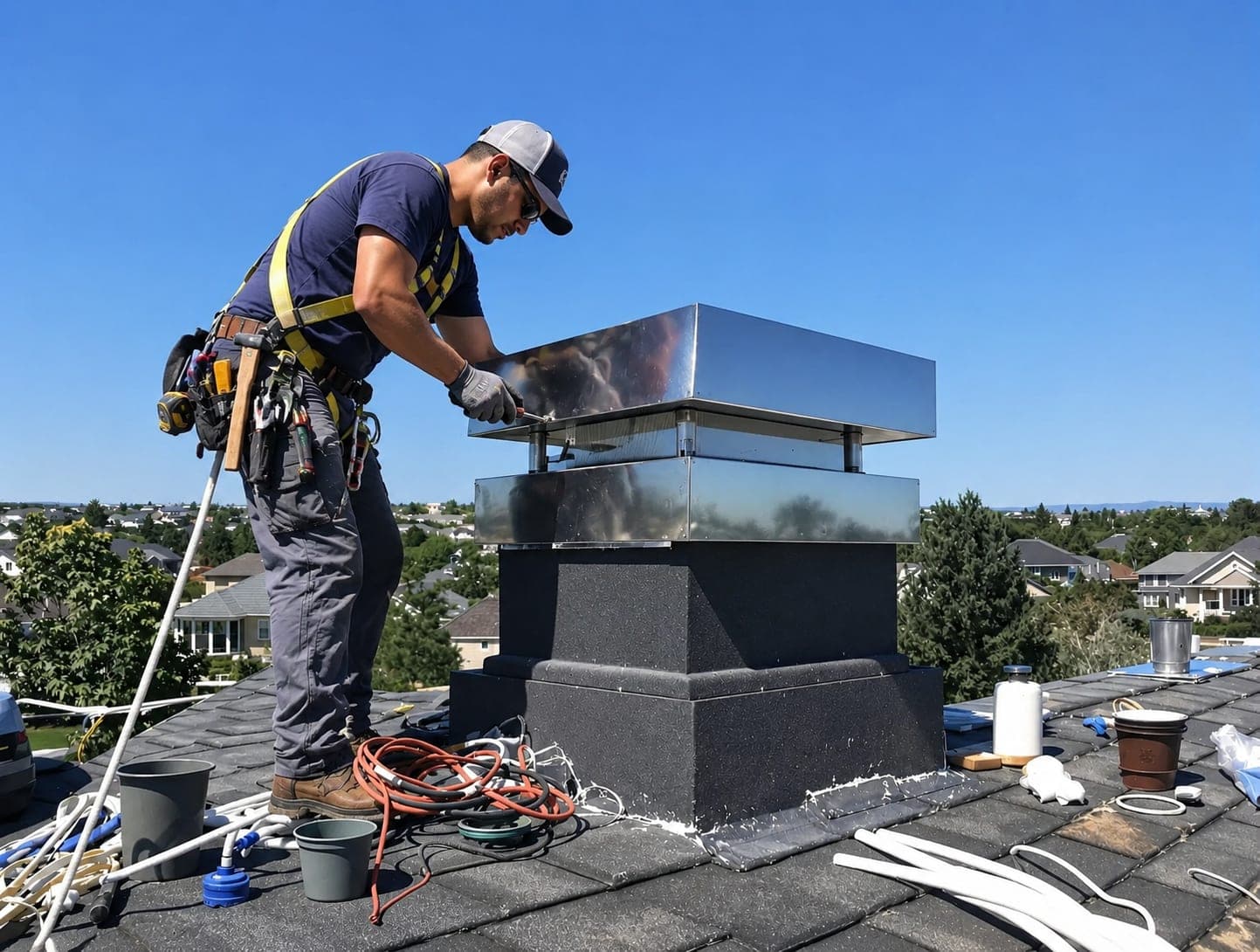
The flue opening matters too. A missing or damaged cap lets rain fall straight into the chimney. If you are unsure whether yours needs one, our guide to whether you need a chimney cap covers the basics. Factory-built chimneys with a metal top have a chase cover instead, and a rusted one can be handled through chase cover replacement.
What the visit involves, step by step
How a waterproofing job usually goes
Inspection
We look at the brick, mortar, crown, flashing and cap, and check inside for signs of water entry.
Estimate
You get a free estimate that explains what needs repair first and what the waterproofing covers.
Cleaning the surface
The masonry is cleaned of dirt, moss and loose material so the repellent can soak in evenly.
Repairs
Mortar joints, damaged brick, the crown and flashing are repaired as needed.
Drying time
Fresh mortar and washed masonry need to dry before sealing, so timing depends on the repairs and the weather.
Applying the repellent
A breathable water repellent is applied to the exterior masonry, and the crown gets its own sealing coat where appropriate.
Final check
We review the finished work with you and point out anything to keep an eye on.
Don't seal a wet or damaged chimney
Sealing masonry that is still wet, or that has open cracks, can trap moisture inside the brick. That is why repairs and drying come before the repellent goes on.
Keeping the chimney dry afterward
Water repellents wear down with sun and weather, and how long one lasts depends on the product and how exposed the chimney is. A routine inspection lets you catch cracked mortar, a failing crown or lifted flashing before water does real damage. While someone is on the roof, it is also a good time to check the cap; if birds or animals have been a problem, it helps to know how chimney animal screen installation works.
Booking chimney waterproofing
Same-day visits are available where the schedule allows, and emergency calls are accepted if water is actively coming into the house. We also take on commercial and property-manager work. Call or request an estimate to get started.