On this page
What chimney crown repair involves
A chimney crown covers the top of the masonry around the flue tile. A well-built crown has three features. It slopes away from the flue. It overhangs the brick with a drip edge, so water falls clear of the chimney face. It also leaves a small gap or bond break around the flue, so the tile and the concrete can expand at different rates without cracking each other.
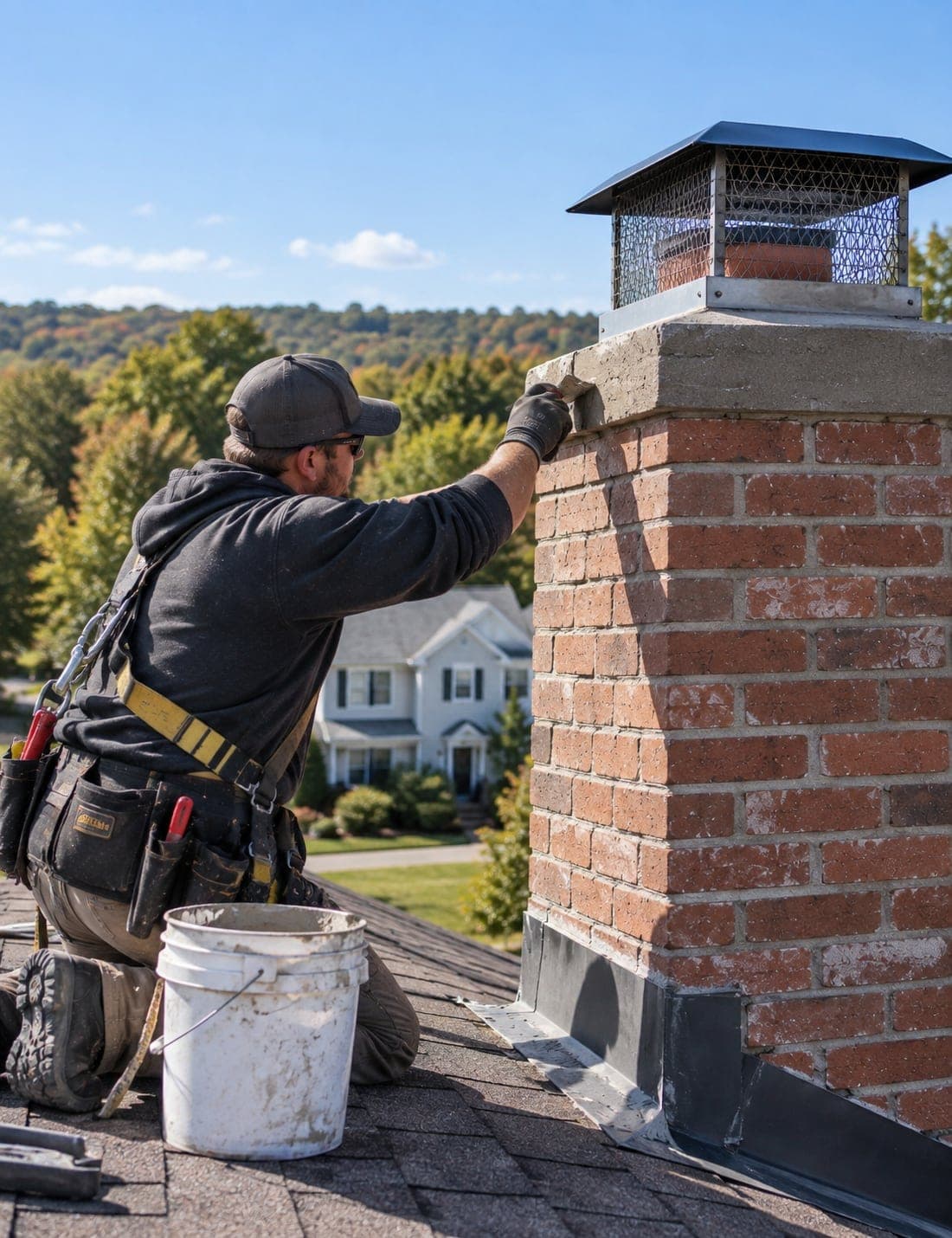
Many crowns were never built that way. Some were troweled on with leftover mortar, some were laid flat, and some were set tight against the flue. Those crowns crack sooner, and once they crack, every rain pushes water down into the chimney. Chimney crown repair covers two kinds of work: sealing a crown that is sound but has surface cracks, and removing and re-forming a crown that has broken up or was built poorly to begin with.
| Feature | Sealing the crown | Rebuilding the crown |
|---|---|---|
| Best suited to | Hairline and small surface cracks in a solid crown | Wide cracks, crumbling sections, loose pieces or a flat mortar cap |
| What happens | Cracks are cleaned and a flexible crown sealant is applied over the surface | The old crown is removed and a new one is formed with proper slope, overhang and a bond break at the flue |
| Main limitation | Cannot fix a crown that is structurally broken or shaped to hold water | More involved, and the new concrete needs time to cure |
Best suited to
- Sealing the crown
- Hairline and small surface cracks in a solid crown
- Rebuilding the crown
- Wide cracks, crumbling sections, loose pieces or a flat mortar cap
What happens
- Sealing the crown
- Cracks are cleaned and a flexible crown sealant is applied over the surface
- Rebuilding the crown
- The old crown is removed and a new one is formed with proper slope, overhang and a bond break at the flue
Main limitation
- Sealing the crown
- Cannot fix a crown that is structurally broken or shaped to hold water
- Rebuilding the crown
- More involved, and the new concrete needs time to cure
If the damage goes past the crown into loose bricks or a leaning stack, the job becomes masonry work. Our guide to chimney repair vs rebuild explains how that decision is usually made.
Signs of a cracked chimney crown
The crown sits where most homeowners never look, so damage often shows up somewhere else first. These signs point to the top of the chimney:
Common signs of crown damage
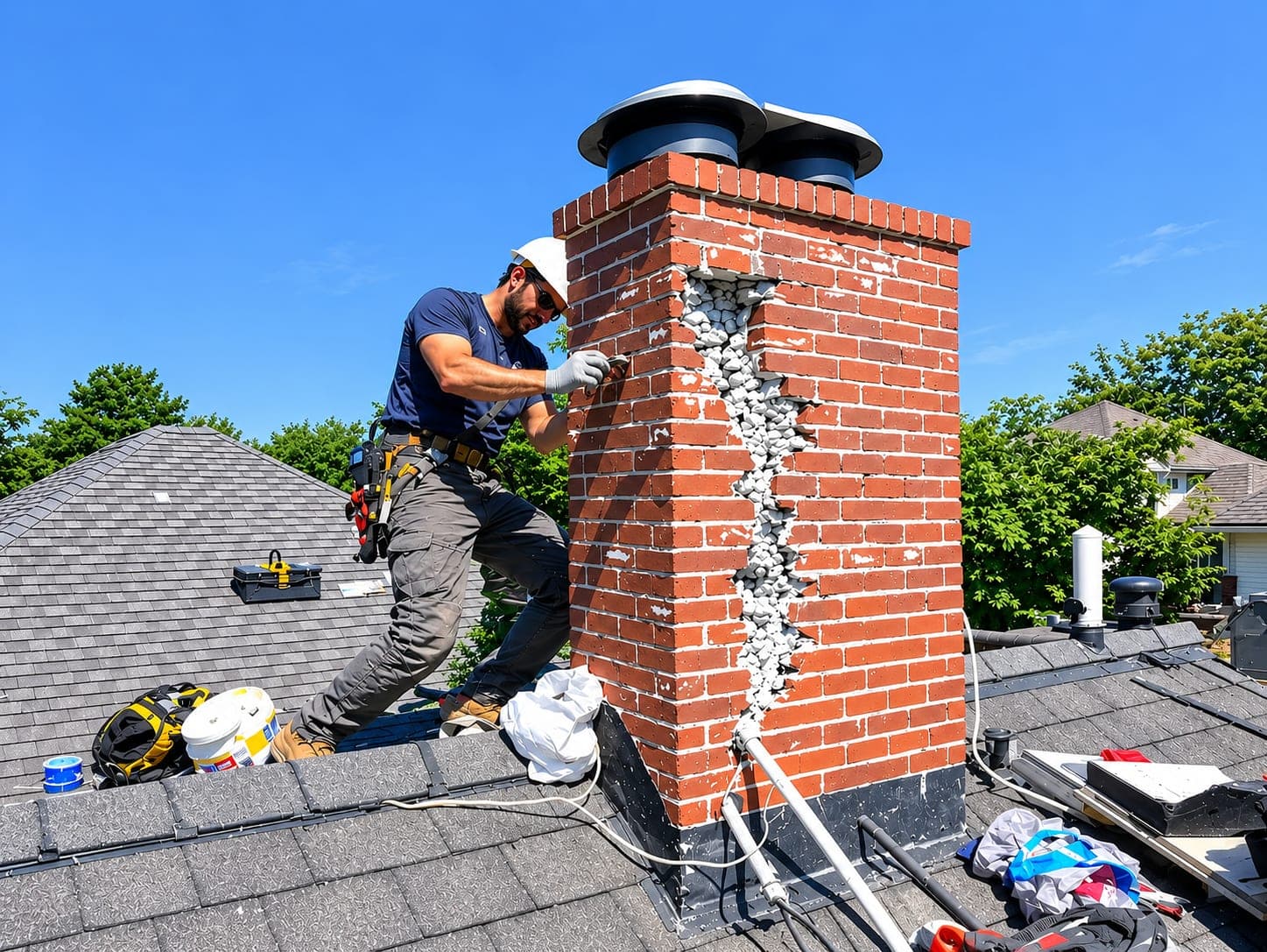
- Visible cracks, gaps or missing chunks on the top of the chimney
- Bits of concrete or mortar collecting on the roof, in the gutters or on the hearth
- Brick faces flaking or popping off near the top of the chimney
- White, chalky staining on the brick, which is mineral residue left by water moving through the masonry
- Water stains on the ceiling or wall next to the chimney
- Damp smell from the fireplace, or water in the firebox after rain
- Rust on the damper or firebox parts
Failed flashing or a missing cap can cause several of these signs too, so we check the whole top of the chimney. If water is already showing up indoors, our chimney leak repair service traces the source before anything is sealed.
Is a cracked chimney crown urgent?
Most crown cracks are not a hazard on the day you find them. They do let water into the chimney with every rain, though, and that damage builds over time. Call right away if pieces of the crown are loose or falling, or if water is coming into the house. Until the chimney has been looked at, keep people and pets clear of the area below it.
Emergency calls are accepted, with 24-hour service Sunday–Friday.
What the visit involves, step by step
From first look to finished crown
Inspect the top of the chimney
We check the crown for cracks, slope, overhang and how it meets the flue tile. We also check the cap, the flashing and the upper brick.
Explain what we found
We tell you whether the crown can be sealed or needs to be rebuilt, and whether anything else on the chimney is letting water in.
Free estimate
You get an estimate at no charge before any work starts.
Prepare the crown
For sealing, we clean out the cracks and clear loose material from the surface. For a rebuild, we break out the old crown down to sound masonry.
Repair or re-form
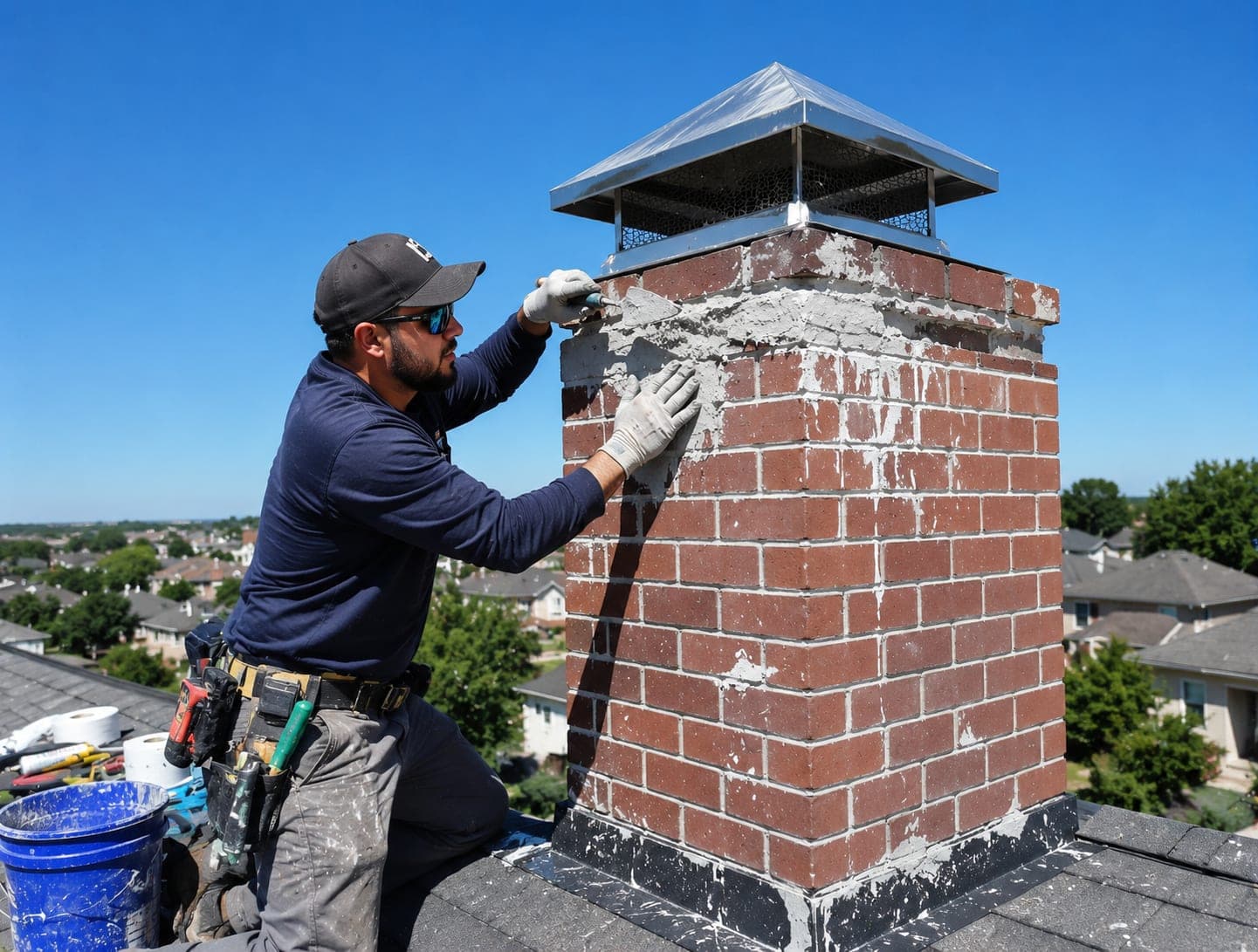
We apply sealant over the cleaned crown, or form a new crown with a slope, a drip edge and a bond break around the flue.
Clean up and review
We clear debris from the roof and gutters and walk you through the work we did.
Masonry crowns, chase covers and caps
Crowns belong to masonry chimneys. A factory-built (prefab) chimney inside a framed chase has a metal chase cover on top instead. A rusted or dented cover is handled through chase cover replacement, not crown work.
A chimney cap is a separate part. It sits over the flue opening to keep out rain, debris and animals, and some larger caps also shade the crown. If you are unsure whether your chimney needs a cap, read do you need a chimney cap. If birds or raccoons are the concern, we can do chimney animal screen installation on the same trip as the crown work.
Keep the crown from coming back as a problem
Look at the top of the chimney once a year and after heavy storms, from the ground or with binoculars. If you catch hairline cracks early, the crown can often be sealed instead of rebuilt.
Booking crown repair
Get in touch to request an estimate. Commercial and property-manager work is offered, so landlords and building managers can book crown repair for more than one chimney.