On this page
- What a chimney inspection covers
- Signs your chimney needs an inspection
- Inspection levels, including a level 2 chimney inspection
- Fireplace inspection
- What the visit involves, step by step
- Does a chimney need cleaning before it's inspected?
- Safety and maintenance between inspections
- Booking a chimney inspection
What a chimney inspection covers
A chimney inspection is a structured look at the whole venting system: the firebox, damper, smoke chamber, flue liner, the masonry or prefab chase, the crown, the flashing and the cap. The goal is to answer three questions. Is the chimney structurally sound? Is the flue clear enough to carry smoke and gases out of the house? Is anything wearing in a way that will cause a leak, a draft problem or a fire later?
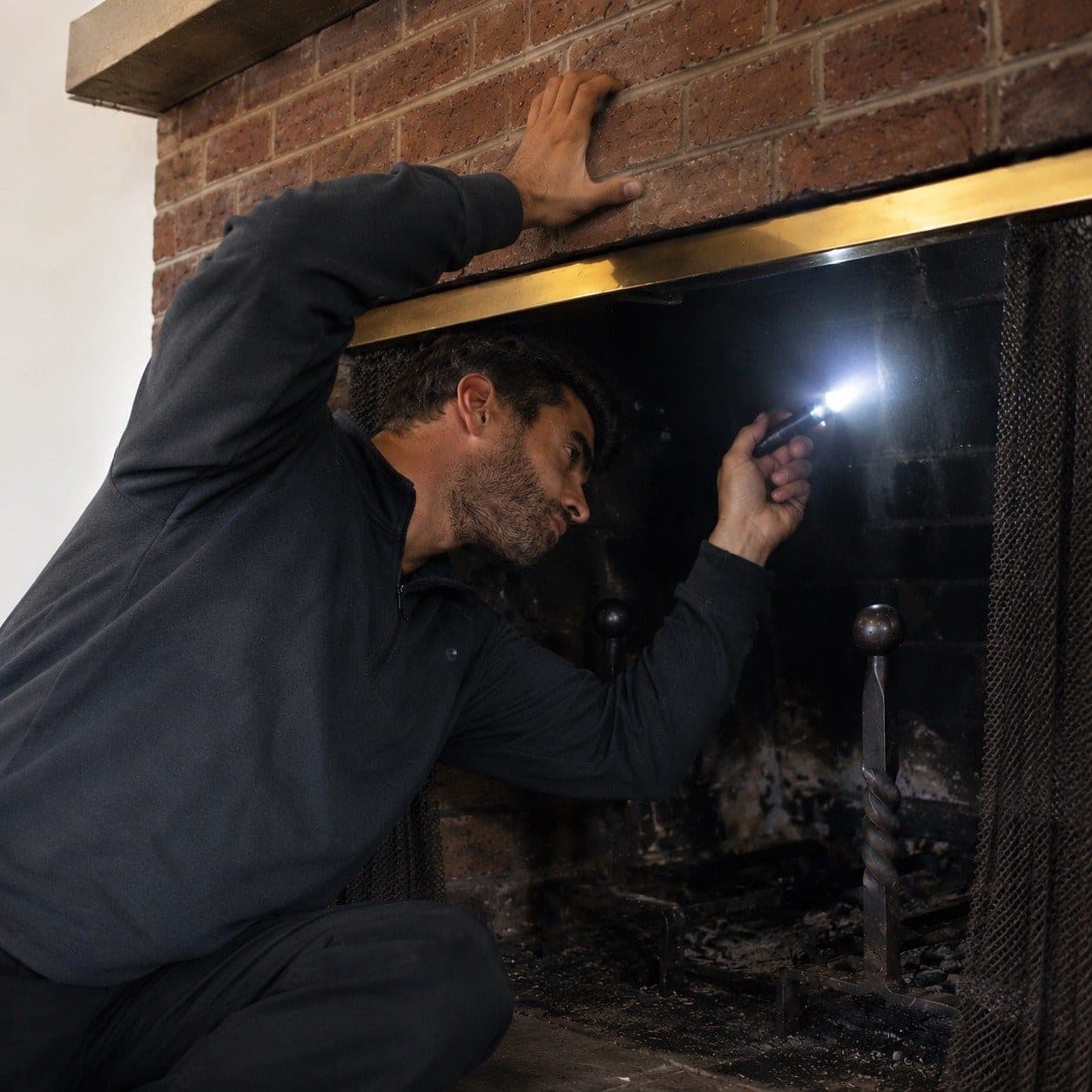
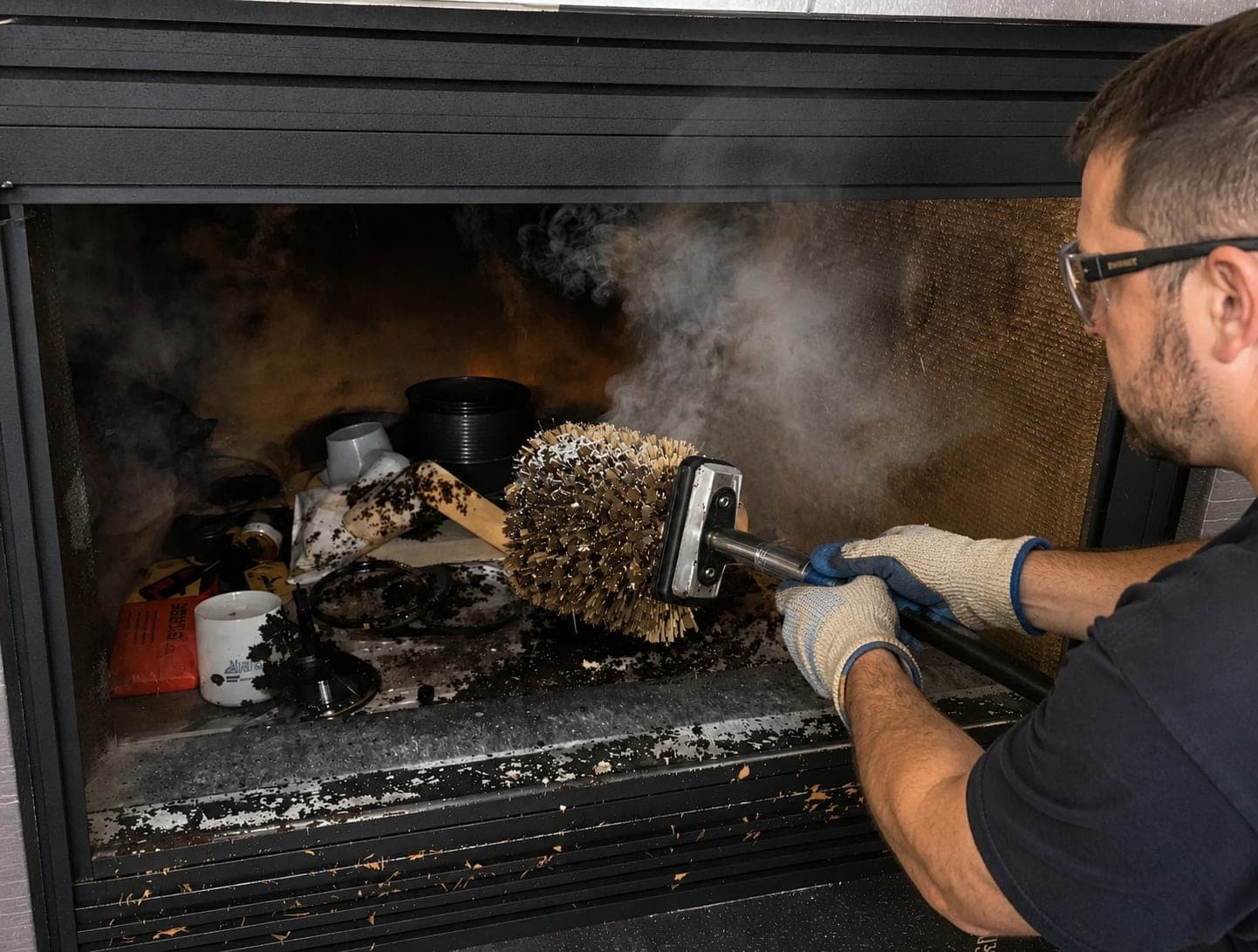
Inspection is different from cleaning. A sweep removes soot and creosote. An inspection decides whether the system is in good enough shape to keep using, and points to the specific repairs if it isn't.
Signs your chimney needs an inspection
Some homeowners book an inspection as routine upkeep. Others book one because something changed. These are the common reasons to call:
Reasons to schedule an inspection
- Smoke rolls back into the room or the fire is hard to keep lit
- A strong smoky or musty smell, especially on humid days
- Flakes of tile, brick or mortar falling into the firebox
- Water stains on the ceiling or wall beside the chimney
- Cracked or crumbling bricks, a damaged crown or a missing cap
- Scratching, chirping or nesting material in the flue, which may call for chimney animal & nest removal after the check
- Heavy, shiny or tar-like creosote inside the firebox or on the damper
- You haven't used the fireplace in years, or you just bought the home
- A recent earthquake, high winds, a fallen branch or another impact
Ground shaking can crack flue tiles and loosen mortar in places you can't see from the room. If you're noticing new gaps, leaning or debris, read about what causes chimney damage after an earthquake before lighting a fire. For wind, falling limbs and other weather damage, our storm damage chimney inspection service focuses on documenting what the event did to the chimney.
Inspection levels, including a level 2 chimney inspection
Chimney inspections are commonly described in three levels under the NFPA 211 standard. The level depends on why the inspection is needed and how much of the system has to be seen.
| Level | What it involves | Typical reason |
|---|---|---|
| Level 1 | A visual check of the readily accessible parts of the chimney, fireplace and connections | Routine yearly check when nothing about the system has changed |
| Level 2 | Everything in Level 1, plus accessible areas like the attic and crawl space and a camera view of the full flue interior | Buying or selling a home, a change in fuel or appliance, or after an earthquake, chimney fire or storm |
| Level 3 | Removing parts of the structure, such as a wall section or crown, to reach concealed areas | When a Level 2 inspection finds a serious hidden problem that can't be assessed any other way |
Why a level 2 inspection uses a camera
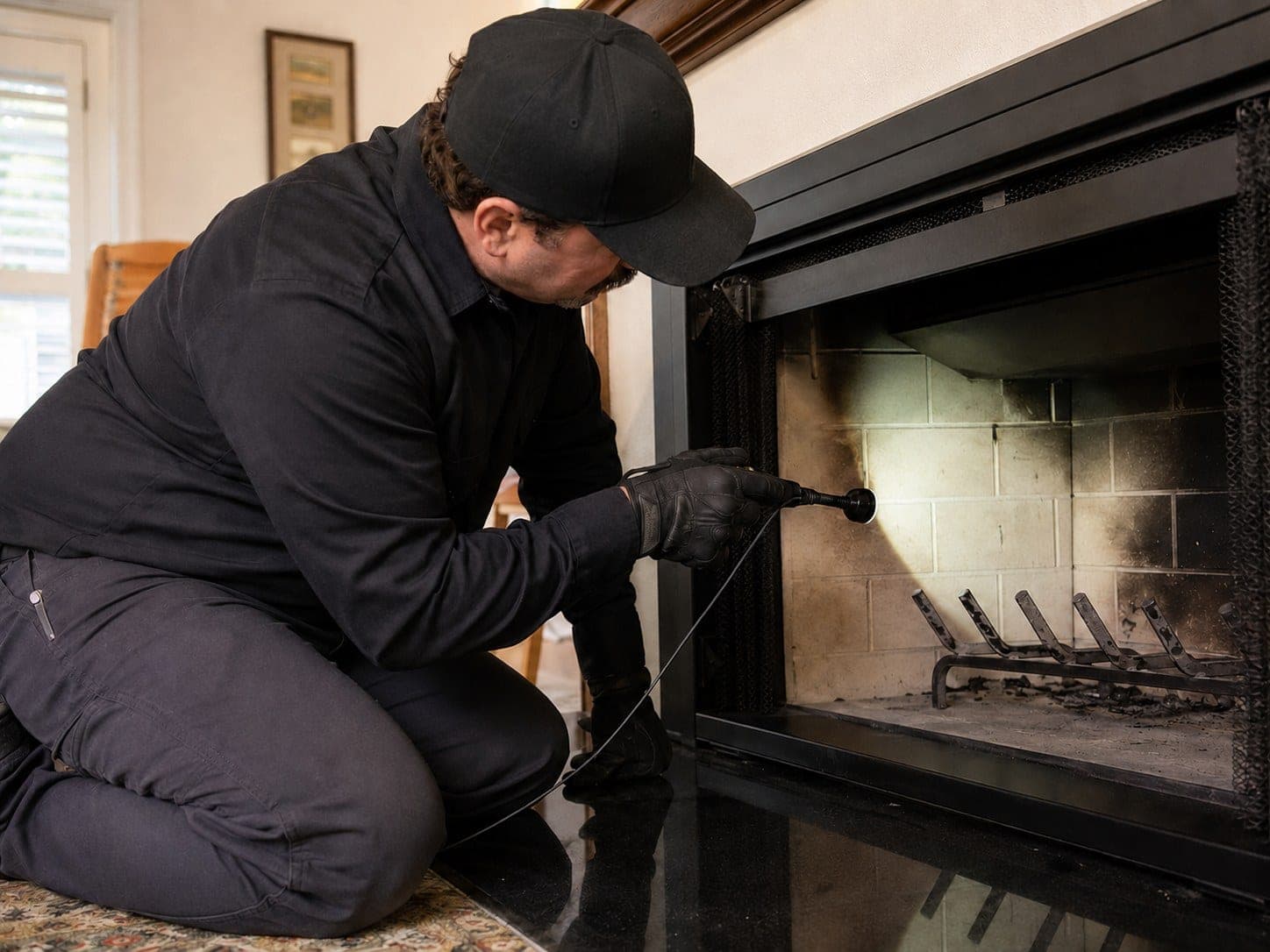
Most of a flue can't be seen from the firebox or the roof. A camera run down the liner shows cracked or missing tiles, gaps at the joints, heavy creosote and blockages along the full length. It's the part of a Level 2 chimney inspection that turns guesses into clear answers. If you're in the middle of a sale, our real estate chimney inspection is built around that timeline.
Fireplace inspection
The fireplace is half of the system, so it gets its own close look. We check the firebox for cracked bricks, gaps in the mortar joints or worn refractory panels, then test the damper to confirm it opens, closes and seals. We also check the smoke chamber above the damper and the hearth extension in front of the opening.
For gas fireplaces and inserts, we look at the glass and door, the venting, the logs and burner area, and the connection to the chimney or vent. Gas fireplace and gas appliance work is offered, and we work on all major brands of fireplaces, inserts and stoves.
What the visit involves, step by step
How an inspection visit runs
Talk through what you've noticed
We start with your concerns: smells, smoke, leaks, noises, how often you burn and what fuel you use. That tells us where to look hardest.
Protect the room
We cover the hearth and floor around the fireplace before opening anything.
Inspect the fireplace
We check the firebox, damper, smoke chamber and, for inserts or gas units, the appliance and its connection.
Inspect the flue
We look up the flue and, for a Level 2 inspection, run a camera along the liner to see its full length.
Check the exterior
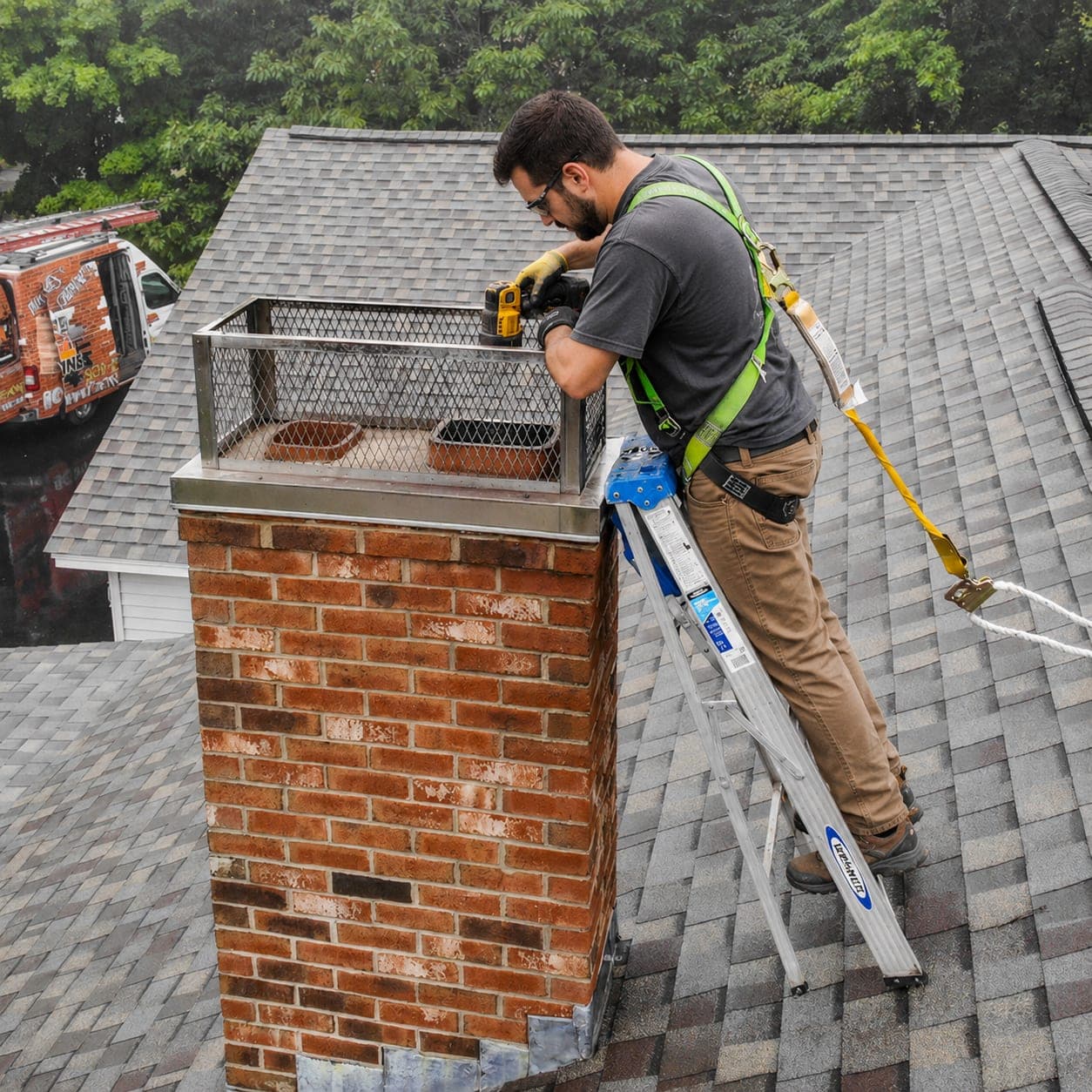
Where it can be reached safely, we look at the crown, cap, masonry or chase, and the flashing where the chimney meets the roof.
Explain the findings
We walk you through what we saw, what is urgent, what can wait, and whether cleaning or repair is the next step. Estimates are free.
Does a chimney need cleaning before it's inspected?
Sometimes. A thick layer of soot or creosote can hide cracks in the liner, so a heavily used flue may need to be swept before a camera can show its condition. A chimney that's lightly used or recently cleaned can usually be inspected as-is. We'll tell you which applies once we see the flue.
Safety and maintenance between inspections
Most chimney fires start with creosote, the residue that builds up when wood smoke cools in the flue. Burning dry, seasoned wood, keeping fires hot enough to burn cleanly, and having the flue swept when buildup appears all cut that risk. Our guide to creosote buildup dangers and prevention covers what to watch for in more detail.
Stop using the fireplace if you notice these
Loud popping or a roaring sound from the flue, dense smoke pouring from the chimney top, or a hot smell coming through the wall are signs of a possible chimney fire. If you hear roaring or see flames or sparks from the top of the chimney, get everyone out and call 911. Get everyone out and call the fire department. Our chimney fire safety guide explains what to do afterward. Have the system inspected before lighting another fire.
Keep working smoke and carbon monoxide alarms on every level of the home, and test them regularly. A cracked liner or a blocked flue can push combustion gases into living space without any visible smoke.
Booking a chimney inspection
Get in touch to request an estimate. Estimates are free. Same-day visits are available where the schedule allows. 24-hour service runs Sunday–Friday, and emergency calls are accepted. Commercial and property-manager work is offered, so landlords and managers can schedule inspections for multiple units too.
Related work covered on this page
- Fireplace Inspection