On this page
What fireplace cleaning covers
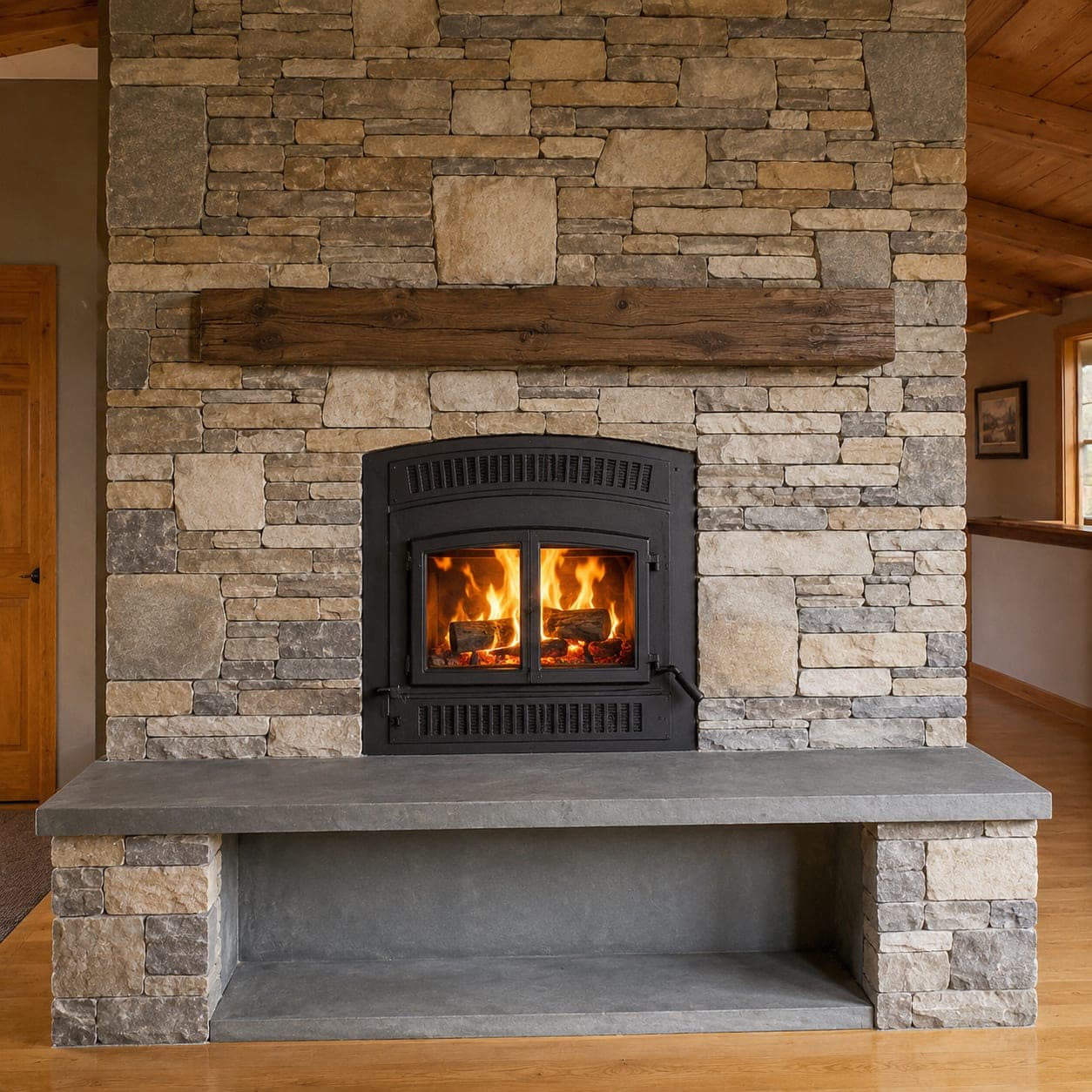
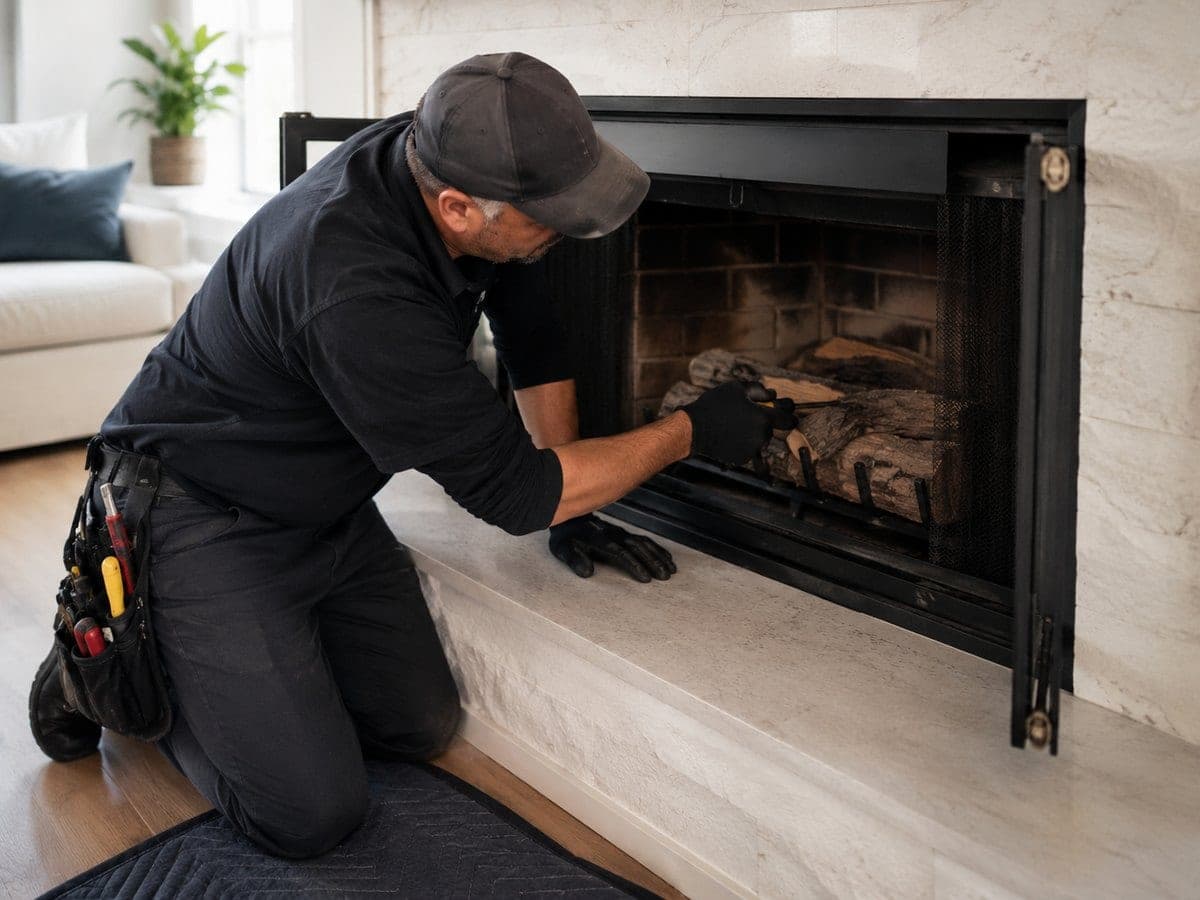
Fireplace cleaning focuses on the parts of the fireplace you can see and reach from the room: the firebox, the grate and andirons, the area just above the opening around the damper, and any glass doors or screen. The goal is to remove loose ash, caked soot and the tar-like residue called creosote, which forms when smoke cools and condenses on the masonry or panels.
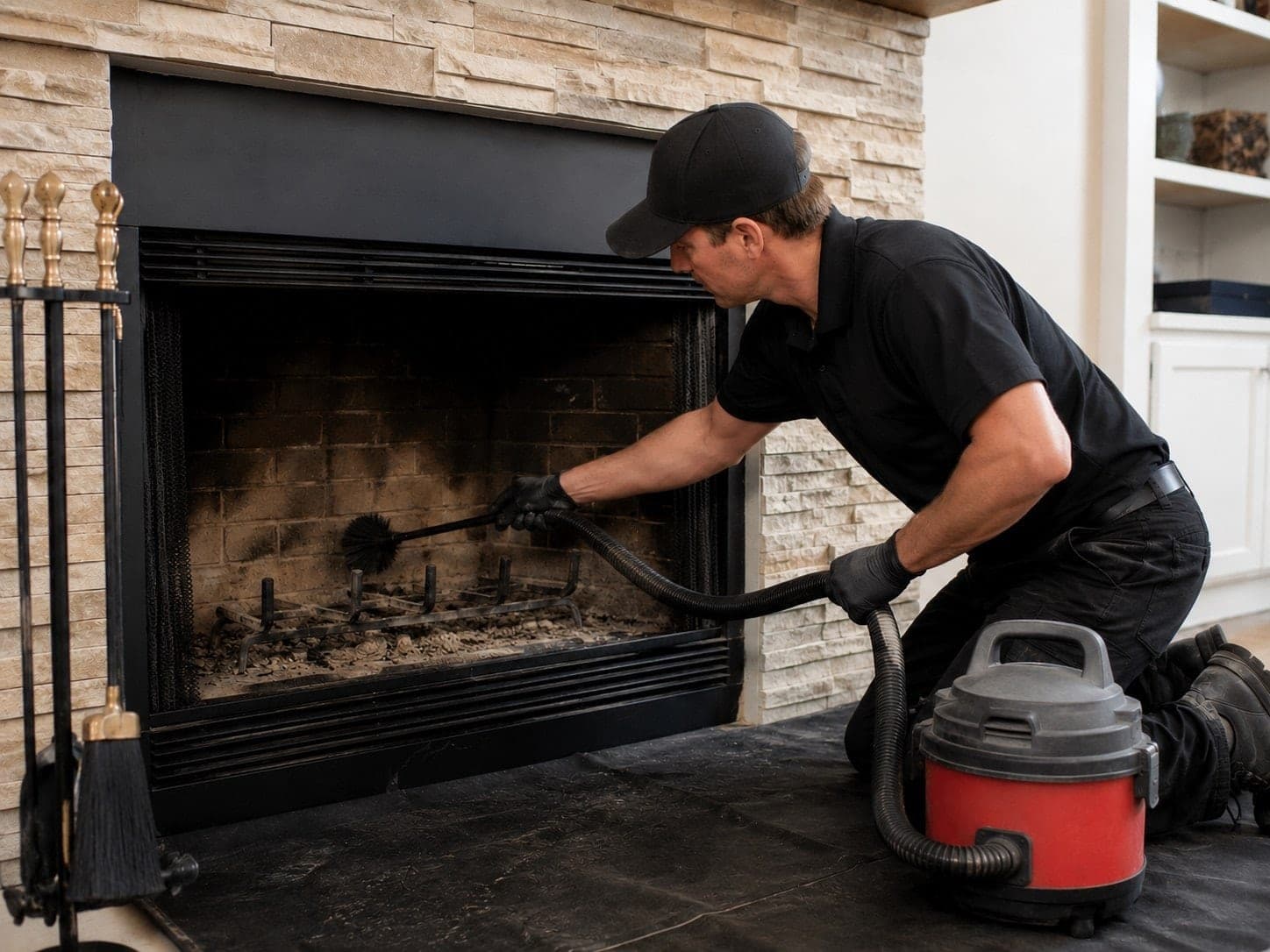
It's related to chimney sweeping, but it's a different job. A fireplace cleaning deals with the firebox and its surroundings. A chimney sweep clears the flue that carries smoke up and out. Many homes need both, and we offer both. Once we've looked at your fireplace, we can tell you which one it needs.
If your fireplace has a closed insert with its own glass front and liner, that setup has different parts. Our fireplace insert cleaning service is built for that kind of unit.
Wood, gas and electric fireplaces
Wood-burning fireplaces produce the most residue and benefit most from regular cleaning. Gas fireplaces burn cleaner, but the logs, burner area and glass can still collect soot and dust. This is more likely if the flame burns yellow or the logs have shifted. We work on gas fireplaces and gas appliances, and we work on all major brands. Electric fireplaces don't burn anything, so they don't need soot removal. If one stops heating or the flame effect fails, electric fireplace repair is the service to look at. If you're weighing a switch from one fuel to another, our guide to gas vs wood burning fireplace walks through the trade-offs.
Signs your fireplace needs cleaning
Common reasons homeowners call
- Ash has piled up in the firebox and under the grate
- The firebox walls or smoke shelf have a black, shiny or crusty coating
- A smoky, sooty smell lingers in the room, often worse on warm or humid days
- Glass doors are clouded or stained and don't come clean with regular wiping
- Fires are harder to light or smolder instead of burning steadily
- Soot marks appear on the wall or mantel above the opening
- You've moved into a home and don't know when the fireplace was last cleaned
- You're getting ready for the first fire of the season after months of not using it
When a smoky fireplace points to the chimney
If smoke rolls back into the room instead of going up, cleaning the firebox alone may not fix it. A dirty or partly blocked flue, a damper that doesn't open fully, or poor draft can all push smoke back indoors. During the visit we check the damper and look up into the flue. That tells us whether you also need a chimney sweep. If the flue is clear and the fireplace still smokes, the problem may be airflow, which is what fireplace draft repair addresses.
What happens during a fireplace cleaning visit
Step by step
Protect the room
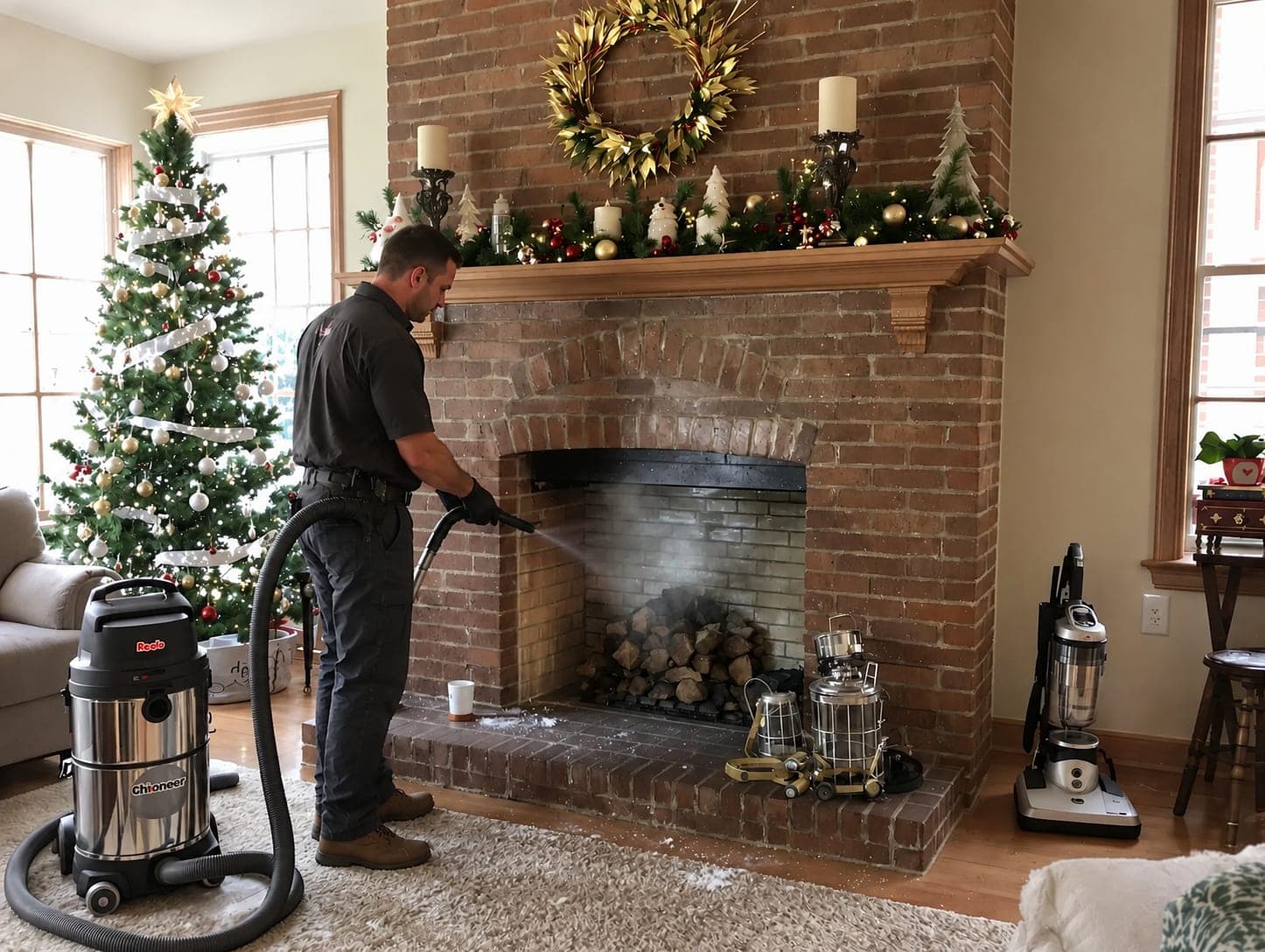
We lay down drop cloths in front of the hearth and cover nearby surfaces so ash and soot stay contained.
Remove ash and debris
Loose ash, leftover wood and debris come out of the firebox. We also take out the grate and andirons so the floor of the firebox can be cleaned.
Brush and vacuum the firebox
We brush the back wall, sides and floor to loosen soot and creosote. Then we vacuum with equipment made to capture fine ash rather than blow it around the room.
Clean the damper and smoke shelf area
The area just above the opening collects a lot of buildup. We clean around the damper and check that it opens and closes properly.
Clean doors, screen and accessories
Glass doors, screens and the grate are cleaned before being put back in place.
Look for problems and report back
With the firebox clean, cracks, loose mortar, damaged panels or damper trouble are much easier to spot. We tell you what we saw and whether anything needs attention.
Before the visit
Let the fireplace go cold before we arrive. Ash can hold heat for a long time after a fire looks out, so don't shovel or bag ashes yourself right after a fire. Move anything fragile off the mantel and clear a path to the hearth.
Safety and maintenance between cleanings
Creosote is flammable. The more of it there is in the firebox, smoke chamber and flue, the more fuel there is for a fire to spread where it shouldn't. A cleaner room is a bonus, but keeping creosote under control is the main safety reason to clean a fireplace.
- Burn dry, seasoned firewood. Wet or green wood smokes more and leaves more creosote behind.
- Don't burn trash, cardboard, wrapping paper or painted or treated wood.
- Keep a thin layer of ash under the grate if you like, but don't let it build up to the grate itself.
- Store removed ashes in a metal container with a lid, away from the house and anything that burns.
- Open the damper fully before lighting a fire and keep it open until the fire is completely out.
- Make sure the smoke and carbon monoxide alarms in your home work, especially if you burn gas or wood regularly.
Cleaning at the end of the burning season
Spring is a good time to have a fireplace or wood stove cleaned. Soot and creosote left in a closed-up fireplace through the warmer months often cause stale, smoky odors. A cleaning in spring also leaves time to handle any repair we find before you want to use the fireplace again. We clean wood stoves as well as open fireplaces.
Booking a fireplace cleaning
Get in touch to request a free estimate. We offer 24-hour service Sunday–Friday, and emergency calls are accepted. We also handle commercial work and jobs for property managers looking after several fireplaces.
Free estimates
Tell us what kind of fireplace you have and what you've noticed, and we'll take it from there.