On this page
If you smell gas, do this first
Leave the building right away and get everyone out with you. Don't flip light switches, unplug anything, use a phone or light any flame while you're inside. Once you're outside and away from the house, call your gas utility or 911. Don't go back in until they tell you it's safe.
What gas fireplace repair involves
Gas fireplace repair means finding and fixing whatever is keeping the unit from lighting, staying lit or burning cleanly and safely. A gas fireplace is a small appliance with several working parts: a gas valve, an ignition system (a standing pilot or electronic ignition), safety sensors, a burner, a log set or media, and a vent that carries combustion gases outside. When one part fails or wears out, the whole unit can stop working or start working badly.
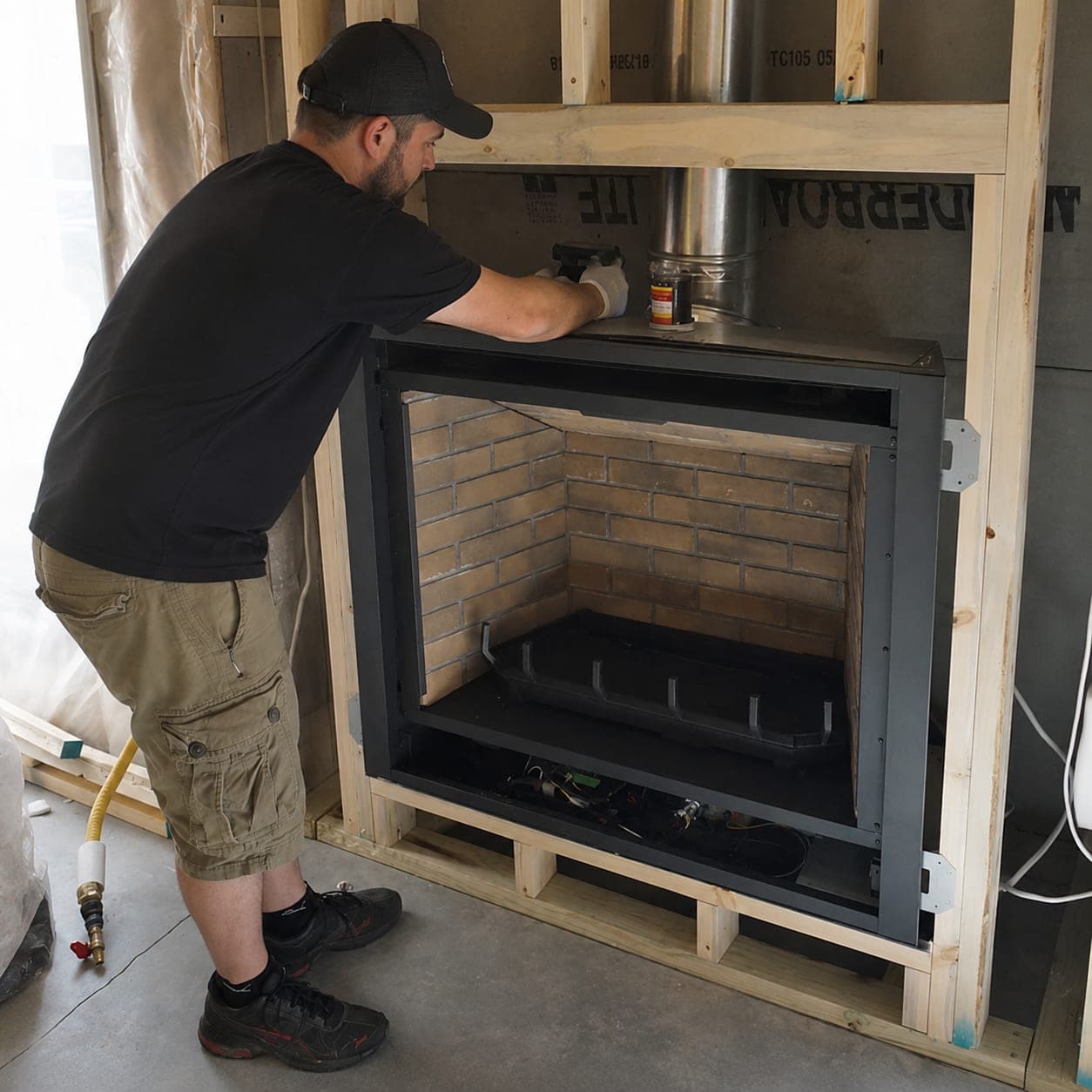
Repair is different from routine upkeep and from replacing the unit. If the fireplace is beyond sensible repair, or you're adding one where there wasn't one before, our gas fireplace installation service covers that. For the full range of gas fireplace work we do, from tune-ups to repairs, start with our gas fireplace service overview.
Signs your gas fireplace needs repair
These are the problems that most often lead homeowners to call:
- The pilot won't light, or lights and goes out when you release the knob.
- The burner won't come on even though the pilot is lit.
- The fire starts, then shuts off after a few minutes.
- Flames are tall, orange and lazy, or are leaving black soot on the glass, logs or wall above the opening.
- The remote, wall switch or thermostat no longer controls the fireplace.
- You hear clicking without ignition, or a whoosh or pop when the burner lights.
- The glass is cracked, the door gasket is loose, or the glass fogs heavily every time.
- Rust, corrosion or debris is visible around the burner or pilot.
If the trouble is getting the fire started at all, our breakdown of what causes gas fireplace won't light walks through the usual culprits in more detail.
Gas fireplace pilot light repair
Many gas fireplace problems trace back to the pilot assembly. On a standing-pilot unit, a small flame heats two sensors: a thermocouple, which tells the gas valve it's safe to keep the pilot gas flowing, and a thermopile, which makes the small amount of electricity that opens the main valve for the burner. Electronic-ignition units use a spark igniter and a flame sensor instead.
Common pilot faults we fix
- A dirty or partly blocked pilot orifice that gives a weak flame the sensors can't read.
- A worn thermocouple that lets the pilot go out as soon as you let go of the knob.
- A weak thermopile that keeps the pilot lit but can't open the main burner valve.
- A cracked or misaligned igniter, or a dead battery or module on electronic systems.
- Spider webs, lint or dust in the pilot hood, which is common after a fireplace sits unused for months.
We test the sensors, clean the pilot assembly, and replace parts that are out of range rather than guessing. If the pilot itself is fine, we keep going down the line to the valve, controls and burner.
What the repair visit involves
How a gas fireplace repair visit works
Talk through the symptoms
We ask what the fireplace is doing, when it started and whether anything changed recently, such as a new remote, a long idle stretch or recent work nearby.
Shut off and inspect
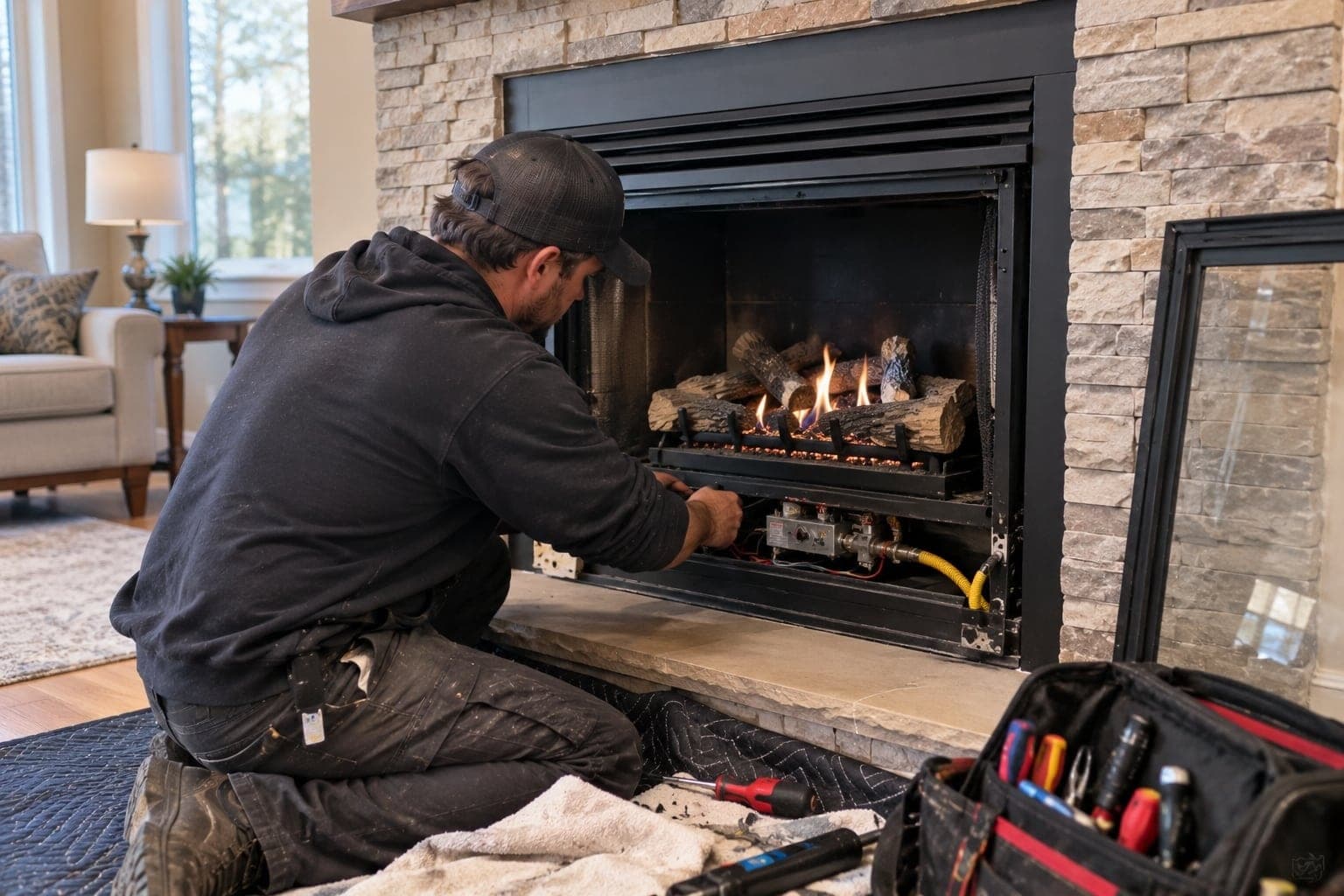
With the gas off at the unit, we open the fireplace, remove the glass and log set as needed, and look over the pilot, burner, valve, wiring and vent connections.
Test the components
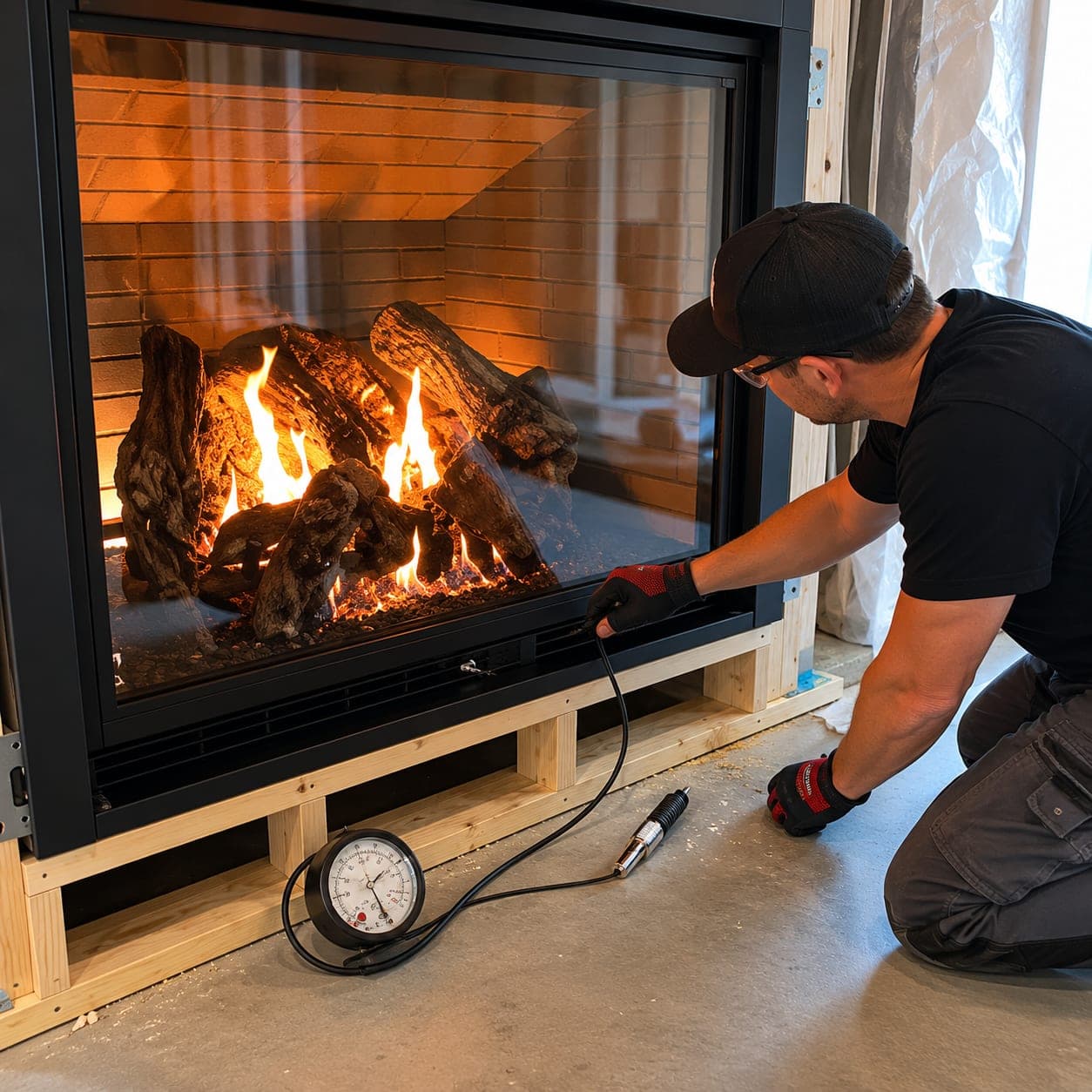
We check the pilot flame, sensor output, ignition, gas pressure and controls so the repair is based on readings, not hunches.
Explain the fix and give a free estimate
You hear what's wrong, what it takes to fix it, and your options before any repair work starts.
Repair and clean
We replace or adjust the failed parts, clean the burner and pilot area, and reset the logs or media in their correct positions so the flame isn't blocked.
Fire it up and check for leaks
We light the unit, watch it run through a full cycle, check connections for leaks and confirm the venting is working before we leave.
Parts and systems we work on
| Part | What it does | Typical problem |
|---|---|---|
| Thermocouple | Keeps the pilot gas flowing once the pilot is lit | Pilot goes out when the knob is released |
| Thermopile | Powers the main gas valve on millivolt systems | Pilot stays lit but the burner won't come on |
| Gas valve | Controls gas to the pilot and burner | Won't open, sticks or won't respond to controls |
| Igniter and module | Lights the pilot or burner electronically | Clicks without lighting, or no spark at all |
| Burner and logs | Shape and spread the flame | Soot, orange flames or uneven burn from clogging or misplaced logs |
| Venting | Carries combustion gases outside | Blocked or disconnected vent, poor draft, safety shutoffs |
| Glass and gasket | Seals the firebox on direct-vent units | Cracks, loose gaskets, heavy fogging |
We work on all major brands of gas fireplaces, inserts and log sets. If you're still weighing whether gas is the right fit for your home in the first place, our guide to gas vs wood burning fireplace lays out the trade-offs.
Safety and maintenance
A gas fireplace burns cleanly when everything is in order, but some problems deserve attention right away rather than later:
Stop using the fireplace and call if you notice
- If a carbon monoxide alarm sounds, get everyone outside and call 911.
- Heavy soot building up on the glass or wall.
- Flames that roll out of the opening or burn outside the burner area.
- A cracked glass front on a sealed unit.
A gas smell is different: get everyone out first and call your gas utility or 911 from outside. Working carbon monoxide alarms on each level of the home are a simple, worthwhile safeguard with any gas appliance. Regular service keeps the pilot and burner clean, catches worn sensors before they fail and confirms the vent is clear. Poor venting can show up as soot, odors or a fire that keeps shutting itself off; when the issue sits in the flue rather than the appliance, how fireplace draft repair works explains how we address it.
Booking a gas fireplace repair
Call or request an estimate and tell us what the fireplace is doing. Same-day visits are available where the schedule allows, and emergency calls are accepted. Our 24-hour service runs Sunday–Friday. We also take commercial and property-manager work, so the same approach applies to rentals and multi-unit buildings.
Free estimates.
Get in touch to describe the problem and set up a visit for your gas fireplace.