On this page
If you smell gas right now
Leave the building and get everyone out. Don't flip light switches, use phones or light anything while you're inside. Once you're outside, call the gas utility or 911.
What gas line installation involves
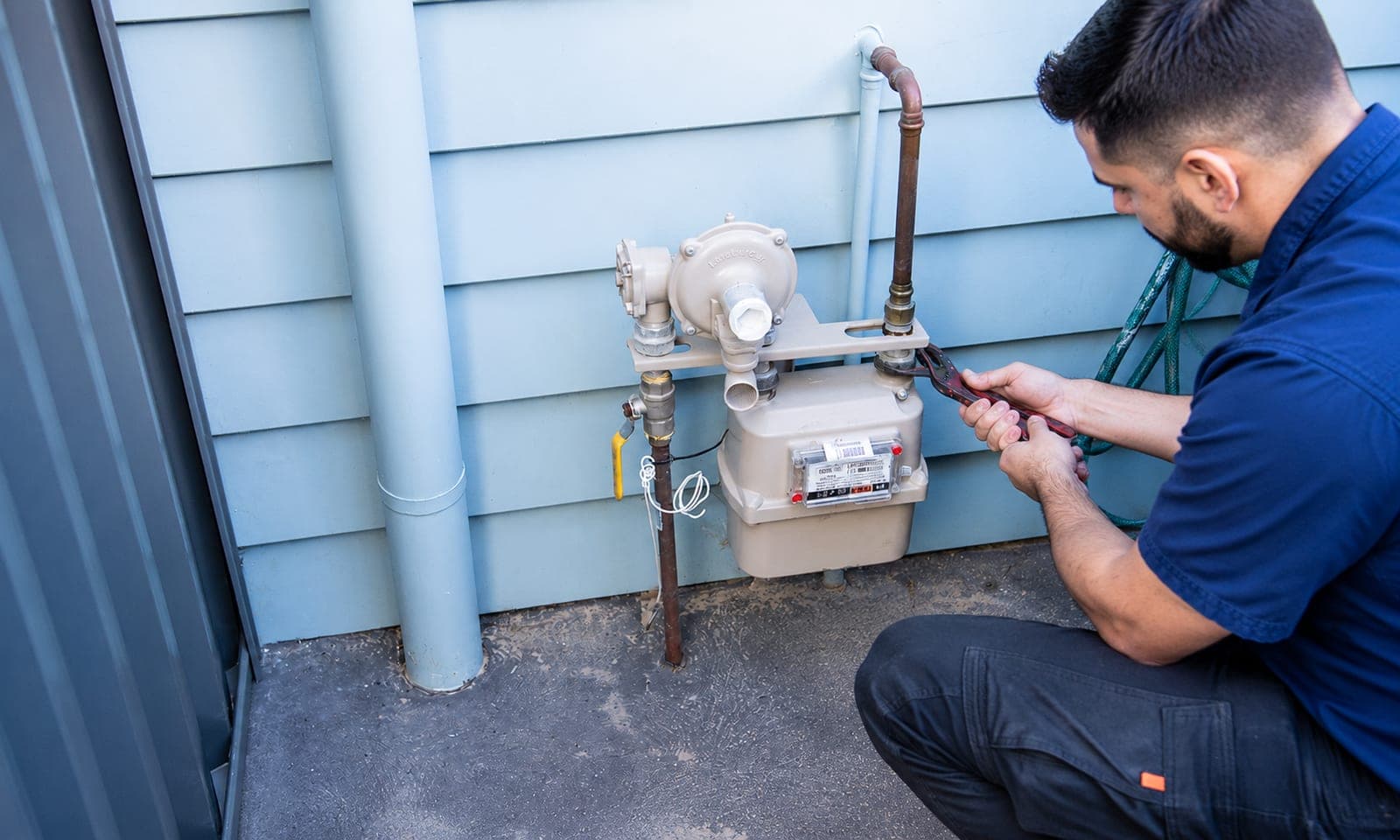
Gas line installation means running a dedicated pipe from your home's existing gas supply to the spot where a gas appliance will sit. For us, that is usually a fireplace, an insert or a set of gas logs, though we also handle other gas appliance work. The job covers the route, the pipe, a shutoff valve near the appliance, the final connection, and a leak test before anything is lit.
The line has to deliver enough gas for the appliance it feeds. If the pipe is too small, or it runs too far for its size, the flame can be weak or uneven even when the appliance itself is fine. Most of the planning goes into getting that sizing and route right.
When a home needs a new gas line
A gas line is usually part of a bigger project, not a separate repair. Common reasons include:
- Adding a gas fireplace where there was none. The line is part of gas fireplace installation and is planned with the unit.
- Putting gas logs into an existing masonry fireplace that has never had a gas supply. The line is part of our gas log installation service.
- Switching from wood to gas. If you're still deciding, our guide to gas vs wood burning fireplace covers the tradeoffs.
- Moving a gas appliance to a new spot in the room or the house.
- Replacing an older appliance with one that needs more gas than the current line can supply.
- Replacing an old, kinked or damaged connector that shouldn't stay in service.
If you already have a gas fireplace that lights poorly or won't stay lit, the line may not be the problem. Our gas fireplace service checks the appliance first, so you don't pay to run new pipe that doesn't fix the issue.
What the visit involves, step by step
How we install a gas line
Look at the appliance and where it will go
We confirm what the line will feed, using the appliance's gas requirements and its planned position.
Trace the existing supply
We find where the new line can tie into your current gas piping and work out a practical route to the appliance.
Size the line
We choose the pipe size based on how much gas the appliance needs and how far the gas has to travel.
Run the pipe and add a shutoff
We install the line and put an accessible shutoff valve near the appliance, so its gas can be turned off without shutting off the whole house.
Pressure and leak test
We test the new piping and connections for leaks before the appliance is put into use.
Connect and check the appliance
We make the final connection, light the appliance and check that the flame looks right.
Pipe and connection materials
Residential gas lines are usually rigid steel (black iron) pipe, flexible corrugated stainless steel tubing (CSST), or a mix of the two. A short approved connector often makes the last link to the appliance. Which one fits your home depends on the route, the distance and how the existing piping is set up. We'll explain what we plan to use and why before the work starts.
Safety and upkeep after installation
A gas line that is sized correctly, tested and has its own shutoff should need very little attention day to day. A few habits help keep it that way:
Good habits around a gas appliance
- Know where the shutoff valve for the fireplace or appliance is.
- Keep the area around the valve and connector clear so it can be reached.
- Don't let anything heavy rest on or crush the line or connector.
- Have the gas appliance serviced on a regular schedule.
- Treat a gas smell as an emergency, not something to investigate yourself.
Booking a gas line installation
Get in touch and tell us what the line will feed and where it will go. We work on all major brands of gas fireplaces and appliances, and we also take commercial and property-manager jobs.