On this page
What gas log installation involves
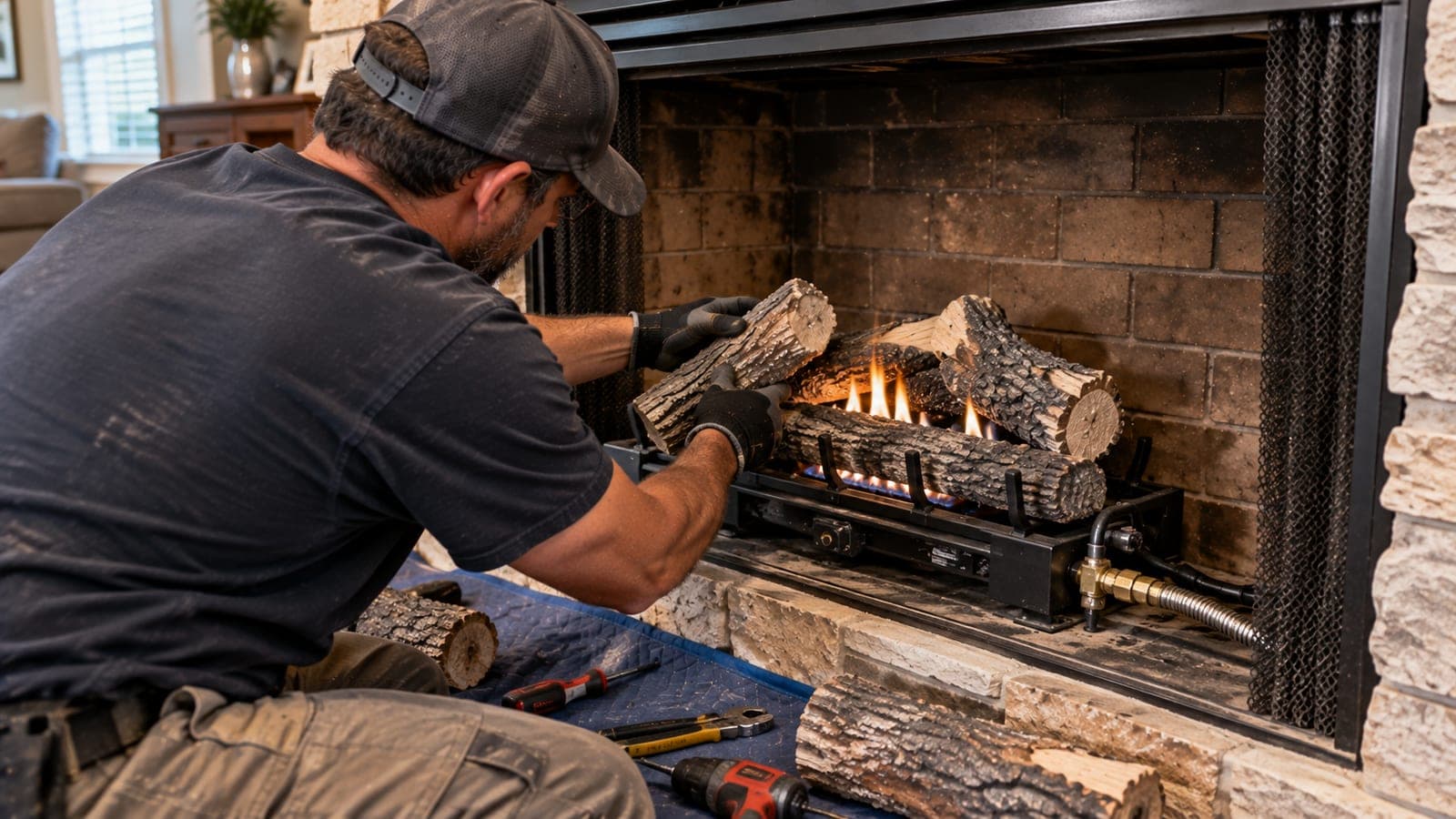
A gas log set is a burner, a valve and a set of ceramic or refractory logs that sit in the firebox of an existing fireplace. Unlike a sealed insert, the set burns in the open firebox and depends on the fireplace and chimney to carry exhaust out of the house. Installation is more than setting logs on a grate. The gas supply has to reach the firebox, the burner has to suit the size of the opening, and the flue has to be clear and sound.
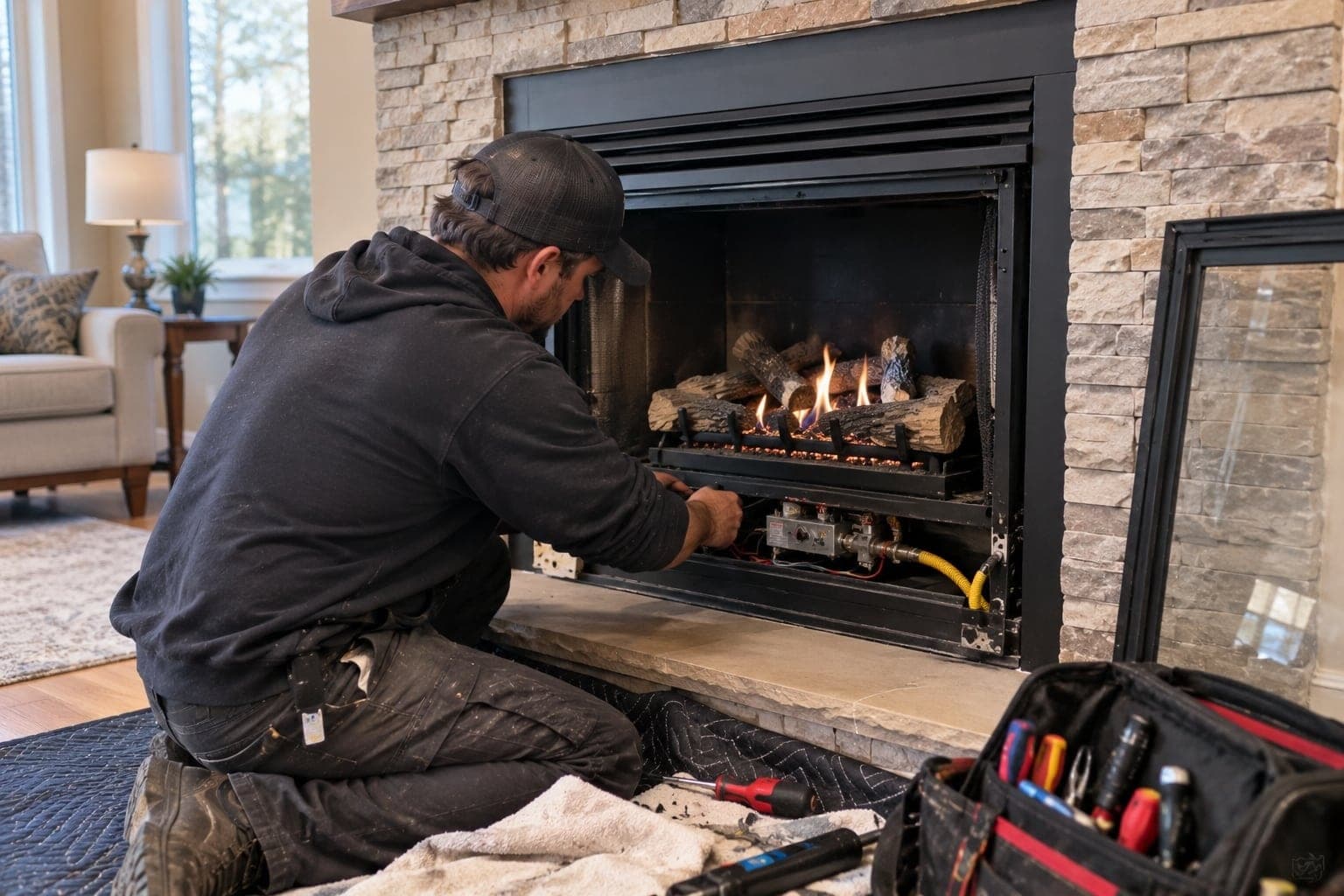
If you're still deciding whether gas is right for you at all, our guide to gas vs wood burning fireplace walks through the trade-offs in heat, upkeep and feel. If you want a sealed, self-contained unit instead of logs in an open firebox, look at our gas fireplace installation service.
If you smell gas
Leave the building right away. Don't flip light switches, use phones or light any flame inside. Once you're outside, call the gas utility or 911.
When a gas log set makes sense
Homeowners usually call about gas logs for one of these reasons:
- The wood-burning fireplace rarely gets used because of the work involved: buying and storing wood, building fires and cleaning out ash.
- An older gas log set has cracked or crumbling logs, a corroded burner or a pilot that won't stay lit.
- Logs on an existing set have started leaving heavy soot on the firebox or glass doors, a sign the set may need attention.
- You want a real flame for atmosphere without smoke in the room.
- A gas line already runs to the fireplace, often from a previous set that was removed.
If there's no gas supply at the fireplace yet, that's part of the job. Our gas line installation work covers running the line to the firebox before the logs go in.
The parts of a gas log set
| Component | What it does | What you choose |
|---|---|---|
| Burner | Spreads the flame under and through the logs | Sized to the firebox opening |
| Logs | Ceramic or refractory pieces shaped like wood | Style and number of pieces |
| Embers and media | Glowing material on the burner bed | Ember type or decorative media |
| Valve and ignition | Controls gas flow and lights the burner | Match-lit, standing pilot or remote-ready |
| Feature | Vented | Vent-free |
|---|---|---|
| Flame look | Taller, more yellow, closer to a wood fire | Shorter, bluer, more efficient burn |
| Damper | Must stay open while burning | Designed to run with less venting |
| Heat to the room | More decorative, less heat | More heat stays in the room |
| Log arrangement | More forgiving | Must match the manufacturer layout exactly |
Flame look
- Vented
- Taller, more yellow, closer to a wood fire
- Vent-free
- Shorter, bluer, more efficient burn
Damper
- Vented
- Must stay open while burning
- Vent-free
- Designed to run with less venting
Heat to the room
- Vented
- More decorative, less heat
- Vent-free
- More heat stays in the room
Log arrangement
- Vented
- More forgiving
- Vent-free
- Must match the manufacturer layout exactly
We'll tell you which type suits your fireplace once we've seen it. We work on all major brands of gas log sets and the fireplaces they go into.
What the installation visit looks like
Step by step
Check the fireplace and flue
We look at the firebox, damper and chimney to confirm the fireplace can safely carry exhaust. Cracks, blockages or a damaged damper get flagged before anything is installed.
Confirm the gas supply
We check whether gas reaches the firebox and whether the existing line and shutoff suit the new set.
Prepare the firebox
Old logs, grates and ash come out, and the firebox gets cleaned so the burner sits level.
Fit the burner and controls
The burner pan, valve and ignition go in and connect to the gas supply.
Arrange the logs
Logs and embers are placed in the manufacturer's layout, which controls flame pattern and clean burning.
Leak test and burn test
We check every connection for leaks, light the set, and watch the flame and draft.
Walk you through it
You'll learn how to light and shut off the set, where the gas shutoff is, and what normal operation looks like.
Safety and upkeep after installation
Gas logs burn cleaner than wood, but they still produce exhaust that has to leave through the chimney. A few habits keep a set running safely:
Keeping gas logs safe
- Have the flue and set checked once a year. Birds' nests and debris can block a chimney even when no wood is burned.
- Keep the damper open whenever a vented set is lit.
- Leave the logs in the layout we set. Moving them can cause soot and poor combustion.
- Keep a working carbon monoxide alarm in the home.
- Call for service if you see heavy soot, a lazy yellow flame on a vent-free set, or a pilot that keeps going out.
For yearly checks, repairs to an existing set or problems with ignition, our gas fireplace service covers the work after installation.
Booking your gas log installation
Commercial and property-manager work is offered too. Call or request an estimate and tell us about the fireplace you have now and whether gas already reaches it.