On this page
What dryer vent cleaning involves
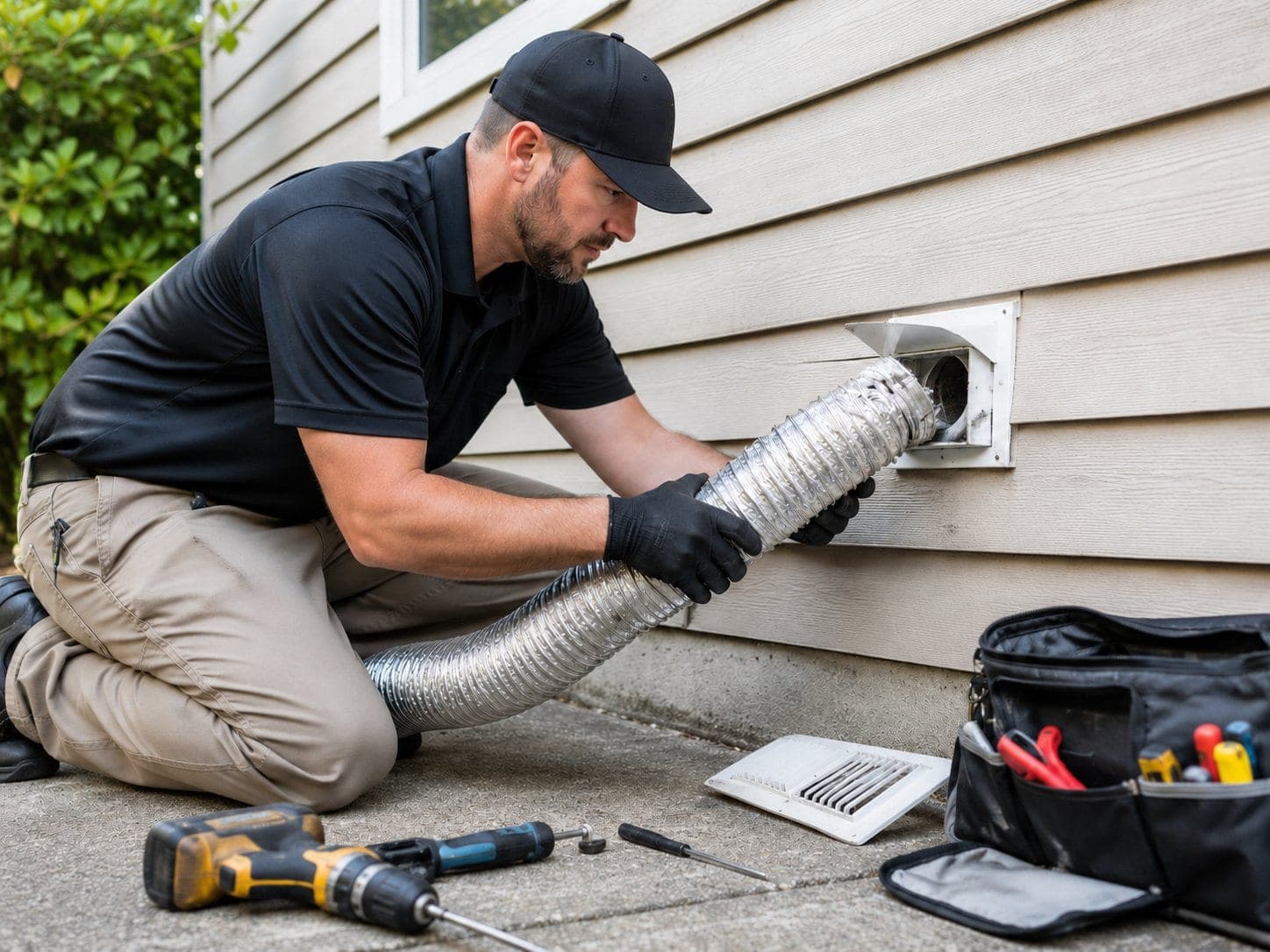
Your dryer pushes hot, damp air and fine lint through a duct to the outside. The lint screen catches most of it, but some always gets through and settles along the duct walls, at bends, and around the exterior cap. Over time that layer narrows the passage. Dryer vent cleaning removes it along the whole length of the duct, not just the few inches you can reach by hand.
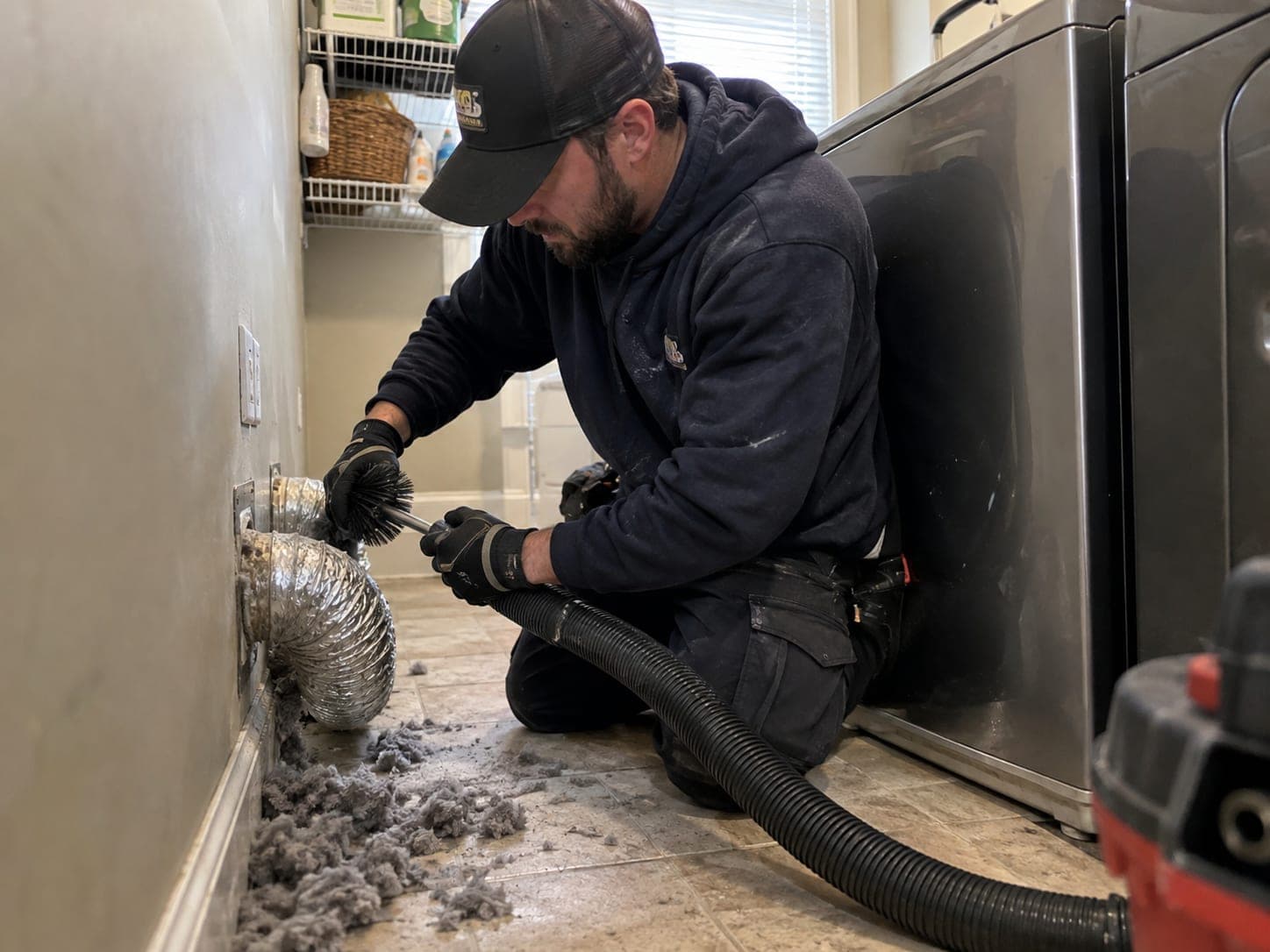
The job covers the transition hose behind the dryer, the duct running through walls, floors or ceilings, and the termination point outside, whether that's a wall cap or a rooftop vent. If the run turns out to be packed solid or holding something other than lint, the work moves into clearing a fully blocked dryer vent.
Signs your dryer vent is clogged
A restricted vent usually shows up in how the dryer behaves before it shows up anywhere else. The most common complaint is a dryer taking too long to dry a normal load, often needing a second cycle.
Signs that point to the vent
- Clothes come out damp or need extra cycles
- The dryer or the clothes feel unusually hot at the end of a cycle
- The laundry room gets warm or humid while the dryer runs
- A burning or musty smell when the dryer is on
- Little or no airflow at the outside vent cap while the dryer runs
- Lint collecting around the exterior vent opening or behind the dryer
- The exterior flap stays shut or is stuck open
Some of these signs can also come from a worn heating element or sensor inside the dryer. Checking the vent first makes sense because it's the most common cause of slow drying and it's the part a vent cleaning actually fixes.
What the visit involves, step by step
How a dryer vent cleaning visit goes
Look at the setup
We check where the dryer sits, how the duct is routed, and where it exits, so the right tools and access point are used.
Check airflow
Airflow at the exterior cap is checked with the dryer running, which gives a before-and-after comparison.
Disconnect the dryer
The dryer is pulled out and the transition hose is taken off so the duct can be cleaned from the inside end.
Clean the full duct run
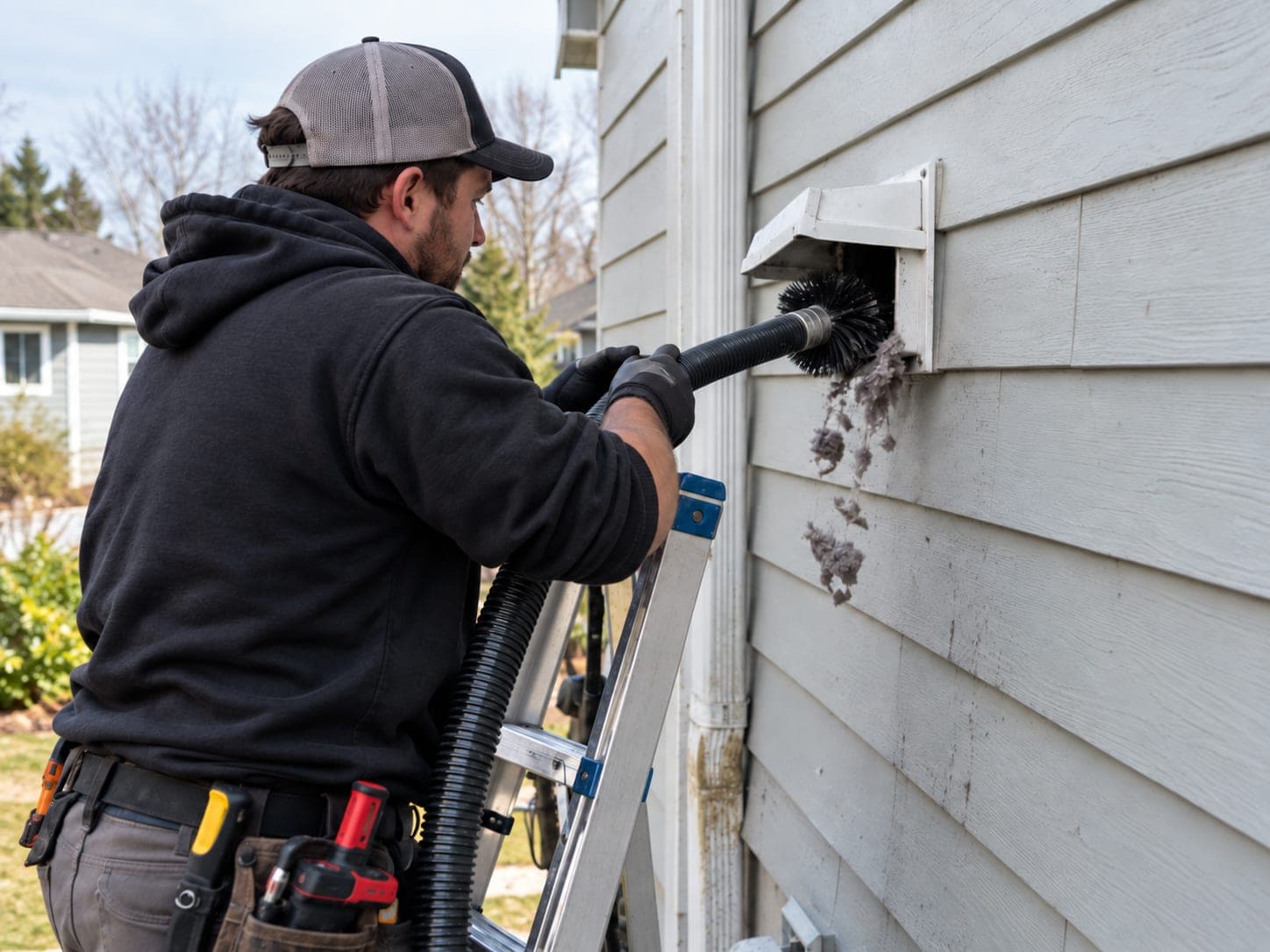
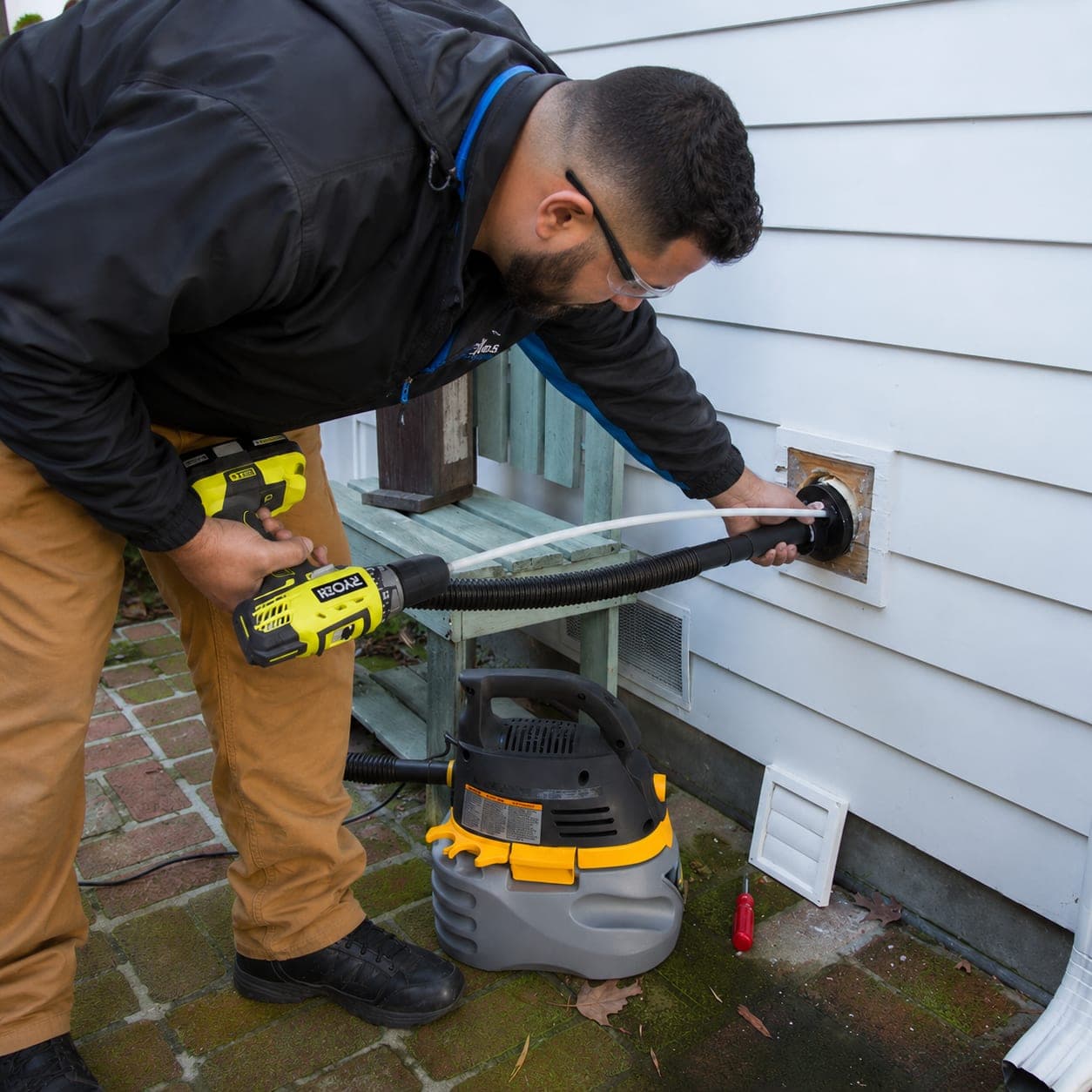
Rotary brushes and air are worked through the length of the duct to break up lint and push it out, including at bends.
Clear the exterior or rooftop cap
The cap, flap or screen at the outside end is cleaned so air can leave freely.
Reconnect and retest
The dryer is reconnected, the hose is checked for kinks or crushing, and airflow is checked again.
If we find a damaged duct, a loose connection or an exterior cap that no longer opens and closes properly, we'll show you what we found before any further work. A broken or missing cap can be handled through replacing the dryer vent cover.
Roof dryer vent cleaning
Some dryer vents run up through the attic and exit on the roof instead of out a side wall. These runs are usually longer and climb vertically, so lint tends to fall back and gather at the lowest bend, and the rooftop cap can trap lint behind its screen or flap. Because the top end is out of reach for most homeowners, rooftop vents often go much longer between cleanings.
Roof dryer vent cleaning works from both ends where needed: from inside at the dryer connection and from the roof at the cap. The cap itself is cleared, and the run is checked to make sure lint isn't left sitting in the attic section.
Components and materials we work on
- Transition hose: the short flexible connector behind the dryer. Thin plastic or foil hose crushes easily and catches lint in its ridges.
- Rigid or semi-rigid duct: the main run through walls, floors or the attic. Smooth metal duct holds less lint than corrugated flex.
- Elbows and bends: where lint collects most heavily.
- Exterior wall cap or rooftop cap: the flap, louvers or screen at the outside end.
- Gas and electric dryers: both are cleaned the same way at the vent, but gas dryers also exhaust combustion gases through the same duct.
Safety and maintenance
Why lint buildup is a safety issue
Dryer lint is highly flammable, and a restricted vent keeps more heat inside the dryer and duct. With a gas dryer, a blocked vent can also keep exhaust gases, including carbon monoxide, from leaving the home. Make sure you have working smoke and carbon monoxide alarms.
Between cleanings, a few habits help:
- Clean the lint screen before or after every load.
- Wash the lint screen with warm soapy water now and then if you use dryer sheets, which can leave a film that blocks airflow.
- Keep the transition hose short and free of kinks when you push the dryer back.
- Check the outside cap occasionally while the dryer runs: you should feel steady airflow and see the flap open.
If you own or manage several units, a regular cleaning schedule is easier to keep through our dryer vent cleaning for rentals and property managers.
Booking dryer vent cleaning
24-hour service runs Sunday–Friday, and emergency calls are accepted.
Free estimates.
Call or request an estimate, and tell us whether your vent exits through a wall or the roof and what the dryer has been doing.
Related work covered on this page
- Dryer Vent Lint Removal
- Roof Dryer Vent Cleaning