On this page
What a dryer vent inspection covers
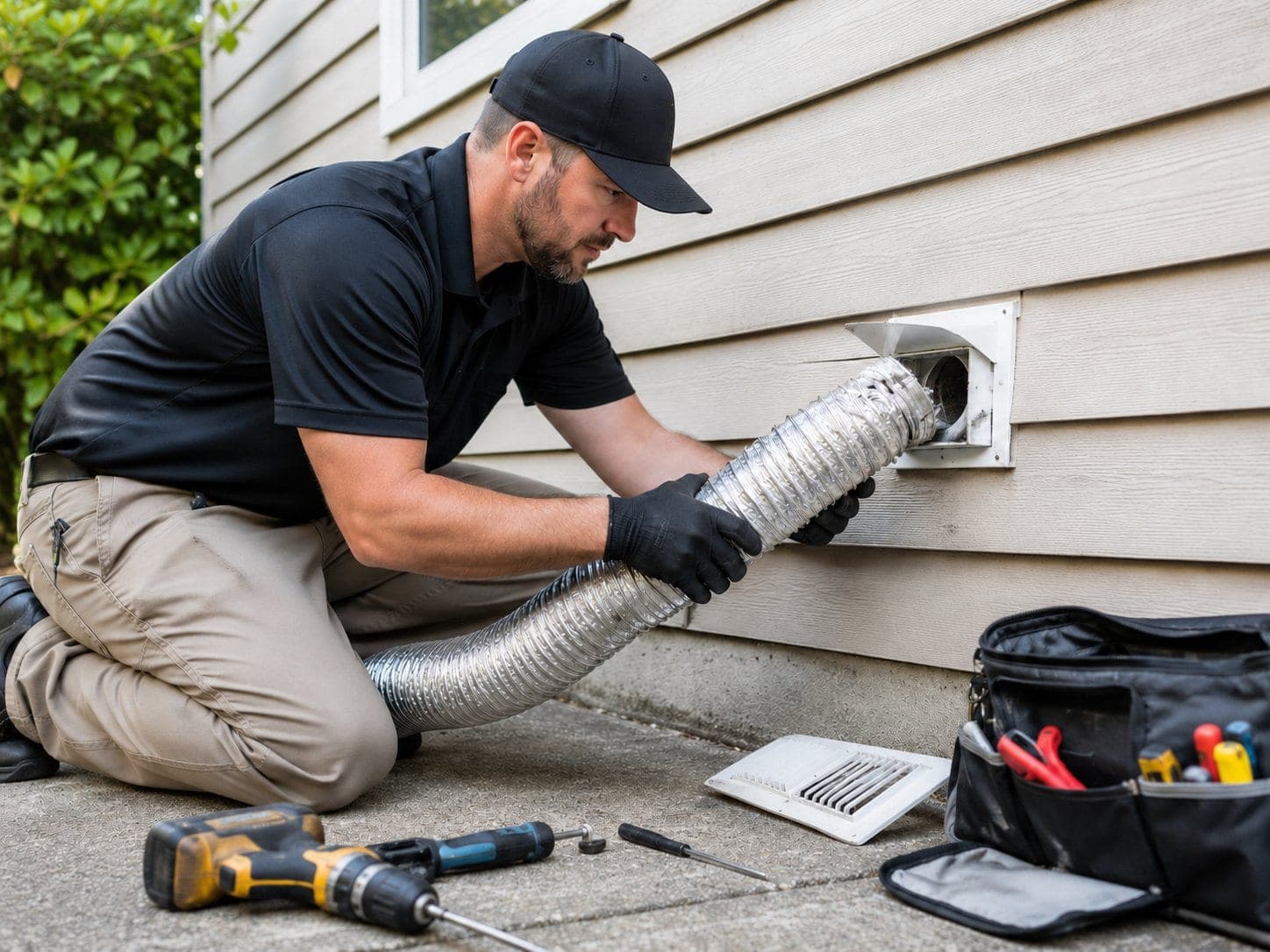
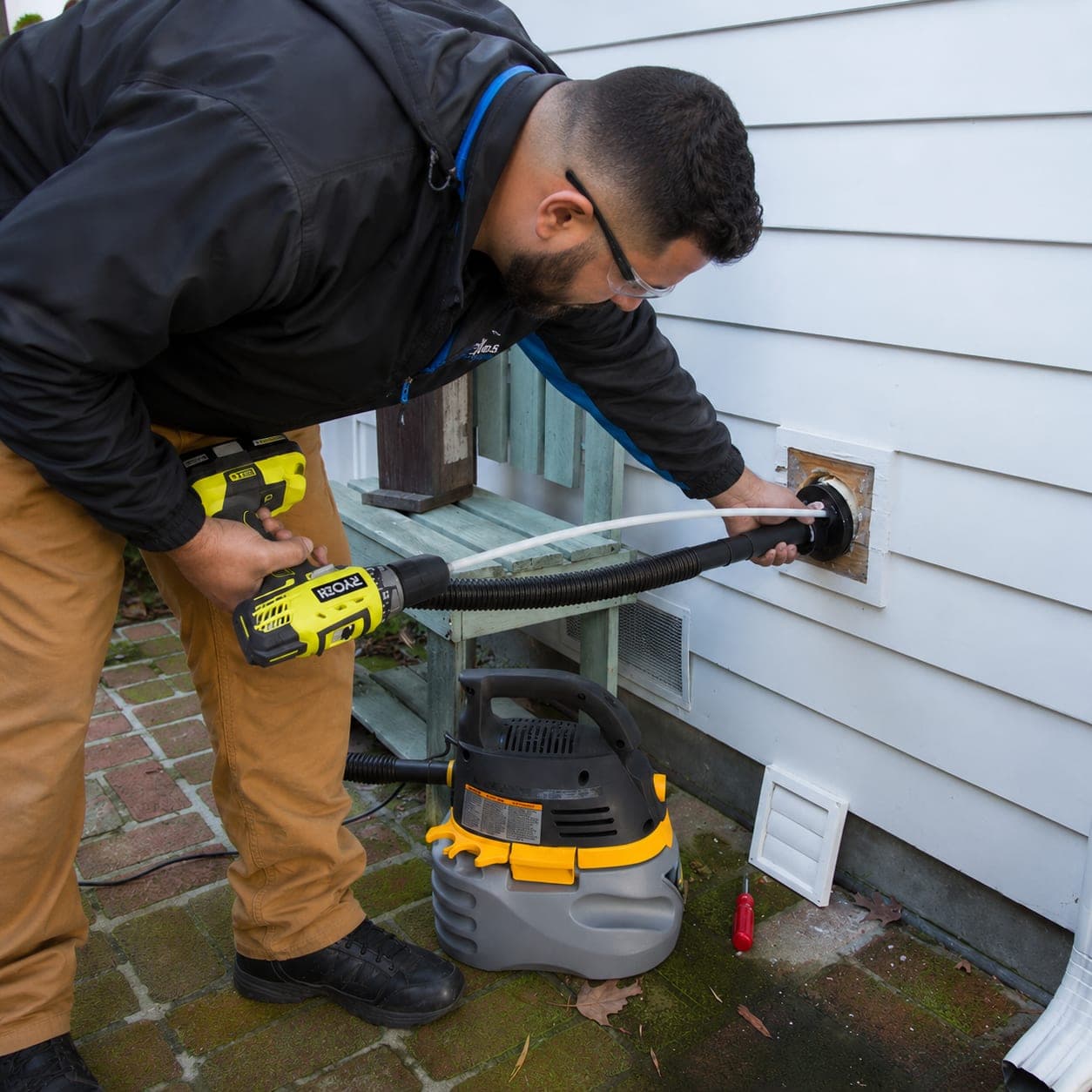
A dryer pushes hot, moist, lint-laden air through a duct to the outside of the house. A dryer vent inspection follows that path from start to finish. We look at the connection behind the dryer, the duct run through walls, floors or the attic, and the termination outside on a wall or roof. We also measure how well air actually moves out of the outlet.
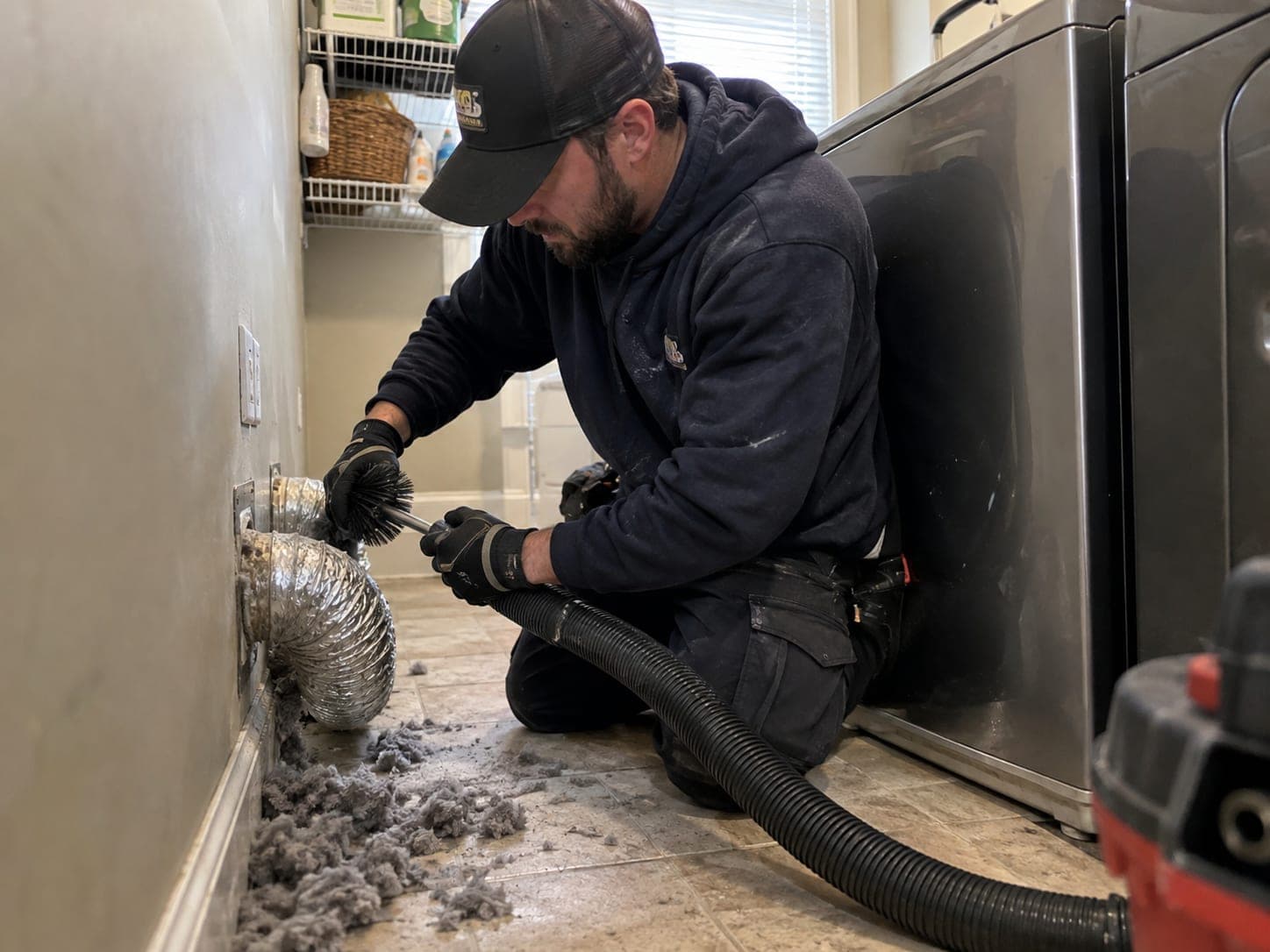
The goal is a clear answer about the vent's condition. Sometimes it is fine. Sometimes it needs cleaning, has a blockage, or has a damaged part that needs repair or replacement. You get that answer before any work is done.
Signs your dryer vent should be checked
Common reasons to book an inspection
- Loads take longer to dry, or need a second cycle
- The dryer or the clothes feel unusually hot when a cycle ends
- The laundry room gets humid or warm while the dryer runs
- A burning or musty smell when the dryer is on
- Lint collecting around the outside vent opening, or the cover flap stays shut while the dryer runs
- Little or no air coming out of the outside vent
- The duct behind the dryer is crushed, kinked or disconnected
- You've moved into a home and don't know when the vent was last cleaned
- A bird or other animal may be nesting in the outside vent
If you can already see a clogged outlet or packed lint, you may know the vent needs professional dryer vent cleaning. An inspection still helps when the cause isn't clear, or when you want to know the whole run is sound rather than just the end you can see.
How the visit works, step by step
What happens during a dryer vent inspection
Talk through the symptoms
We ask what you've noticed: drying times, smells, heat, noises. We also ask whether the dryer runs on gas or electric.
Check the connection behind the dryer
We pull the dryer out and look at the transition duct and clamps, and check how much lint sits at the dryer outlet.
Look along the duct run
We trace the duct where it can be reached and look for lint buildup, sagging sections, crushed or kinked spots, and loose joints.
Inspect the outside termination
We check the wall or roof outlet and its cover. A flap or screen that sticks, clogs or traps lint is a common cause of restricted flow.
Test the airflow
With the dryer running, we check how well air moves out of the outlet so the result rests on a measurement, not a guess.
Explain what we found
We tell you what's working and what isn't, recommend any next step, and give you a free estimate before any further work.
Parts of the vent system we look at
- Transition duct: the short flexible piece between the dryer and the wall. Thin foil or plastic types crush and trap lint more easily than metal duct.
- Main duct run: the length inside walls, ceilings or the attic. Long runs and many turns slow airflow and give lint more places to settle.
- Joints and clamps: loose or separated joints can leak lint and moist air inside the house.
- Exterior vent cover: the hood, flap or louvers at the outlet. When a cover is broken or keeps sticking, replacing the dryer vent cover is often a simple fix.
- Roof outlets: vents that end on the roof are harder to reach and easy to forget, so they get checked too.
Why the vent matters for safety
Lint burns easily. When it builds up in a warm duct with poor airflow, the dryer runs hotter and longer than it should, which raises fire risk and wears out the machine. A restricted vent also wastes energy, because every load takes more time.
Gas dryers need a working vent
A gas dryer burns fuel, and its exhaust must leave the house through the vent. A disconnected or blocked duct can send exhaust back indoors. Keep a working carbon monoxide alarm near living areas. If you smell gas, leave the home and call your gas utility or emergency services.
A few habits help between visits: clean the lint screen after every load, keep the area behind the dryer clear, and glance at the outside outlet now and then to make sure the flap opens when the dryer runs. Unplug the dryer first, and on a gas dryer turn off its gas valve. If the inspection finds a clog deep in the duct, clearing a dryer vent blockage restores the airflow.
Booking a dryer vent inspection
Call or request an estimate and tell us what you're noticing with your dryer. Commercial and property-manager work is offered, so vents in rentals and multi-unit buildings can be checked too.