On this page
What dryer vent cover replacement involves
The dryer vent cover is the fitting where your dryer's exhaust duct leaves the house. It is also called the hood or exterior termination. It has a flap or a set of louvers that opens when the dryer pushes air out and closes when the dryer stops. The closed flap keeps out drafts, rain and animals.
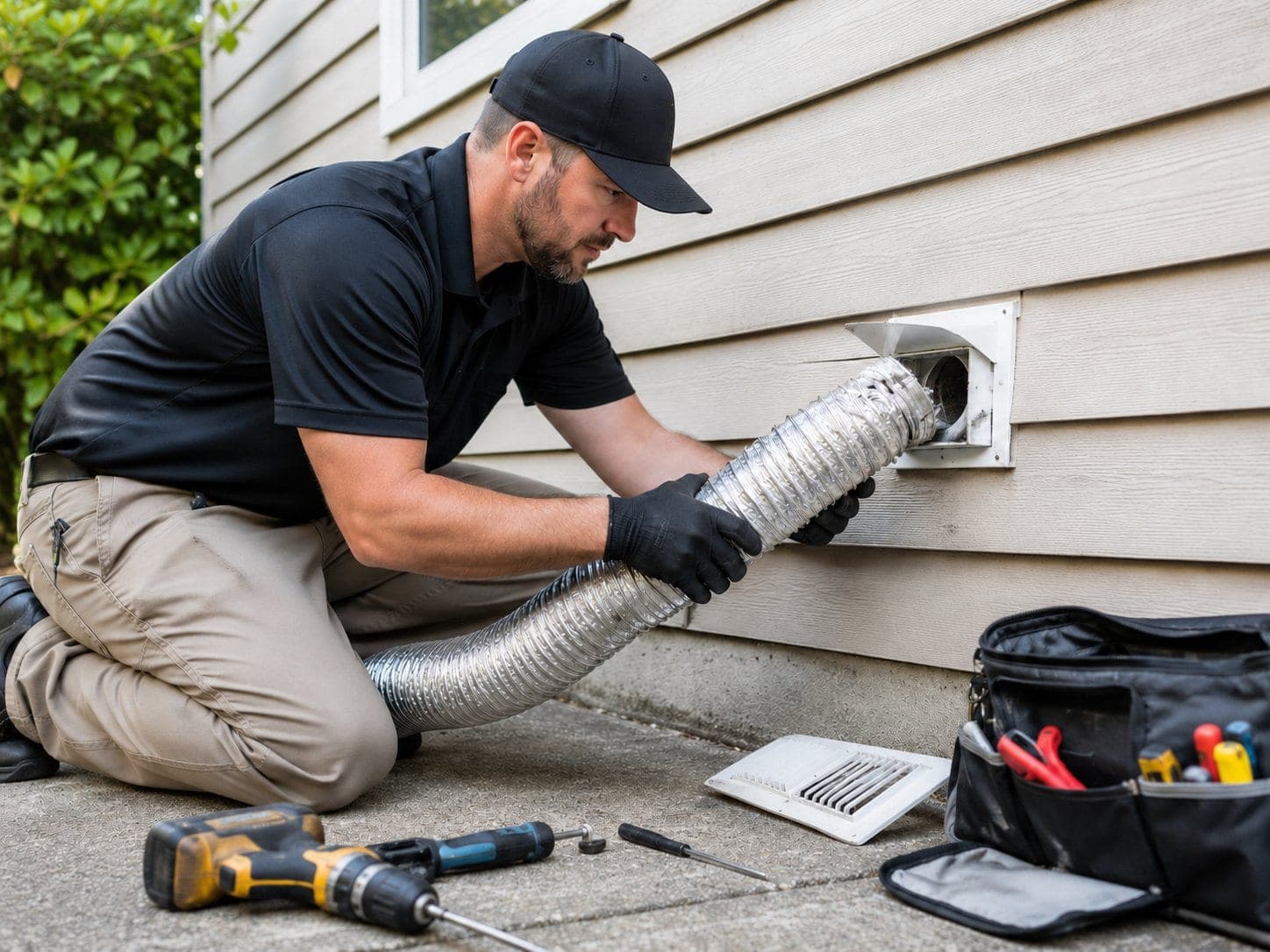
Dryer vent cover replacement starts with removing the damaged hood. We check that the duct behind it is connected and reasonably clear, then fit a new cover. We fasten it to the wall, seal it against the siding and test it while the dryer runs. The job is small, but a poorly fitted cover can restrict airflow as much as a clogged duct.
Signs your dryer vent cover needs replacing
Look at the outside vent while the dryer is running
- The flap stays shut, or opens only a little, when the dryer is on
- The flap hangs open when the dryer is off, so cold air or rain gets in
- Louvers are cracked, broken off or missing
- The plastic has gone brittle, warped or faded to the point of splitting
- Lint is packed around the hood opening or caked on the flaps
- Birds, rodents or insects are getting in, or there are signs of a nest
- The cover has pulled away from the wall, leaving a gap around the duct
- Clothes take longer to dry than they used to, and the laundry area feels warm or humid
Some of these signs point past the cover. Long drying times and lint packed at the hood often mean the duct itself is loaded with lint. If you aren't sure whether the problem is the cover or the duct behind it, a dryer vent inspection with airflow testing sorts that out before any parts are swapped.
What the visit looks like, step by step
How we replace a dryer vent cover
Check the existing cover
We run the dryer and watch how the flap behaves. Then we look at the condition of the hood and how it is attached to the wall.
Remove the old hood
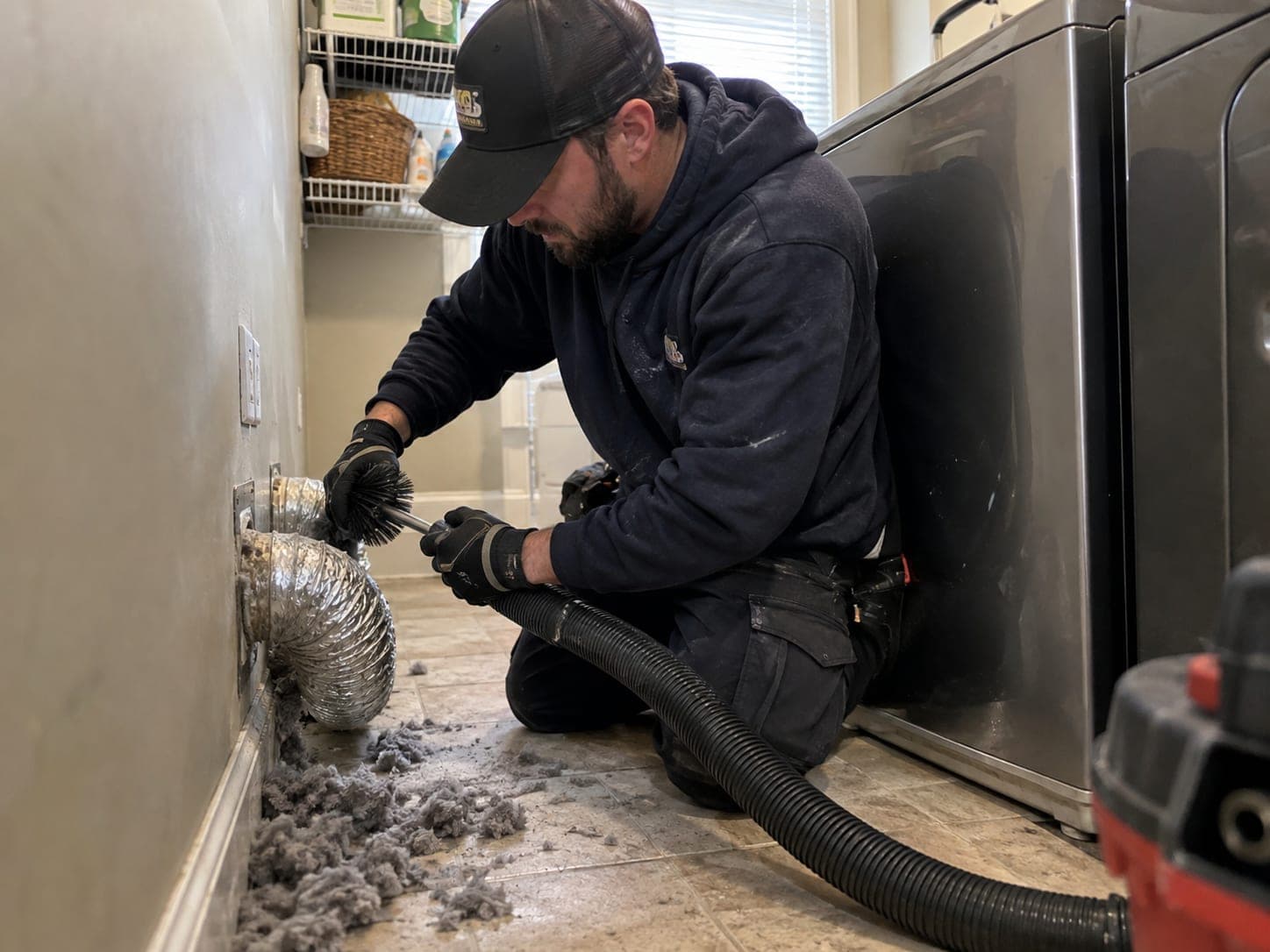
We take off the damaged cover and look at the duct connection right behind it. We check whether it is attached, crushed, disconnected or full of lint.
Deal with what's behind it
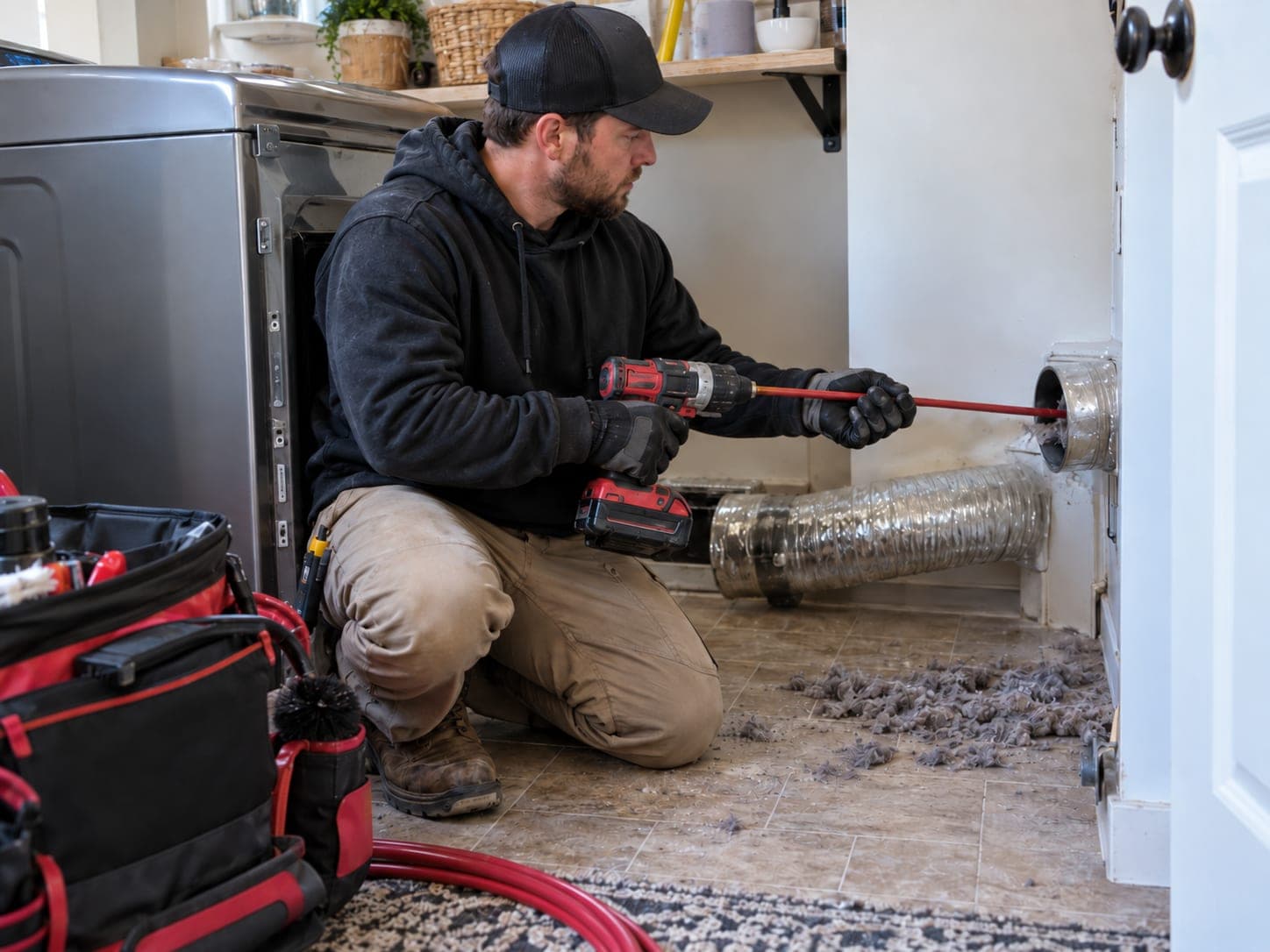
If lint or debris is lodged at the termination, we clear it. If the whole duct is packed, we'll explain what we found and what a full cleaning would involve before going further.
Fit the new cover
We connect the new hood to the duct, fasten it to the wall and seal the edges so water and air can't get in around it.
Test with the dryer on
We run the dryer again. We confirm that the flap opens fully, air is moving out, and the flap closes when the dryer stops.
Cover styles and materials
Exterior dryer vent covers come in a few common designs. Louvered hoods have several small slats. Single-flap hoods have one larger door. Some covers have a built-in guard against animals.
Covers are made of plastic, aluminum or galvanized steel. Plastic is light but can turn brittle in the sun. Metal hoods hold up better and don't warp. We'll suggest a cover that fits your duct size, your wall surface and the problem you're having, such as a flap that sticks or pests that keep getting in.
Avoid fine screens on a dryer vent
A screen over a dryer exhaust may look like a quick fix for birds or rodents, but lint collects on it fast and can choke off airflow. A cover with a proper flap, or a guard made for dryer exhaust, keeps animals out without trapping lint.
Safety and upkeep after the new cover is on
Dryer lint is highly flammable. When the exhaust can't get out, heat and lint build up inside the duct and the dryer. A flap that sticks shut or a hood packed with lint is one of the simplest causes of that restriction. With a gas dryer, the duct also carries combustion byproducts out of the house along with the moist air, so a blocked exhaust is a bigger concern.
- Clean the lint screen inside the dryer after every load.
- Every so often, run the dryer and check from outside that the flap opens and air is flowing.
- Wipe away lint that collects on the outside of the hood.
- Keep plants, stored items and debris clear of the vent opening.
- If drying times creep up again, have the duct checked. Our dryer vent cleaning service clears lint from the full duct, not just the end.
A new cover won't fix a nest, a crushed section or a wad of lint stuck partway down the duct. That calls for clearing a blocked dryer vent, which we can do on the same visit when the schedule allows.
Booking your dryer vent cover replacement
Call or request an estimate and tell us what you're seeing at the outside vent, such as a stuck flap, broken louvers, pests or lint buildup. Our 24-hour service runs Sunday through Friday, and emergency calls are accepted. We also handle commercial and property-manager work, so we can replace covers across several units or buildings.