On this page
What dryer vent rerouting and relocation involves
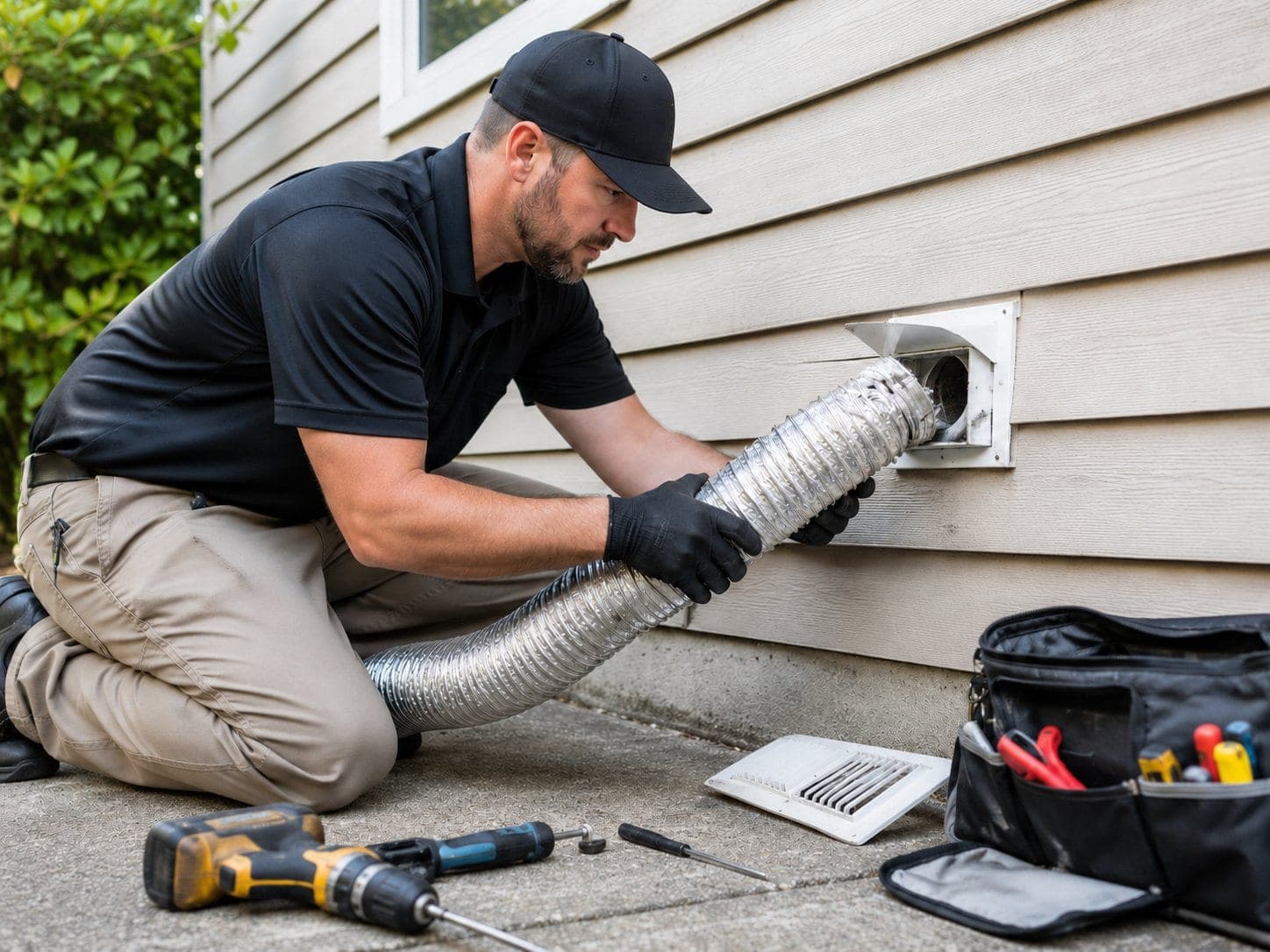
Rerouting means changing the path the exhaust duct takes from the back of the dryer to the outside. Relocation means moving where the vent leaves the house, or moving the duct to suit a dryer that now sits somewhere else. Usually both happen together: the old run is removed or capped, and a new run is installed with fewer turns and less total length.
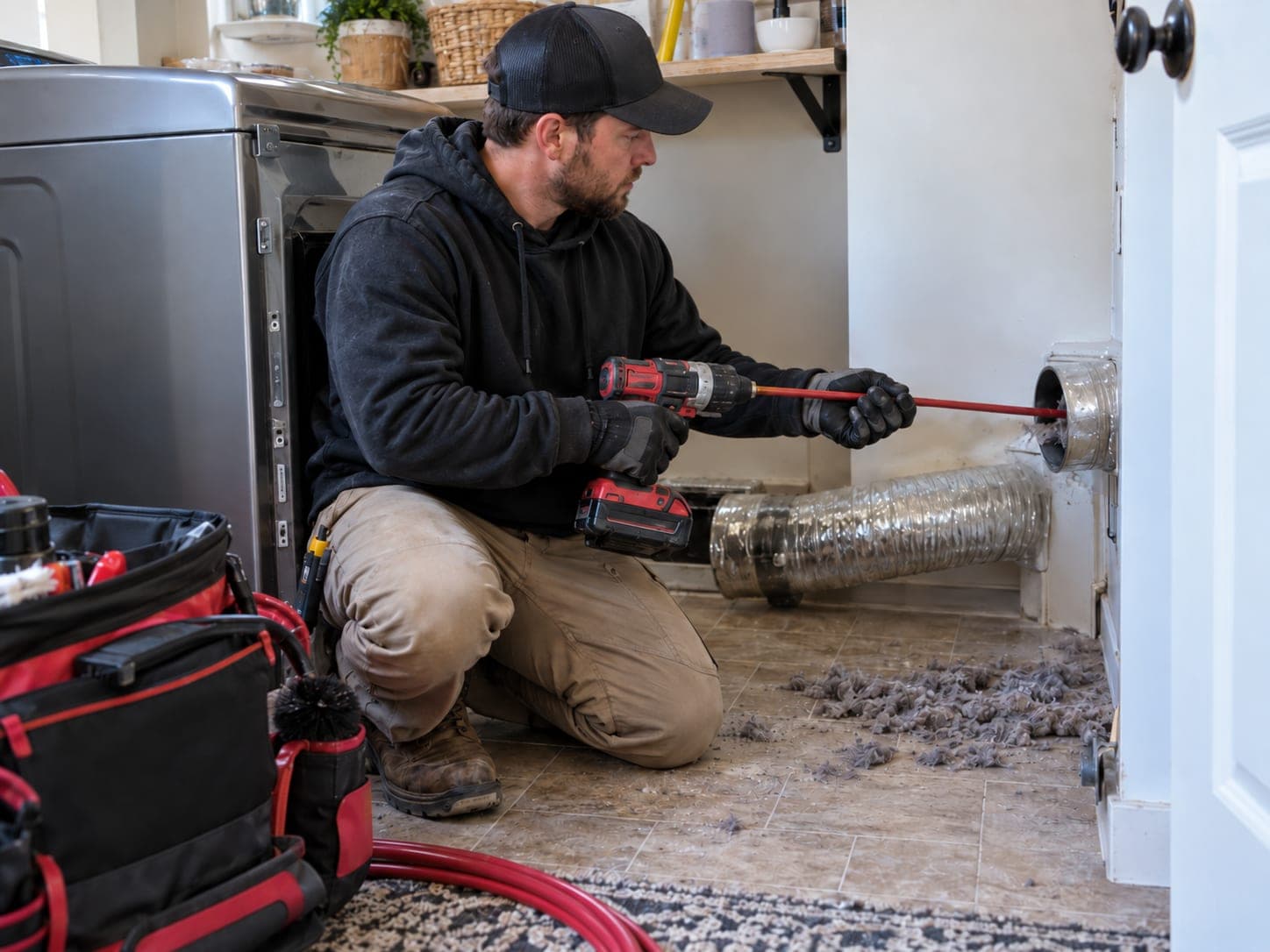
The goal is simple. Lint and moisture should leave the house quickly instead of settling in long runs, sagging sections and tight elbows.
Signs your dryer vent may need a new route
Some airflow problems clear up with a good cleaning. Others come back because the layout itself is the problem. These signs point toward rerouting:
When the layout is the problem
- Clothes need two or more cycles to dry, even after the vent has been cleaned
- The vent clogs again soon after a professional dryer vent cleaning
- The duct makes several sharp turns or runs a long way before reaching the outside
- Flexible foil or plastic duct is crushed behind the dryer or sagging through a crawlspace or attic
- The vent ends in an attic, crawlspace, garage or under a deck instead of outdoors
- The laundry room feels hot and humid while the dryer runs
- You moved the dryer or remodeled, and the old vent no longer lines up
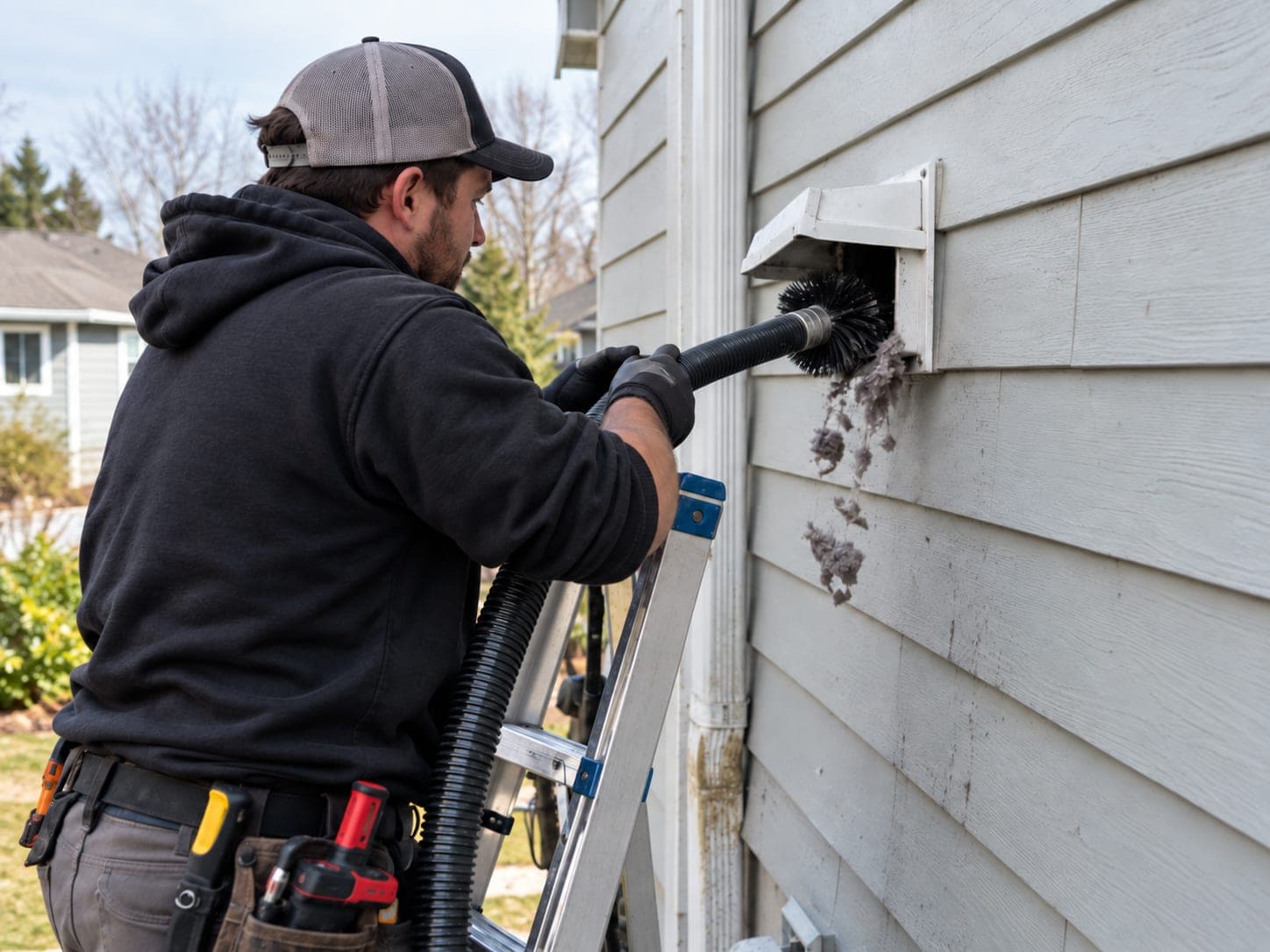
If the dryer stopped venting suddenly, the cause may be a single clog rather than the route. In that case, clearing a blocked dryer vent is often the first step, and we can talk about rerouting if the blockage keeps returning.
What the visit involves, step by step
How a rerouting job usually goes
Look at the current run
We trace the existing duct from the dryer to where it exits, noting length, turns, damaged sections and where lint has built up.
Plan a better path
We look for the shortest practical route to an exterior wall or roof, and check the dryer maker's limits on vent length and elbows.
Walk you through the plan
You get a free estimate that explains the new route, where the duct will pass and what access we need.
Remove or seal the old run
Duct that is no longer used is taken out where reachable, or closed off so it can't collect lint or let air in.
Install the new duct and exit
We run the new duct, seal the joints, support it so it doesn't sag and fit an exterior hood at the new exit point.
Reconnect and check airflow
The dryer is connected with a proper transition piece, then run so we can confirm air is moving freely at the outside hood.
Materials used in a new dryer vent route
| Part | What it does |
|---|---|
| Rigid metal duct | Forms the main run; its smooth inside wall lets lint pass instead of catching |
| Metal elbows | Turn corners with as gentle a bend as the space allows |
| Transition duct | Connects the dryer to the wall so the dryer can be pulled out for service |
| Foil tape and clamps | Seal and hold joints without screws poking into the airflow |
| Exterior hood or roof cap | Lets exhaust out and keeps rain, birds and pests from getting in |
If the new exit point needs a fresh hood, or the old one at the outside wall is cracked or stuck, replacing the dryer vent cover can be done as part of the same job.
Safety and upkeep after the new route is in
Why the path matters
Lint is flammable, and a dryer that can't exhaust properly runs hotter and longer. A gas dryer also sends combustion gases out through the vent, so a vent that ends indoors or is badly restricted is a real hazard, not just an inconvenience.
- Clean the lint screen before or after every load
- Keep the space behind the dryer clear so the transition duct isn't crushed. Unplug the dryer first, and on a gas dryer turn off its gas valve.
- Check the outside hood now and then; the flap should open when the dryer runs
- Schedule periodic vent cleaning, since even a short, smooth route collects lint over time
- Call if drying times start creeping up again
Booking a dryer vent rerouting visit
Get in touch to request an estimate; estimates are free. Commercial and property-manager work is offered, so landlords with several units can arrange rerouting the same way a homeowner would.
Free estimates.
Call or request an estimate, and we'll look at your current vent and lay out a better route.