On this page
What rental dryer vent cleaning covers
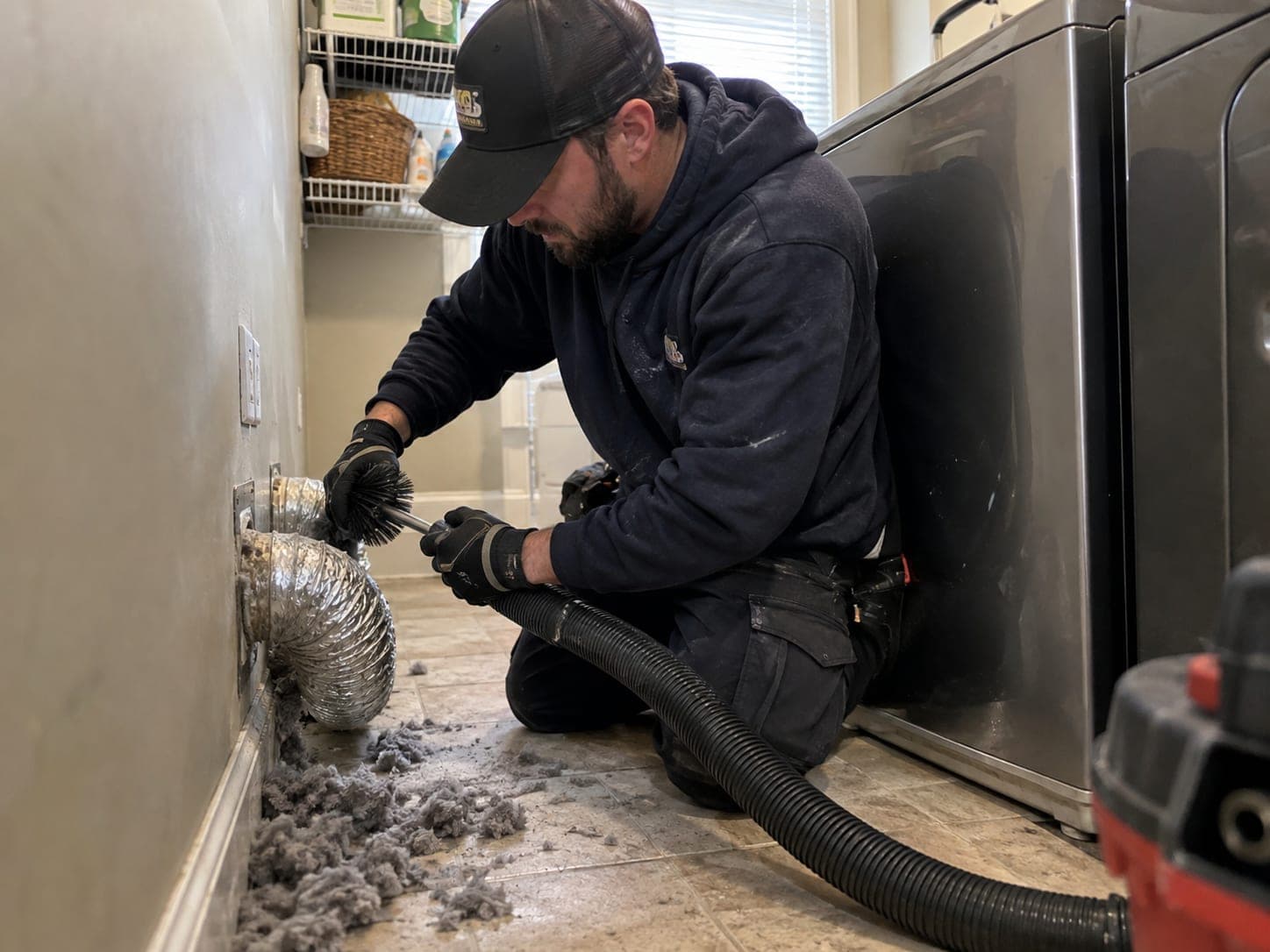
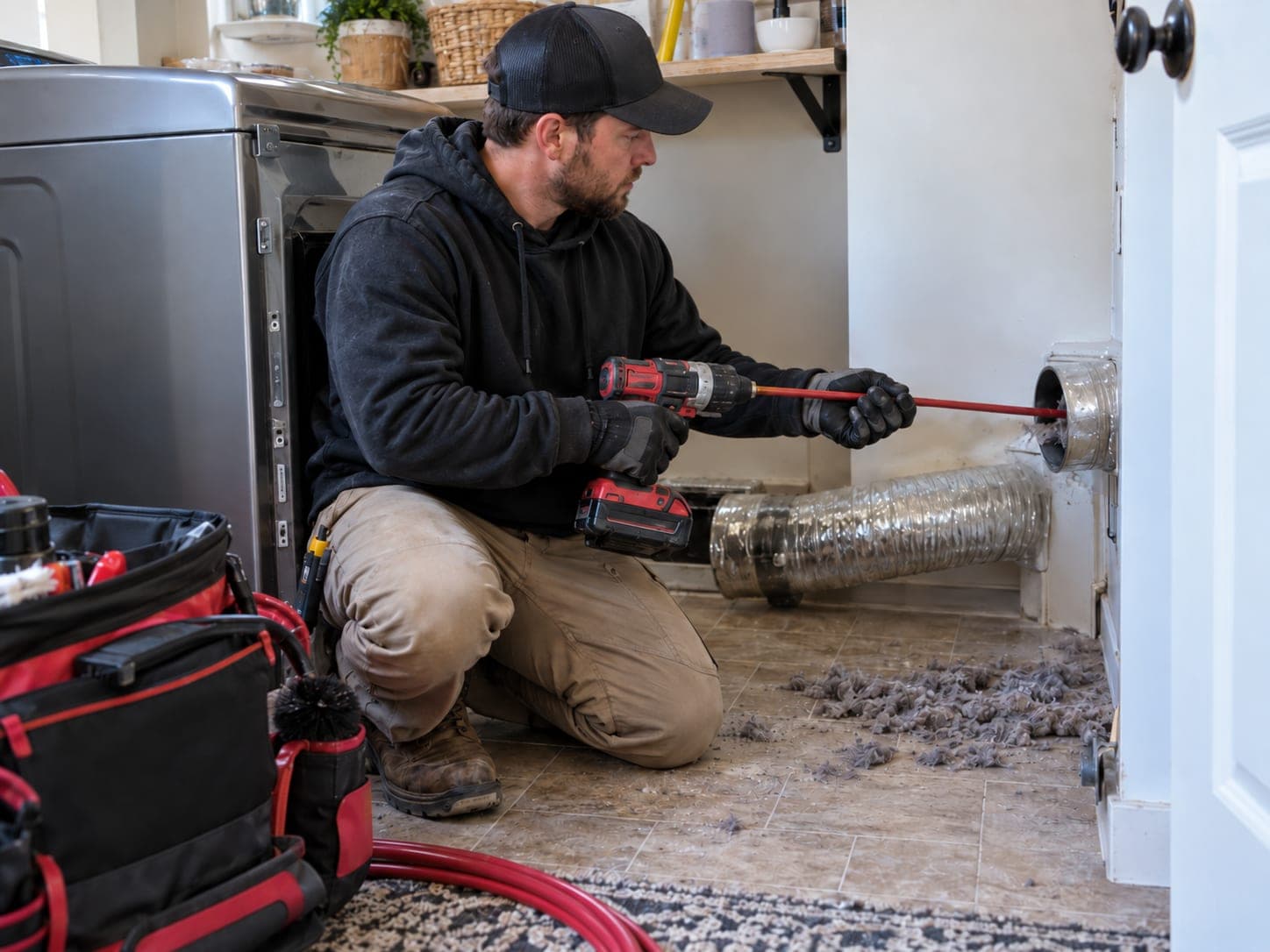
The cleaning itself is the same job as our standard dryer vent cleaning service. We clear lint from the duct that runs from the back of the dryer to the outside cover. What changes in a rental is how the work is organized. Tenants are living in the space, an owner or manager is often not on site, and several units or dryers may need attention.
For property managers and owners, that usually means three things:
- Coordinating access with whoever handles tenant notice, so we arrive when the laundry area can be reached.
- Cleaning each dryer's vent run separately, because one clear vent says nothing about the vent in the unit next door.
- Telling you what we found in each unit, including any damaged duct, crushed connector or stuck exterior flap, so you can decide what to do next.
Commercial and property-manager work is offered, so a single rented house and a building with several laundry hookups are both jobs we take on.
Signs a rental's dryer vent needs attention
Tenants rarely report a dryer vent problem directly. They report the symptoms. Watch for these:
Common warning signs in tenant-occupied units
- Complaints that one load needs two or more cycles to dry
- Clothes or the dryer's top surface feeling unusually hot at the end of a cycle
- A hot, humid laundry closet or a burning smell while the dryer runs
- Lint collecting around the outside vent cover, or a flap that stays shut while the dryer is on
- A dryer that shuts itself off mid-cycle
- A new tenant moving in after someone else used the dryer heavily, with no record of the last cleaning
If lint has packed solid somewhere in the run, or a bird or rodent has nested near the outlet, a routine cleaning may not be enough. That calls for clearing a blocked dryer vent, which targets the obstruction itself.
What the visit involves, step by step
Access and setup
We confirm which units or laundry areas are on the list, then pull the dryer out far enough to reach the connection without straining the duct or the gas or power supply.
Check the connector
We look at the flexible duct between the dryer and the wall. Crushed, kinked or torn sections restrict airflow even when the rest of the vent is clean.
Clean the full run
We clear lint from the dryer outlet through the wall duct to the exterior termination, working the whole length of the run rather than only the first few feet.
Clear the exterior cover
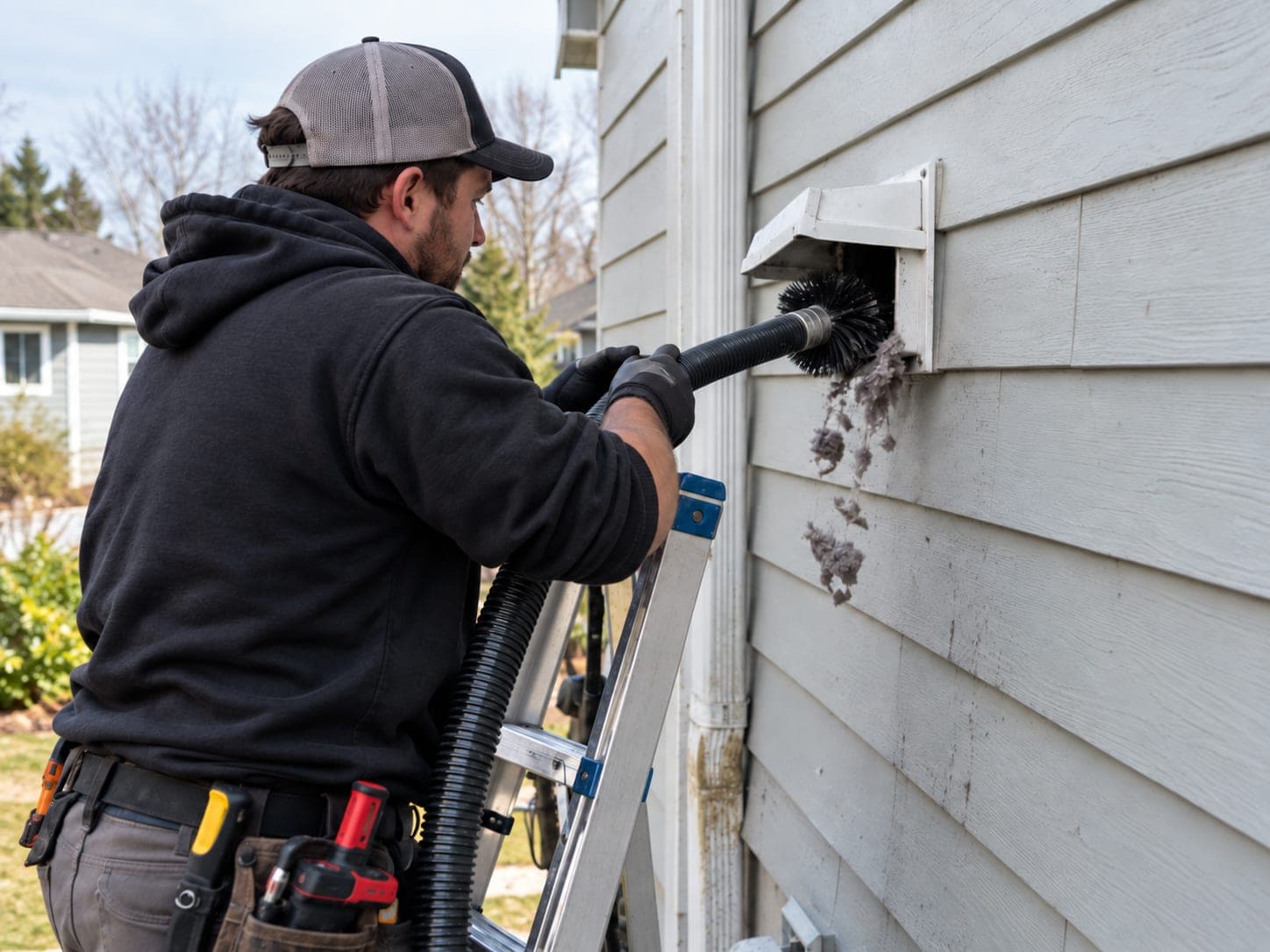
We remove lint from the outside cover and check that the flap or louvers open freely when the dryer runs and close when it stops.
Confirm airflow and report
With the dryer reconnected, we run it and check that air is leaving the outside cover. Then we go over what we found in each unit with you or your contact.
Parts that commonly cause trouble in rentals
Most problems in tenant-occupied units come down to a few parts. The transition duct behind the dryer is easy to crush when a dryer gets pushed back against the wall. Long runs and runs with several bends collect lint faster. Exterior covers get stuck open or shut. A cover with a broken flap lets in pests and weather, and replacing it is a separate job. Our vent cover replacement work handles that.
Safety and upkeep between tenants
Lint is flammable
Lint that builds up in a vent sits next to a heat source every time the dryer runs. A restricted vent also makes the dryer run hotter and longer. With a gas dryer, poor venting can push exhaust back toward the living space.
Some habits help between cleanings, and you can pass them on to tenants:
- Clean the lint screen before or after every load.
- Leave space behind the dryer so the connector isn't crushed.
- Report long drying times or a burning smell instead of running extra cycles.
- Schedule a vent cleaning during turnover, when the unit is empty and easy to reach.
Booking dryer vent cleaning for your rentals
Tell us how many units or dryers are involved, whether they share a laundry area, and who will arrange tenant access. If a tenant reports a burning smell or a dryer that won't vent at all, emergency calls are accepted. Request an estimate or call to set up a visit.