On this page
What fireplace insert cleaning covers
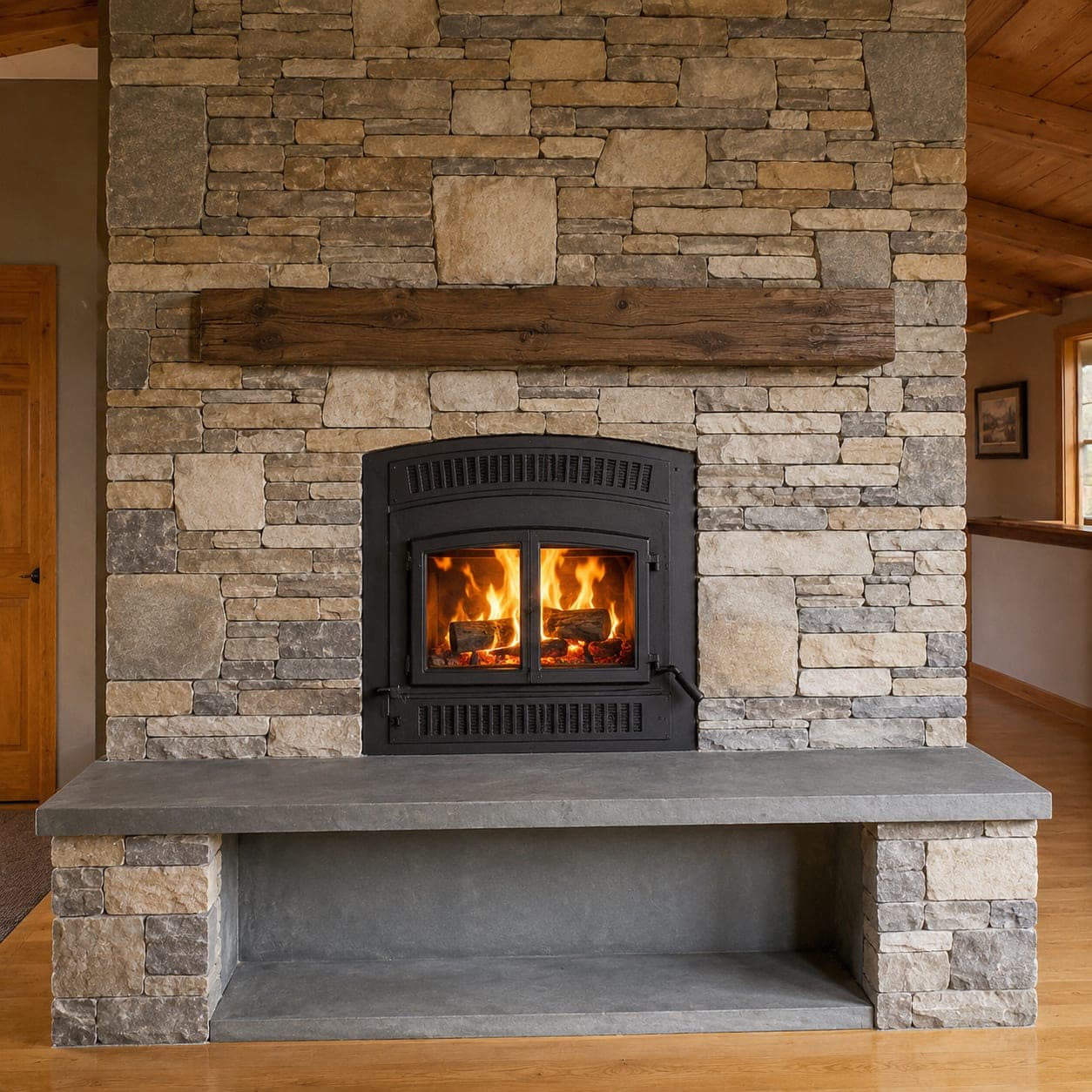
An insert is a closed firebox that sits inside an existing masonry fireplace and vents through a liner running up the chimney. The unit is sealed and the liner is narrow, so buildup doesn't fall back into the hearth the way it does in an open fireplace. It settles on the baffle plate above the fire, on the firebox walls, behind the glass and along the liner itself. Cleaning an insert means reaching all of those surfaces, not just sweeping out the ash.
If you have a standard open fireplace with no insert, the job is different, and our fireplace cleaning service is the better fit.
Wood and gas inserts need different work
| Feature | Wood-burning insert | Gas insert |
|---|---|---|
| Main buildup | Soot and creosote | Light soot and a white or gray film on the glass |
| Inside the unit | Baffle plate, firebrick, ash and debris shelf | Burner area, logs or media, pilot assembly |
| Venting | Liner brushed for creosote | Vent checked for debris and restrictions |
| Glass | Soot and tar residue removed | Combustion film removed |
Main buildup
- Wood-burning insert
- Soot and creosote
- Gas insert
- Light soot and a white or gray film on the glass
Inside the unit
- Wood-burning insert
- Baffle plate, firebrick, ash and debris shelf
- Gas insert
- Burner area, logs or media, pilot assembly
Venting
- Wood-burning insert
- Liner brushed for creosote
- Gas insert
- Vent checked for debris and restrictions
Glass
- Wood-burning insert
- Soot and tar residue removed
- Gas insert
- Combustion film removed
Gas fireplace and gas appliance work is offered, so a gas insert is handled as a wood unit. If you're still deciding which kind of insert suits your home, our guide to gas vs wood burning fireplace lays out the trade-offs.
Signs your insert needs cleaning
Common reasons homeowners call
- The glass blackens within a fire or two of being wiped clean
- Smoke rolls into the room when you open the door to add wood
- The fire is hard to start or dies down even with the air control open
- You can see flaky or shiny black deposits on the baffle or around the door frame
- A smoky or tar-like smell comes from the fireplace on warm or humid days
- A gas insert's flame looks lazy, yellow or sooty instead of steady
- It has been a full burning season or more since the last cleaning
Poor draw can come from buildup, but it can also come from how the chimney and liner are set up. When a cleaning doesn't fix the airflow, fireplace draft repair looks at the causes a brush can't solve.
What the visit involves, step by step
How an insert cleaning goes
Protect the room
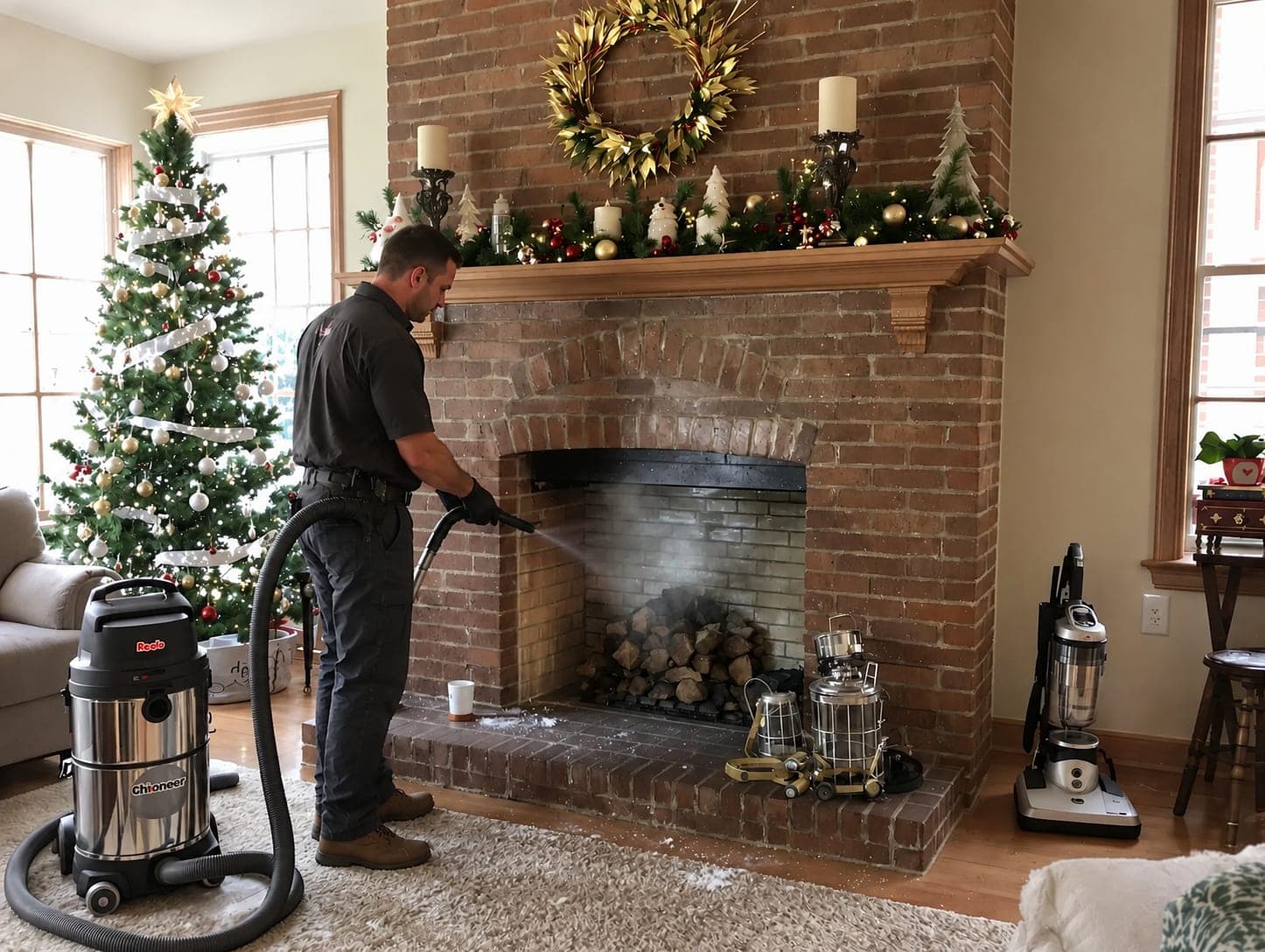
We lay down drop cloths and set up a vacuum so soot stays out of your living space.
Check the unit cold
The insert needs to be fully cool. We look over the door, glass, gaskets and visible firebox before taking anything apart.
Remove the internal parts
On a wood insert, the baffle plate and any loose firebrick come out so the area above the fire can be reached. On a gas insert, the logs or media come out for cleaning.
Clean the liner and firebox
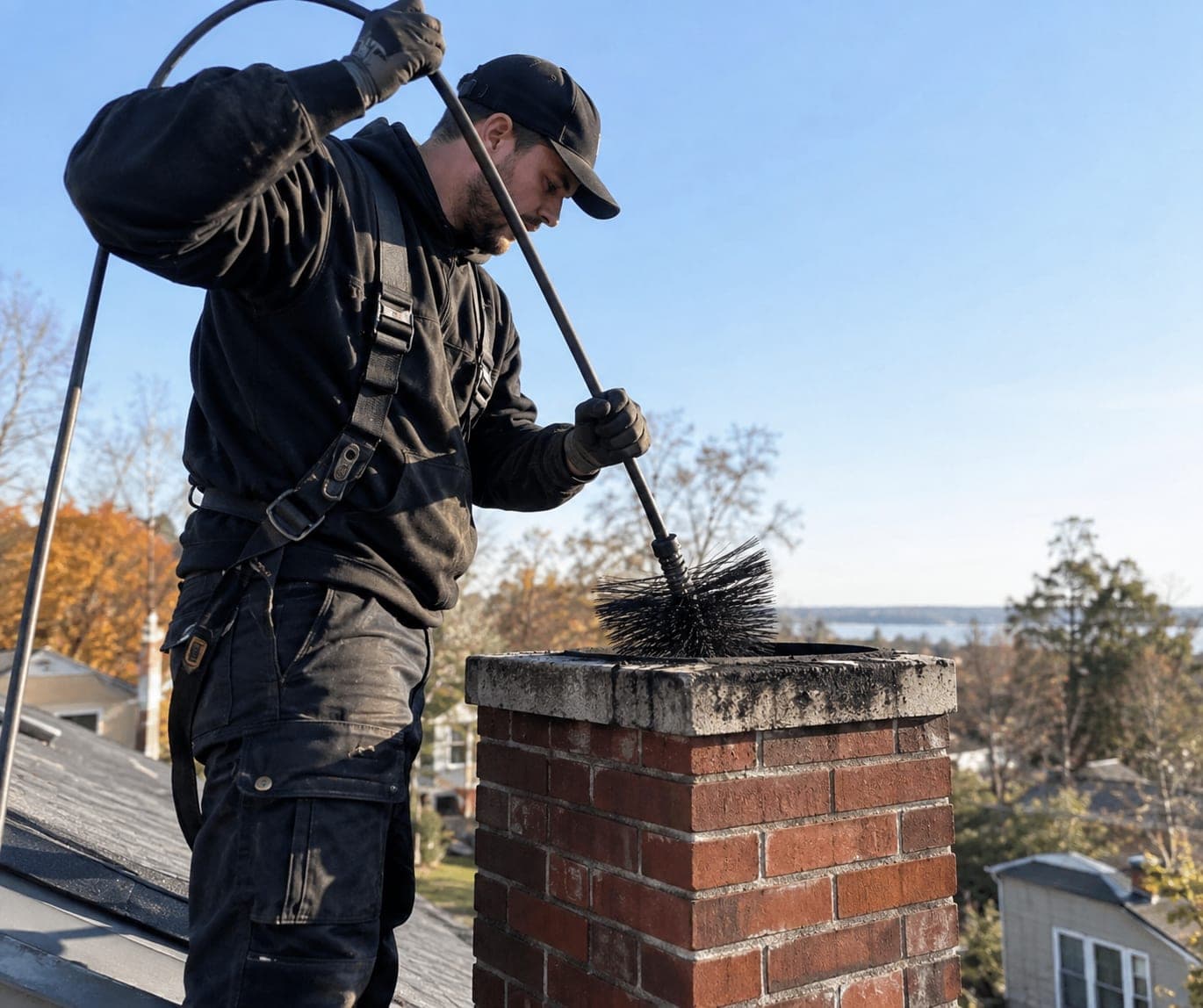
The liner is brushed for its full length, and the loosened soot and creosote are vacuumed from the firebox and smoke shelf.
Clean the glass and reassemble
Glass is cleaned with products suited to ceramic glass, then parts go back in their correct positions.
Walk you through what we saw
You hear what the buildup looked like and anything worn, cracked or out of place, such as a flattened door gasket or a damaged baffle.
Safety and upkeep between cleanings
Creosote is flammable, and a tight insert liner gives it less room to build before it restricts the flue. That's why buildup in an insert deserves attention sooner than it might in a wide open chimney. On a gas unit, a blocked vent matters for a different reason: combustion gases need a clear path out of the house.
- Burn dry, seasoned wood. Wet wood smolders and leaves heavier creosote.
- Avoid running the insert on a low, smoky burn for hours at a time.
- Keep working carbon monoxide detectors near the fireplace and sleeping areas.
- Don't burn trash, cardboard or treated lumber in the insert.
- Have the insert and liner cleaned and checked at least once a year if you use it regularly.
Stop using it if something seems wrong
Loud roaring or crackling from the liner, smoke pouring into the room, or a gas smell are reasons to stop using the insert right away.
If the inspection shows the insert itself is failing or poorly fitted, we can talk through fireplace insert installation as an option rather than repeated cleanings on a unit that won't perform.
Booking an insert cleaning
Get in touch to describe your insert, wood or gas, and what you've noticed. We work on all major brands, and commercial and property-manager work is offered for buildings with more than one unit to service.