On this page
What fireplace installation involves
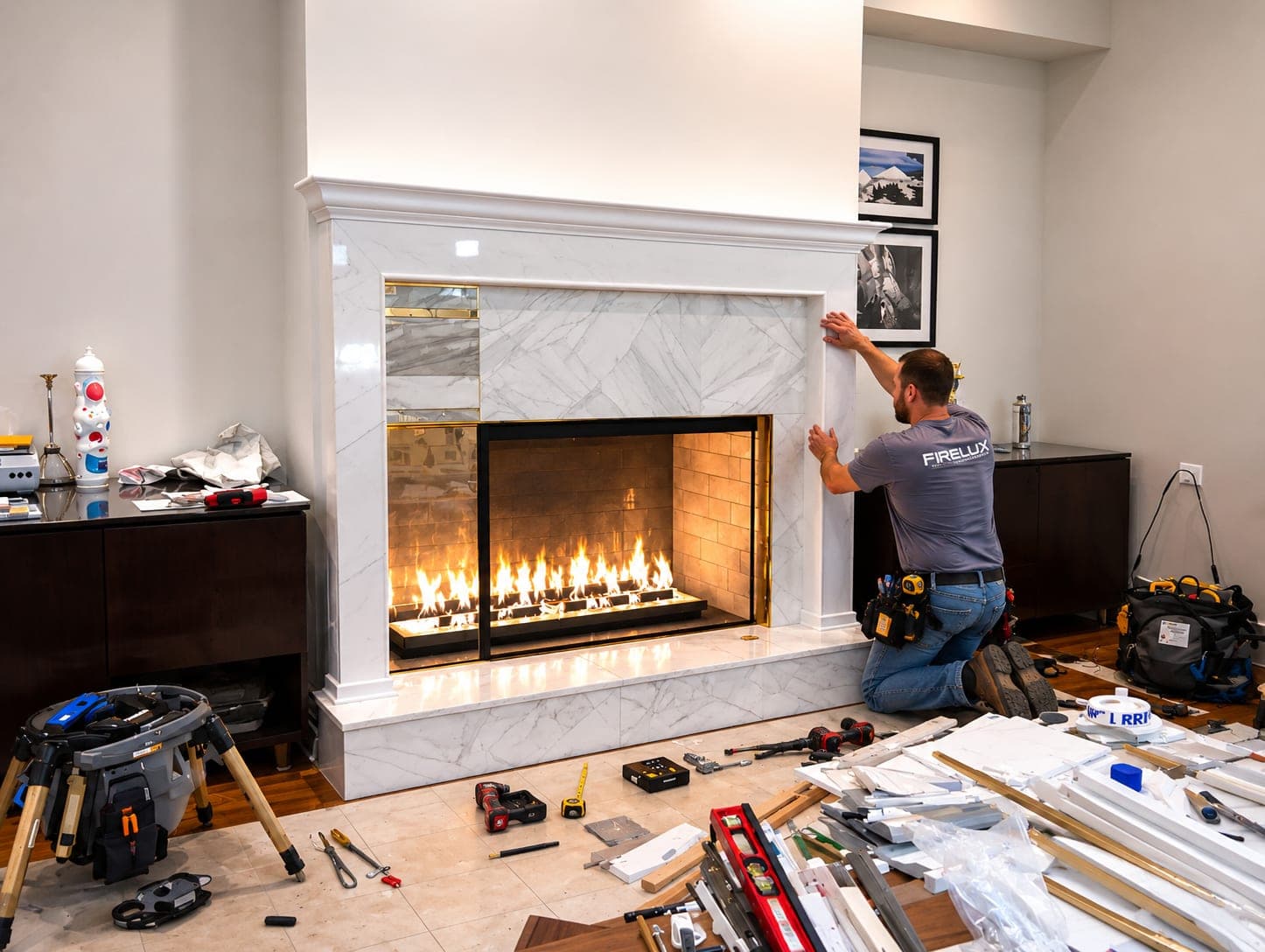
Fireplace installation means fitting a complete new fireplace, not upgrading one that already works. The job covers the firebox or unit itself, the venting that carries exhaust out of the home, the hearth and surround, and a gas supply when the unit burns gas. Every fireplace comes with manufacturer requirements for clearance to framing and furniture, hearth size and vent routing. We plan the installation around those requirements.
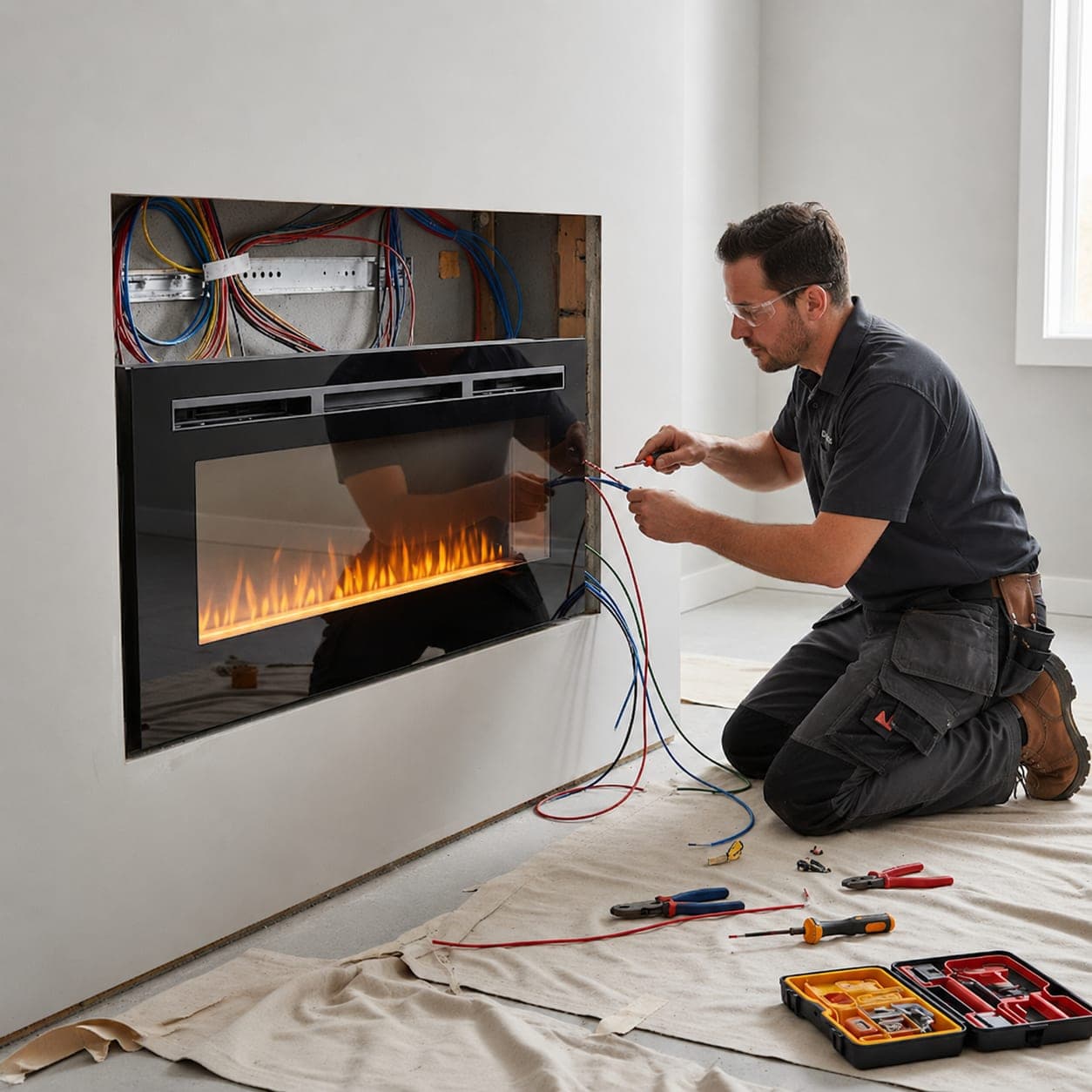
If you already have a masonry fireplace and only want it to burn more efficiently, a sealed unit set into the existing opening may suit you better. Read about how fireplace insert installation works before you decide.
When a home needs a new fireplace
- The home has no fireplace and you want one added to a living area.
- An old prefab fireplace is worn out, damaged or no longer safe to use, and replacing the whole unit makes more sense than repairing it.
- You want to change fuel, for example from wood to gas, and the existing setup can't be adapted.
- A remodel is changing the room, and the fireplace needs to move or be rebuilt.
Some fireplaces don't need replacing at all. Smoke that rolls back into the room is often a draft problem, and the fireplace draft repair service may solve it. We'll tell you at the estimate whether a repair would do the job.
Gas or wood: choosing the fuel
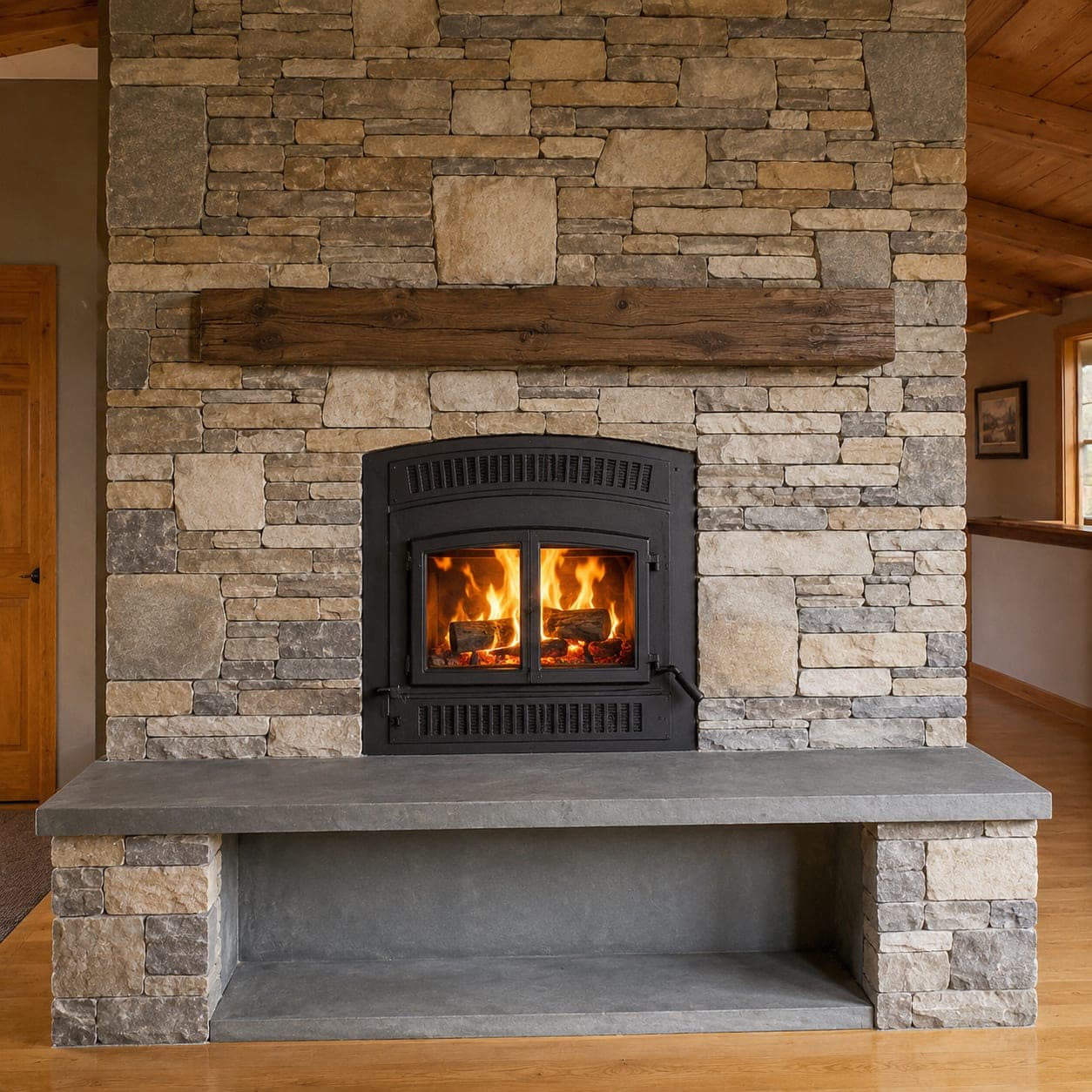
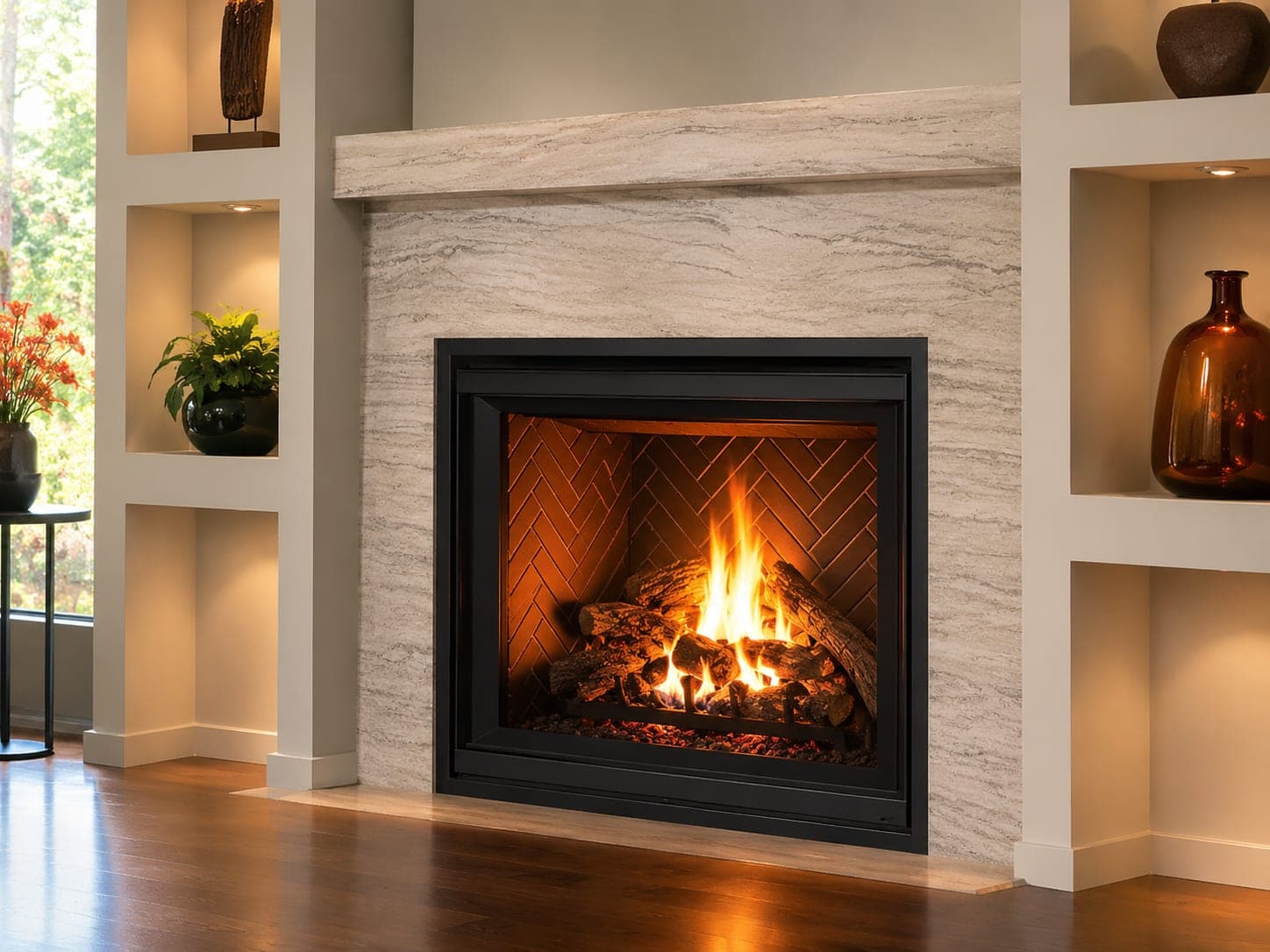
Fuel choice shapes the rest of the project. A wood-burning fireplace needs a chimney or a listed chimney system that runs up through the roof. Many gas fireplaces can vent through an exterior wall. Gas units also need a supply line, which we can run as part of the job. We do gas fireplace and gas appliance work as well as wood-burning installs, so we can install either. For a side-by-side look at heat, upkeep and day-to-day use, read our guide to gas vs wood burning fireplace.
| Feature | Gas | Wood-burning |
|---|---|---|
| Venting | Often a direct vent through a wall or roof | A chimney or listed chimney system through the roof |
| Extra work | A gas line to the unit | Hearth protection for embers and ash |
| Daily use | Switch or remote, no ash | Loading wood, cleaning ash, regular sweeping |
Venting
- Gas
- Often a direct vent through a wall or roof
- Wood-burning
- A chimney or listed chimney system through the roof
Extra work
- Gas
- A gas line to the unit
- Wood-burning
- Hearth protection for embers and ash
Daily use
- Gas
- Switch or remote, no ash
- Wood-burning
- Loading wood, cleaning ash, regular sweeping
The installation, step by step
From estimate to first fire
Free estimate
We look at the room, the wall or floor where the fireplace would go, and the possible routes for the vent or chimney. Then we talk through fuel and unit options with you.
Choosing the unit
You pick the fireplace. We work with all major brands, so you aren't limited to a single line.
Preparation
We frame or open the space, protect the floor with a hearth where the unit needs one, and run a gas line if the fireplace burns gas.
Fitting and venting
The unit goes in at the manufacturer's clearances, and the vent or chimney system is installed and sealed.
Testing and walkthrough
We fire the unit and check that it drafts and burns properly. Then we show you how to operate it and what upkeep it needs.
Glass doors can be added to a wood-burning fireplace during or after the install. The fireplace door installation service covers fitting and sizing them.
Safety and upkeep after installation
Keeping a new fireplace safe
- Keep furniture, rugs and decorations outside the clearances listed in the unit's manual.
- Have working smoke and carbon monoxide alarms in the home.
- Burn only dry, seasoned wood in a wood-burning unit, and never use it to burn trash.
- Book yearly service: sweeping for wood-burning fireplaces, a check of burner, pilot and venting for gas units.
- If you smell gas, leave the house and call the gas utility before anything else.
Booking your fireplace installation
Call or request an estimate, and we'll arrange a visit to look at the space and go over your options. We also take on commercial and property-manager projects.
Free estimates.
Get in touch to plan a new gas or wood-burning fireplace. We'll go over the room, fuel and venting with you before any work starts.