On this page
What fireplace insert installation involves
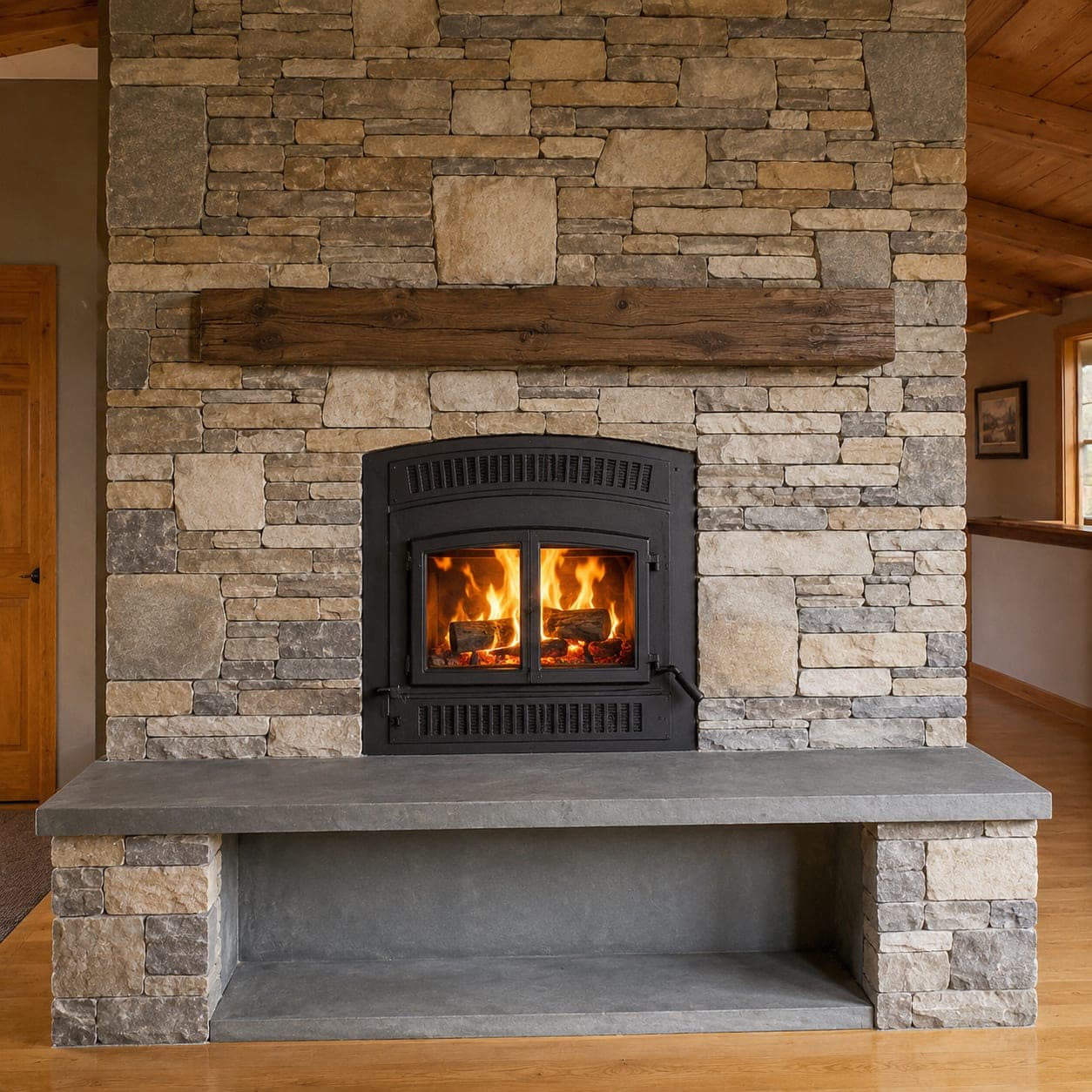
A fireplace insert is a firebox enclosed in steel or cast iron that slides into the opening of an existing fireplace. It has a glass front and its own vent connection. Installing one is more than setting a box in place. The existing fireplace and chimney have to be checked so they can safely hold it. The insert has to be sized to the opening. In most cases a liner is run up the chimney so exhaust leaves through a sealed path instead of the old open flue.
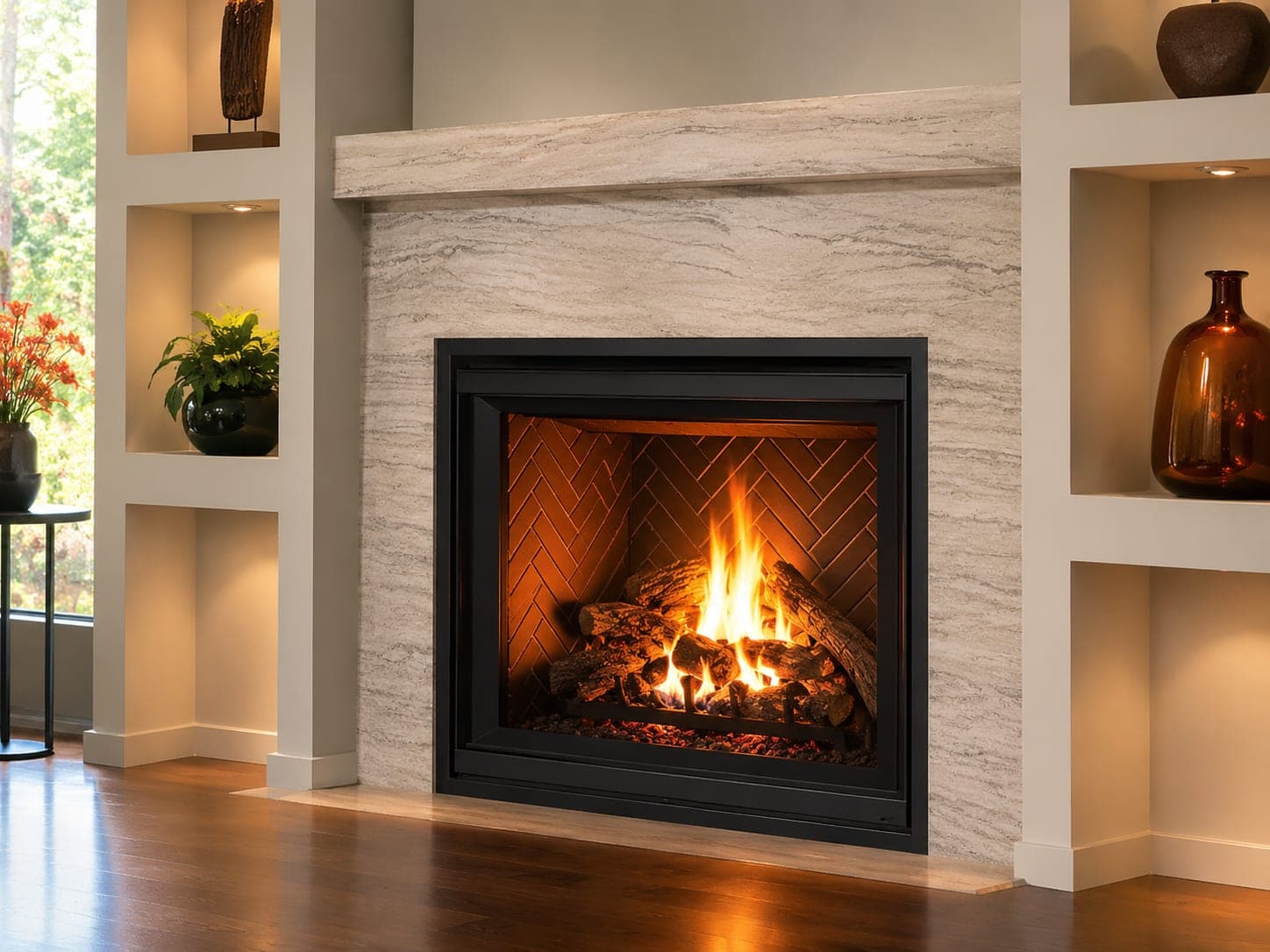
If you're starting from an empty wall or replacing a whole unit, our fireplace installation service is the better fit. An insert is for homes that already have a working fireplace opening and want it to heat better, burn cleaner or switch fuels.
Signs an insert is the right move
Homeowners usually call about an insert when:
- The room stays cold even with a fire going, or the rest of the house feels colder when the fireplace is lit
- Drafts come down the chimney when the fireplace isn't in use
- Smoke spills into the room, or the fire is hard to keep going
- The firebox is worn and you'd rather enclose it than keep burning in it open
- You want to switch from wood to gas, or stop hauling firewood altogether
- You want a fireplace you can actually use for heat, with glass doors and controls
An insert won't fix structural chimney damage on its own. If the inspection turns up cracked flue tiles, a damaged crown or deteriorated masonry, we'll explain what needs repair before an insert goes in.
Gas fireplace insert installation
A gas insert gives you heat at the flip of a switch or the press of a remote, with no ash or wood to manage. Most gas inserts are direct-vent. They pull combustion air from outside and send exhaust out through a sealed liner system run up the existing chimney, so the burn stays separate from the air in your room.
- Gas supply: the insert needs a gas line to the fireplace. If there isn't one, gas line work is part of what we offer.
- Venting: the liner or liners are sized to the insert's vent connections and run the full height of the chimney.
- Controls: depending on the model, this can be a wall switch, remote, thermostat or fan.
If you haven't settled on a fuel yet, our guide to comparing gas and wood-burning fireplaces walks through the trade-offs.
Wood-burning fireplace insert installation
A wood-burning insert keeps a real fire but burns it inside a closed firebox with controlled airflow. That generally means more heat into the room and less wood used than an open fireplace. Because wood smoke carries creosote, the venting matters. A wood insert is normally connected to a stainless steel liner sized to its flue outlet and run to the top of the chimney. That gives the smoke a clean, continuous path out and makes the system easier to sweep.
Wood inserts need routine care to keep drawing well. Once yours is in, our insert cleaning service covers the firebox, baffle and liner.
Electric fireplace inserts
An electric insert doesn't burn anything, so it needs no venting or gas line, only power at the fireplace. It's an option when you want the look of a fire and some supplemental heat without fuel or chimney upkeep. It won't give you a real flame, and it won't heat like a gas or wood unit.
| Feature | Gas | Wood-burning |
|---|---|---|
| Fuel | Natural gas or propane | Firewood |
| Venting | Sealed direct-vent liner system | Full-height chimney liner |
| Day-to-day effort | Switch or remote | Loading wood, clearing ash |
| Ongoing upkeep | Periodic gas appliance service | Regular sweeping and cleaning |
Fuel
- Gas
- Natural gas or propane
- Wood-burning
- Firewood
Venting
- Gas
- Sealed direct-vent liner system
- Wood-burning
- Full-height chimney liner
Day-to-day effort
- Gas
- Switch or remote
- Wood-burning
- Loading wood, clearing ash
Ongoing upkeep
- Gas
- Periodic gas appliance service
- Wood-burning
- Regular sweeping and cleaning
The installation visit, step by step
From estimate to first fire
Estimate and inspection
We look at the fireplace opening, firebox, damper and chimney. We also talk through how you want to use the fireplace and which fuel makes sense.
Measuring
The opening's width, height and depth are measured so the insert fits and the surround covers the gap cleanly.
Preparing the fireplace
The chimney and firebox are cleaned. Any repairs found during the inspection are handled before installation, and the damper is removed or secured where the liner needs to pass.
Installing the liner
The liner is run down the chimney and connected at the top with a cap. The cap keeps out rain, debris and animals.
Setting and connecting the insert
The insert is set into the opening, connected to the liner and, for gas units, connected to the gas supply and checked for leaks.
Surround and finish
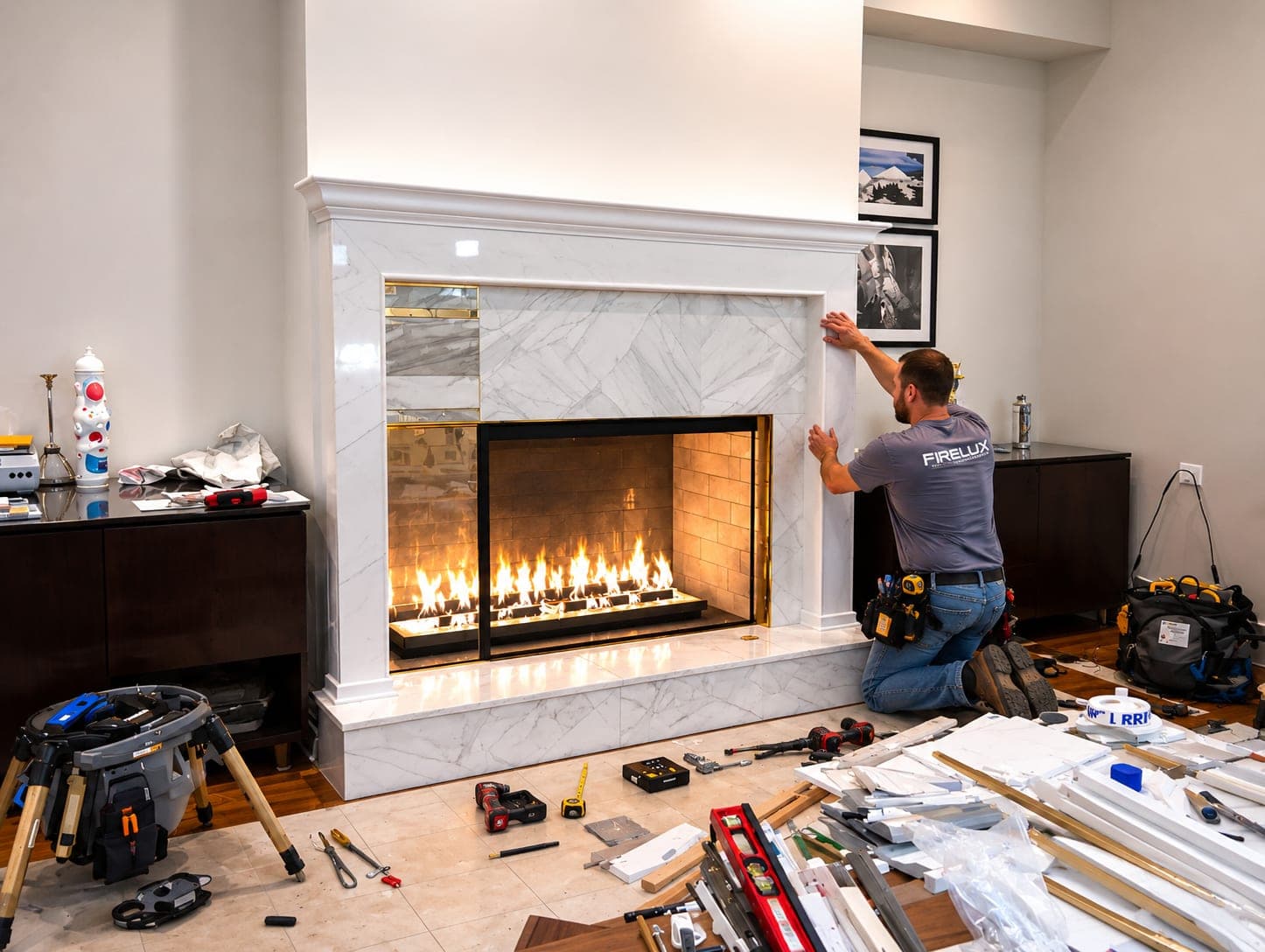
The trim panel or surround is fitted to close off the opening around the insert.
Test and walkthrough
We run the insert and check draft and operation. Then we show you how to use it and what upkeep it needs.
Keeping an insert safe and working well
- Have the insert and its liner inspected and cleaned on a regular schedule. Wood units need it more often than gas.
- Burn only dry, seasoned wood in a wood insert. Wet wood builds creosote quickly.
- Keep the glass and door gaskets in good shape so the firebox stays sealed.
- Have a working carbon monoxide alarm in the home, especially with any fuel-burning appliance.
- For a gas insert, call for service if you smell gas, see a lazy yellow flame, or notice soot on the glass.
If you're keeping the open fireplace for now and mostly want to cut drafts, adding glass fireplace doors is a smaller step to consider.
Booking your insert installation
Free estimates.
Get in touch to request an estimate. We work on all major brands of inserts and fireplaces, and commercial and property-manager work is offered too.