On this page
What wood-burning fireplace repair covers
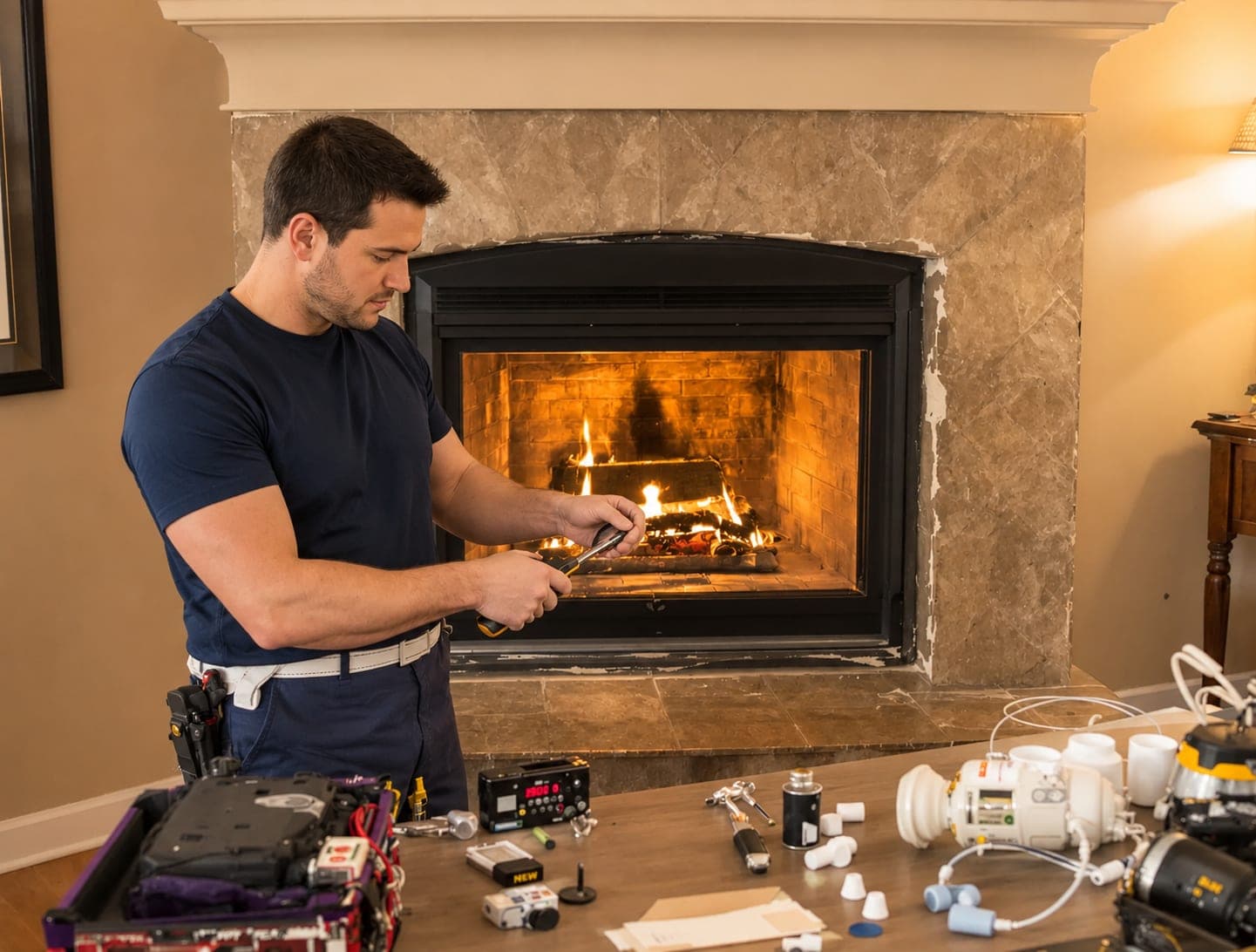
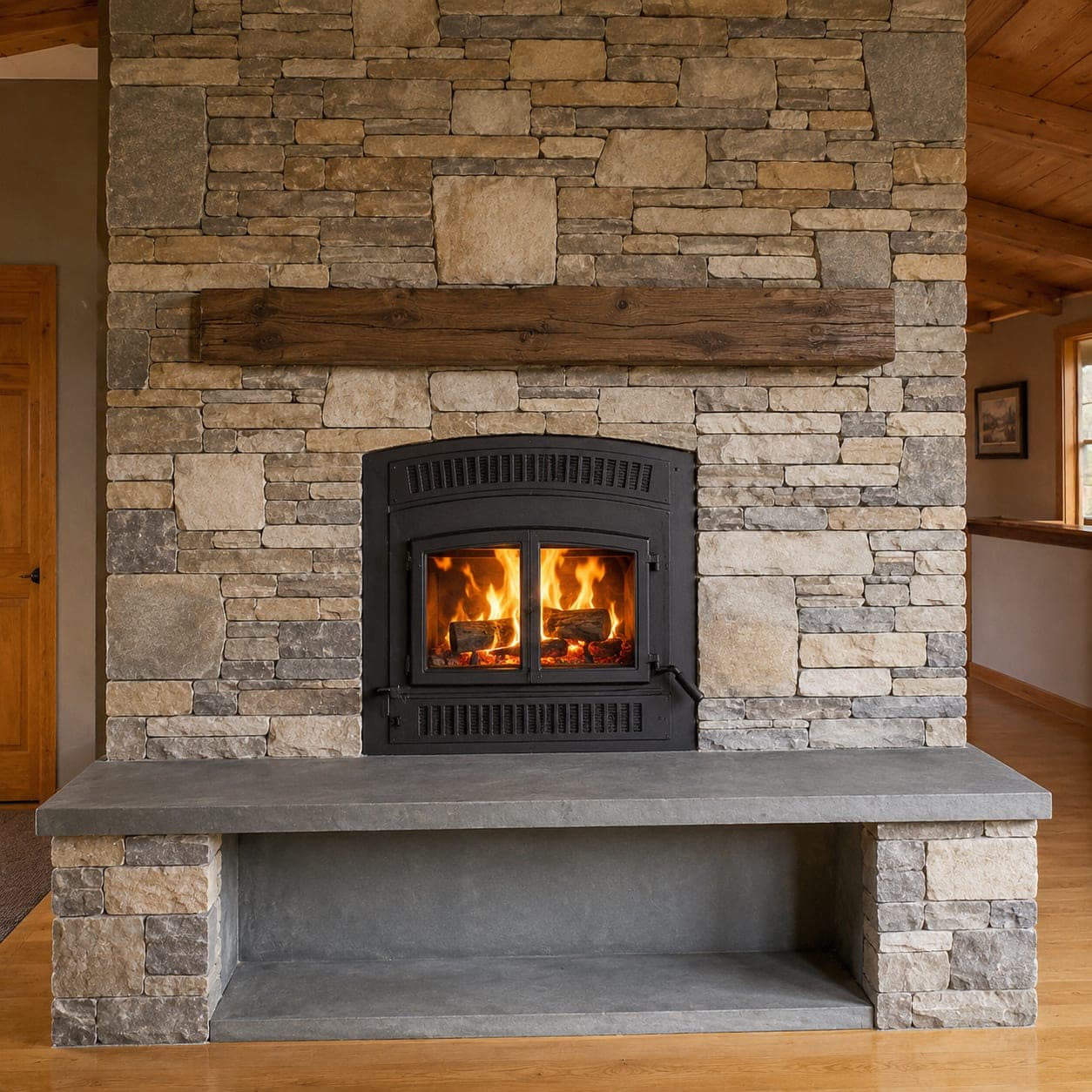
A wood fire puts more heat, soot and moisture-laden smoke through a fireplace than any other fuel. Over years of fires, that wears down the parts that hold the fire and guide the smoke up the chimney. Wood-burning fireplace repair restores those parts so the fireplace burns safely and draws properly again.
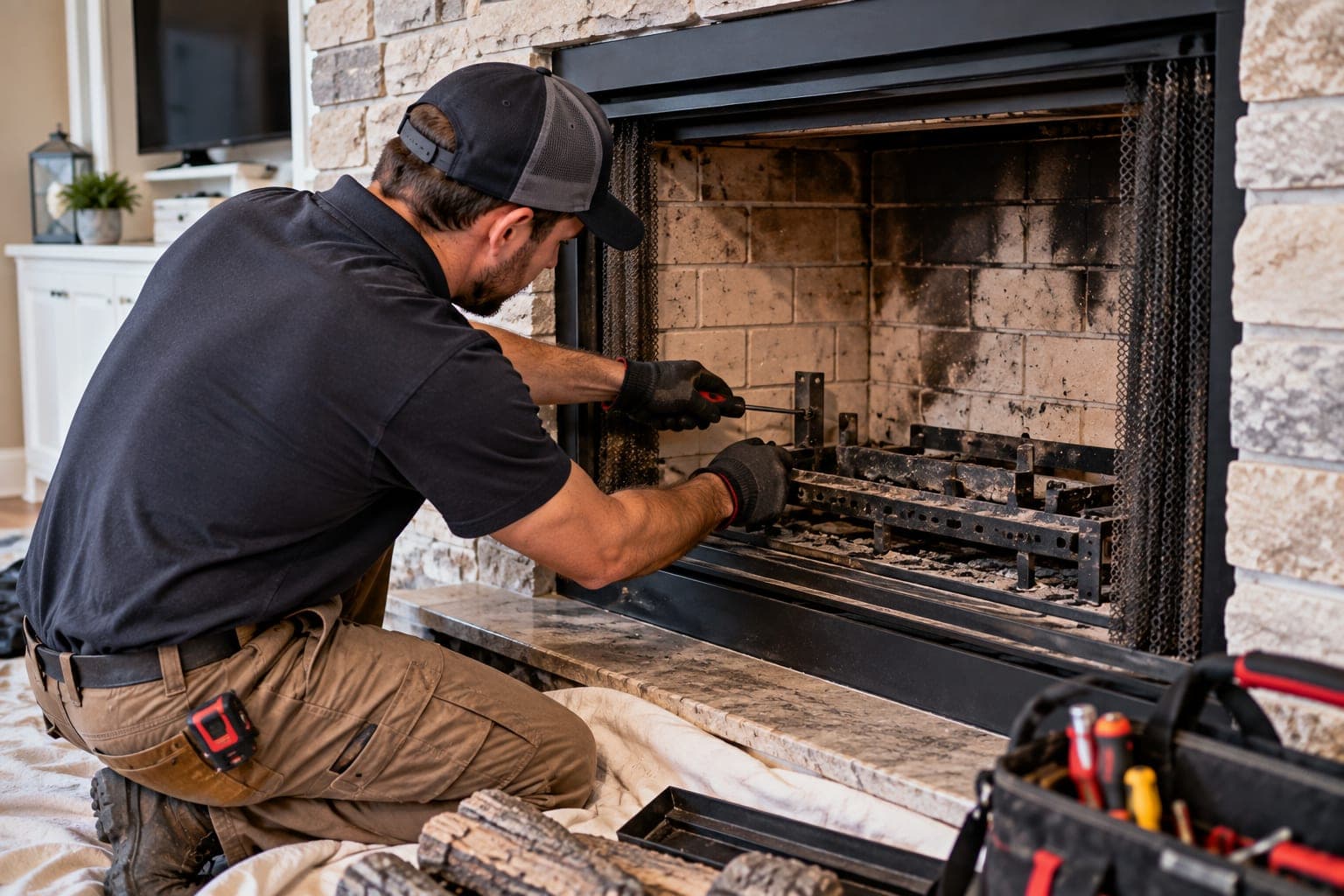
It is a focused part of our broader fireplace repair service, which also covers prefab units, doors, glass and restoration work. If your fireplace runs on gas or plugs into the wall, the work is different. Gas fireplace work is offered, and plug-in units are handled through electric fireplace repair.
The parts we work on
- Firebox: the masonry box that holds the fire, lined with heat-resistant firebrick set in refractory mortar.
- Mortar joints between firebricks, which shrink, crack and wash out with repeated heating and cooling.
- Damper: the metal plate that closes the flue when the fireplace isn't in use, which can rust, warp or seize.
- Smoke chamber: the sloped area above the damper that funnels smoke into the flue, where rough or cracked surfaces can slow the draft and collect creosote.
- Hearth and surround, where loose or cracked pieces can let heat reach materials behind them.
- Fireplace doors and glass, which control airflow and keep embers in the firebox.
Signs your wood-burning fireplace needs repair
Call for a look if you notice any of these
- Firebrick that is cracked through, spalling (flaking off in layers) or loose
- Mortar joints with gaps deep enough to see into or crumbling when touched
- Smoke drifting into the room instead of going up the chimney
- A damper that sticks, won't seal, or has come off its track
- Rust flakes or debris falling into the firebox
- Cracks in the hearth or gaps between the hearth and the firebox
- Fireplace doors that won't close or glass that is cracked
Smoke coming into the room has several possible causes, and not all of them are repairs inside the firebox. When the trouble is how the fireplace draws, we look at it as fireplace draft repair, which checks the damper, smoke chamber, flue and the way air moves through the house.
Hold off on fires if the firebox is cracked through
Gaps in a firebox or its mortar can let heat and embers reach the framing behind the masonry. If you see open joints or bricks cracked all the way through, it is generally wise to stop burning until the fireplace has been checked.
What the repair visit involves
From first look to finished repair
Inspect the fireplace
We check the firebrick, mortar joints, hearth, damper and doors, then look up into the smoke chamber with a light.
Explain what we found
You get a plain account of what is damaged, what is normal wear, and what can wait. Estimates are free.
Protect the room
The hearth area and nearby floor are covered before any cleaning or masonry work begins.
Make the repair
That can mean replacing damaged firebrick, repointing joints with refractory mortar, repairing the smoke chamber, or fixing or replacing the damper, depending on what the inspection showed.
Check the finished work
We confirm the damper opens and seals and talk you through any cure time before the first fire.
Repair it or rethink the fireplace?
Most wood-burning fireplaces are worth repairing. Some homeowners use a repair visit to decide whether they want to keep burning wood at all. If you're weighing that choice, our guide to gas vs wood burning fireplace sets out the differences in upkeep, heat and daily use.
Booking a wood-burning fireplace repair
Call or request an estimate and tell us what you're seeing: cracked brick, smoke in the room, a stuck damper, or anything else that seems off. Commercial and property-manager work is offered too.