On this page
What chimney animal & nest removal involves
To a bird, squirrel or raccoon, an uncapped or damaged chimney looks like a hollow tree. It's sheltered, dark and hard for predators to reach. The bigger problem is what gets left behind: packed twigs, leaves, fur, droppings and sometimes an animal that couldn't climb back out.
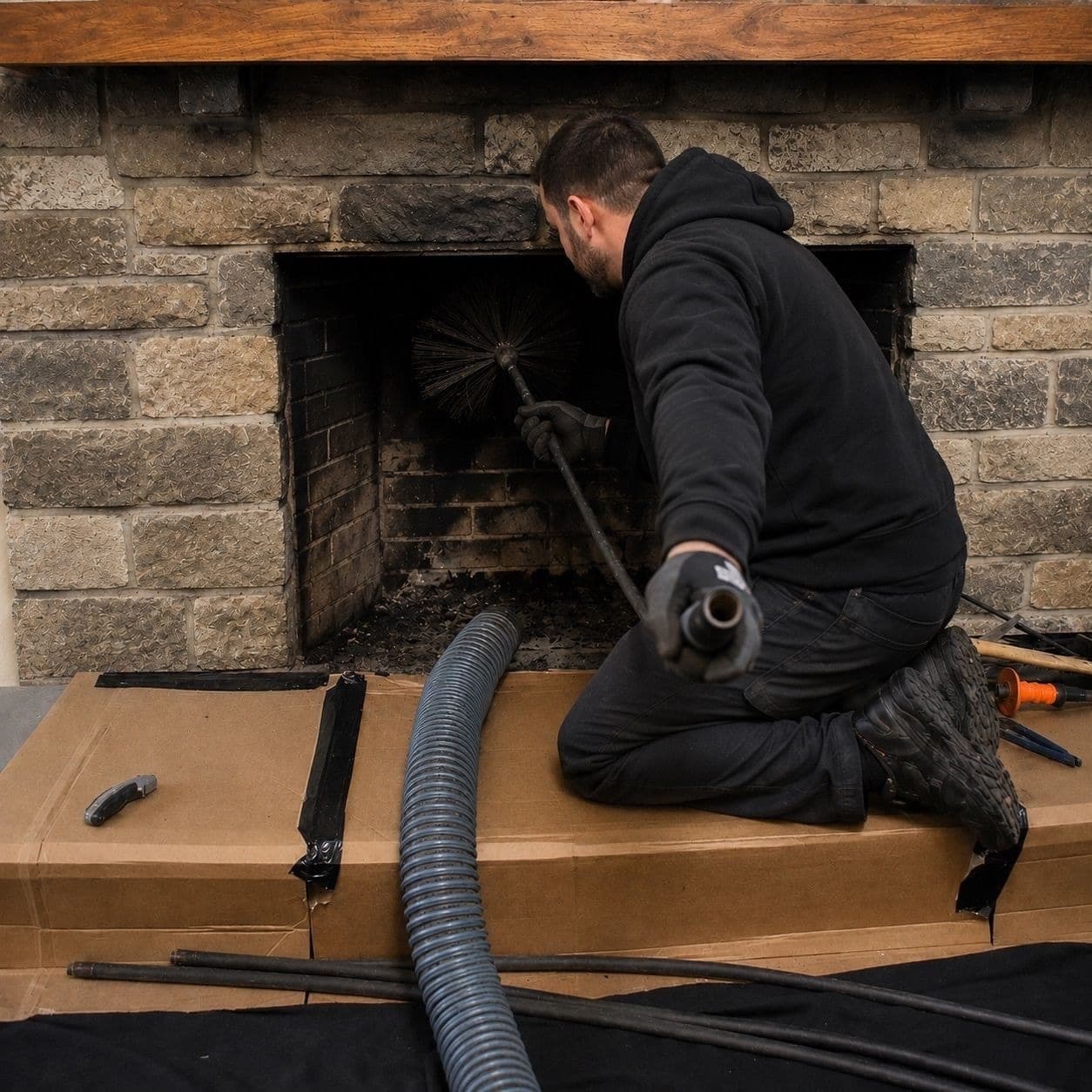
This service clears that material out of the flue, the smoke shelf and the firebox. It also includes a check of the chimney for damage the animal caused or used to get in. A nest is one kind of blockage. If the obstruction turns out to be fallen masonry or other debris, that work falls under chimney blockage removal.
Signs an animal has been in your chimney
Common signs
- Scratching, fluttering, chirping or squeaking from inside the chimney or behind the fireplace
- Twigs, leaves, straw or feathers falling onto the damper or into the firebox
- A musty, ammonia-like or rotten smell, often stronger on warm or humid days
- Smoke rolling back into the room when you light a fire
- Droppings or nest material on the roof near the chimney top
- A missing, bent or rusted chimney cap or screen
A smell can stay after the animal has left, because droppings and nest material soak into soot and masonry. The first step is removing the source. If the odor stays after that, our chimney odor removal service deals with what's left.
Don't light a fire to drive an animal out
A fire under a nest can trap or kill the animal and set dry nesting material burning inside the flue. It can also push smoke and carbon monoxide back into the house. Don't use the fireplace until the flue has been cleared and checked.
What the visit involves, step by step
How a nest removal visit usually goes
A few questions first
When you call, we ask what you've heard, seen or smelled, and whether you think an animal is still inside. Your answers tell us what to bring and how to approach the chimney.
Seal off the living space
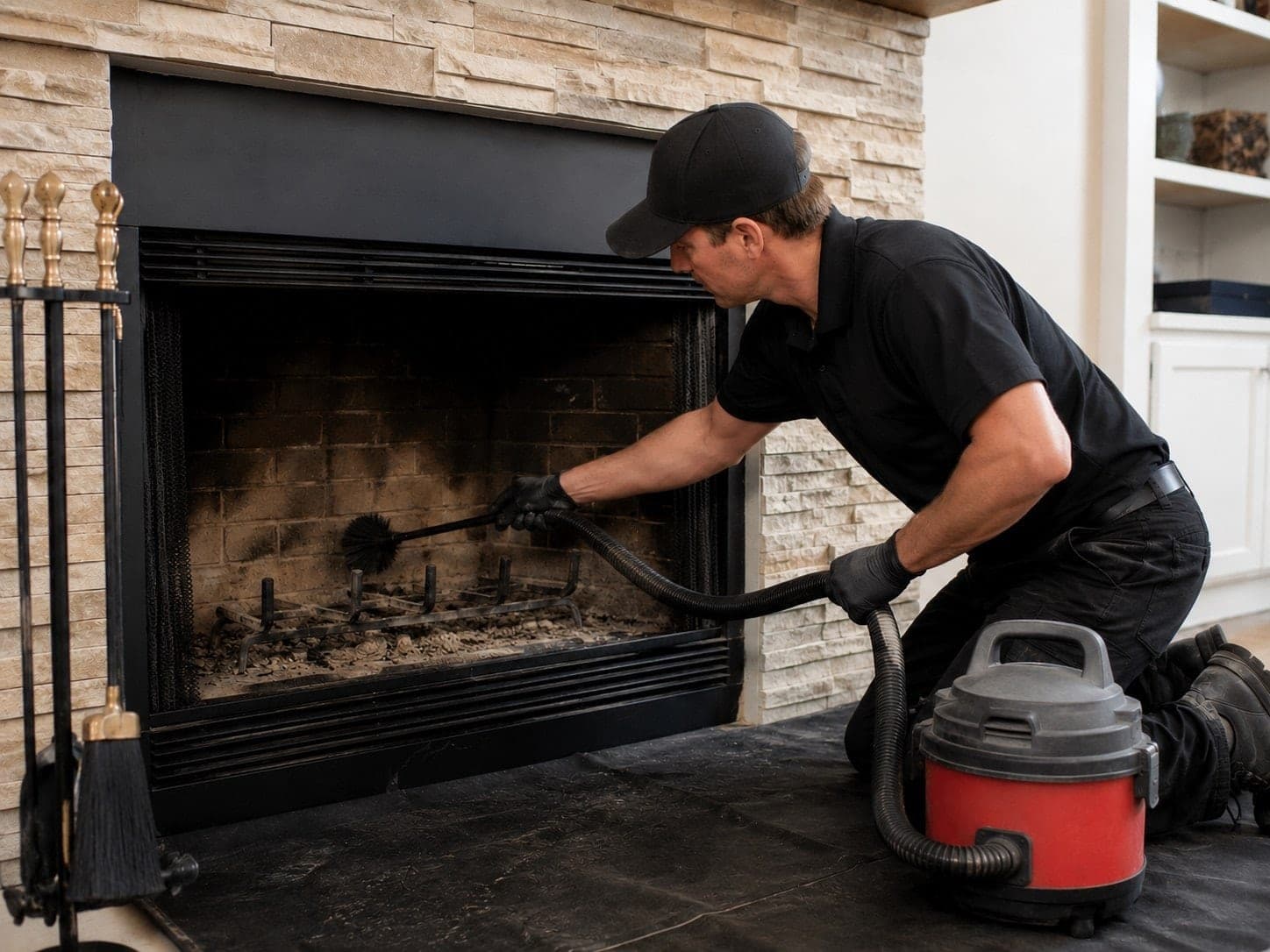
We protect the hearth and the floor around the fireplace. We also keep the damper and doors closed off so nothing gets into the room. If the fireplace has gas logs, leave the damper as the installer set it — vented gas logs need it open.
Look before removing anything
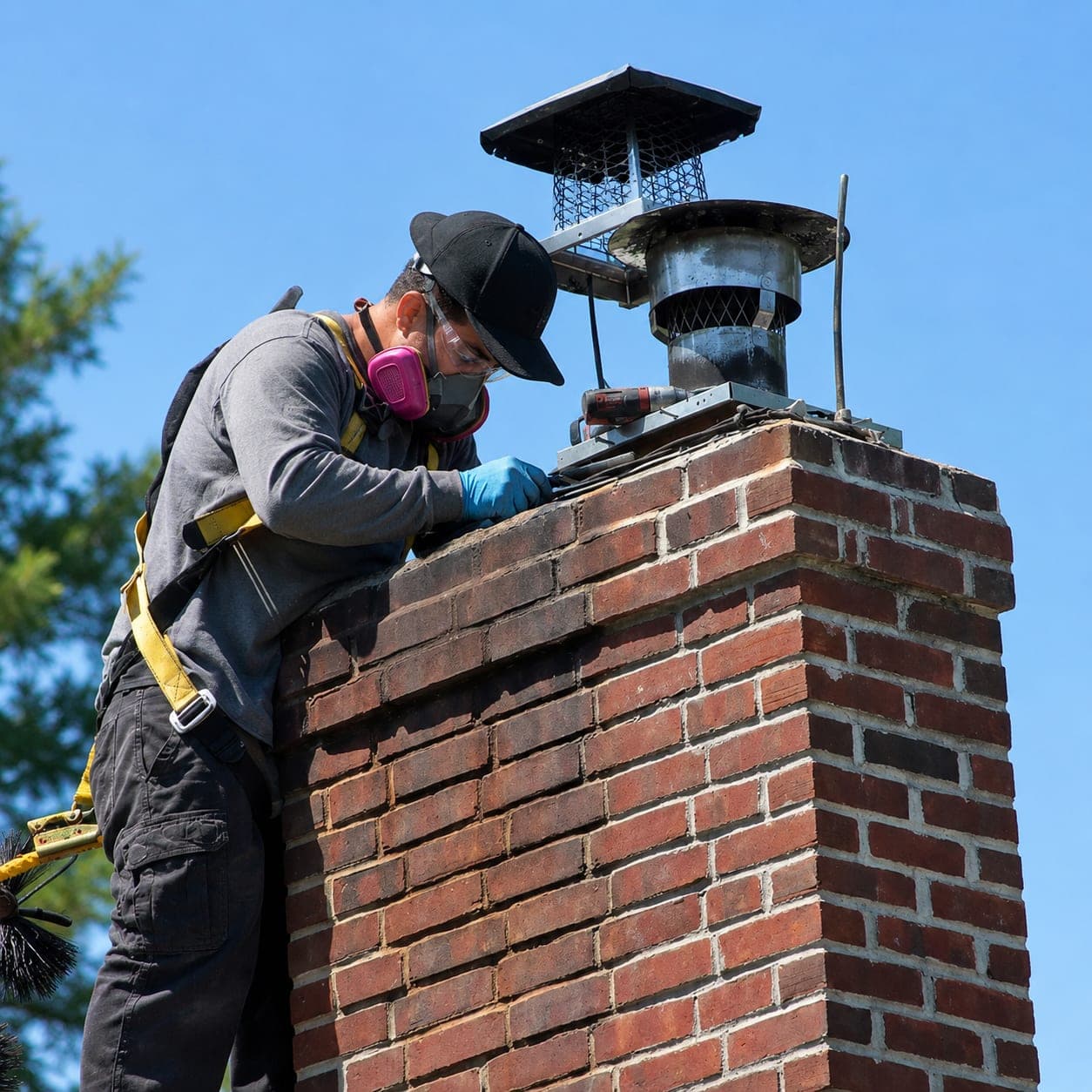
We inspect the firebox, the damper and the flue from the bottom and the top. A camera can show how far up the material goes and whether anything is still living in it.
Remove nest material and debris
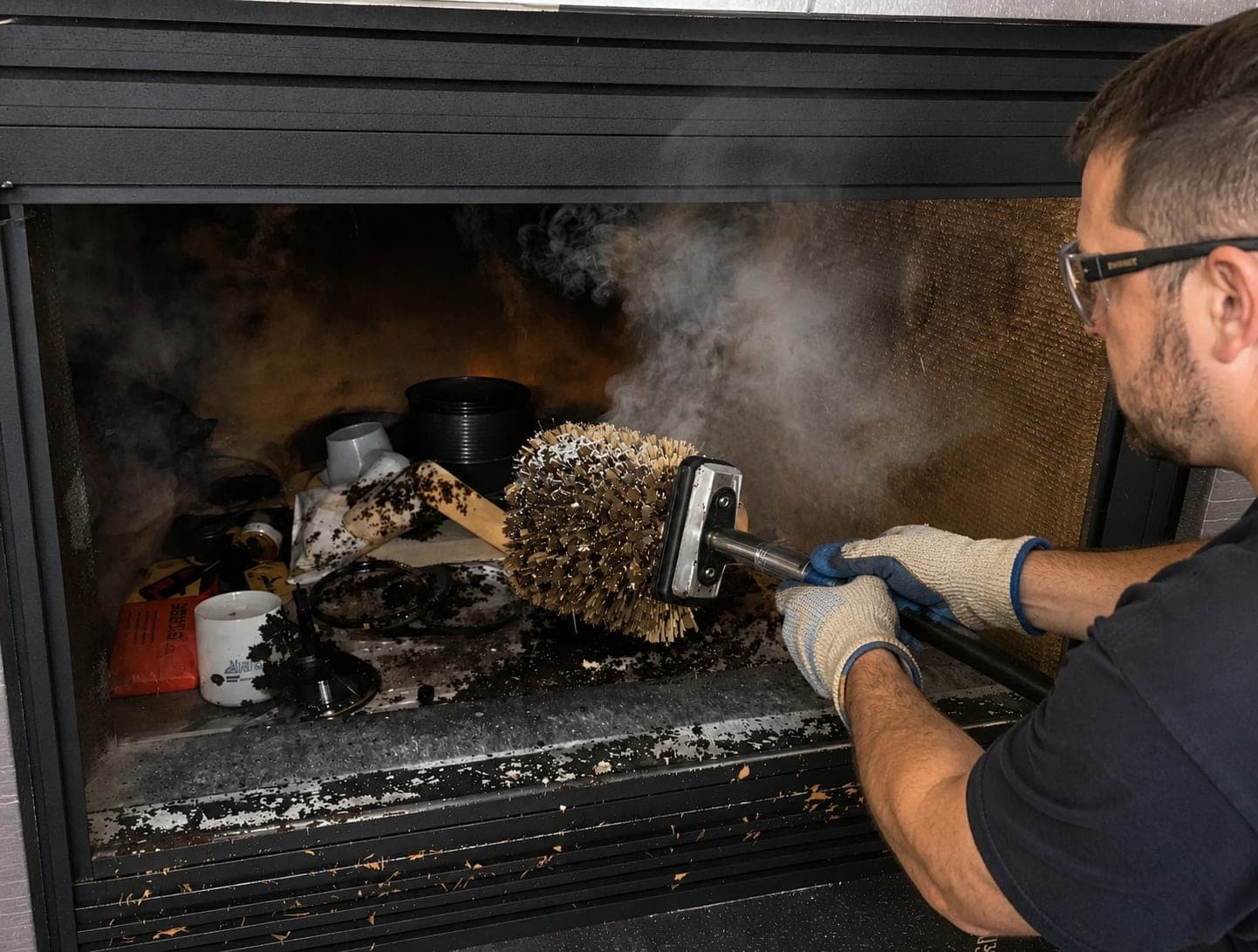
We clear nesting material, droppings and any remains from the flue, smoke shelf and damper area, then bag them and take them away.
Clean the affected area
Animal debris mixes with soot and creosote, so we also clean the section of flue that held the nest. If the whole system is overdue, we may suggest a full chimney sweep at the same visit.
Check for damage and the way in
We look for gaps, broken caps, damaged dampers or liner problems and explain what we found. You also get a free estimate for any repair.
Keeping animals out once the nest is gone
If the entry point stays open after a nest is cleared, another animal usually finds it the next season. Animals typically get in through an open flue top or through a cap that has rusted, bent or come loose. We handle chimney cap installation, cap replacement and animal screen installation, so the opening can be covered properly once the flue is clear.
Nest material is dry and burns easily, and it often sits on top of creosote. If you use the fireplace often, our guide to chimney fire safety and the overview of creosote buildup dangers and prevention explain why a blocked or dirty flue is a fire risk and not just a nuisance.
Booking chimney animal & nest removal
Same-day visits are available when the schedule allows. Call or request an estimate, and tell us what you're hearing or smelling so we can plan the visit.