On this page
What chimney blockage removal involves
A chimney has one job: carry smoke and combustion gases up and out of the house. When something narrows or closes the flue, those gases have nowhere to go but back into the living space. Chimney blockage removal means finding the obstruction, removing it without damaging the flue, and confirming the passage is open from the firebox or appliance all the way to the top.
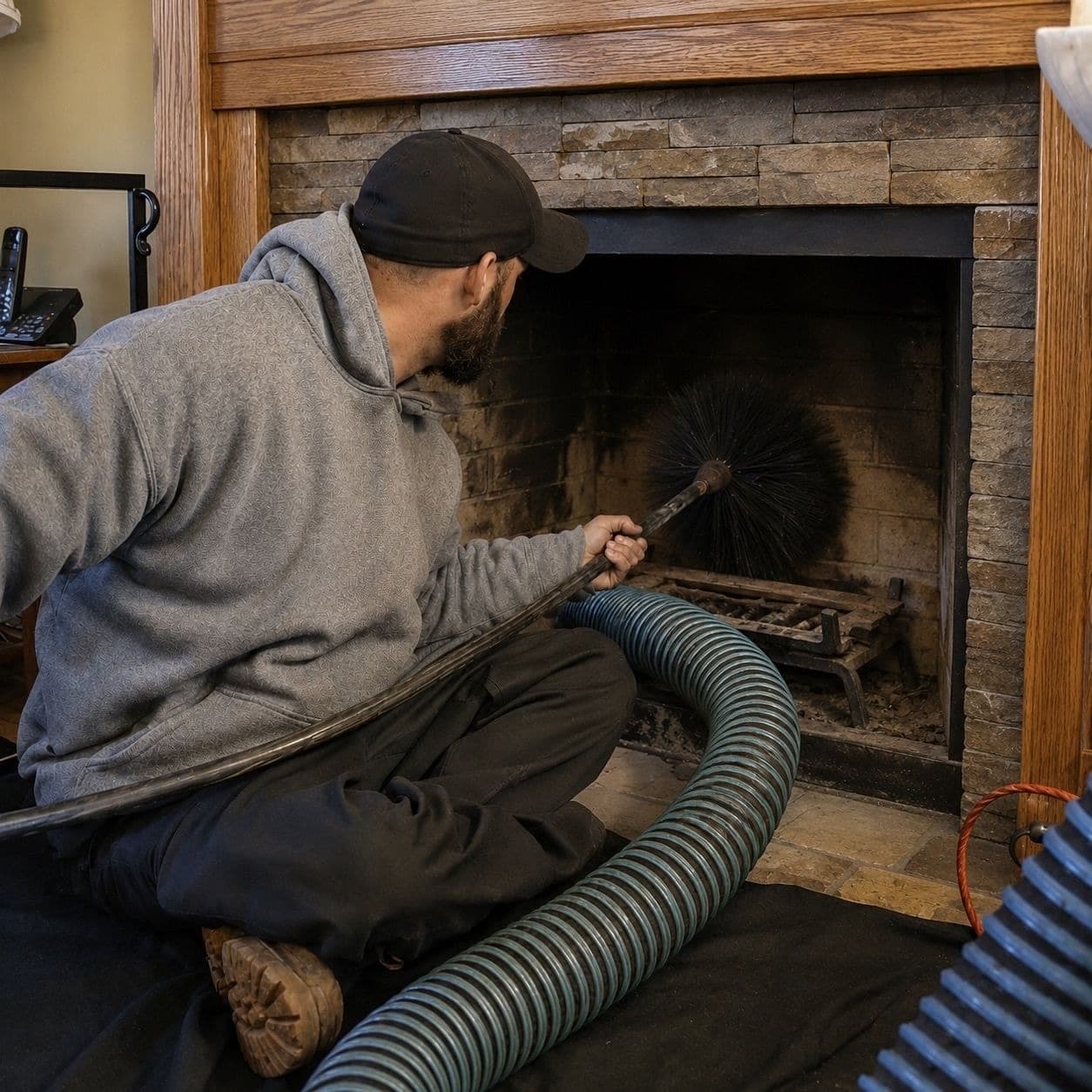
Blockages tend to come from a short list of causes:
- Nests and nesting material from birds or other animals that got in through an open or damaged top.
- Leaves, twigs and windblown debris that collect over time, especially without a cap.
- Fallen masonry or flue tile pieces that have broken loose inside the chimney.
- Heavy creosote or soot buildup that narrows the flue until it chokes the draft.
- Debris knocked loose by weather or by an animal moving around inside.
Heavy creosote is a blockage and a fire risk at the same time; our guide to creosote buildup dangers and prevention explains why it forms and how to keep it from coming back.
Signs your chimney may be blocked
Call us before the next fire if you notice
- Smoke spilling into the room instead of going up the flue
- A fire that's hard to light, burns poorly or goes out on its own
- A strong smoky, musty or animal smell coming from the fireplace
- Twigs, leaves, soot clumps or bits of masonry landing in the firebox
- Scratching, chirping or fluttering sounds inside the chimney
- A gas fireplace or appliance that seems to vent poorly or smells unusual
If you can hear an animal inside, the job starts with getting it out safely; that's handled through our chimney animal and nest removal service. A lingering smell after a blockage is gone can call for chimney odor removal.
Don't light a fire to clear it
Burning a fire to push out a suspected blockage can send smoke and carbon monoxide into the house, or ignite nesting material and creosote inside the flue. Leave the fireplace cold until the chimney has been checked. More on the risks in our chimney fire safety guide.
How the visit works, step by step
From first look to a clear flue
Talk through what you've noticed
Smoke, smells, sounds and when it started all help narrow down what's in the flue and where.
Protect the room
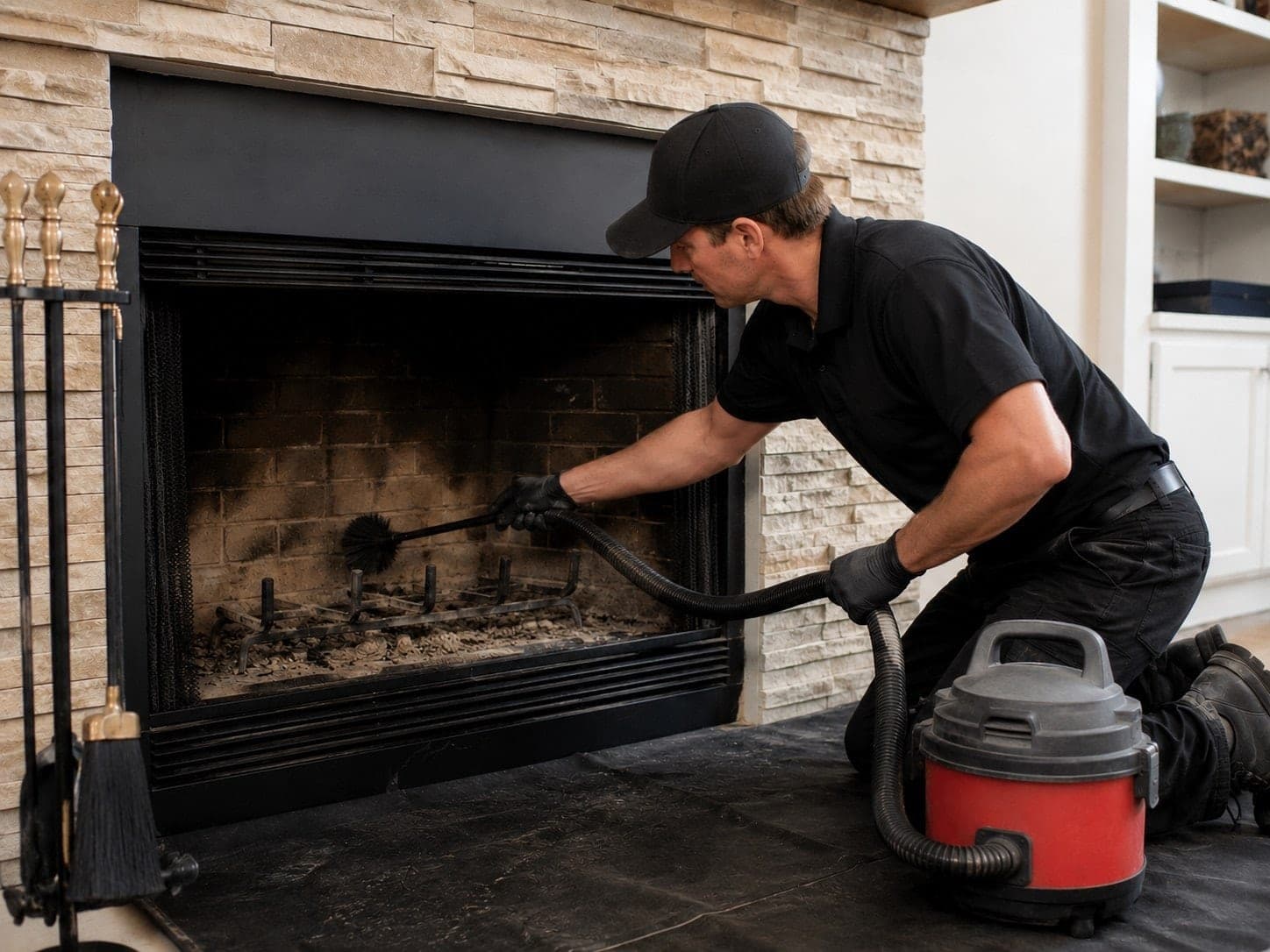
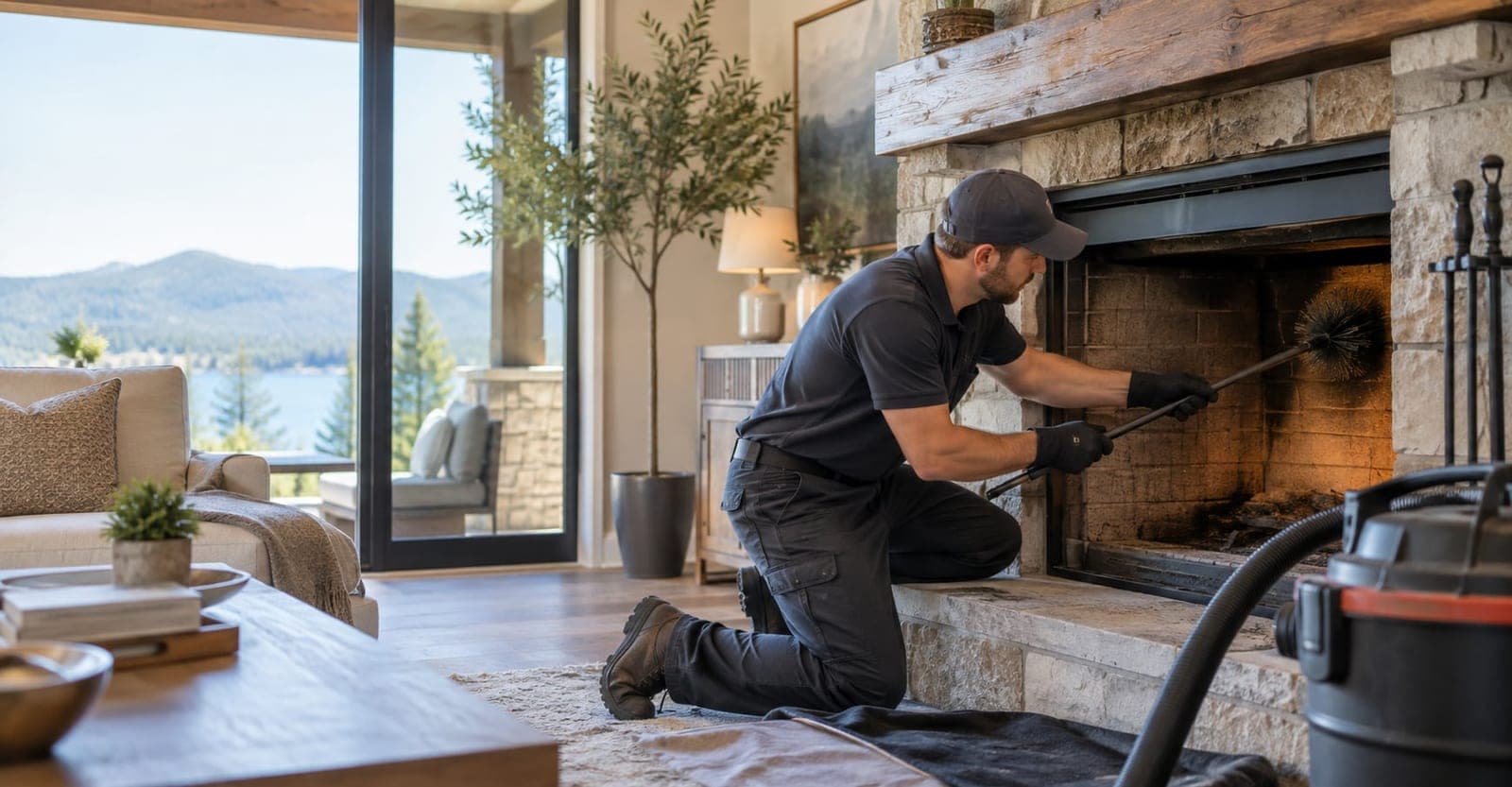
The fireplace opening and the floor around it are covered so soot and debris stay contained.
Locate the blockage
We look up the flue from the firebox or appliance and, where needed, from the top of the chimney to see what's there and how far up it sits.
Clear the obstruction
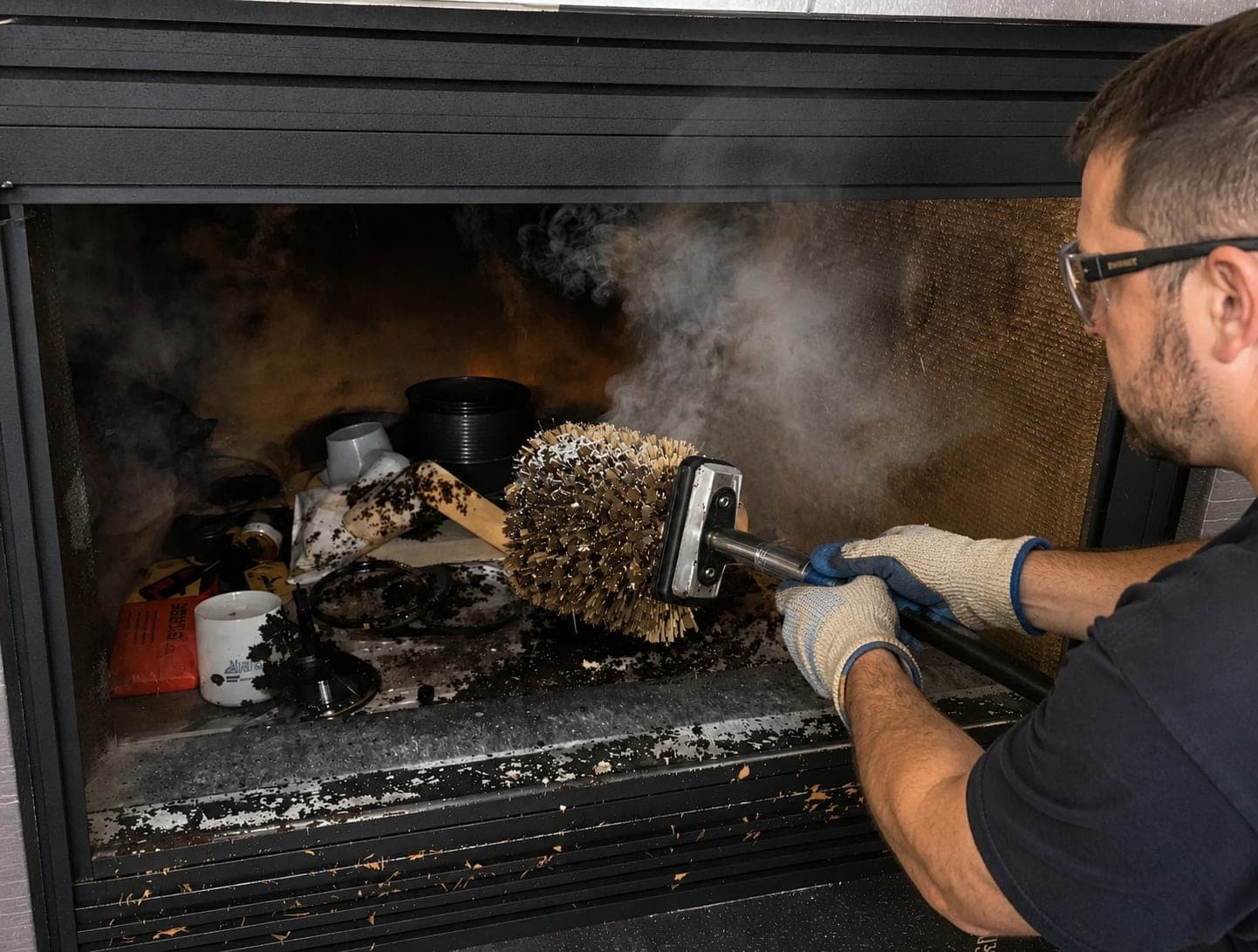
Nests, debris, broken pieces and heavy buildup are removed with tools suited to the flue type, so the liner isn't damaged in the process.
Check the passage
Once it's clear, we confirm the flue is open top to bottom and look for whatever let the blockage happen, such as a missing cap or loose masonry.
Explain what we found
You'll hear what caused the problem and whether anything else needs attention before you use the fireplace again.
If the flue is also coated with soot and creosote, a full chimney sweep often makes sense during the same visit.
Wood-burning, gas and appliance flues
Blockages aren't only a wood-burning problem. Gas fireplaces and other gas appliances vent through flues too, and a nest or debris in that path can be harder to notice because there's less visible smoke. We work on gas fireplaces and gas appliances as well as wood-burning fireplaces and stoves, and on all major brands.
Keeping it from happening again
Most repeat blockages come from an open chimney top or a flue that isn't swept often enough. A properly fitted chimney cap or animal screen keeps out nests and windblown debris, and regular cleaning keeps creosote from building up to the point of restricting the draft. If we find a damaged cap, loose flue tile or crumbling masonry while clearing the blockage, we'll point it out so you can decide what to do about it.
Booking chimney blockage removal
Get in touch and tell us what you're seeing. Commercial and property-manager work is offered too.