On this page
What chimney odor removal involves
Chimney odor removal is not a spray or a scent. Smells come from something in the flue, smoke chamber or firebox: creosote deposits, soot, trapped moisture, leaves and debris, or material left by animals. The work is to identify which of these is causing the odor, remove it, and then address the condition that lets the smell into the room, such as a damper that doesn't seal or air being pulled down the chimney.
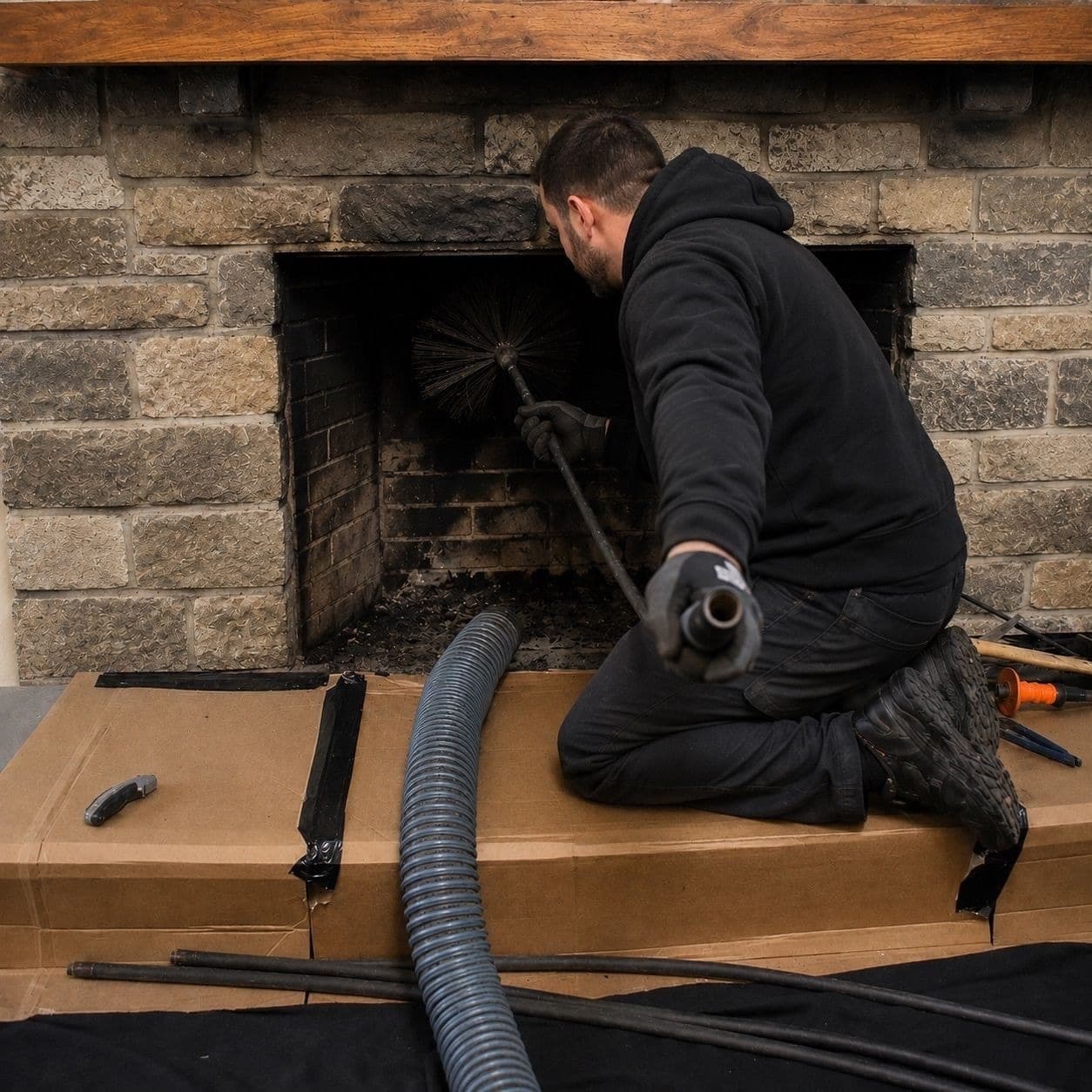
In many homes the job overlaps with a full chimney sweep service, because creosote and soot are the most common sources. When the cause turns out to be a nest or a dead animal, it becomes chimney animal & nest removal work. When debris has packed the flue, it's handled as chimney blockage removal.
Signs your home needs chimney odor removal
The type of smell and when it shows up are the best clues to the source.
Common chimney smells and what usually causes them
01Campfire or barbecue smell when the fireplace isn't in use
- What you may notice
- A strong smoky odor, often worse in warm or humid weather, or when the heat or air conditioning runs.
- How it’s confirmed
- The flue and smoke chamber are checked for creosote and soot buildup, and the damper is checked for how well it closes.
02Musty or damp smell
- What you may notice
- A basement-like odor that gets stronger after rain, sometimes with stains or flaking in the firebox.
- How it’s confirmed
- The cap, crown and flue are checked for places water gets in, and the firebox and smoke chamber are checked for wet deposits and debris.
03Rotten or sour smell
- What you may notice
- A sharp, unpleasant odor that appears suddenly, sometimes with flies or noises in the chimney beforehand.
- How it’s confirmed
- The flue and smoke shelf are checked for nests, droppings or an animal that became trapped.
04Smell that comes and goes with fans
- What you may notice
- Odor appears when kitchen or bathroom exhaust fans or the dryer run, then fades.
- How it’s confirmed
- The chimney is checked for deposits, and draft is assessed to see whether the house is pulling air down the flue.
A rotten-egg smell is different
If you smell gas near a gas fireplace or any gas appliance, don't try to find the source yourself. Leave the house and call your gas utility or emergency services from outside. Once the gas supply is safe, gas fireplace and gas appliance work is something we handle.
What the visit involves, step by step
How a chimney odor removal visit works
Talk through the smell
We ask what it smells like, which room it's strongest in, and when it shows up: after rain, in warm weather, when fans run, or all the time. Those answers narrow the search quickly.
Inspect the fireplace and chimney
The firebox, damper, smoke chamber, flue and top of the chimney are checked to find deposits, debris, moisture or signs of animals.
Remove the source
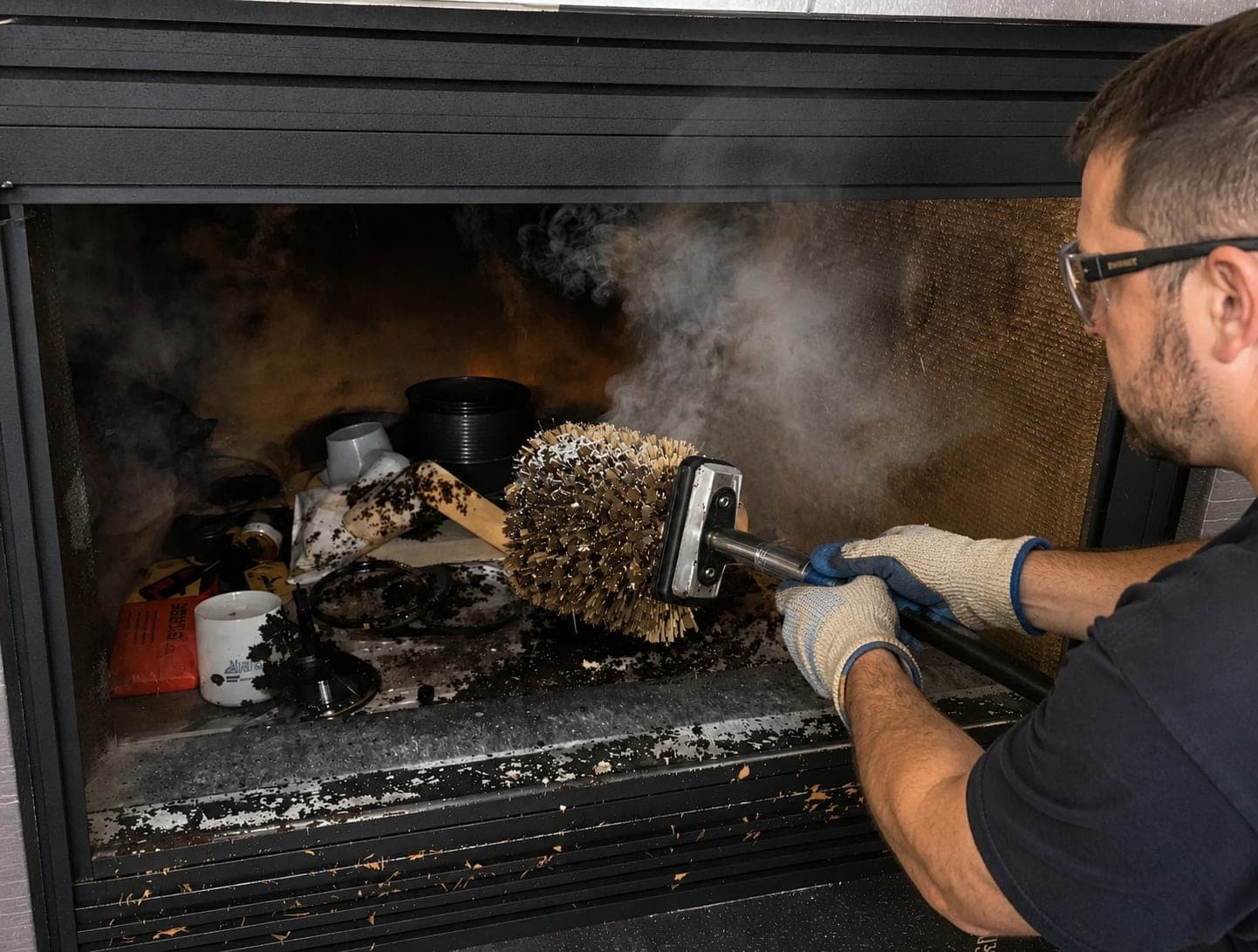
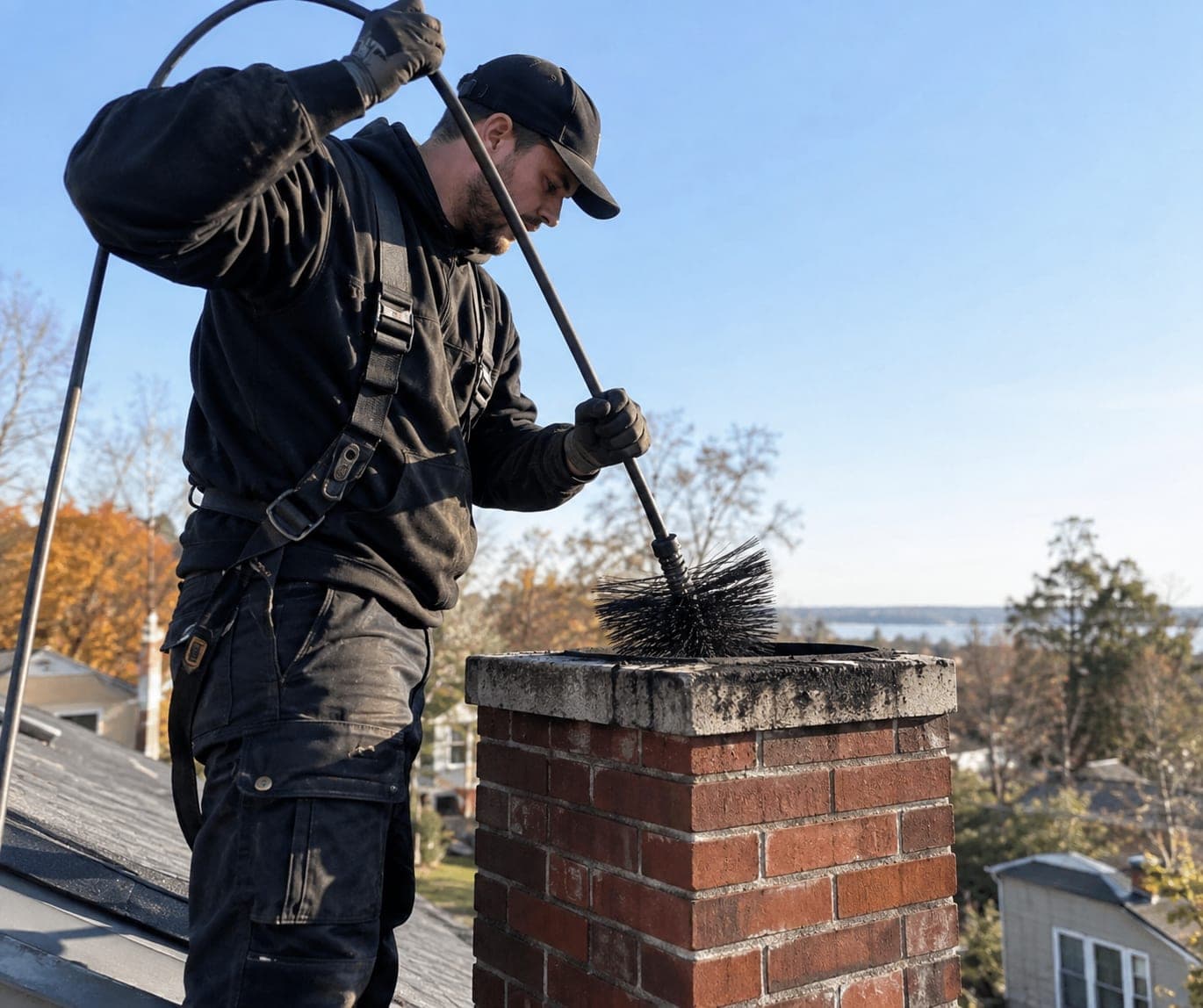
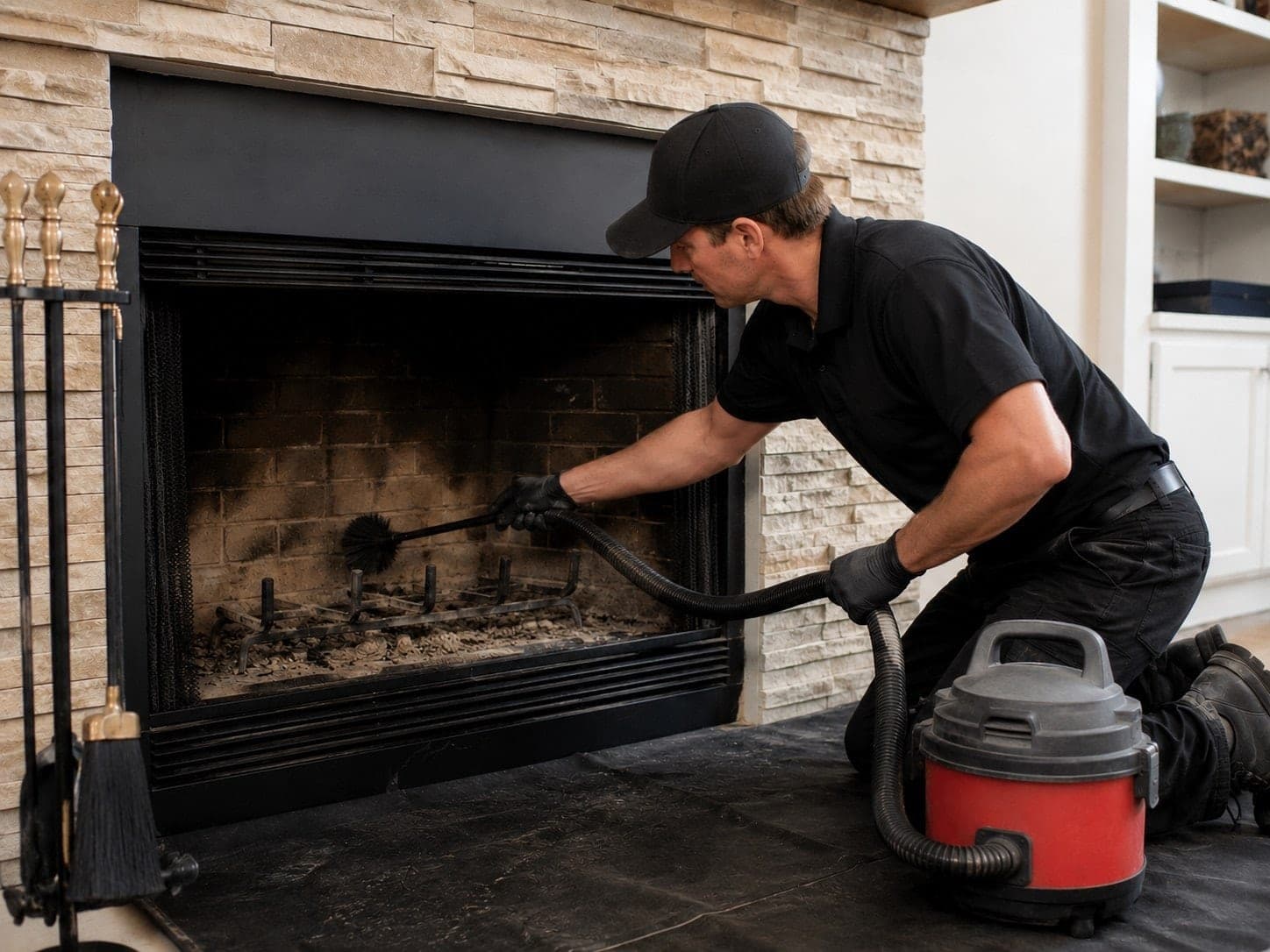
Creosote and soot are cleaned from the flue and smoke chamber, debris or nesting material is cleared, and the firebox is cleaned so residue isn't left behind to keep smelling.
Address why the smell reaches the room
We explain what let the odor in, such as a worn damper, a missing or damaged cap, or water entry, and what repair would stop it from returning.
Walk you through what we found
You get a plain explanation of the cause and any recommended repairs before any additional work is done.
Wood-burning and gas fireplaces
In a wood-burning fireplace, the usual culprit is creosote, a tar-like byproduct of burning wood that clings to the flue and gives off a strong smell when the air is warm or damp. Our guide on creosote buildup dangers and prevention explains how it forms and how burning habits affect it. Gas fireplaces don't produce creosote, but their vents can still collect debris, moisture or nesting material. We work on all major fireplace brands.
Why odor is worth taking seriously
A smoky smell from a cold fireplace often means creosote has built up in the flue, and creosote is fuel for chimney fires. Removing it cleans up the smell and lowers that risk at the same time. If you use your fireplace regularly, our guide to chimney fire safety covers warning signs and good burning habits. Keeping the damper closed when the fireplace is off and having the chimney cleaned on a regular schedule both help keep smells from coming back.
Booking chimney odor removal
Call or request an estimate and describe the smell and when you notice it. Our 24-hour service runs Sunday–Friday, and emergency calls are accepted. Commercial and property-manager work is offered as well, so landlords and building managers can book odor problems in rental units too.