The short answer on chimney fire safety
Chimney fire safety comes down to keeping fuel out of the flue. Wood smoke leaves creosote on the inside of the chimney, and creosote burns hot. Once enough builds up, a stray spark or a very hot fire can ignite it. Regular sweeping, dry wood, a fully open damper during fires and a yearly inspection keep that buildup from turning into a fire. If you think a chimney fire is burning right now, skip to the emergency steps below and get everyone outside first.
Why chimney fires start
Creosote is the fuel, but certain habits and conditions make it build up faster or ignite more easily:
- Wet or unseasoned wood burns cool and smoky, and that smoke condenses into creosote inside the flue.
- A partly closed damper or a starved fire slows the draft, so smoke lingers and cools in the chimney.
- Blockages such as nests, leaves or debris restrict airflow and trap heat and smoke.
- Burning paper, cardboard, wrapping or trash sends burning embers up the flue, where they can land on creosote.
- An oversized or overloaded fire can heat existing deposits to the point where they ignite.
- A cracked or damaged flue liner lets heat reach parts of the house that were never meant to get hot.
For a closer look at how deposits form and how to slow them down, read our guide to creosote buildup dangers and prevention.
How creosote changes as it builds up
| Form | What it looks like | What it takes to remove |
|---|---|---|
| Light soot | Dry, dusty, flaky black layer | A standard brush sweep |
| Crunchy or tar-like flakes | Thicker, porous deposits that crumble or feel sticky | Heavier sweeping, sometimes rotary tools |
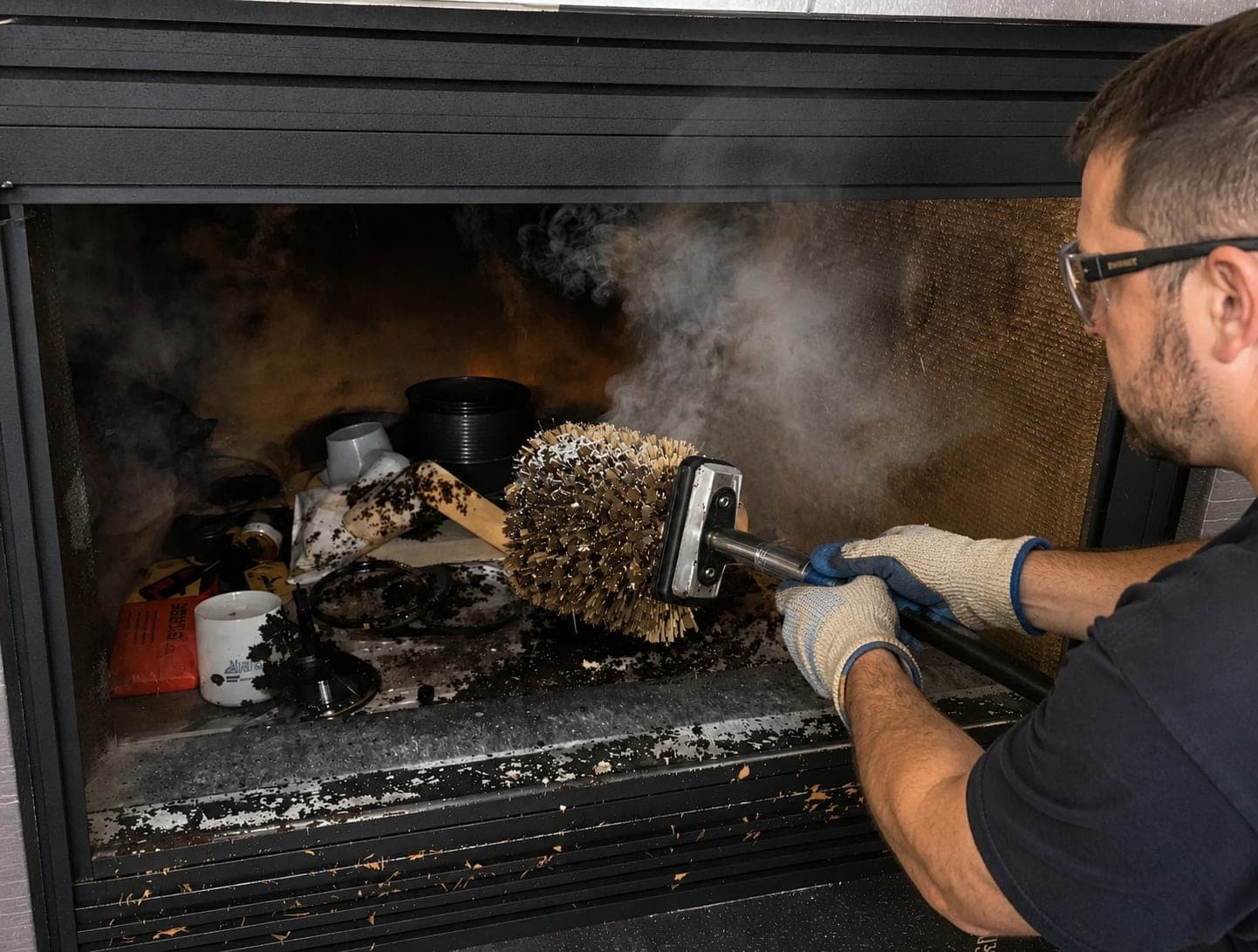
| Glazed creosote | Shiny, hardened coating like dried tar | Specialized removal; this form burns the hottest |
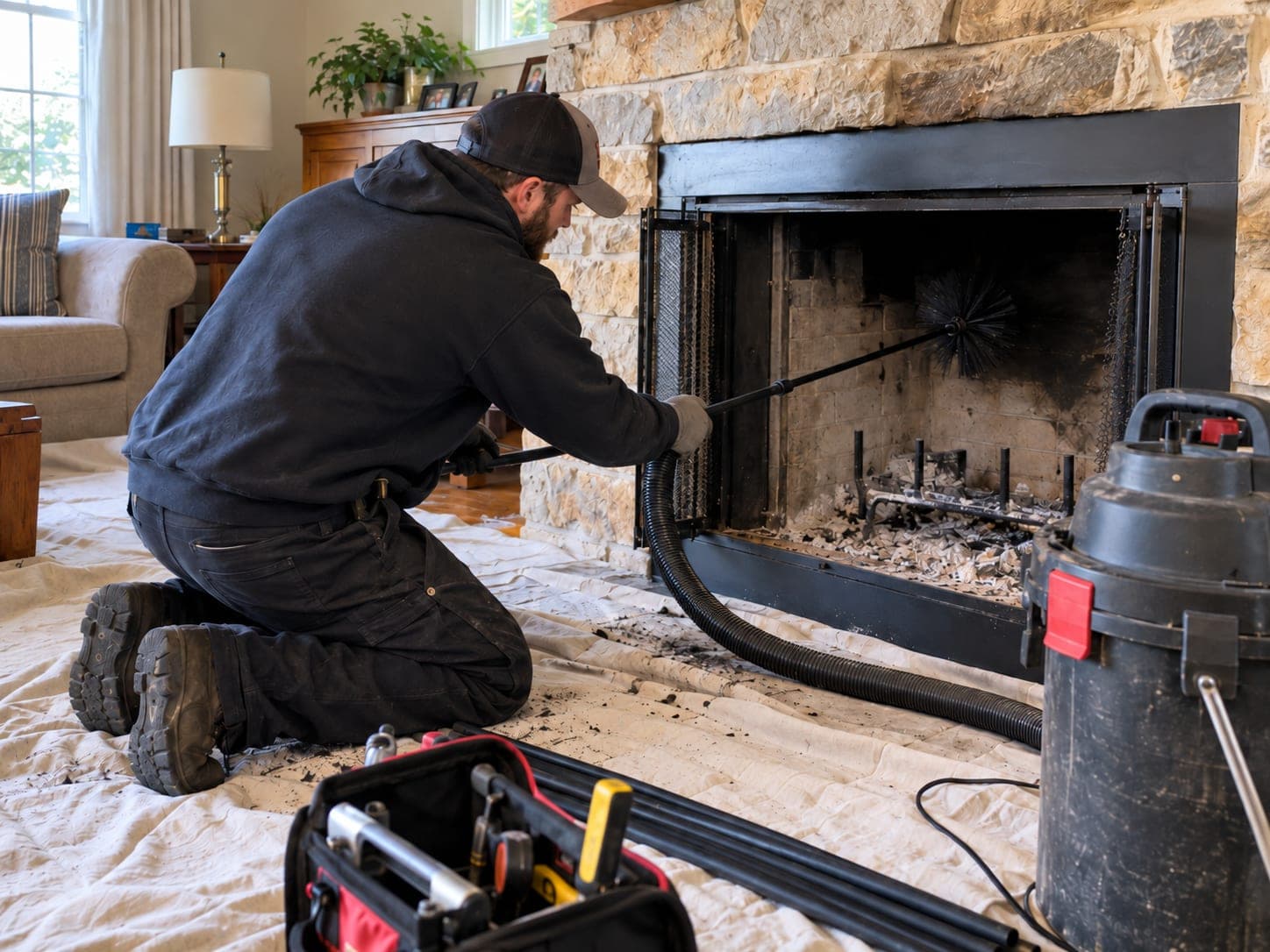
Light soot is normal and comes off with a routine chimney sweep. The glazed form is the hardest to clear and the most dangerous, and it usually needs dedicated creosote removal rather than brushing alone.
Warning signs of a chimney fire
Some chimney fires are loud and obvious. Others smolder quietly and are only found later. Signs of an active fire include:
Signs a chimney fire may be burning
- A loud roaring or rumbling sound, often compared to a freight train or a low-flying plane
- Loud popping or cracking from inside the chimney
- Thick, dark smoke pouring from the top of the chimney
- Flames or sparks shooting out of the chimney top. If you hear roaring or see flames or sparks from the top of the chimney, get everyone out and call 911.
- A strong, hot, burning smell inside the house
- Walls or the chimney breast feeling unusually hot to the touch
If a chimney fire may be burning
Get out and call 911
Get everyone out of the house and call 911. Don't stay inside to watch it or try to put it out yourself. Don't use the fireplace or stove again until the chimney has been inspected.
What to do, in order
Get everyone out
Take people and pets outside and stay there. A chimney fire can spread into walls, the attic or the roof.
Call 911
Tell the dispatcher you suspect a chimney fire. Let the fire department decide whether the fire is out.
Don't throw water into the firebox
Cold water on hot masonry or a hot liner can crack it, and the steam can cause burns.
Leave the fireplace unused
Even after the fire is out, don't light another fire until the chimney has been inspected. A fire can crack liners and loosen masonry in ways you can't see from the hearth.
Damage a chimney fire can leave behind
Slow, quiet chimney fires often go unnoticed until someone finds the damage. After a suspected fire, or if you see any of these, stop using the fireplace and have the system checked:
Signs of a past chimney fire
01Puffy, honeycombed creosote
- What you may notice
- Creosote that looks swollen, airy or bubbled, unlike the usual flat layer
- How it’s confirmed
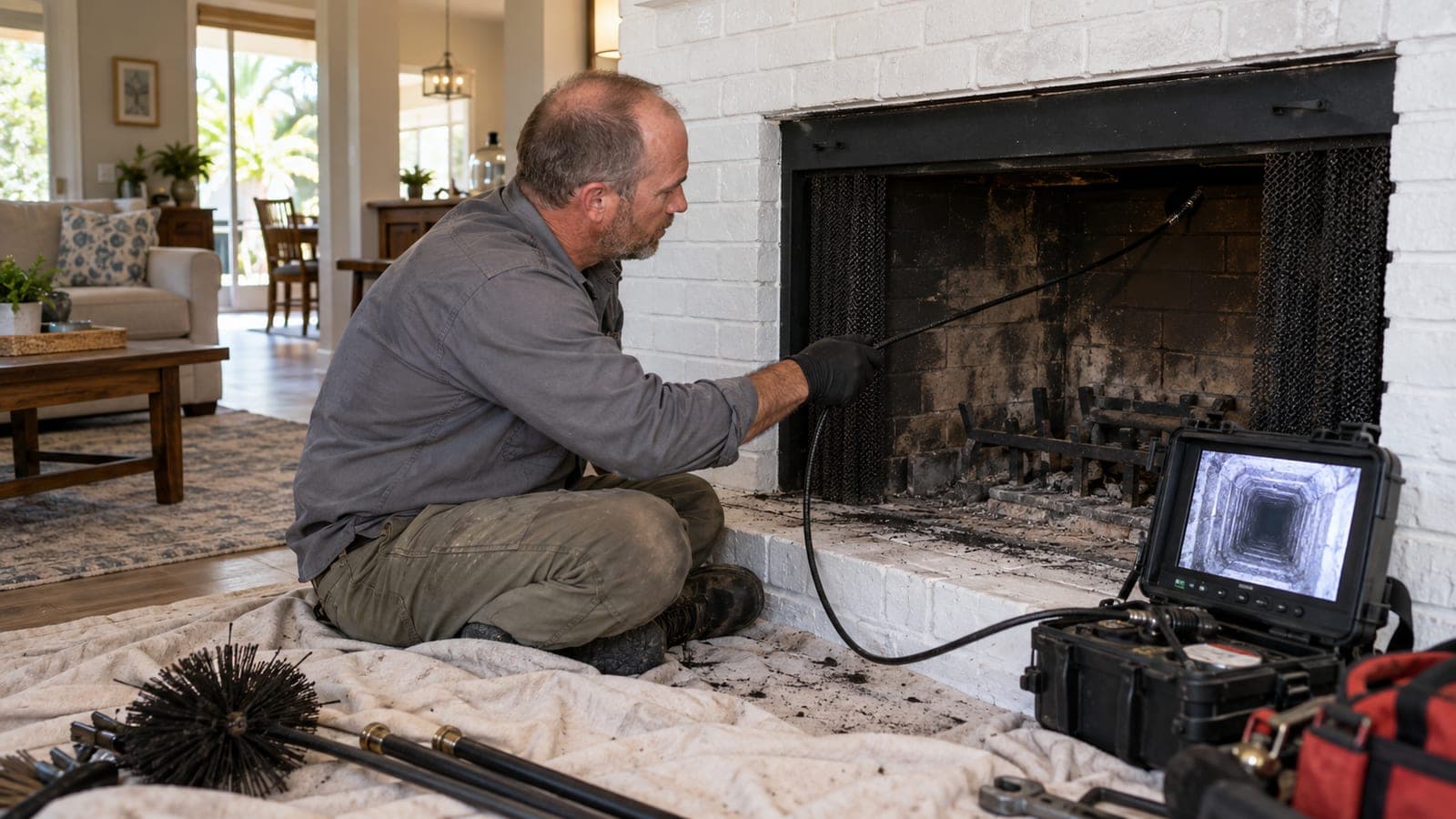
- A visual and camera look at the flue walls
02Cracked or missing flue tiles
- What you may notice
- Tile pieces in the firebox or on the smoke shelf, or visible gaps in the liner
- How it’s confirmed
- A camera run through the full length of the flue
03Warped metal parts
- What you may notice
- A damper that sticks or no longer closes, or a bent or discolored chimney cap
- How it’s confirmed
- Checking the damper, cap and any metal liner by hand and by eye
04Heavy deposits on the roof or in the yard
- What you may notice
- Chunks of creosote, soot or charred debris near the chimney
- How it’s confirmed
- Inspecting the chimney top and the flue from above
Shaking can damage a flue in many of the same ways heat does, which is why the checks overlap with those for chimney damage after an earthquake.
Habits that prevent chimney fires
Prevention checklist
- Burn only dry, seasoned hardwood. It should feel light, sound hollow when two pieces knock together and show cracks on the ends.
- Open the damper fully before lighting and leave it open until the fire is completely out.
- Build smaller, hotter fires instead of large smoldering ones.
- Never burn trash, cardboard, wrapping paper or treated or painted wood.
- Keep a chimney cap in place so nests and debris stay out of the flue.
- Have the chimney swept when deposits build up, and inspected once a year whether or not you burned much.
Deciding what your chimney needs
| Feature | Sweeping | Inspection |
|---|---|---|
| Main purpose | Removes soot, creosote and debris | Checks the condition of the flue, liner, damper, cap and masonry |
| When it makes sense | When deposits have built up from regular use | Yearly, after a suspected chimney fire, after storms or shaking, or before buying a home |
| What it can't do | It doesn't confirm the liner is intact | It doesn't remove buildup by itself |
Main purpose
- Sweeping
- Removes soot, creosote and debris
- Inspection
- Checks the condition of the flue, liner, damper, cap and masonry
When it makes sense
- Sweeping
- When deposits have built up from regular use
- Inspection
- Yearly, after a suspected chimney fire, after storms or shaking, or before buying a home
What it can't do
- Sweeping
- It doesn't confirm the liner is intact
- Inspection
- It doesn't remove buildup by itself
If you've had a fire, a strange smell or a damper that no longer works right, start with an inspection. If the system checks out and you simply burn often, a sweep is usually the next step. Learning how chimney inspection works can help you know what to expect before you book.
When you're ready for a check or a cleaning, Chimney Flame handles chimney inspection, sweeping and creosote removal, and estimates are free.