On this page
What creosote removal involves
Creosote is the residue left when wood smoke cools on its way up the chimney. It condenses on the flue walls and builds up with every fire. A routine chimney sweep service clears loose soot and light deposits. Creosote removal goes further. It targets buildup that has thickened or hardened past what standard brushing can lift.
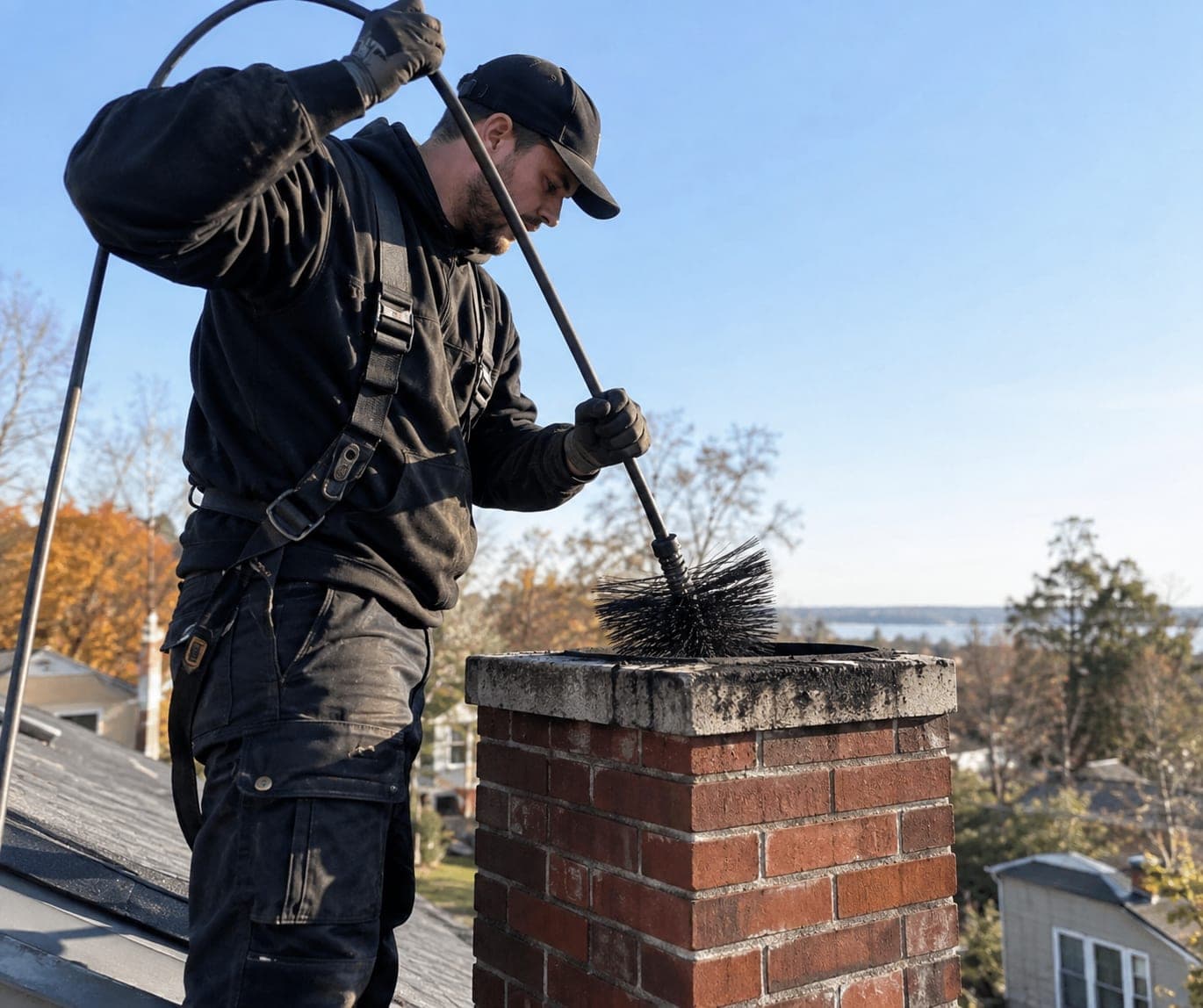
The approach depends on the form the creosote has taken. That's why we look at the flue first and pick the method afterward.
| Form | What it looks like | Typical approach |
|---|---|---|
| Light, flaky | Dry, dark, powdery soot | Brushing during a standard sweep |
| Crunchy or tar-like | Thick, puffy or sticky deposits | More aggressive mechanical tools, sometimes several passes |
| Glazed | Hard, shiny coating, like dripped tar | A treatment that loosens the glaze so it can be removed, often over more than one visit |
Signs your chimney may need creosote removal
Heavy creosote doesn't always announce itself, but these signs are worth acting on:
Signs to watch for
- A strong, smoky or tar-like smell from the fireplace, especially in warm or humid weather
- Black, flaky or sticky material falling into the firebox
- A shiny, hard coating visible when you look up the flue with a flashlight
- Fires that are harder to start or smoke that drifts into the room
- A previous sweep that noted deposits it couldn't fully remove
- Burning damp or unseasoned wood, or long, smoldering, low-air fires
Poor draft and smoke spilling into the room can also come from something sitting in the flue. If debris or nesting material could be the cause, chimney blockage removal or chimney animal & nest removal may be part of the fix.
What the visit looks like, step by step
How a creosote removal visit runs
Protect the room
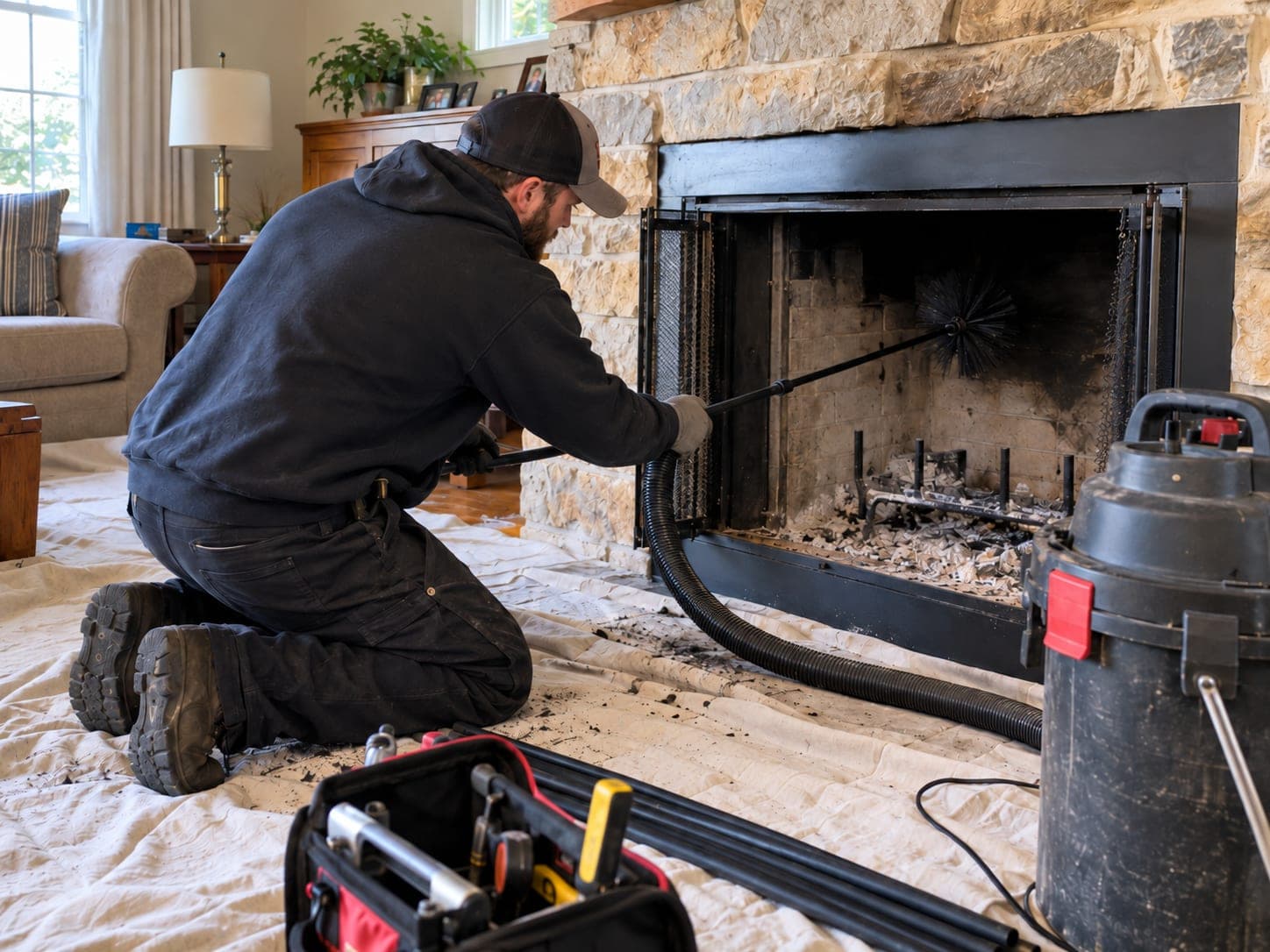
We cover the hearth and nearby floor before opening anything up, so soot and debris stay contained.
Look before cleaning
We examine the firebox, damper and flue to see what kind of creosote is present and how far it extends. Where a closer look is needed, a camera inspection can show the flue's full length.
Remove the deposits
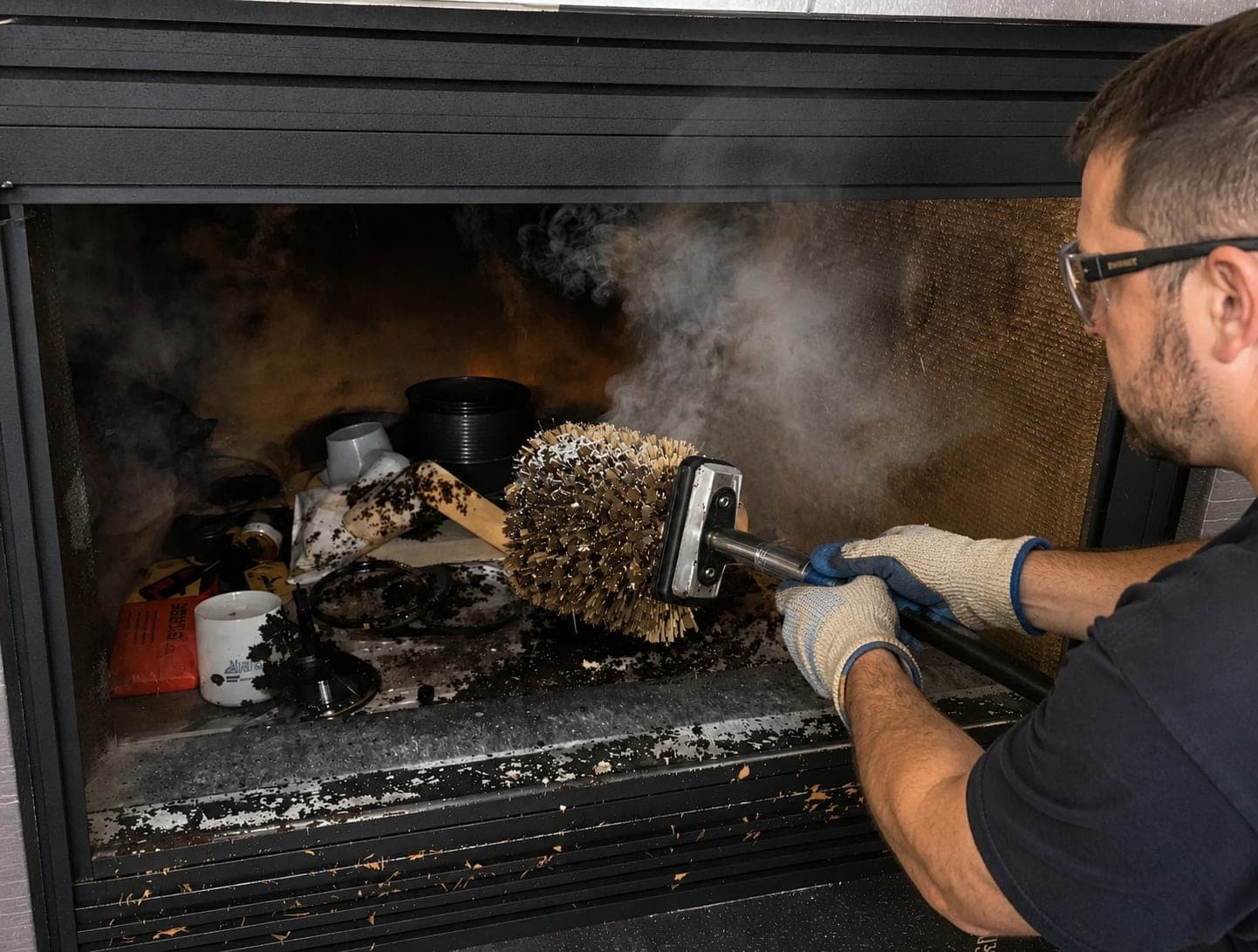
Loose and crunchy buildup is broken up and brushed out. Glazed creosote may need a treatment that softens it first, then removal, and sometimes a return visit.
Clean up and check again
We collect the debris and look at the flue again to confirm what came out and what, if anything, remains.
Explain what we found
You'll hear what condition the flue is in, whether any damage turned up under the deposits, and what would help slow future buildup.
Why creosote builds faster in some homes
Buildup depends mostly on how a fireplace or wood stove is used. Wet or green wood, fires kept smoldering with the air turned down, and flues that run cool all speed up creosote. Dry, seasoned wood and fires that burn hot and steady leave less behind. For more on what drives it and how to slow it down, read our guide to creosote buildup dangers and prevention.
If a chimney fire may be burning
A loud roaring sound, dense smoke, or flames or sparks shooting from the top of the chimney can mean the creosote inside is on fire. Get everyone out of the house and call 911. Don't use the fireplace again until it has been inspected, because a chimney fire can crack a flue or liner without visible signs from the room. Our chimney fire safety guide covers what to do and what to watch for.
Booking creosote removal
Get in touch to request an estimate. Commercial and property-manager work is offered too.