On this page
What a real estate chimney inspection covers
A real estate chimney inspection is a detailed look at a chimney and fireplace system when a home changes hands. A standard home inspector looks at the visible parts: the firebox, the damper and the outside of the stack. This inspection also checks the inside of the flue, where cracks, gaps in the liner and heavy deposits are hard to see without a camera.
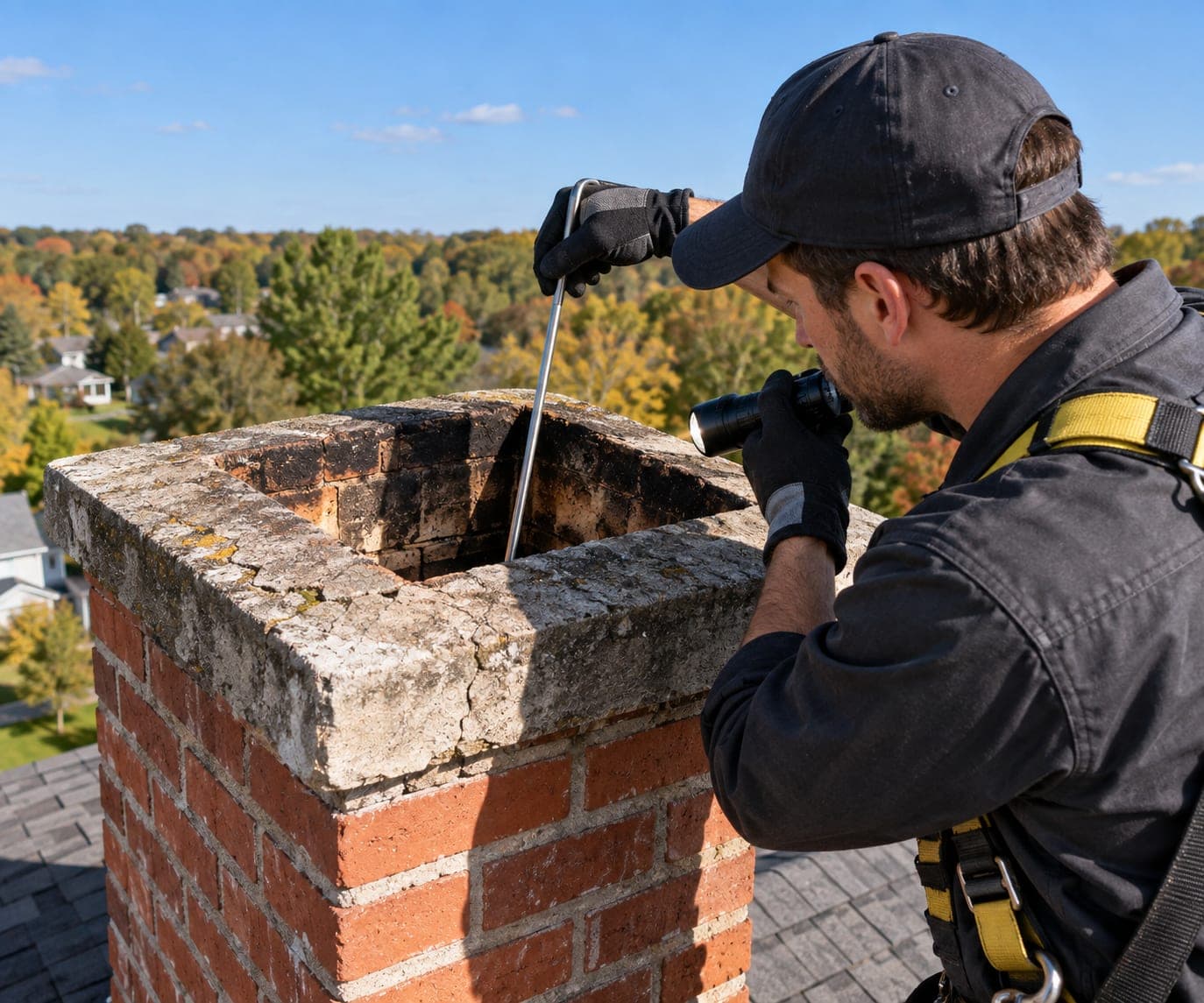
It is based on the same work as our routine chimney inspection service, with more detail and a camera scan. That fits a purchase decision, because the buyer is taking on whatever condition the chimney is in.
Level 2 inspections and home sales
The CSIA recommends this level at three points:
- When a property is sold or transferred
- After a chimney fire
- After a weather or seismic event that could have affected the chimney
These are recommendations from an industry standard. They help buyers, sellers and agents decide how thorough the chimney check should be. If the concern is damage from wind, falling limbs or shaking rather than a sale, our storm damage chimney inspection service is the better fit.
Why the camera matters
From the firebox, you can only see a short way up the flue. A chimney camera passes through the whole flue and shows cracked flue tiles, separated joints, damaged liner sections and blockages. The camera footage is what separates this inspection from a quick visual check.
When a home sale calls for this inspection
Buyers, sellers and agents usually ask for a real estate chimney inspection in situations like these:
Common reasons to book
- A home with a wood-burning fireplace, insert or wood stove is going under contract
- The home inspection report recommends further evaluation of the chimney
- Sellers have no record of when the chimney was last cleaned or inspected
- There are visible cracks in the crown or masonry, or stains around the chimney
- You smell smoke or a musty odor from the fireplace when it isn't in use
- There are signs of animals or nesting material at the damper or top of the flue
- A gas fireplace or gas insert vents through an older masonry chimney
- The seller wants to know the chimney's condition before listing
If the inspection finds a nest or debris in the flue, we handle it through our chimney animal & nest removal service. You won't need to find a separate company.
What the visit involves, step by step
How the inspection runs
Scheduling around the sale
Tell us your inspection window and who will be at the property: buyer, seller or agent. We'll plan the visit around that window.
Exterior check
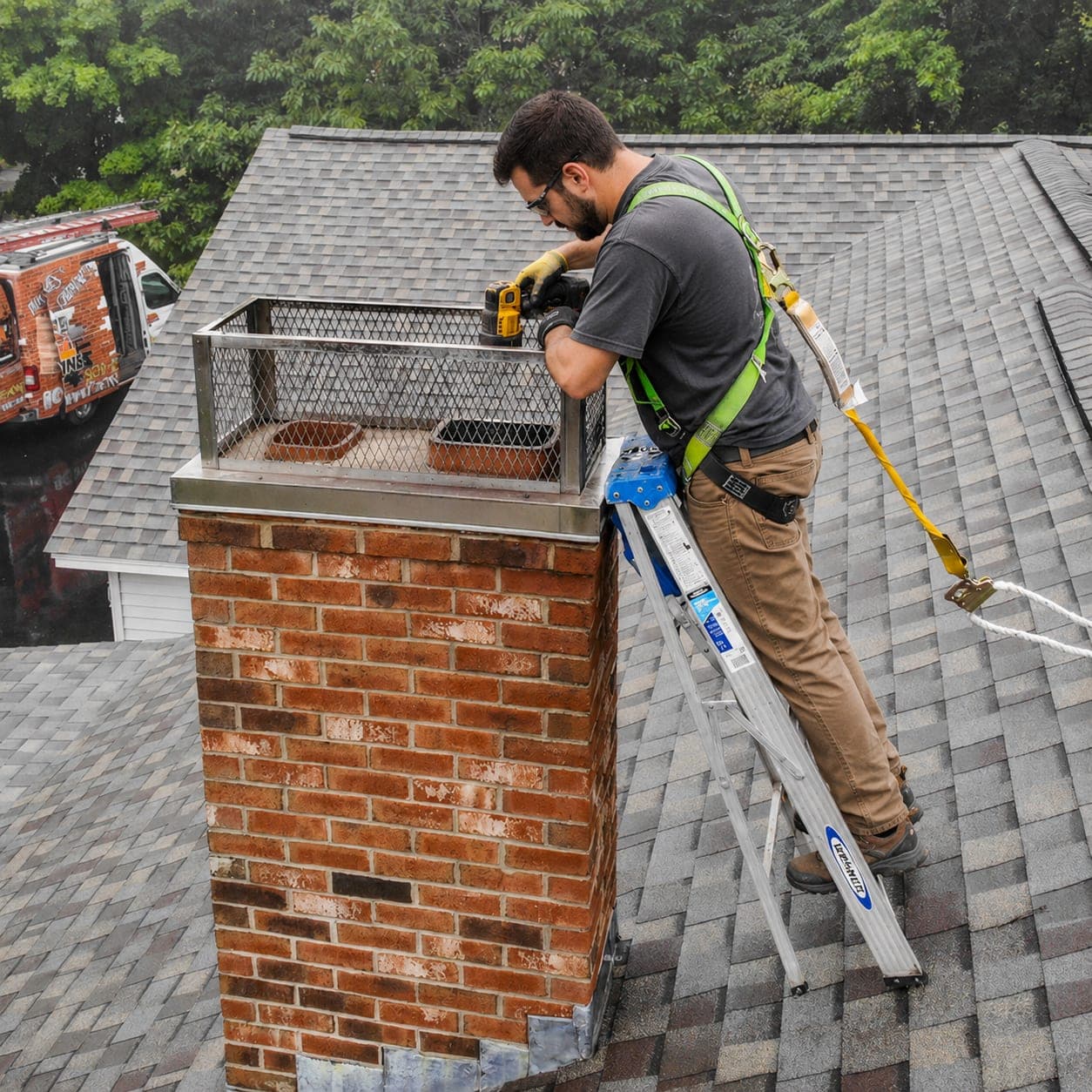
We look at the chimney's exterior, crown, cap, flashing and masonry wherever we can reach them safely.
Interior and firebox
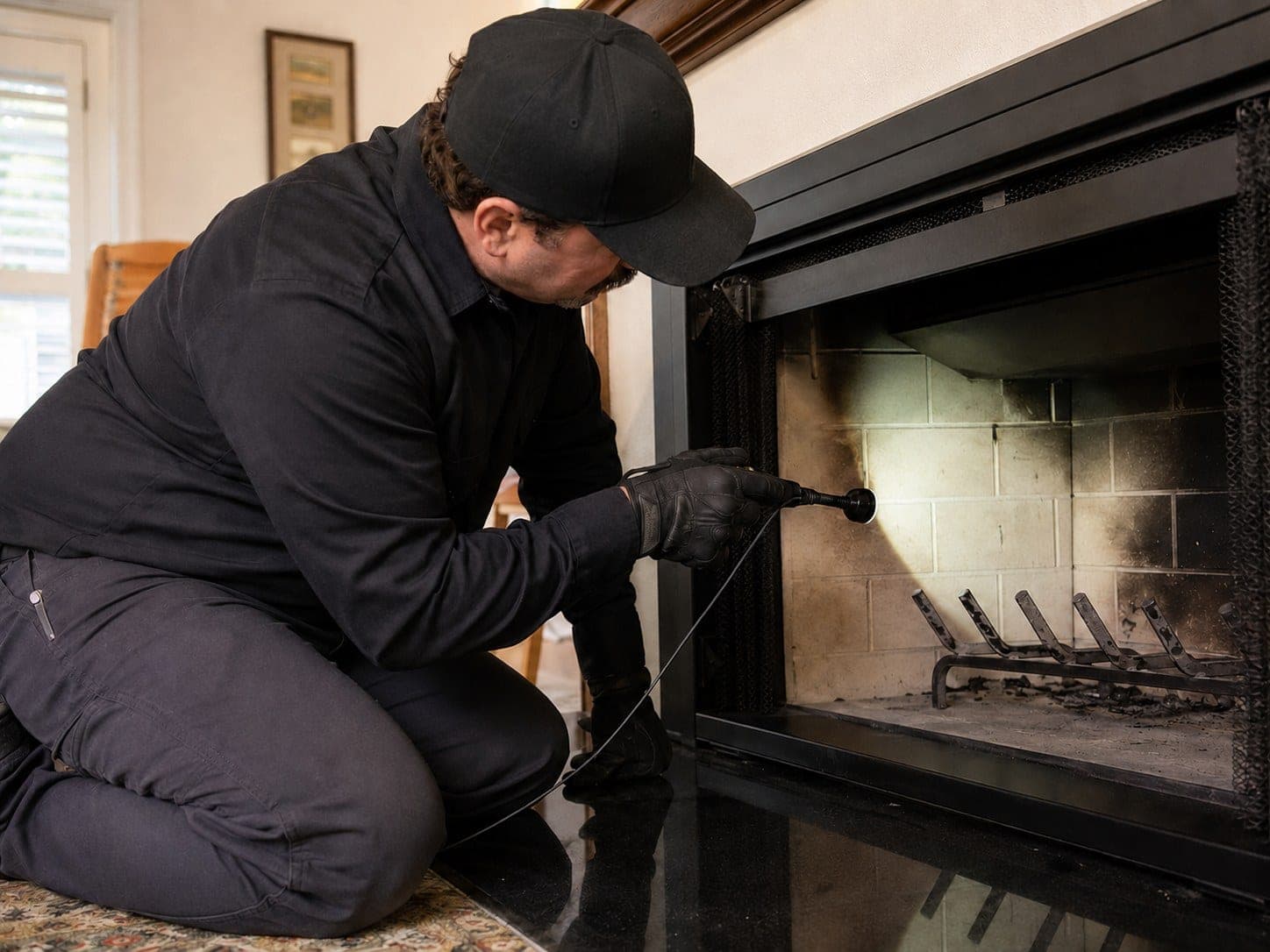
We check the firebox, damper, smoke chamber and any insert, stove or gas appliance connected to the chimney.
Video scan of the flue
A camera runs through the flue to record the liner and joints and to spot blockages or deposits.
Review of findings
We walk you through what we found and what it means. If repairs are needed, the estimate is free.
Systems and fuel types we inspect
Real estate inspections cover the setups most homes have: masonry chimneys with clay or metal liners, prefab fireplaces with metal chimneys and chases, wood stoves, fireplace inserts and gas fireplaces. We work on gas fireplaces and gas appliances, and on all major fireplace and stove brands.
Safety and maintenance after the sale
An inspection shows the chimney's condition on one day. Keeping it safe after that depends on use and upkeep. Creosote builds up in wood-burning flues over time, and heavy deposits can catch fire. Our guide to creosote buildup dangers and prevention explains how that happens and how to slow it.
Before the first fire in a new home
If you've just bought the home, don't light a fire until you know the flue is clear and the liner is intact. A blocked or cracked flue can send smoke, heat or carbon monoxide into the house. Our guide to chimney fire safety covers the warning signs to watch for.
Booking your real estate chimney inspection
Call or request an estimate and tell us the property and your closing timeline. Commercial and property-manager work is offered too, so agents and managers can book inspections for the properties they handle.
Free estimates.
Get in touch to schedule a real estate chimney inspection before your inspection window closes.
Related work covered on this page
- Chimney Camera Inspection