On this page
What chimney animal screen installation involves
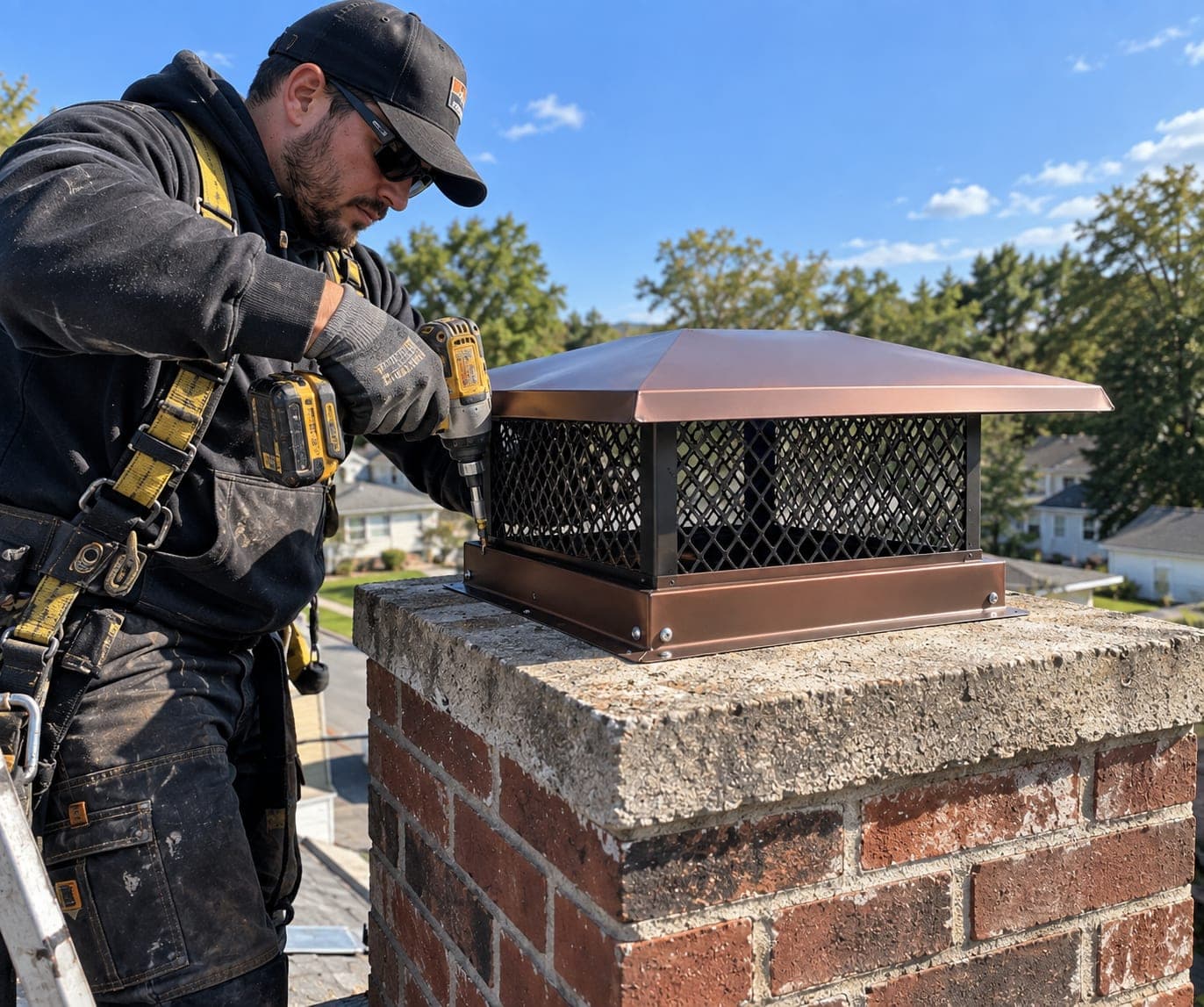
A chimney animal screen is a mesh enclosure fastened around the top of the flue. It lets smoke and gases out while keeping wildlife from climbing or dropping in. Most screens are built into a cap with a solid top that also sheds rain, so screen work and chimney cap installation often happen together. On some chimneys a screen can be added to an existing cap that is still sound.
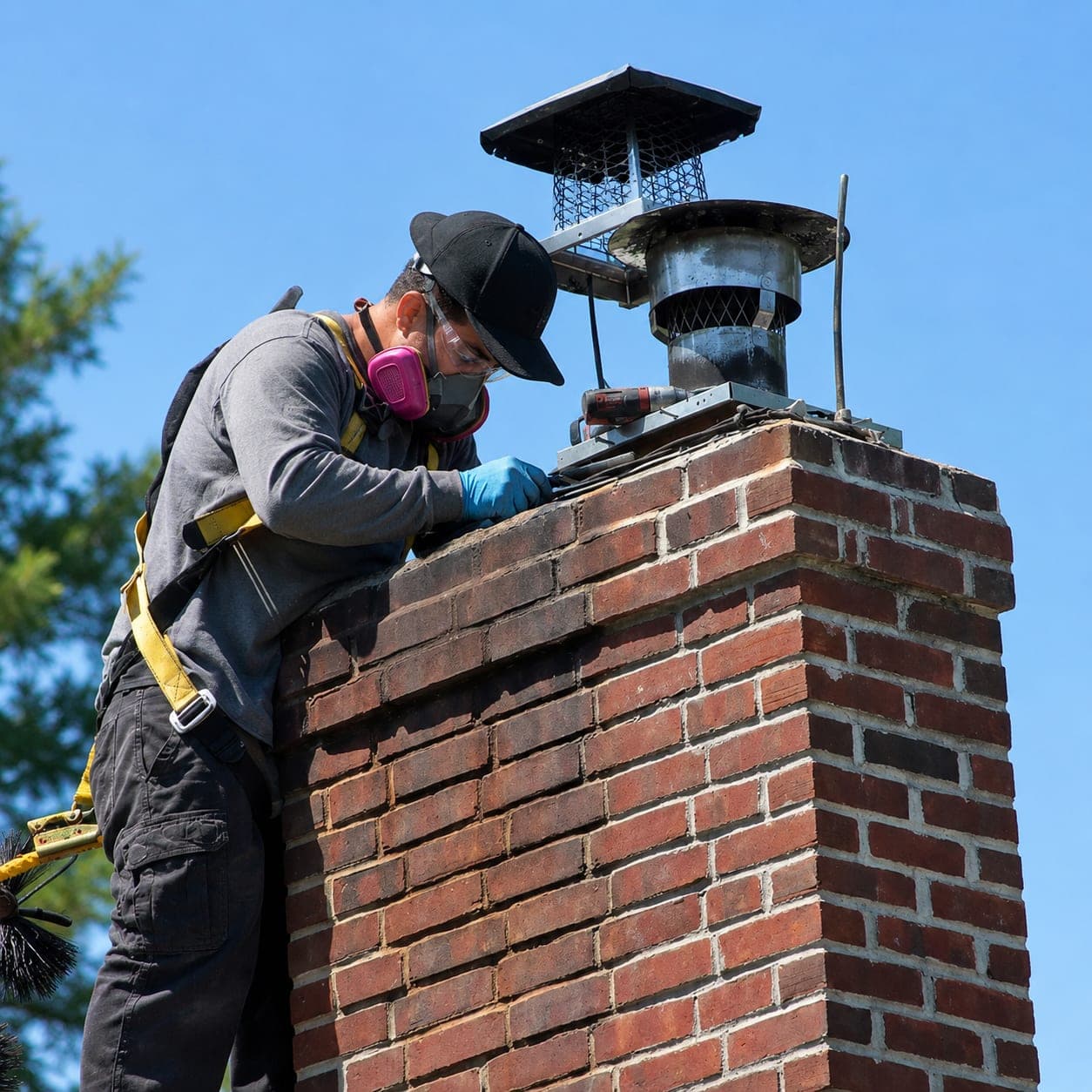
The job involves more than setting mesh on top of the flue. The screen has to match the flue's shape and size and sit securely on the flue tile or crown. Its mesh opening also has to block animals without trapping soot. Mesh that is too fine can clog and restrict draft. Mesh that is too coarse lets small birds and bats through.
Signs your chimney needs an animal screen
Common reasons homeowners call
- Scratching, chirping or fluttering sounds from the fireplace or flue
- Twigs, leaves, feathers or droppings falling into the firebox
- A musty or animal smell from the fireplace, especially in damp weather
- No cap or screen on top of the chimney at all
- A screen that is rusted through, bent, torn or pulled loose
- An animal or nest was recently removed and you want to keep it from happening again
If something is living in the flue now
Don't light a fire or try to smoke an animal out. Smoke can back up into the house, and a nest can catch fire or block the flue. Chimney animal and nest removal comes first. The screen goes on once the flue is clear.
What the visit looks like, step by step
From estimate to finished screen
Free estimate
We go over what you've heard or seen and what kind of fireplace, stove or appliance uses the flue.
Look at the chimney top
We check the flue tile, the crown and any existing cap for cracks, rust or loose parts that would affect how a screen mounts.
Confirm the flue is clear
Any nesting material or debris is removed before anything is installed, so a blockage doesn't get sealed inside.
Measure and choose the screen
We measure the flue and choose a screen or capped screen that fits its shape, with a mesh size suited to the fuel you burn.
Fit and fasten
The screen is secured so wind, animals and weather can't work it loose.
Final check
We confirm the opening is fully enclosed and that the screen leaves enough open area for the chimney to draft properly.
Screen materials and how fuel type matters
Stainless steel mesh holds up well against moisture and flue gases and is a common choice. Galvanized screens can rust sooner. Copper is chosen mostly for its looks. Wood-burning fireplaces and stoves produce more soot, so on those chimneys the mesh shouldn't be so tight that it plugs up between cleanings.
Where embers are a concern, a screen with the right mesh size can also act as a spark barrier. Our chimney spark arrestor installation covers that purpose specifically. If the flue serves a gas appliance, the top may need a termination suited to that appliance. Gas fireplace and gas appliance work is offered.
When the flue itself needs attention
A screen only mounts well on a sound flue. If the inspection finds a cracked or missing liner, the chimney liner installation service may be the better first step. Broken crowns or loose masonry at the top are worth fixing before a new screen goes on. Our guide to chimney repair vs rebuild explains how that decision is usually made.
Keeping the screen working
Mesh collects soot and creosote over time, particularly on wood-burning chimneys. Having the screen checked during regular sweeping keeps it from clogging and restricting draft. If smoke starts lingering in the room after a screen has been in place for a while, a partly blocked mesh is one thing to rule out. If you're weighing whether a full cap makes sense for your chimney, read do you need a chimney cap.
Booking an animal screen installation
Call or request an estimate and describe what's been happening at the chimney. Commercial and property-manager work is offered as well, and we work on all major fireplace and stove brands.