On this page
What a chimney spark arrestor does
A spark arrestor is a metal mesh screen mounted at the top of the flue. The openings are small enough to stop burning embers and large enough to let smoke and combustion gases pass. Many arrestors are built into a chimney cap, with a solid lid on top and mesh around the sides. Others are a mesh enclosure fitted to the flue tile on its own. Both types do the same job: they keep sparks inside until they burn out.
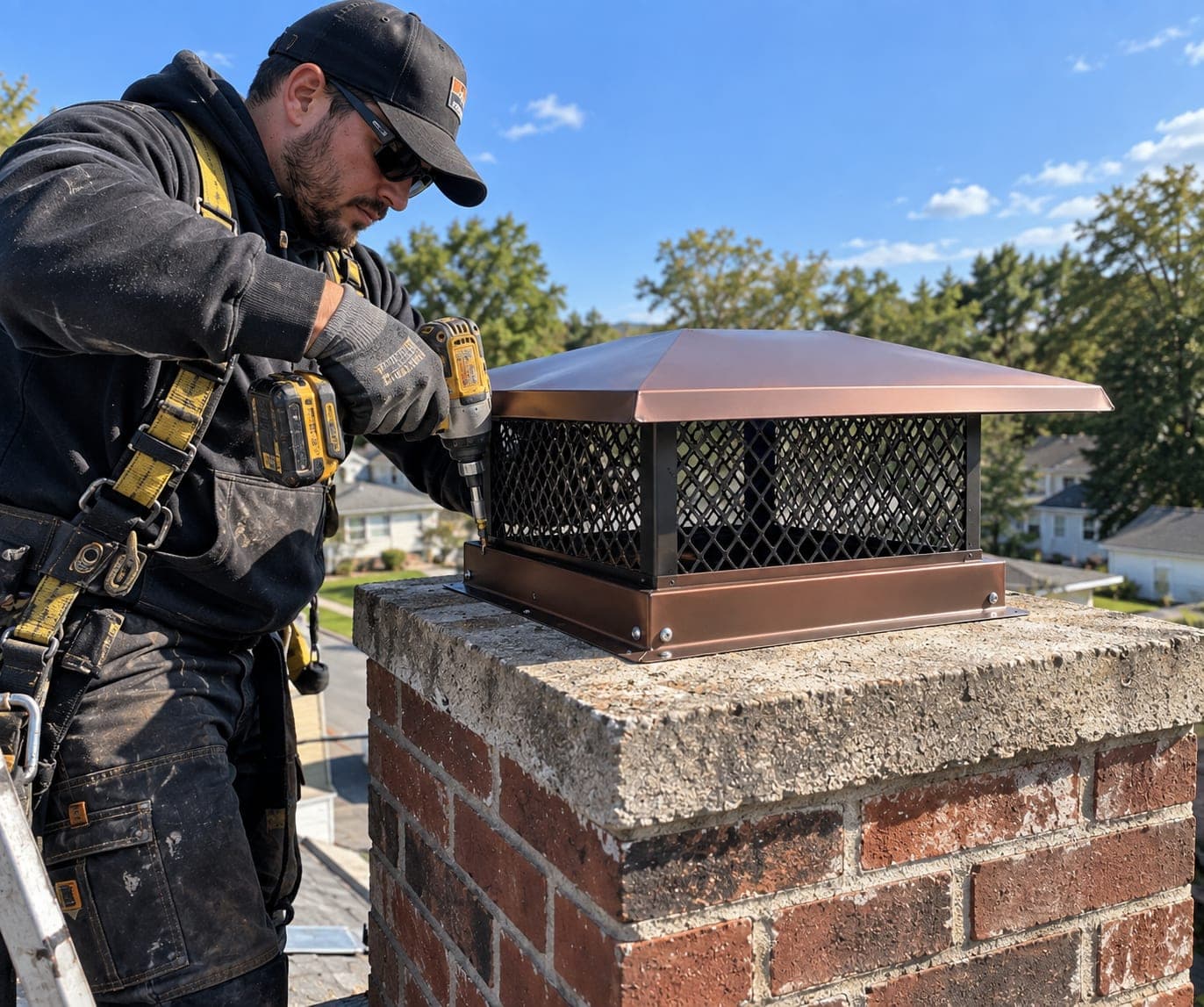
Chimney spark arrestor installation means choosing a screen that fits your flue and crown, attaching it securely, and confirming the chimney still drafts properly with it in place. A loose, undersized or badly clogged screen can be worse than none at all, because it can restrict the draft and push smoke back into the room.
Signs your chimney needs a spark arrestor
Common reasons homeowners call
- There is no cap or screen on the flue at all, only open tile or pipe.
- The chimney has a cap but no mesh around the sides.
- The existing mesh is rusted through, torn or pulling away from its frame.
- You have seen sparks or glowing bits leaving the chimney during a fire.
- Birds, squirrels or debris have gotten into the flue through the top.
- The flue was relined or changed, and the old screen no longer fits.
If animals are the main concern rather than embers, our chimney animal screen installation service covers the same area of the chimney with that goal in mind. If you also want a lid against rain and debris, the screen is often fitted as part of a cap. Our chimney cap installation work covers that combined setup.
What the installation visit involves
Step by step
Check the chimney top
We look at the crown, the flue tile or pipe, and any existing cap or screen. If we find cracks or loose masonry, we tell you before fitting anything to it.
Measure the flue
We measure the outside of the flue and its height above the crown. On chimneys with more than one flue, we measure the full crown for a single arrestor that covers them all.
Choose the arrestor style and material
We go over the options that fit your chimney and the fuel you burn, and you pick one.
Fit and secure it
The arrestor is fastened to the flue or crown so wind cannot lift it off. Any old, failed screen comes off first.
Confirm the draft
We check that smoke will vent freely with the new mesh in place and point out anything that could affect performance.
Materials and arrestor types
| Feature | Single-flue arrestor | Multi-flue (crown-mount) arrestor |
|---|---|---|
| Where it mounts | Clamps or screws to one flue tile or pipe | Fastens to the crown and covers every flue |
| Best for | Chimneys with one exposed flue | Chimneys with several flues close together |
| Typical materials | Stainless steel, galvanized steel or copper | Stainless steel, galvanized steel or copper |
Where it mounts
- Single-flue arrestor
- Clamps or screws to one flue tile or pipe
- Multi-flue (crown-mount) arrestor
- Fastens to the crown and covers every flue
Best for
- Single-flue arrestor
- Chimneys with one exposed flue
- Multi-flue (crown-mount) arrestor
- Chimneys with several flues close together
Typical materials
- Single-flue arrestor
- Stainless steel, galvanized steel or copper
- Multi-flue (crown-mount) arrestor
- Stainless steel, galvanized steel or copper
Stainless steel and copper generally hold up longer outdoors than galvanized steel, which can rust once its coating wears. Gas appliances usually vent through their own terminations, so we confirm what each flue serves before recommending a screen. Gas fireplace and gas appliance work is offered, so we can look at those vents during the same visit.
Keeping the arrestor working
A clogged screen can block the draft
Soot and creosote can build up on the mesh, especially with wet or green wood. If fires start getting smoky or hard to light, have the screen and flue checked.
Have the mesh checked whenever the chimney is swept, and replace it once it is rusted through or torn. If the flue itself is damaged or unlined, the arrestor will not fix that. A new liner may be the bigger priority, and our chimney liner installation work handles that. Damaged masonry at the top can change the plan too. Our guide to chimney repair vs rebuild explains how that decision is made.
Book your spark arrestor installation
Commercial and property-manager work is offered, and we work on all major brands of fireplaces and stoves. If you are still deciding whether the top of your chimney needs covering, our guide on do you need a chimney cap is a good place to start. When you are ready, call or request an estimate.