On this page
What chimney cap installation involves
A chimney cap is a metal cover that sits over the top of the flue. It has a solid top to shed rain and mesh sides that let smoke out but keep birds, squirrels, raccoons and blowing debris from getting in. Chimney cap installation means measuring the flue opening and crown, choosing a cap that fits that chimney, and fastening it so wind can't lift it off.
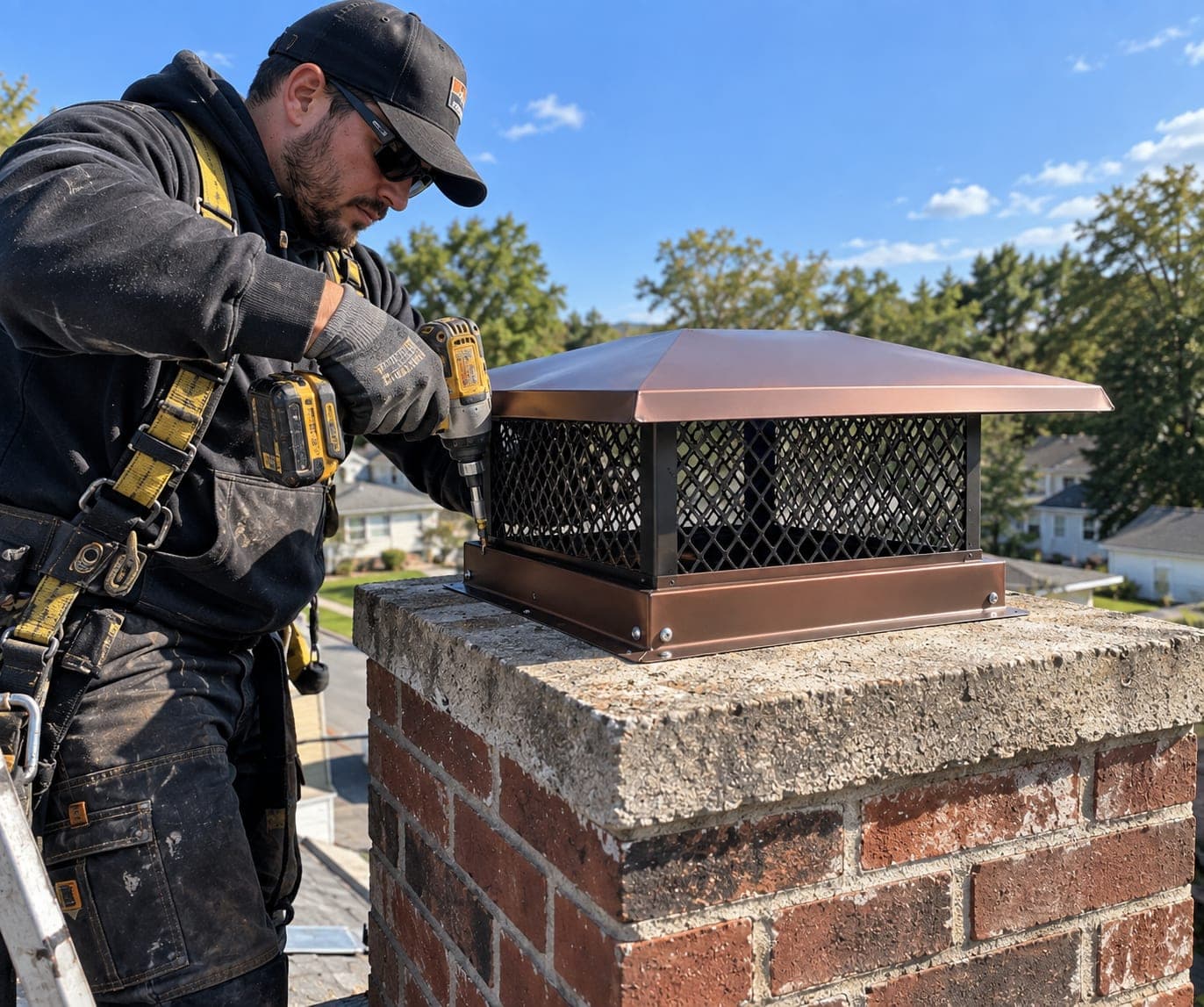
Caps attach in one of two ways. Single-flue caps clamp or bolt to the flue tile that sticks up above the crown. Multi-flue or full-coverage caps fit over the whole crown and are anchored to the masonry. The right choice depends on how many flues the chimney has, how high the tiles extend and what condition the crown is in. If you're still weighing whether your chimney needs one, read our guide to do you need a chimney cap first.
Signs your chimney needs a cap
Some chimneys never had a cap. Others lost theirs to wind, rust or a past repair. Either way, these signs point to an open or failing flue:
Common signs
- You can see the open flue tile from the ground, with no cover or mesh on top
- Water drips into the firebox or you find rust on the damper after rain
- Leaves, twigs or nesting material collect on the smoke shelf or damper
- You hear scratching, chirping or movement inside the chimney
- Damp, musty or animal odors come from the fireplace
- The existing cap is rusted through, bent, loose or missing its mesh
Animal in chimney removal comes first
A cap is the long-term fix for wildlife, but it should never go on while an animal is still inside the flue. Capping a chimney with a bird, squirrel or raccoon below would trap it. Before installing, we check the flue for live animals and handle removal as part of our animal and nest removal work, so the cap goes onto a clear chimney.
If the main problem is animals and the chimney already has a cap that's in good shape, a dedicated screen may be the simpler fix. Our chimney animal screen installation service covers that option.
Dealing with a nest in the chimney
Birds and other animals build nests on the smoke shelf, on the damper or partway up the flue. A nest blocks draft, can push smoke back into the room and is dry, flammable material sitting right above the fire. Don't light a fire to burn a nest out. Leave the fireplace unused until the nest has been removed and the flue has been checked. Once the flue is clear, a cap with intact mesh keeps the next nest from starting.
What the visit involves, step by step
How a cap installation visit goes
Look at the chimney top
We check the flue tiles, the crown and any existing cap to see what's there and how a new cap can be anchored.
Check the flue for animals and debris
Anything living or nesting inside is dealt with before the chimney is closed off. Leaves, nests and other blockages are cleared.
Measure
We measure the flue tile or the full crown so the cap fits snugly and doesn't restrict draft.
Fit and secure the cap
The cap is clamped to the flue tile or fastened to the crown so wind and animals can't dislodge it.
Walk you through what we found
You hear about anything that came up on the roof, such as crown cracks or deteriorated flue tiles, and what it would take to address it.
Stainless steel chimney cap installation
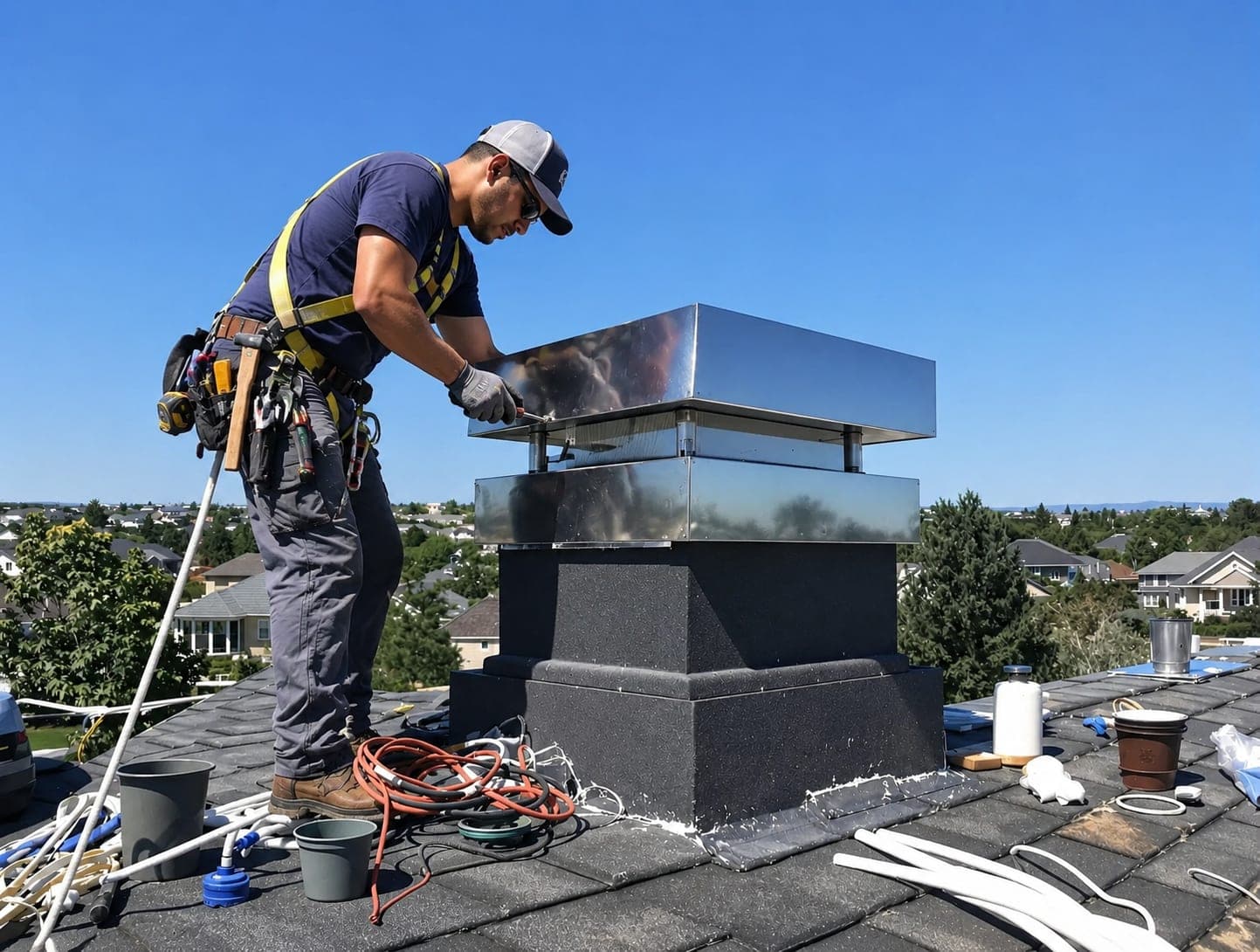
Stainless steel is a common choice for chimney caps because it holds up to moisture and heat without rusting the way galvanized steel eventually does. A rusting cap can stain the crown and brick, and over time the mesh can corrode and open up gaps that let animals in. Copper is another option some homeowners choose for appearance. During the estimate we'll go over which material fits your chimney.
| Feature | Stainless steel | Galvanized steel |
|---|---|---|
| Rust resistance | High | Lower; coating wears over time |
| Staining on masonry | Unlikely | Possible as it rusts |
| Mesh durability | Holds up well | Can corrode and open gaps |
Rust resistance
- Stainless steel
- High
- Galvanized steel
- Lower; coating wears over time
Staining on masonry
- Stainless steel
- Unlikely
- Galvanized steel
- Possible as it rusts
Mesh durability
- Stainless steel
- Holds up well
- Galvanized steel
- Can corrode and open gaps
Safety and maintenance after the cap is on
A cap keeps out rain and animals, but it doesn't replace regular cleaning and inspection. The mesh can collect soot and creosote on wood-burning chimneys and should be looked at during routine sweeps. A clogged screen restricts draft and can push smoke back into the house.
- Have the cap and mesh checked when the chimney is swept.
- Watch for smoke that lingers in the room. It can mean a partly blocked cap or flue.
- Look up at the chimney after strong winds to make sure the cap is still seated.
- If you burn wood and want added protection against embers leaving the flue, ask about chimney spark arrestor installation.
When the problem is below the cap
A cap only protects the top of the chimney. If the flue tiles are cracked or the chimney has no proper liner, the fix happens inside the flue. That's covered in how chimney liner installation works. If the crown or brick is badly deteriorated, chimney repair vs rebuild explains how those decisions get made.
How to book chimney cap installation
Call or request an estimate, and tell us what you're seeing: an open flue, water in the firebox, sounds of animals or a damaged cap. Commercial and property-manager work is offered, so caps on rental and multi-unit buildings can be scheduled too.