On this page
What chimney leak repair involves
Water can get into a chimney in several places: the flashing where it meets the roof, the crown or chase cover on top, the open flue, and the brick and mortar joints. A stain usually shows up away from where the water actually gets in, because water runs along masonry and framing before it shows. The job has two parts. First we find where the water gets in, then we repair that part.
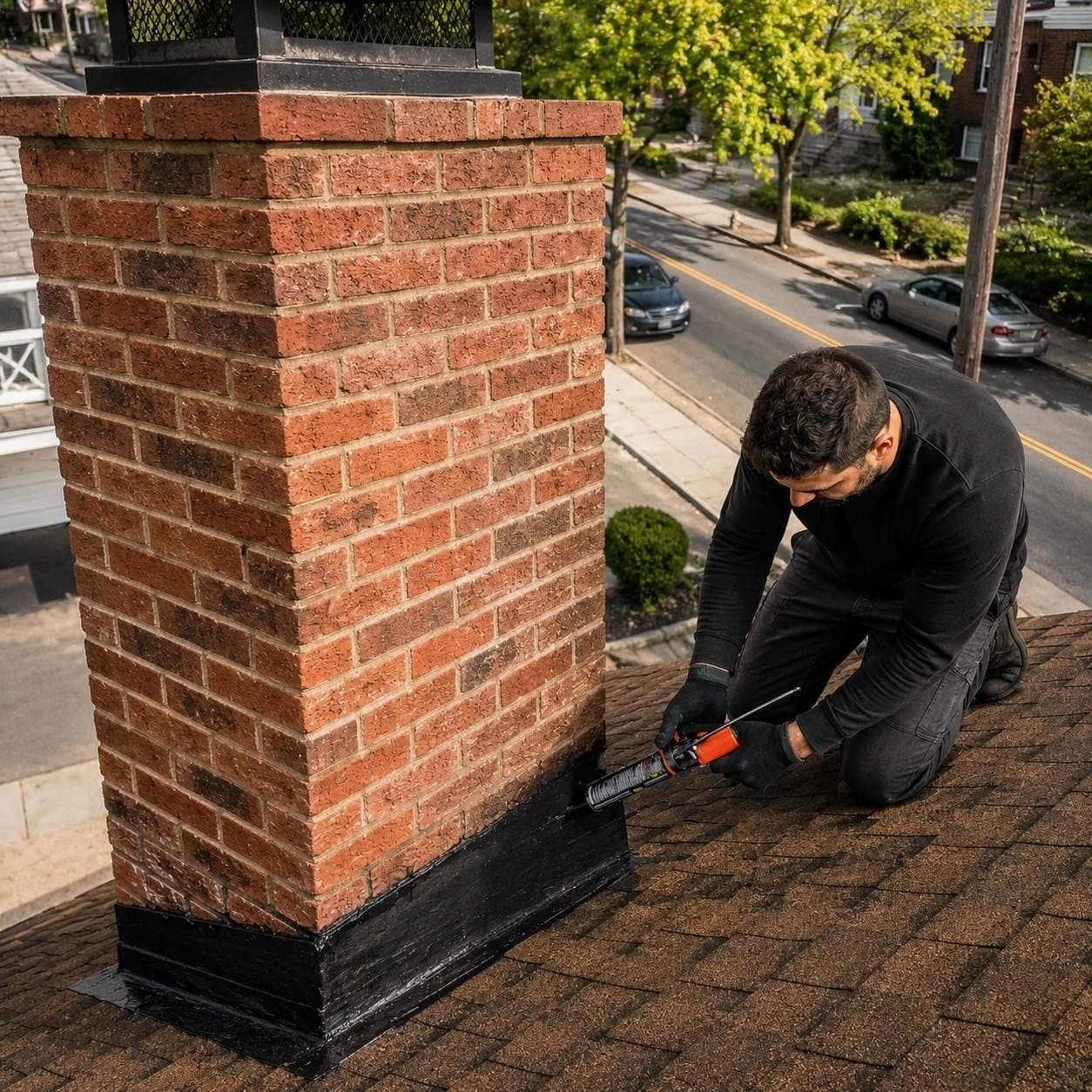
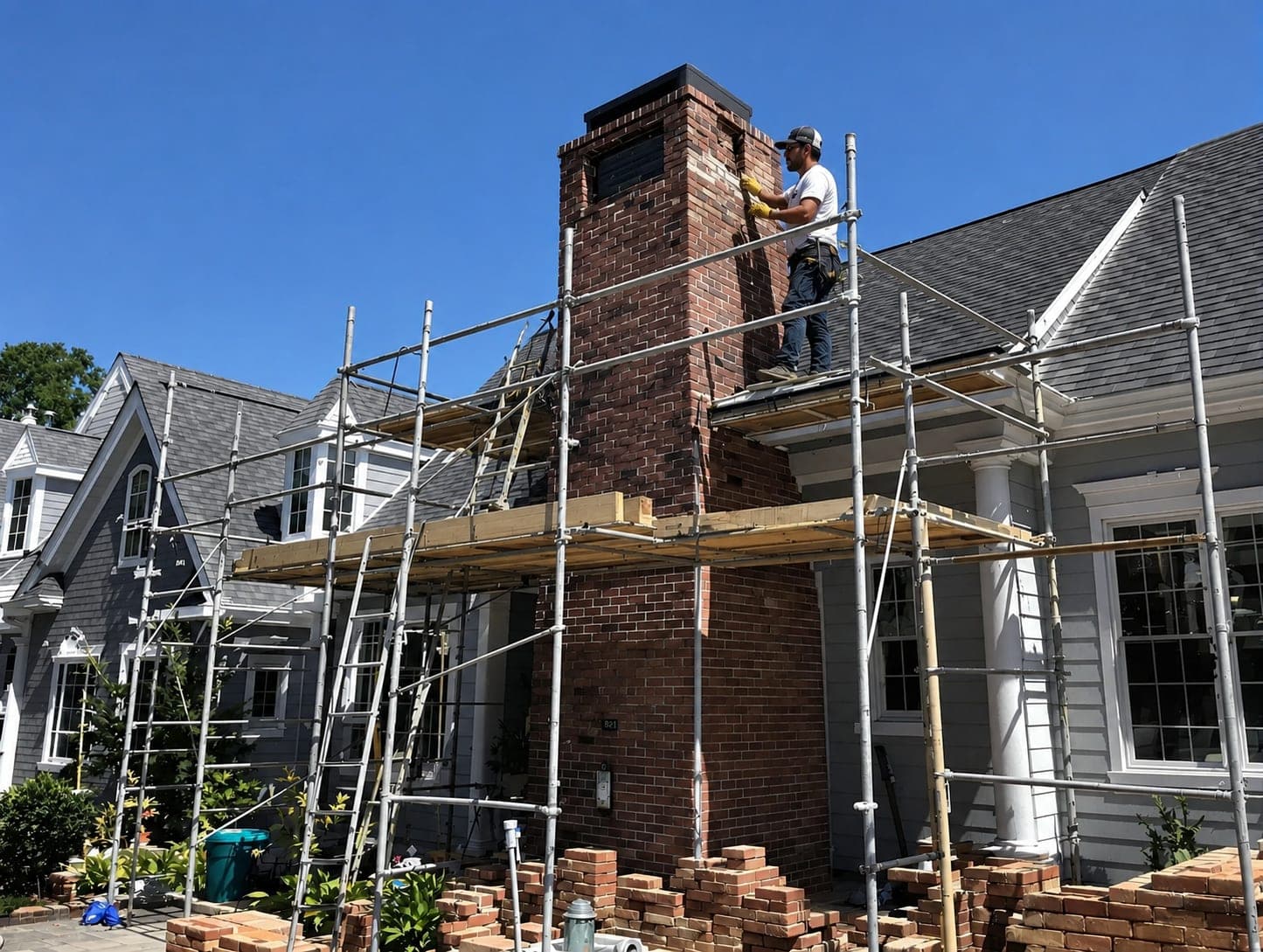
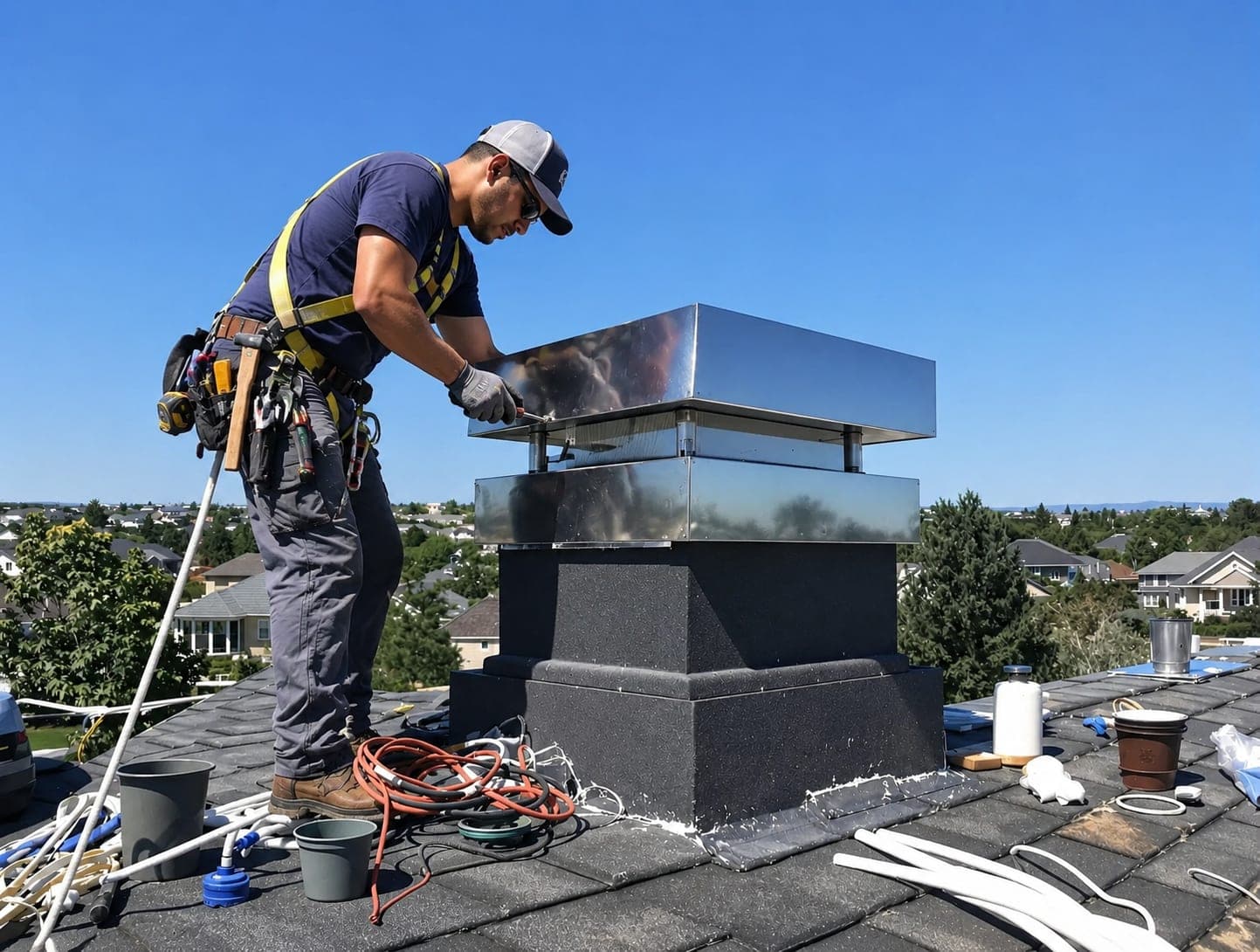
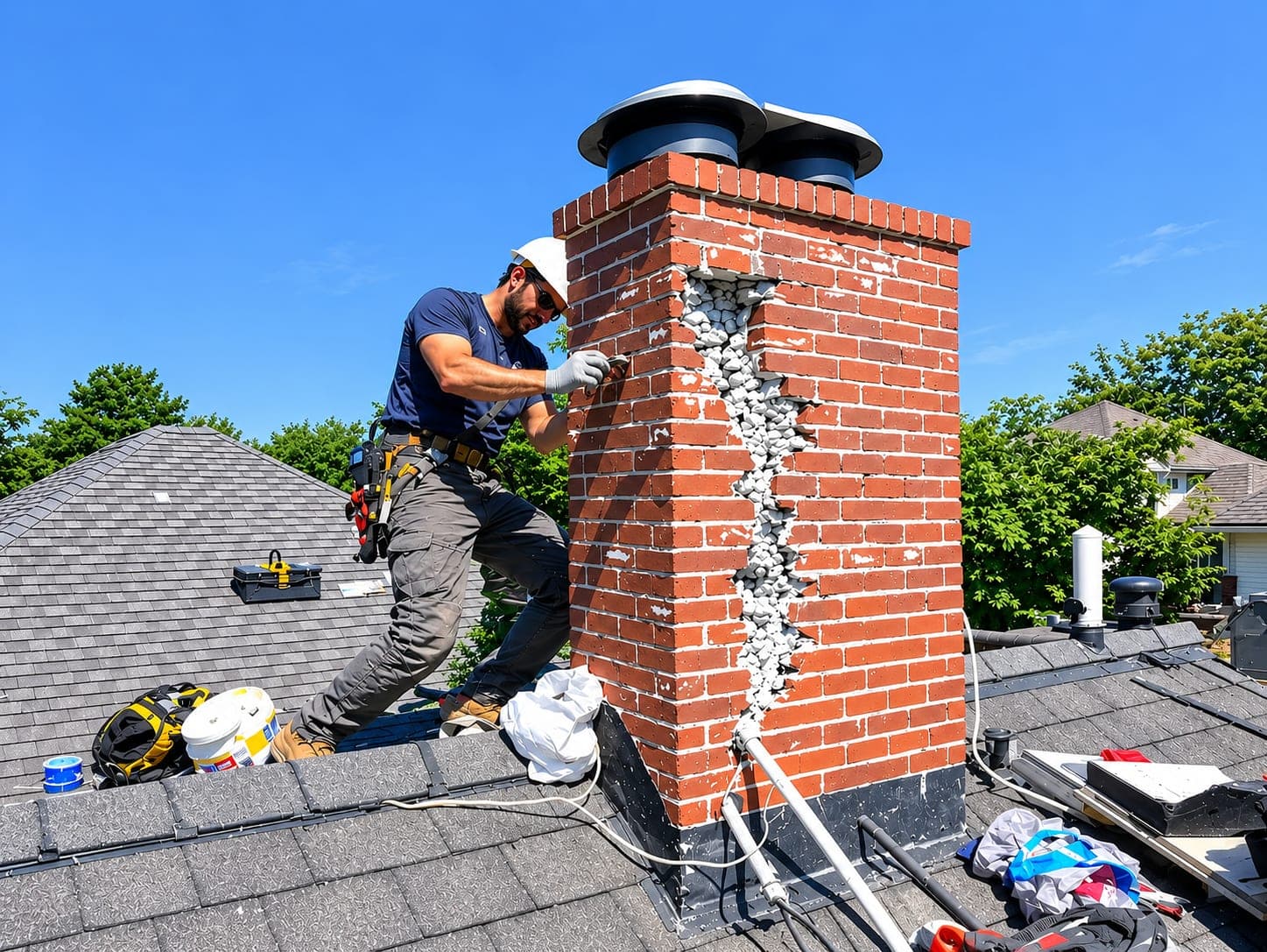
The repair depends on what we find. It can mean resealing or replacing flashing, fixing a cracked crown, tuckpointing worn mortar joints, installing or replacing a chimney cap, replacing a rusted chase cover on a prefab chimney, or applying a breathable water repellent to the masonry. Many leaks need more than one of these. Sometimes the leak is one symptom of wider damage, and the work moves into our broader chimney repair service.
Signs your chimney is leaking
Some leaks are obvious. Others show up slowly as staining or odors. If the problem only appears during or after storms, read about what causes chimney leaking when it rains and the parts that usually fail.
Common signs of water getting into a chimney
- Water stains or peeling paint on the ceiling or wall next to the chimney
- Dripping or puddles inside the firebox or on the hearth
- A musty or damp smell from the fireplace, especially after rain
- White, chalky deposits (efflorescence) on the brick inside or out
- Rust on the damper, firebox doors, chase cover or cap
- Crumbling mortar joints or brick that flakes or spalls
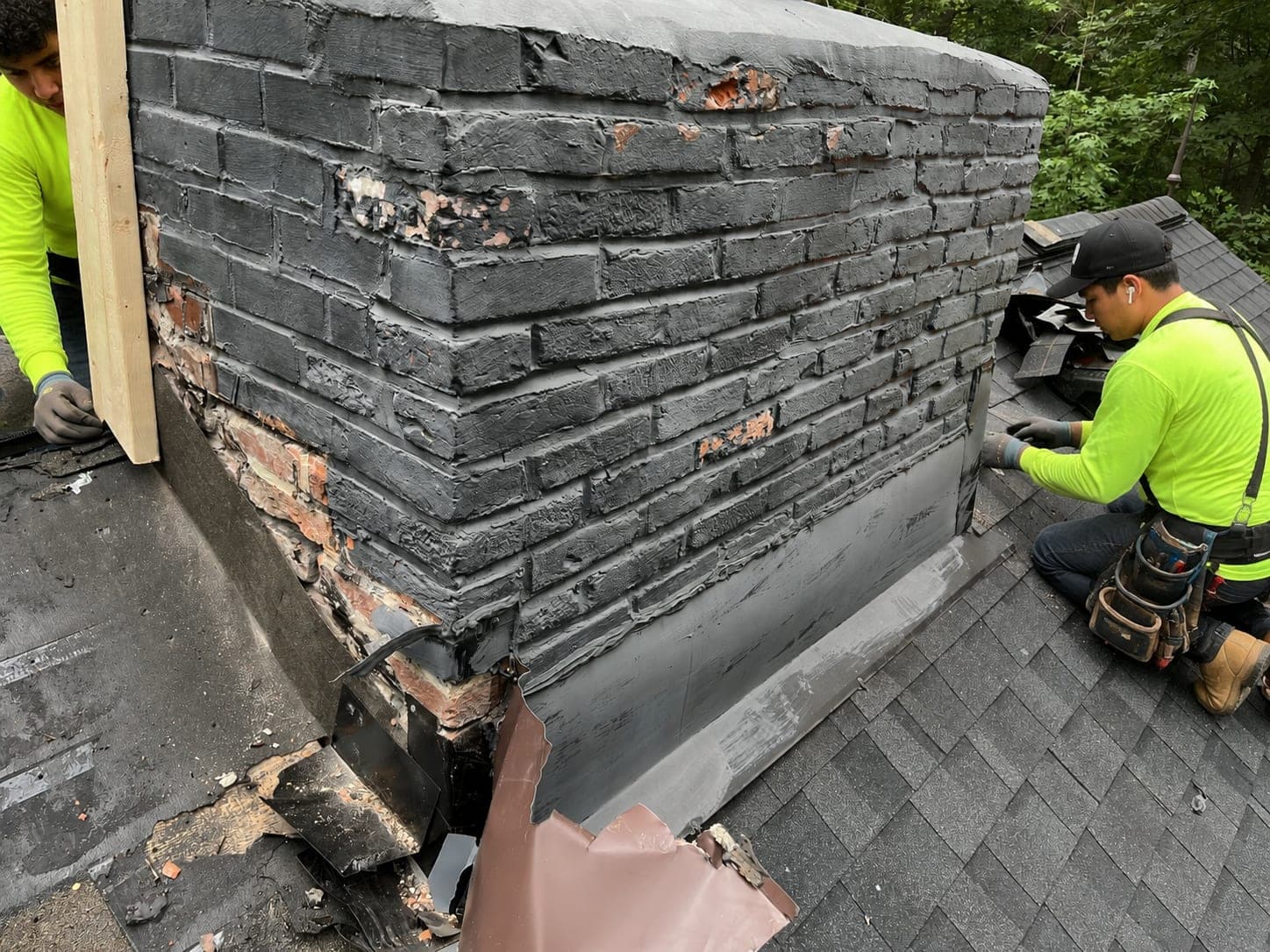
- Cracks in the crown or gaps where flashing meets the roof
Where the water is usually coming from
01Flashing
- What you may notice
- Stains on the ceiling or wall beside the chimney, often right after rain
- How it’s confirmed
- We look where the flashing meets the brick and the roof for lifted edges, failed sealant, rust or gaps
02Crown or chase cover
- What you may notice
- Water inside the flue or firebox, rust streaks on a prefab chase
- How it’s confirmed
- We check the top of the chimney for cracks, pooling water, rust holes or a cover that sheds water onto the chase
03Missing or damaged cap
- What you may notice
- Water or debris falling straight down the flue, damp firebox
- How it’s confirmed
- We check whether a cap is present, sized right and intact
04Masonry and mortar
- What you may notice
- Efflorescence, damp brick, spalling faces, eroded joints
- How it’s confirmed
- We check the brick and mortar joints on all exposed sides for erosion, cracks and porous spots
What a leak repair visit involves
From first look to finished repair
Talk through what you've seen
Where the stain or drip appears, when it shows up, and how long it's been happening all help narrow down where water gets in.
Inspect inside and out
We look at the firebox, damper and flue from inside, then the flashing, crown or chase cover, cap and masonry from outside.
Explain the cause and the fix
You get a plain explanation of where water is getting in, what we recommend, and a free estimate before any work begins.
Make the repair
We fix the failed parts. That can mean flashing, crown, mortar joints, cap, chase cover or waterproofing, or a combination of these.
Check the result
We walk you through what was done and what to watch for during the next heavy rain.
Parts of the chimney that keep water out
| Component | What goes wrong | Typical repair |
|---|---|---|
| Flashing | Sealant fails, metal lifts or rusts, gaps open at the roofline | Reseal, refasten or replace flashing |
| Crown (masonry chimneys) | Cracks let water into the brick and flue | Crack repair or crown rebuild |
| Chase cover (prefab chimneys) | Rust holes, flat tops that pool water | Chase cover replacement |
| Chimney cap | Missing, damaged or wrong size, so rain falls down the flue | Cap installation or replacement |
| Mortar joints | Erosion lets water soak into the wall | Tuckpointing |
| Brick surface | Porous brick absorbs water | Breathable masonry waterproofing |
On factory-built chimneys, the metal top is a frequent source of trouble, and our chase cover replacement work covers that part specifically. A new cap is also a good time to keep birds and animals out, so we can pair it with chimney animal screen installation and handle both in one visit.
Why it's worth fixing early
Water damage tends to spread
Water that gets into a chimney can rust the damper and firebox parts, weaken mortar, and damage the flue liner, and each wet season makes that worse. Damp masonry can also hold odors and make creosote deposits smell stronger. A leak ignored for years can turn a flashing job into a masonry job. If the damage is extensive, weighing chimney repair vs rebuild explains how that decision gets made.
A few simple habits help between visits. Check the ceiling and walls around the chimney after heavy storms. Look for rust or white staining on the brick. Make sure the cap is still in place after high winds. Catching a small change early usually keeps the repair small.
Do you repair chimney leaks and water damage?
Yes. We find where water is getting into the chimney and repair that part, whether it's flashing, crown, cap, chase cover, mortar or brick. We also repair water-damaged chimney and fireplace parts, such as a rusted damper, a deteriorated firebox or a damaged liner. Fixing the source first means any later work on stained ceilings or walls stays fixed.
Booking a chimney leak repair
Call or request an estimate and tell us what you're seeing and where. 24-hour service runs Sunday–Friday, and emergency calls are accepted, which helps if water is actively coming in during a storm. Commercial and property-manager work is offered too, so we can also take care of chimneys on rental and multi-unit buildings.