On this page
What chimney flashing repair involves
Flashing is the set of metal pieces that bridges the gap between a chimney and the roof around it. The chimney and the roof move independently as they warm, cool and settle, so they can't simply be mortared together. Flashing lets them move while still shedding water down and away from the joint.
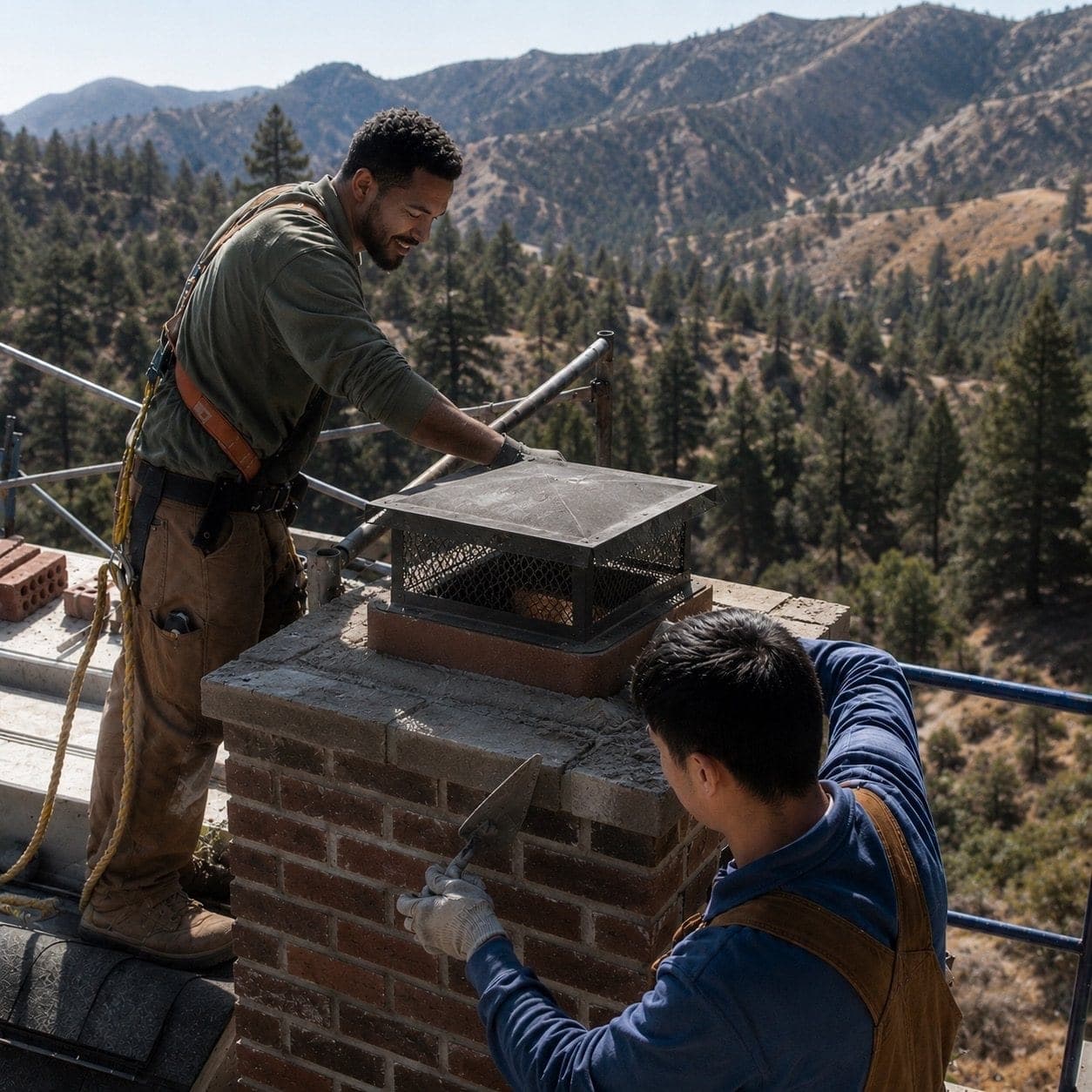
Chimney flashing repair means fixing or replacing those metal pieces where they have lifted, rusted, cracked, pulled out of the mortar or been sealed over with caulk that has since dried out. Sometimes a section can be reseated and resealed. Often the honest answer is that the old flashing needs to come off and new flashing has to go in, because patching corroded metal only buys a short time.
The parts that make up chimney flashing
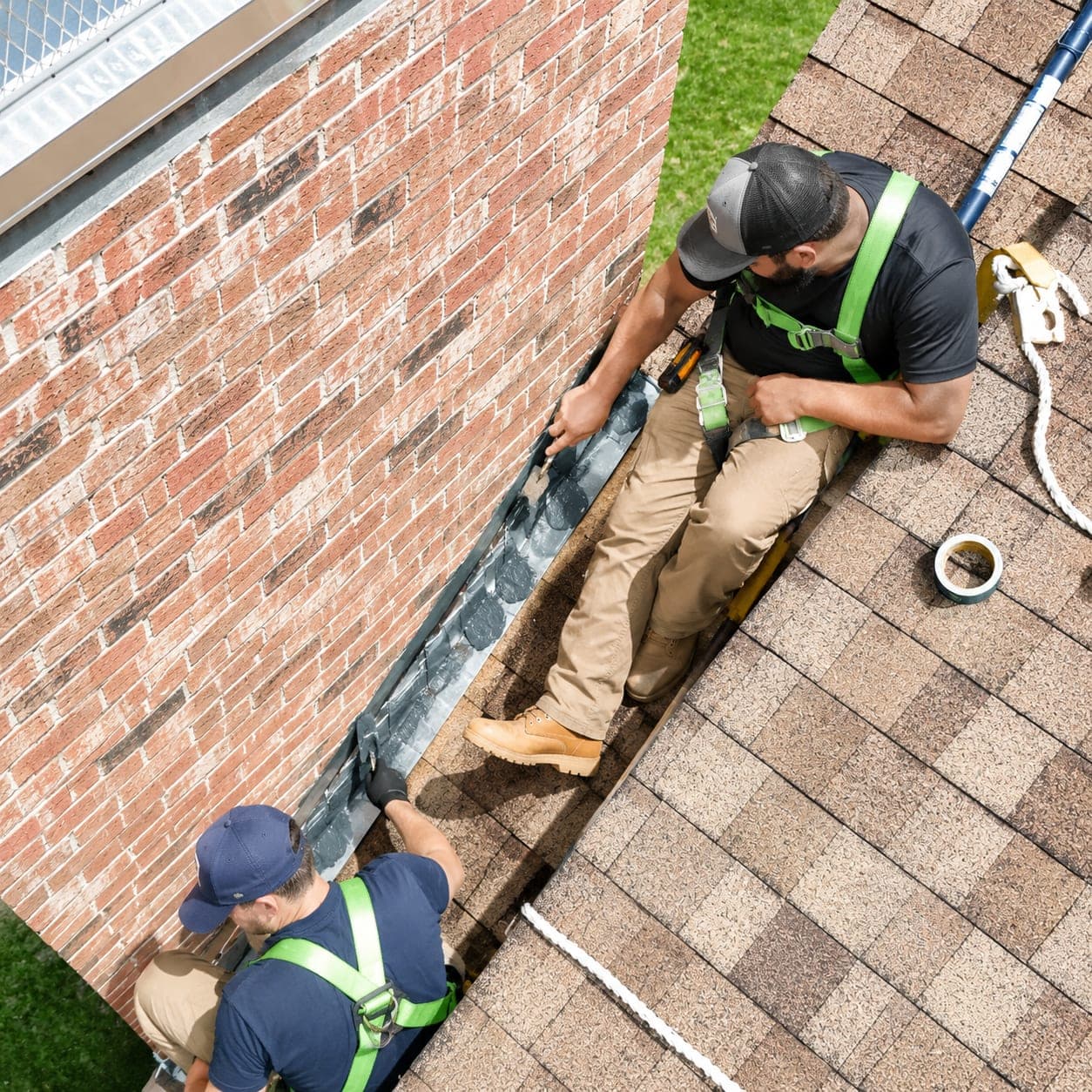
- Step flashing is a series of L-shaped pieces woven in with the shingles along the sides of the chimney, one per course.
- Counter flashing is set into the mortar joints of the chimney and folds down over the step flashing, so water can't get behind it.
- Apron or base flashing wraps the low side of the chimney, where water running down the roof first meets it.
- A cricket or saddle is a small peaked structure on the uphill side of wider chimneys that splits water around the chimney instead of letting it pool against the brick.
Prefab chimneys built inside a framed chase are flashed differently, and a leak there is just as likely to come from the metal top of the chase. If that's the problem, our chase cover replacement service addresses it directly.
Signs of a chimney flashing leak
Flashing problems rarely announce themselves until water is already getting in. These are the signs that usually point to the flashing rather than another part of the chimney:
Signs your flashing may have failed
- Water stains on the ceiling or wall right beside the chimney, especially after heavy or wind-driven rain
- Damp or darkened wood on the rafters or roof deck around the chimney in the attic
- Peeling paint or bubbling plaster on the wall next to the fireplace
- Flashing you can see lifting away from the brick, or gaps where it meets the mortar
- Rust, holes or bent edges on the metal
- Thick layers of caulk, roofing tar or sealant smeared over the joint, a sign of earlier quick fixes
- Loose or missing shingles directly around the chimney
Water near a chimney doesn't always come from the flashing. A cracked crown, missing cap, porous brick or failed mortar can all produce similar stains. When the source isn't clear, our chimney leak repair work starts by tracing the water before anything is replaced. If the flue opening is uncovered, it's worth reading do you need a chimney cap as well, since rain falling straight down the flue is a separate problem from a flashing leak.
What the visit involves, step by step
How a flashing repair visit works
Look at the leak from inside
We check the stained ceiling, wall or attic area to see where the water is showing up and how far it has spread.
Inspect the flashing and the chimney top
On the roof, we look at every piece of flashing, the mortar joints it's set into, the shingles around it, and the crown and cap, so we're not fixing the flashing while another leak source goes unnoticed.
Explain what we found and give a free estimate
You hear whether the flashing can be resealed or needs replacing, and whether anything else contributed. Estimates are free.
Remove the failed material
Old caulk, tar and damaged flashing come off so the new work sits on clean, sound surfaces.
Install or reset the flashing
Step flashing is worked in with the shingles, counter flashing is set into cut mortar joints rather than just glued to the brick face, and the apron is fitted along the low side.
Seal and check the work
Joints are sealed, the surrounding shingles are put back in order, and we walk you through what was done.
When flashing isn't the whole story
If the brick or mortar the counter flashing sits in is crumbling, new flashing won't hold well. In that case we'll explain the masonry options, and our guide to chimney repair vs rebuild covers how that decision is usually made.
Keeping water out between repairs
Leaks around a chimney tend to get worse slowly, so a yearly look at the flashing is worthwhile. From the ground or a safe vantage point, watch for metal pulling away from the brick and for fresh stains inside after storms. Avoid climbing onto a wet or steep roof to check it yourself. While someone is up on the chimney, it's also a sensible time to fit a cap with a screen; our chimney animal screen installation keeps birds and animals out of the flue at the same time.
Booking chimney flashing repair
Get in touch to request an estimate. We also handle commercial buildings and work for property managers, so a leaking chimney on a rental or a multi-unit building can be booked the same way.
Free estimates.
Call or request an estimate, and we'll check where the water is coming from before recommending any work.