On this page
What prefab chimney & chase repair covers
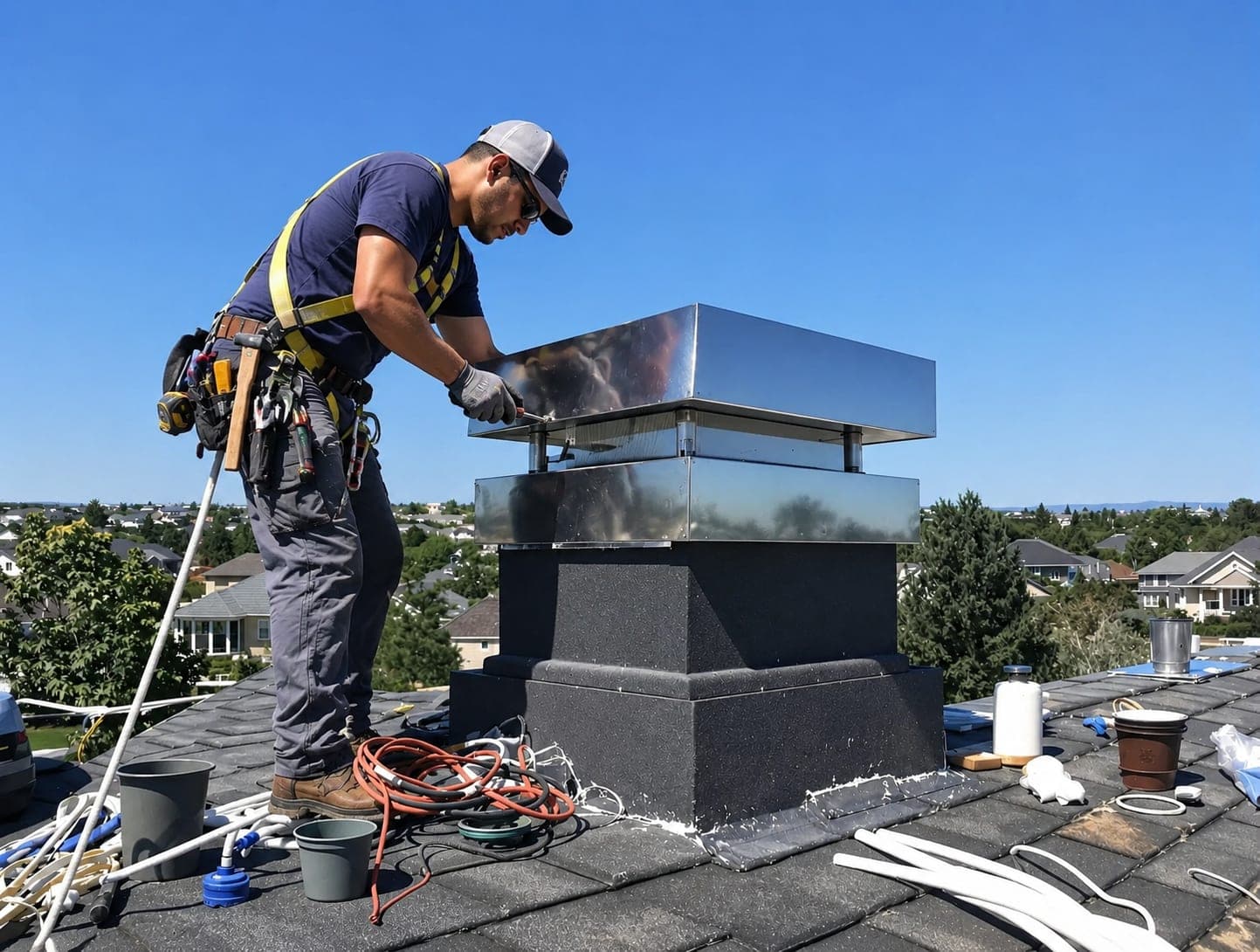
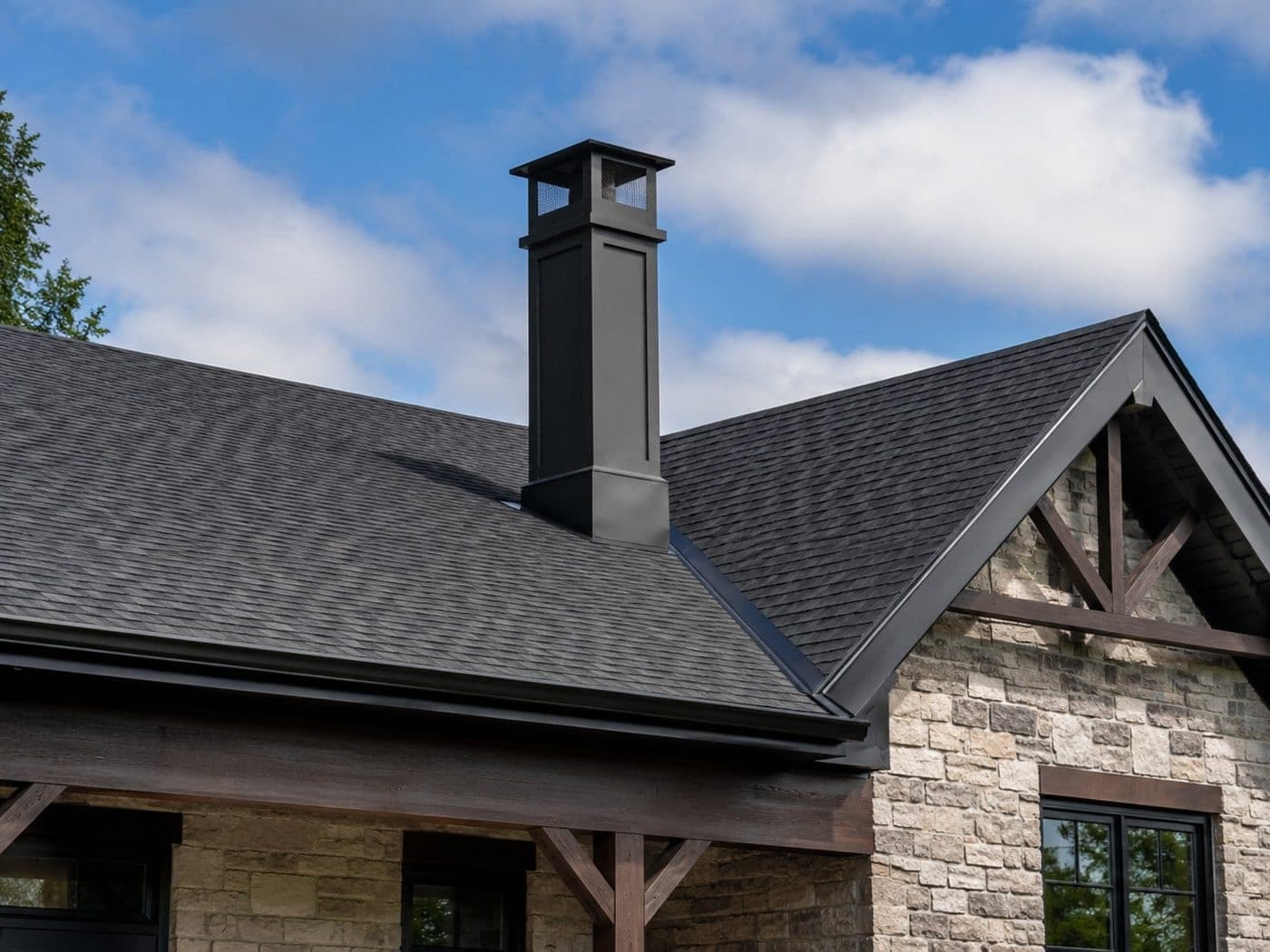
A prefab (factory-built) chimney is not brick. It is a metal flue pipe made to fit a specific fireplace. The flue runs up through a wood-framed enclosure finished with the same siding as the house, and that enclosure is the chase. A metal chase cover sits on top and sheds rain. A collar and cap surround the flue where it exits.
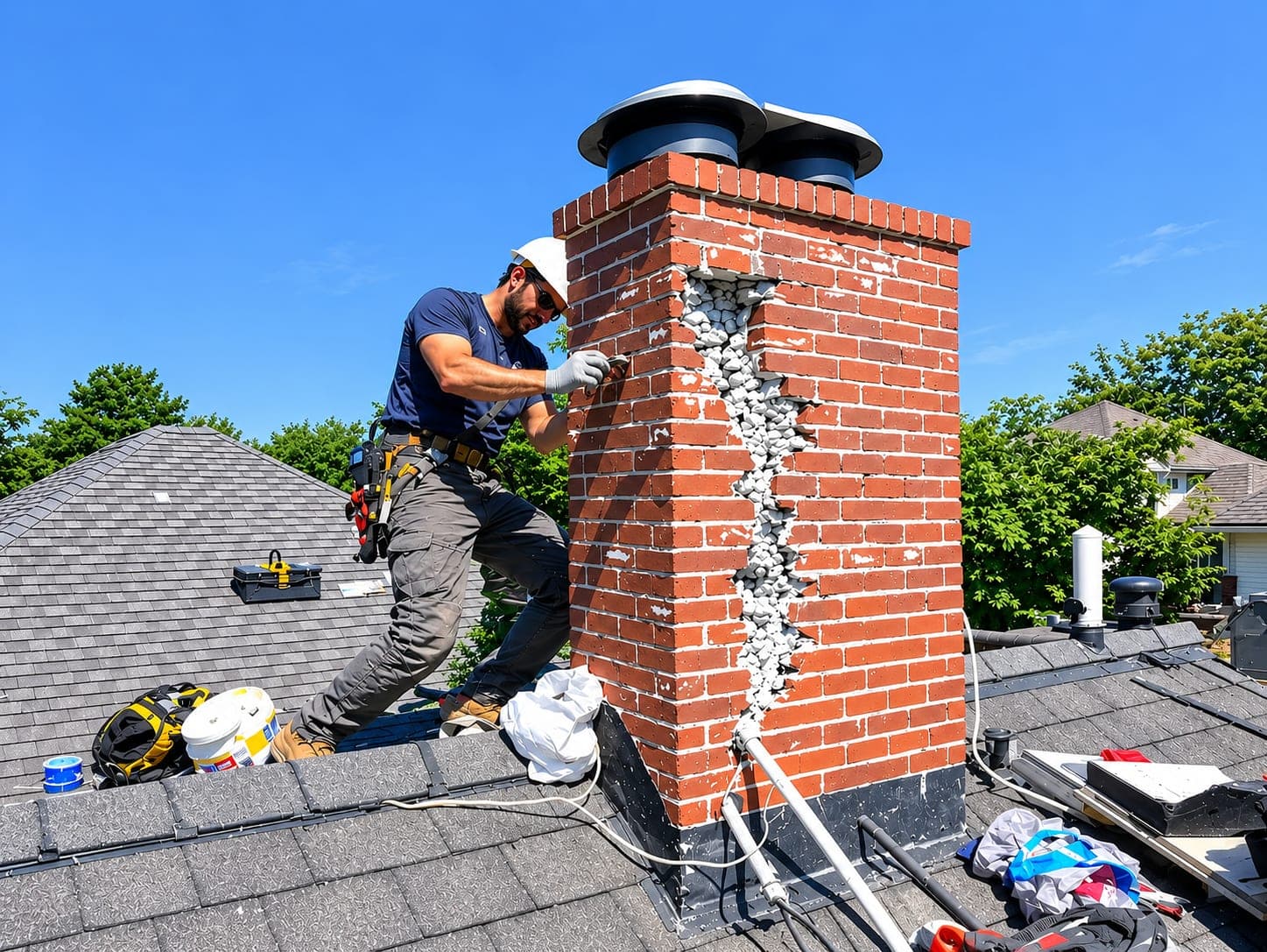
Because the chase is framing and siding rather than masonry, its problems are different from those on a brick chimney. The usual weak points are:
- the chase cover
- the seal where the flue passes through the cover
- the cap
- the siding and flashing where the chase meets the roof
Repair means tracing the damage to its source, fixing or replacing the failed part, and dealing with whatever the water has already reached. If your chimney is masonry instead, our general chimney repair service is the better fit.
Signs your prefab chimney or chase needs repair
Common warning signs
- Rust streaks running down the siding of the chase
- A chase cover that is rusted, sagging or holding standing water
- Water dripping into the firebox, or rust spots on the metal firebox or damper
- Stained, soft or swollen siding or trim on the chase
- Water stains on the ceiling or wall next to the fireplace
- A musty smell from the fireplace, especially after rain
- A cap that is loose, bent or missing, letting rain straight down the flue
- Animals or nesting material inside the chase or flue
Several of these signs together usually mean water is getting past the top of the chase. A rusted chase cover is one of the most frequent causes. Often the fix is replacing the chase cover rather than patching around it. When the cover is still sound but the seams or collar have failed, chimney chase cover repair may be enough.
Hold off on fires if the flue looks damaged
Stop using the fireplace until it has been checked if you see any of these: separated flue sections, heavy rust inside the firebox, or signs of heat damage around the chimney. A factory-built flue relies on its parts fitting together as designed.
What the visit involves, step by step
How a prefab chimney & chase repair visit works
Talk through what you have noticed
Tell us where the stains or rust appear, when leaks happen and how the fireplace has been used. That helps narrow down the source before anyone goes on the roof.
Inspect the chase from the top
The chase cover, flue collar, cap, flashing and siding are checked for rust, gaps, failed sealant and soft spots.
Check the flue and firebox from below
The inside of the fireplace and the flue are checked for rust, separated sections, debris or nesting that would change the repair plan.
Explain the findings and give a free estimate
You hear what failed, what caused it and which repair fixes it, so you can decide before any work starts.
Make the repair
That may mean fitting a new chase cover or cap, resealing the collar, repairing flashing, or replacing damaged chase materials and flue components.
Confirm it is shedding water
Once the work is done, the top of the chase is checked so water runs off instead of pooling or finding its way inside.
Parts of a prefab chimney that commonly fail
| Component | What it does | Typical problem |
|---|---|---|
| Chase cover | Seals the top of the framed chase | Rust, sagging, pooling water, leaks at seams |
| Storm collar and seal | Closes the gap where the flue exits the cover | Dried or cracked sealant letting water run down the flue |
| Chimney cap | Keeps rain, debris and animals out of the flue | Bent, loose, rusted or missing |
| Flue sections | Carry smoke from the firebox to the outside | Rust, separation or damage from water and debris |
| Chase framing and siding | Enclose and protect the flue | Rot, swelling and staining after long-term leaks |
Caps matter more on factory-built chimneys than many homeowners expect, because an open flue lets rain fall straight onto metal parts. If you are unsure whether yours is doing its job, read our guide to whether you need a chimney cap. If more than one part is damaged, weighing chimney repair against a rebuild explains how that decision is usually made.
Keeping a prefab chimney in good shape
- Look at the chase cover and siding from the ground a couple of times a year for new rust or staining.
- Check the fireplace after heavy rain for drips or damp spots.
- Use only the fuels and accessories your fireplace was designed for.
- Have the chimney cleaned and inspected regularly so small leaks are caught before the framing is affected.
Book prefab chimney & chase repair
Same-day visits are available when the schedule allows. Get in touch about what you have noticed on the chase or in the fireplace, and request an estimate for your San Francisco home. We also take commercial and property-manager work, and we work on all major fireplace brands.