On this page
What chimney damper repair involves
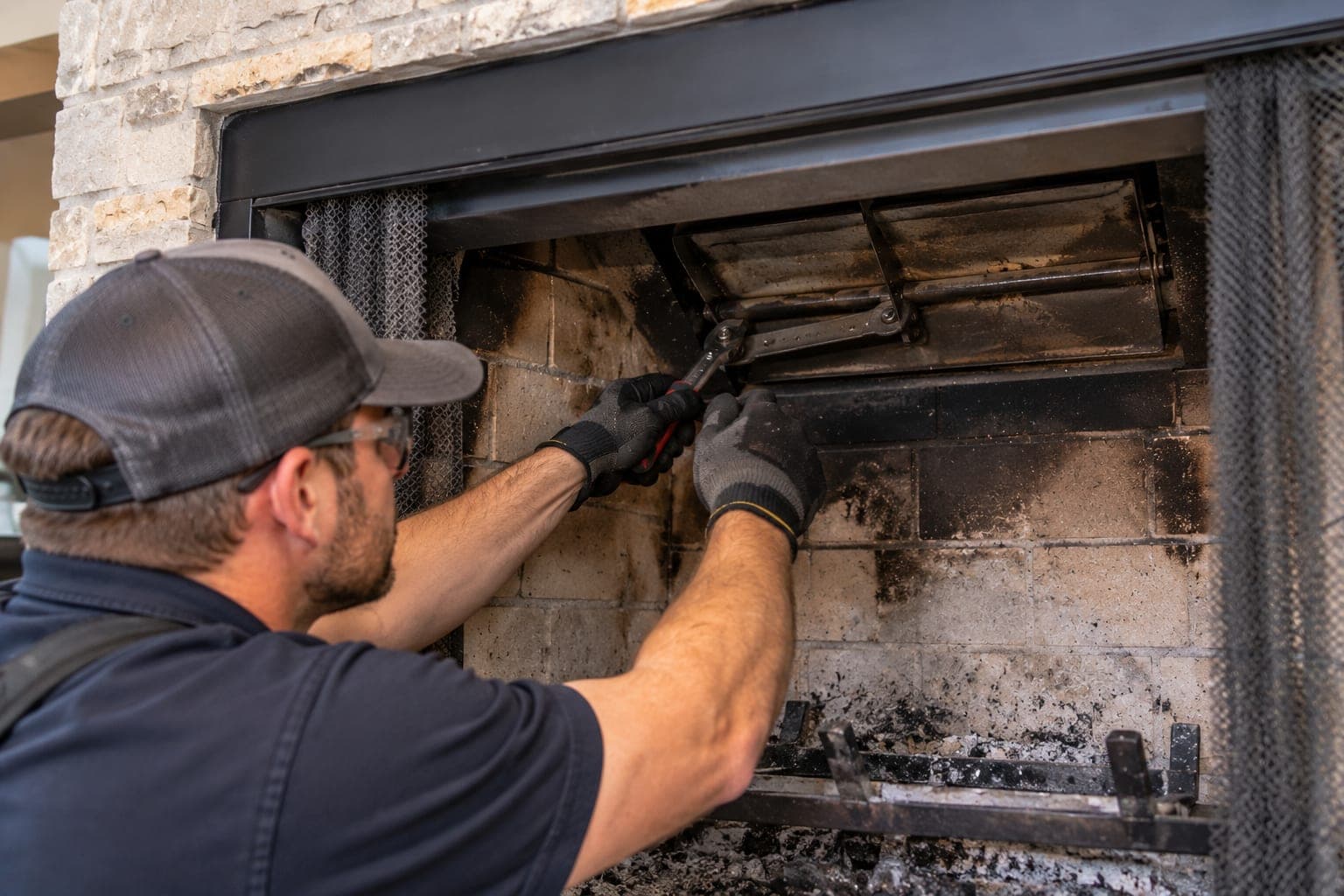
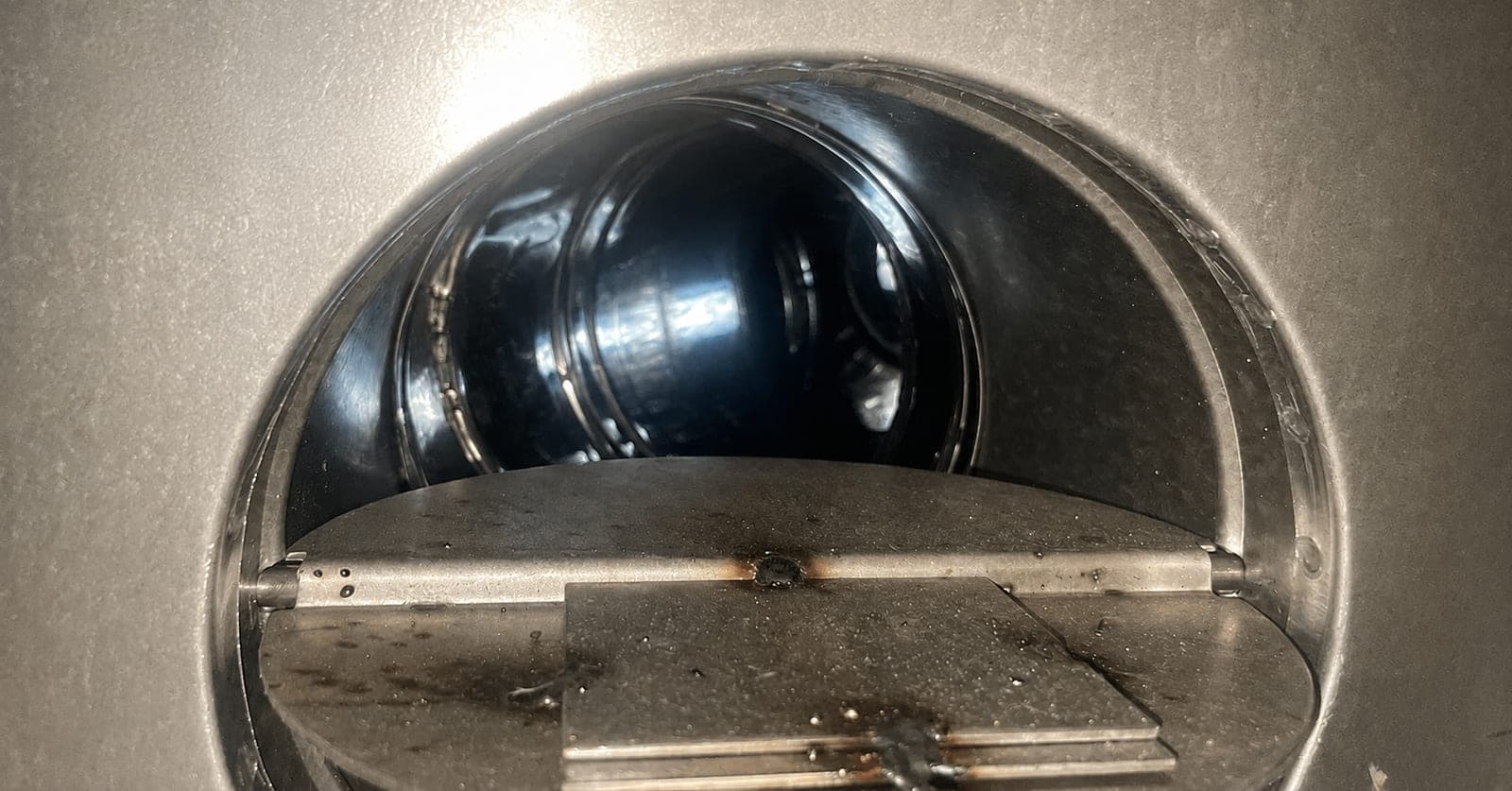
The damper is the movable plate that opens the flue when a fire is burning and closes it when the fireplace sits idle. Most older masonry fireplaces have a throat damper: a cast-iron or steel plate just above the firebox, worked by a handle, lever or rotating knob. Some chimneys use a top-sealing damper at the top of the chimney instead, operated by a cable that runs down into the firebox.
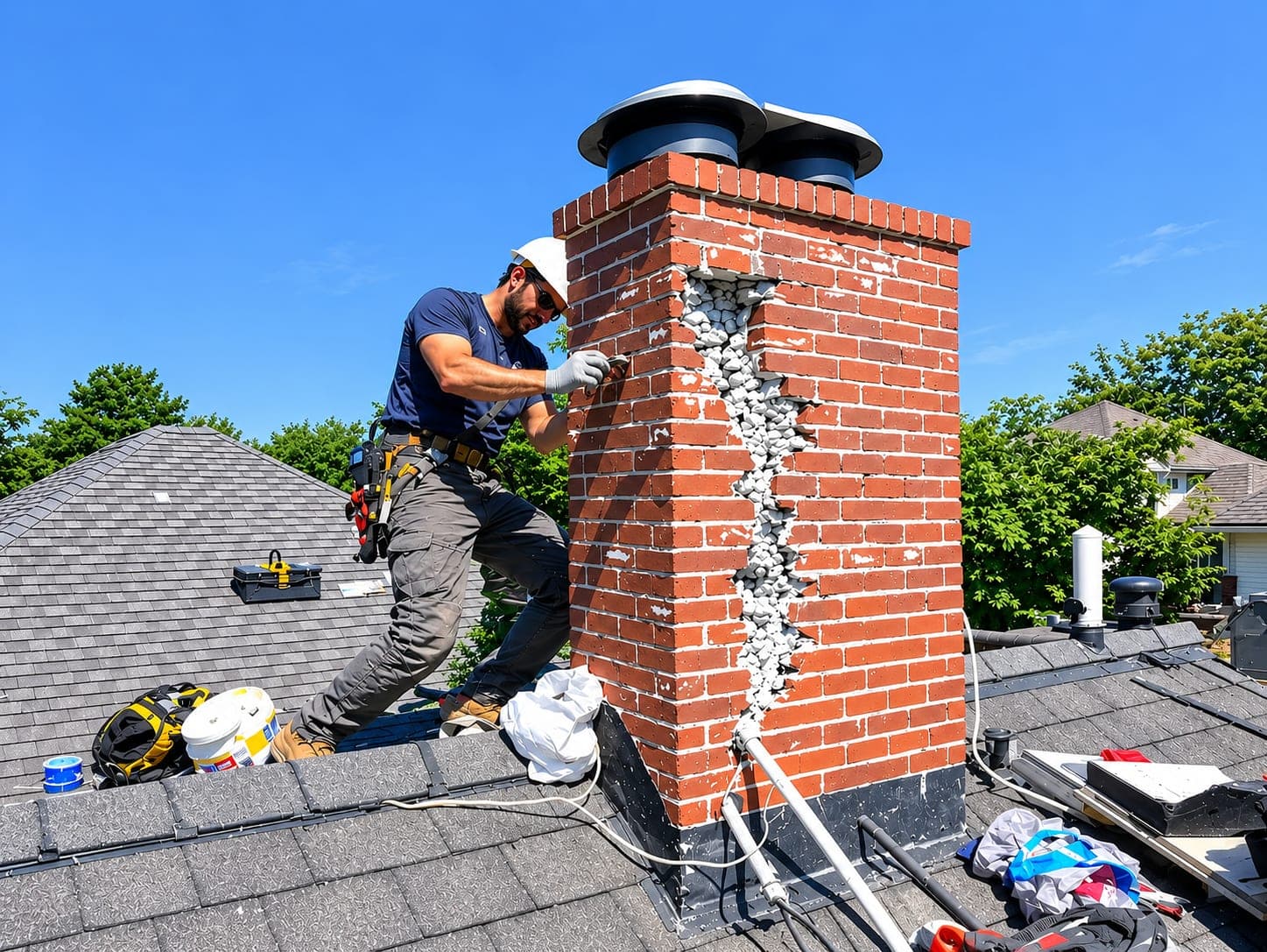
Chimney damper repair means finding out why the damper isn't working and fixing that part. Depending on what we find, the work can include freeing a seized plate, clearing rust and debris from the frame, straightening or reseating the plate, repairing or replacing the handle, linkage or cable, and replacing a worn gasket so the damper seals again.
Signs your damper needs attention
Damper problems usually show up in one of two ways: the fireplace smokes when you use it, or the house feels drafty when you don't. Common signs include:
Signs that point to the damper
- The handle or knob won't move, or moves but the plate doesn't
- Smoke rolls into the room even though you opened the damper
- You feel cold air or smell soot near the fireplace when it's closed
- Rattling or banging in the throat area on windy days
- Rust flakes, debris or bits of metal falling into the firebox
- A top-sealing damper cable that's slack, frayed or won't stay latched
- Daylight visible up the flue with the damper supposedly closed
Rust on a throat damper often means water is getting into the chimney from above. If that's the cause, fixing the damper alone won't hold up for long, and we'll point you toward repairs that stop water coming down the chimney or a cap. Our guide on whether your chimney needs a cap explains how a cap keeps rain off the damper.
Smoky fireplace fix: is the damper to blame?
A plate that only opens partway, has slipped in its frame or has a broken linkage narrows the opening smoke needs to rise through, so smoke spills into the room instead.
It isn't always the damper. Creosote buildup, a nest or debris in the flue, or a general draft problem can produce the same smoky fireplace. That's why a smoky fireplace repair starts with checking the damper first and then looking up the flue. If the damper is fine, we'll tell you what we found instead, whether that's a blockage, a cleaning issue or a draft problem.
Smoke in the room? Put the fire out
Stop adding fuel, open a window and don't relight the fire until the chimney has been checked. If the smoke is heavy, an alarm sounds or you suspect a chimney fire, get everyone outside and call 911. Never close a damper on a fire that is still burning or smoldering.
What the visit involves, step by step
How a damper repair visit works
Talk through the problem
We ask what you've noticed: smoke, drafts, a stuck handle, noise. Then we look at how the fireplace has been used.
Inspect the damper and throat
We open and close the damper, check the plate, frame, handle or cable, and look for rust, warping, missing parts and a worn seal. If the fireplace has gas logs, leave the damper as the installer set it — vented gas logs need it open.
Look at what's causing it
We check for signs of water entry, debris or buildup above the damper that may have caused the failure or could cause it again.
Explain your options
You get a free estimate that covers what we recommend and why, before any work starts.
Make the repair
We free, clean, reseat or replace the damaged parts and fix the operating mechanism.
Test it
We cycle the damper several times to confirm it opens fully, closes fully and stays where it's set.
Throat dampers, top-sealing dampers and gas fireplaces
| Feature | Throat damper | Top-sealing damper |
|---|---|---|
| Location | Just above the firebox | At the top of the chimney |
| How it's operated | Handle, lever or rotating knob | Cable and handle inside the firebox |
| Typical problems | Rust, warping, seized pivots, broken handles | Worn gaskets, stretched or broken cables, latch failure |
| What wears out the seal | Metal-to-metal contact, rust | Weather exposure on the gasket |
Location
- Throat damper
- Just above the firebox
- Top-sealing damper
- At the top of the chimney
How it's operated
- Throat damper
- Handle, lever or rotating knob
- Top-sealing damper
- Cable and handle inside the firebox
Typical problems
- Throat damper
- Rust, warping, seized pivots, broken handles
- Top-sealing damper
- Worn gaskets, stretched or broken cables, latch failure
What wears out the seal
- Throat damper
- Metal-to-metal contact, rust
- Top-sealing damper
- Weather exposure on the gasket
If your fireplace burns gas, the damper matters for a different reason. Many gas log sets need the damper held open, or fixed partly open, so combustion gases can vent. Gas fireplace and gas appliance work is offered, so we can check that a damper is set correctly for a gas setup as part of the visit.
Keeping a damper working
- Open the damper fully before lighting a fire, and check it with a flashlight if you're unsure
- Close it once the fire is completely out and the ashes are cold, to keep warm air in and drafts out
- Work the handle a few times at the start of each season so pivots don't seize
- Pay attention to rust or debris in the firebox, which often signals water coming in from above
- Keep the top of the chimney protected. A worn chase cover on a prefab chimney can let water reach the damper, and replacing a damaged chase cover addresses that
- If animals have gotten in past the damper before, an animal screen at the chimney top helps keep them out
If the damper's frame or the surrounding masonry has deteriorated badly, the conversation can widen beyond the damper. Our guide on deciding between chimney repair and a rebuild covers how that call gets made.
Booking chimney damper repair
Call or request an estimate and tell us what the damper is doing. Same-day visits are available where the schedule allows, so ask when you call. Commercial and property-manager work is offered, and we work on all major fireplace brands.
Free estimates.
Get in touch to have your damper checked and get a clear explanation of what it needs before any work begins.