On this page
What firebox repair involves
The firebox is the chamber where the fire actually burns. In a masonry fireplace it is lined with firebrick laid in heat-resistant refractory mortar. In a factory-built fireplace it is usually lined with molded refractory panels set inside a metal box. Its job is to hold intense heat and keep it away from the framing and the rest of the fireplace structure.
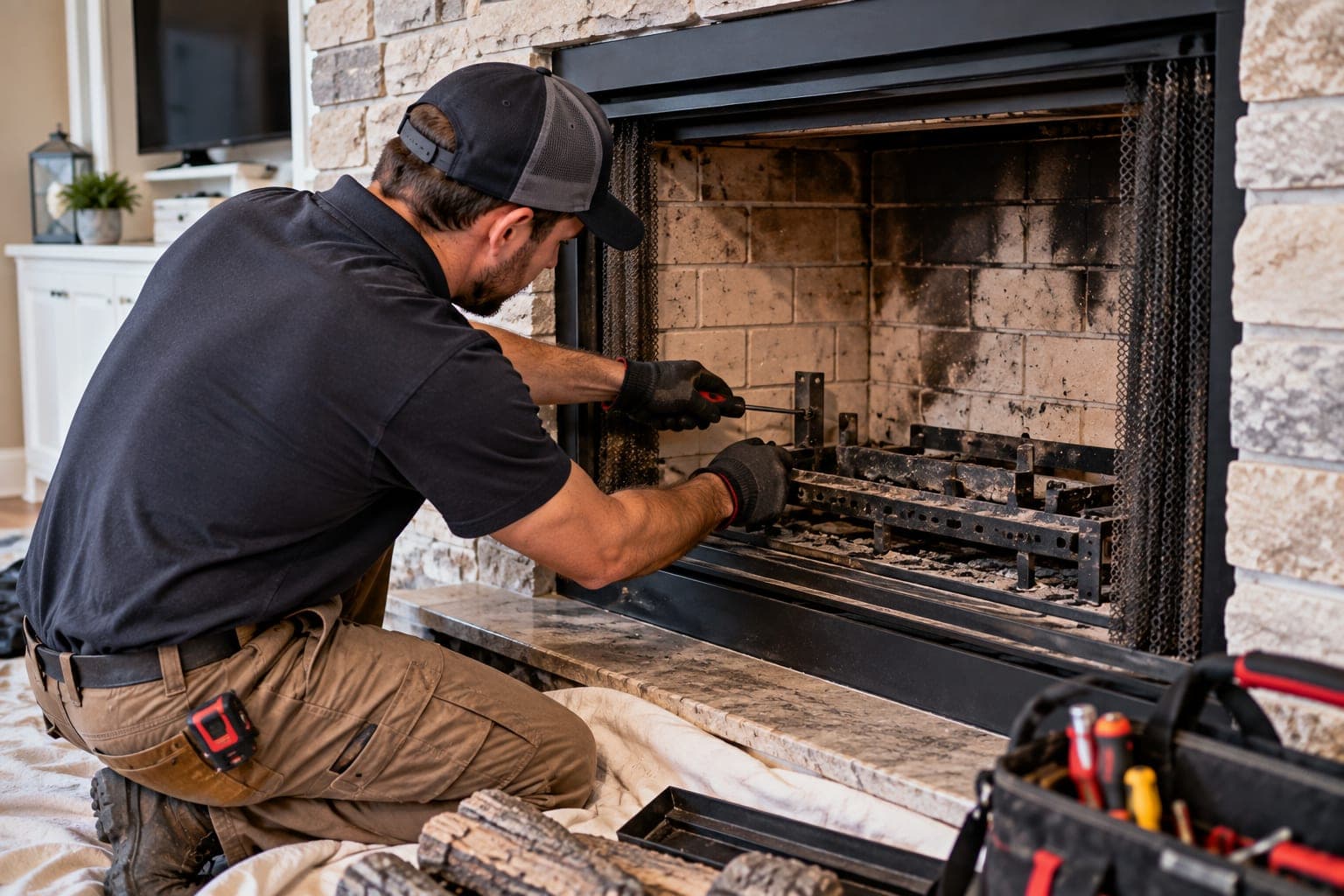
Firebox repair means restoring that heat barrier. Depending on the damage, that can mean repointing worn mortar joints, replacing individual cracked or loose firebricks, rebuilding a damaged wall section, or replacing broken refractory panels in a prefab unit. The goal is a solid, continuous lining with no gaps where heat can escape.
Signs your firebox needs repair
Repeated heating and cooling wears a firebox down, even with careful use. These are the signs worth having looked at:
Common firebox warning signs
- Mortar joints between firebricks that have eroded, opened up or fallen out
- Firebricks that are cracked all the way through, crumbling or loose
- Brick faces flaking or popping off (spalling)
- Refractory panels in a prefab fireplace that are cracked through, separating or missing pieces
- Gaps where you can see the metal box or the masonry behind the lining
- Debris or grit on the hearth that seems to come from the firebox walls
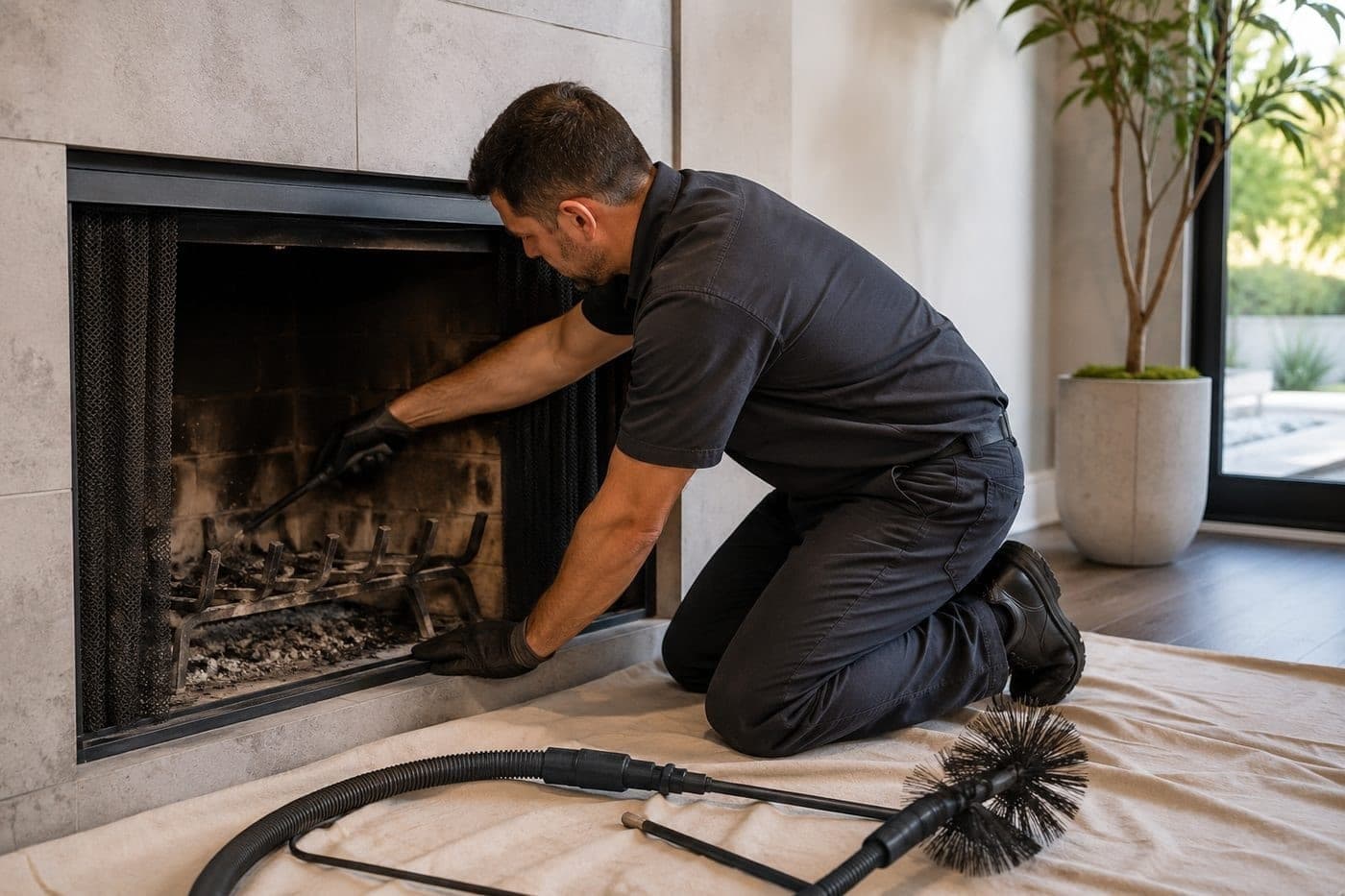
Some problems near the firebox are not firebox damage. Smoke rolling back into the room usually points to a draft issue, which our fireplace draft repair service addresses. Heavy soot or ash buildup that hides the condition of the walls is handled with a thorough fireplace cleaning, which often comes first so the lining can be properly assessed.
When to stop using the fireplace
If you see open mortar joints, bricks that move, or panels cracked through to the metal behind them, hold off on fires until the firebox is checked. A gap in the lining lets heat reach materials that aren't built to take it.
Firebox brick repair
Most masonry firebox damage comes down to two things: mortar joints and the bricks themselves. Firebox brick repair addresses both.
| Feature | Repointing joints | Replacing firebricks |
|---|---|---|
| When it fits | Bricks are sound but the mortar between them is worn, cracked or missing | Bricks are cracked through, crumbling, spalled or loose |
| What's done | Failed mortar is removed and joints are refilled with refractory mortar | Damaged bricks are cut or chipped out and new firebrick is set in refractory mortar |
| Scope | Can cover a few joints or a whole wall | Individual bricks, a section, or a full wall if damage is widespread |
When it fits
- Repointing joints
- Bricks are sound but the mortar between them is worn, cracked or missing
- Replacing firebricks
- Bricks are cracked through, crumbling, spalled or loose
What's done
- Repointing joints
- Failed mortar is removed and joints are refilled with refractory mortar
- Replacing firebricks
- Damaged bricks are cut or chipped out and new firebrick is set in refractory mortar
Scope
- Repointing joints
- Can cover a few joints or a whole wall
- Replacing firebricks
- Individual bricks, a section, or a full wall if damage is widespread
Hairline surface cracks on otherwise solid firebrick are common and don't always need work. Cracks that run through the brick, or bricks that shift when pressed, do.
Materials and fireplace types we work on
- Firebrick: dense brick made to withstand direct flame and repeated heat cycles, used in masonry fireboxes.
- Refractory mortar: heat-rated mortar for firebox joints. Standard masonry mortar breaks down under fire and shouldn't be used inside a firebox.
- Refractory panels: molded liners in factory-built fireplaces. Cracked or broken panels are replaced to fit the unit.
- Wood-burning fireplaces: the most common setting for firebox wear, since they see the highest direct heat.
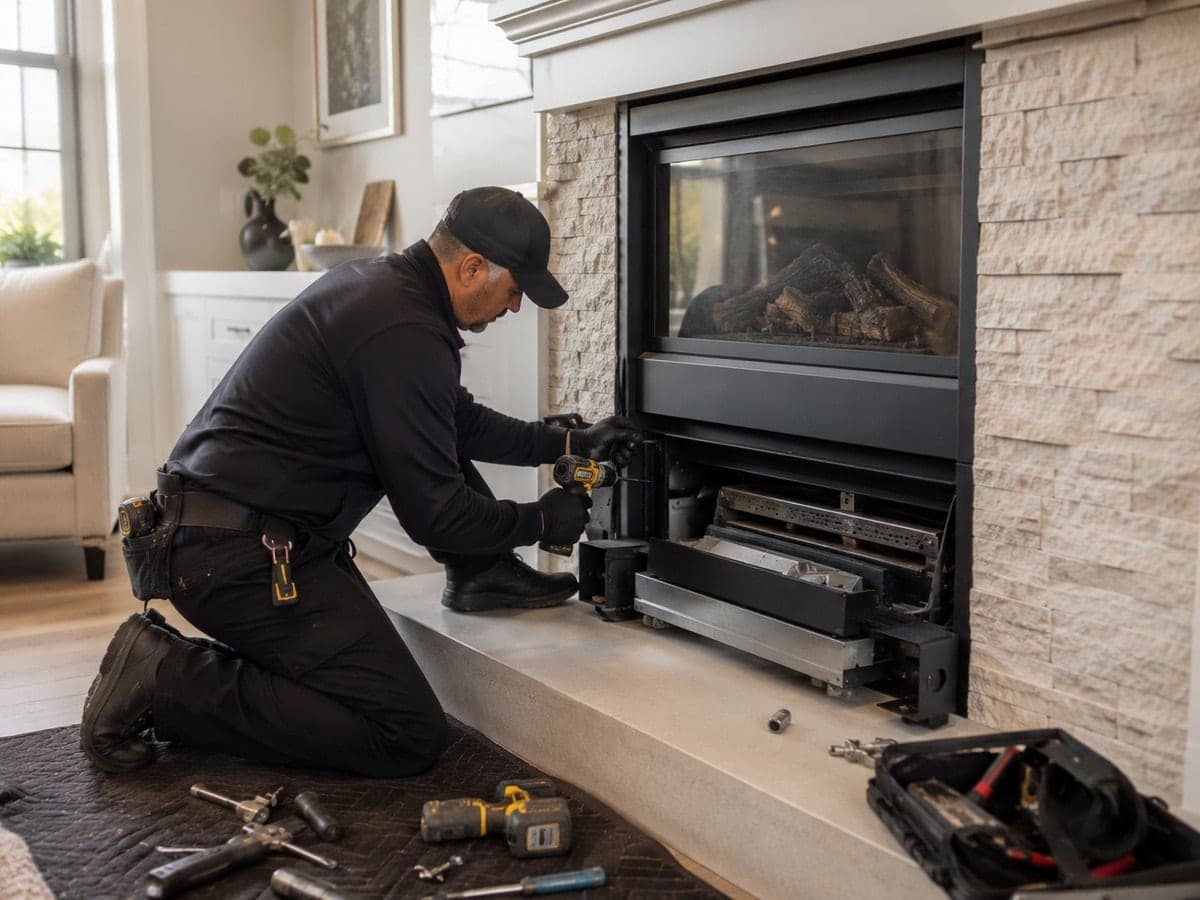
- Gas fireplaces: gas fireplace and gas appliance work is offered, including the firebox and lining in gas units.
We work on all major fireplace brands. Electric fireplaces don't have a combustion firebox, so problems with those units are covered by our electric fireplace repair work instead.
What the visit involves, step by step
How a firebox repair visit works
Look at the firebox
We check the walls, back and floor of the firebox, the mortar joints and, in prefab units, the condition of each refractory panel.
Explain what we found
You'll hear which damage needs repair, what can wait, and whether the issue is the firebox or something else in the fireplace.
Free estimate
Estimates are free, so you can decide on the work before anything is done.
Prepare the area
The hearth and surrounding floor are protected, and loose material and failed mortar are removed from the firebox.
Make the repair
Joints are repointed with refractory mortar, damaged firebricks are replaced, or broken panels are swapped out, depending on the job.
Before the next fire
We tell you how long to wait before lighting a fire and how to bring the repaired firebox back into use gradually.
Keeping a firebox in good shape
- Build moderate fires rather than very large, hot ones that stress the lining.
- Don't throw water on a fire or onto hot firebrick; sudden cooling can crack it.
- Keep logs off the back wall and use a grate.
- Check the walls for open joints or cracked bricks when the fireplace is cold, especially before the burning season.
Booking firebox repair
Call or request an estimate to get started. Commercial and property-manager work is offered as well.