On this page
What wood stove cleaning covers
A wood stove is a closed box with a narrow exhaust path, so deposits build up in a few predictable places. Wood stove cleaning removes ash, soot and creosote from each of them so the stove burns cleanly again. The visit covers two connected parts: the stove itself and the venting that runs from the stove's collar to the top of the chimney.
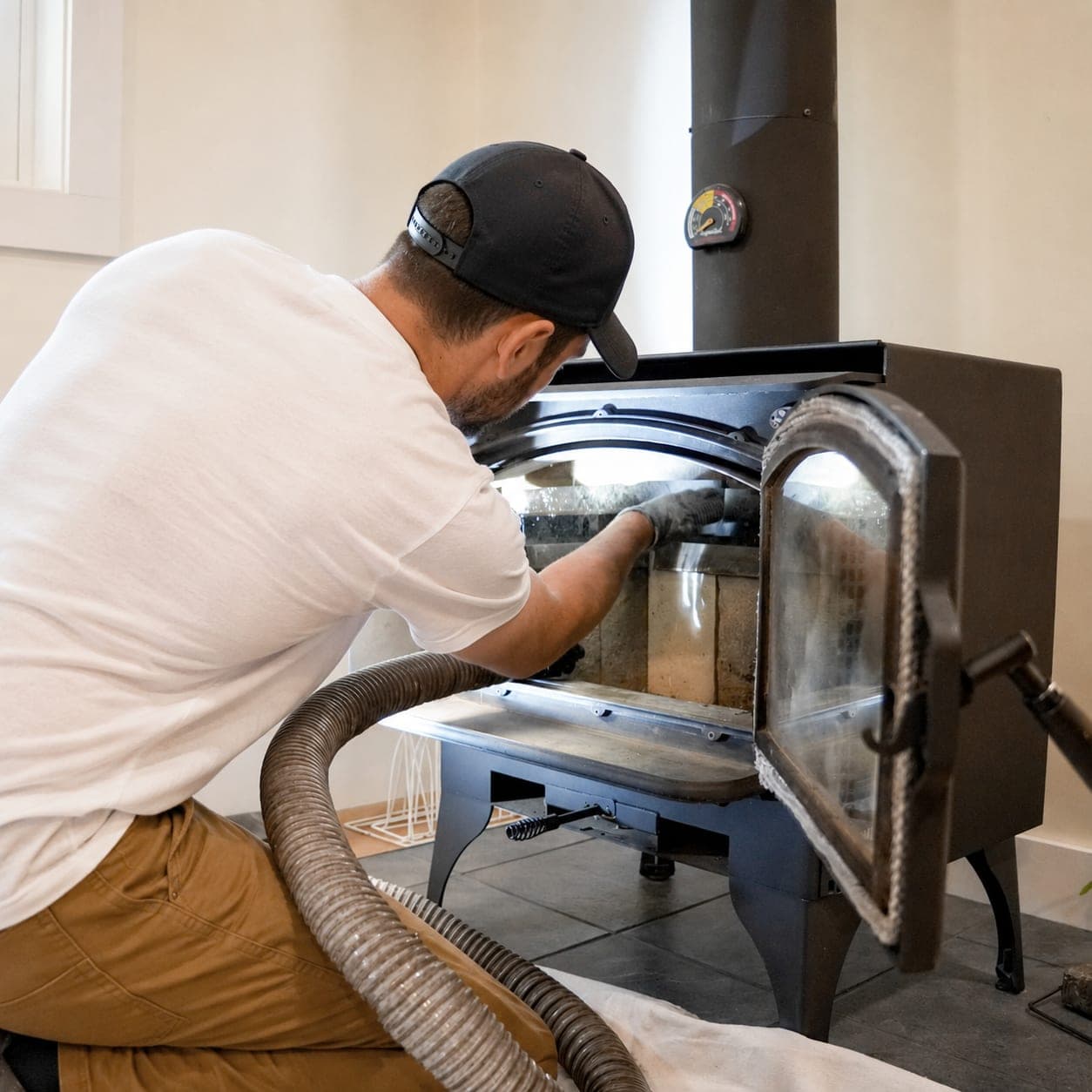
- The firebox: old ash, charcoal and loose debris are cleared out.
- The baffle or flame shield: this plate above the fire collects a heavy layer of soot and fly ash. We clean it and check that it is seated properly.
- Secondary air tubes and combustor: on stoves that have them, these are cleared so the stove can burn off smoke as designed.
- The stovepipe and flue: soot and creosote are brushed out of the connector pipe and the chimney or flue it feeds into.
- Door and glass: the glass is cleaned, and the door gasket is checked for gaps that let in uncontrolled air.
If your stove vents into a masonry chimney that also needs attention, the flue work overlaps with our chimney sweep service. If you have an insert set into an existing fireplace rather than a freestanding stove, fireplace insert cleaning is the better fit.
Signs your wood stove needs cleaning
Most stoves don't fail suddenly. They get gradually harder to run. These signs usually mean buildup is the cause:
Common signs
- Smoke rolls into the room when you open the stove door
- The fire is hard to start or dies down even with the air control open
- The glass turns black or brown much faster than it used to
- A campfire or tar-like smell comes from the stove when it isn't in use, often worse in damp weather
- Flaky, crusty or shiny black deposits inside the stovepipe or around the flue collar
- Debris or bits of creosote falling into the firebox
- It has been a full heating season or longer since the last cleaning
Slow draft and smoke spillage can also come from a blockage higher up, such as a nest or fallen debris. We check the full venting path during the visit to find out which problem you have.
What the visit involves, step by step
How a wood stove cleaning visit runs
Ask about how the stove runs
We start with what you've noticed, such as smoke, smell, draft or glass. We also ask what you burn and how often.
Protect the room
Drop cloths go down around the stove and hearth, and we set up so soot stays out of the room.
Clear the firebox and baffle
Ash comes out first. Then we clean the baffle, air tubes and any combustor and check them for warping or damage.
Sweep the stovepipe and flue
The connector pipe and flue are brushed from end to end to remove soot and creosote, and the loosened debris is collected.
Check the door, gasket and glass
The glass is cleaned and the door seal is checked, since a leaky gasket makes the stove burn hot and fast.
Walk you through what we found
We tell you what the buildup looked like, whether anything needs repair, and what we'd suggest for your burning habits.
Fuel, burning habits and buildup
How quickly creosote builds up depends mostly on how the stove is run. Wet or freshly cut wood, long low smoldering fires, and running the stove with the air turned down all send cooler, smokier exhaust up the pipe, where it condenses into creosote. Dry, seasoned hardwood burned with enough air leaves far less behind. If you're still deciding whether wood is right for your household, our guide to gas vs wood burning fireplace compares the upkeep each one involves.
Safety and maintenance between cleanings
Creosote is a fire hazard
Creosote is flammable. A thick layer in the stovepipe or flue can ignite during a hot fire and cause a chimney fire. Regular cleaning keeps that fuel from building up.
- Burn only dry, seasoned wood. Never burn trash, painted lumber or cardboard.
- Give each fire enough air to burn brightly rather than smolder for hours.
- Empty ash into a metal container with a lid and keep it outside, away from the house. Ashes can hold heat for days.
- Keep a working carbon monoxide alarm and smoke alarm near the stove.
- Have the stove and venting cleaned and checked at least once a year, and more often if you burn heavily.
If you also have an open fireplace in the house, how fireplace cleaning works explains the equivalent service for that setup.
Booking wood stove cleaning
Please let the stove go out and cool completely before the visit. Call or request an estimate to set up a time.