On this page
What smoke chamber repair involves
In a masonry fireplace, the smoke chamber sits between the firebox and damper below and the flue above. Its walls slope inward like a funnel to gather smoke and heat and guide them into the narrower flue. Many chambers were built by stepping bricks inward in layers, a method called corbelling. That leaves a stair-stepped surface that disrupts airflow, traps creosote and can hide gaps in the mortar.
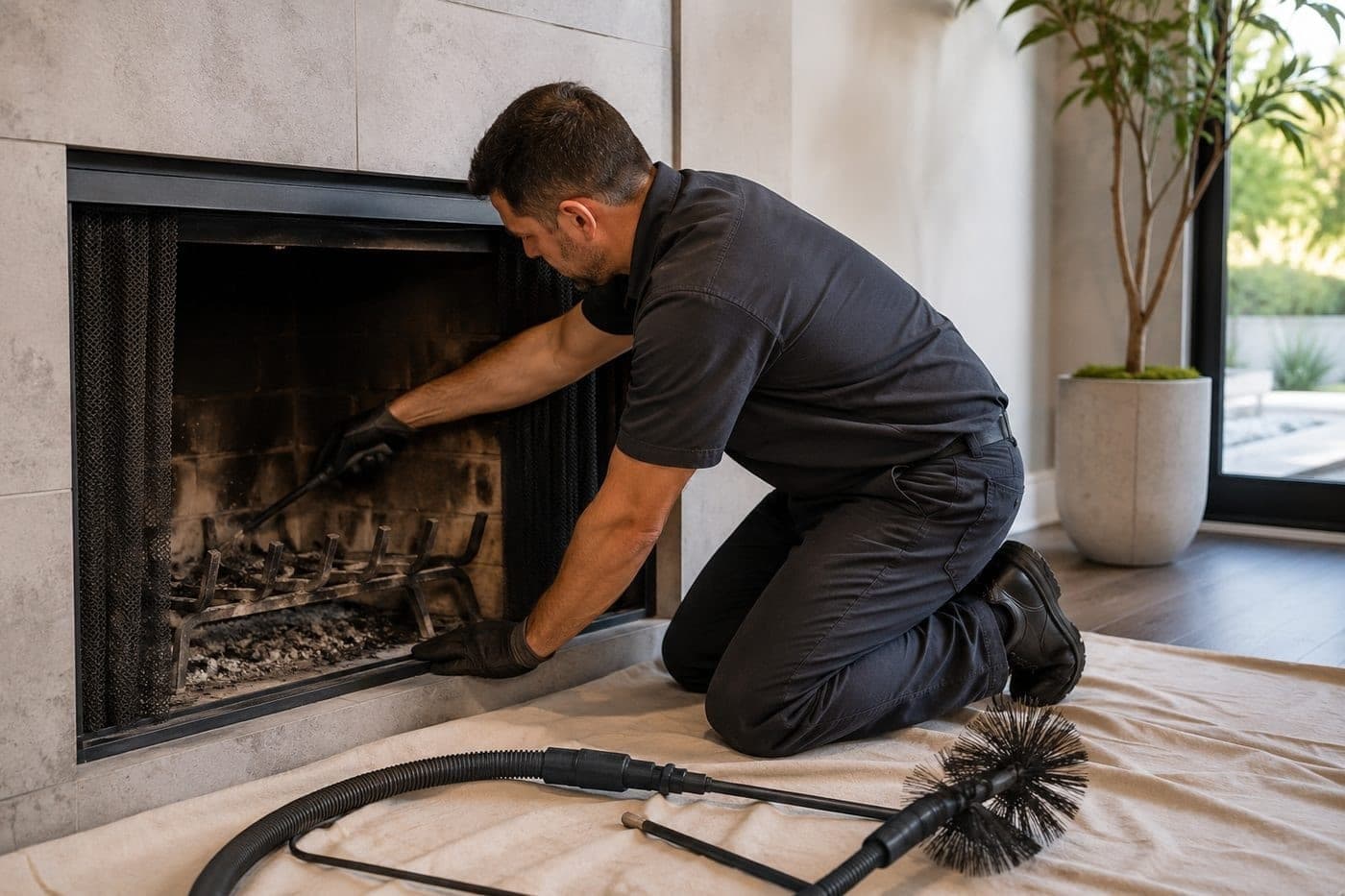
Smoke chamber repair restores those walls. Depending on what we find, the work can include:
- Parging: coating the walls with heat-resistant refractory mortar to create a smooth, sealed surface over corbelled brick or worn mortar
- Filling cracks and open mortar joints that let heat and gases reach the surrounding structure
- Rebuilding sections where bricks are loose, broken or falling out
- Resealing where the chamber meets the damper area and the base of the flue
If the problem turns out to be elsewhere in the fireplace, such as the firebox walls, the damper or the surround, we handle that through our broader fireplace repair work rather than stretching a smoke chamber job to cover it.
Signs your smoke chamber needs attention
Most homeowners never see their smoke chamber, so the clues usually show up somewhere else. Get it checked if you notice any of these:
Common signs
- Smoke spills into the room even with the damper fully open
- Bits of mortar, brick or grit land on the damper or the firebox floor
- A sweep or inspector reported an unparged, corbelled or cracked smoke chamber
- Creosote keeps building up quickly above the damper
- A smoky smell lingers in the room, especially on damp or windy days
- The fireplace has been unused for years and you want to start burning in it again
Smoke coming into the room has several possible causes, including the flue size, the damper or the way air moves through the house. If the chamber checks out fine, solving a fireplace that won't draw is usually the next step, and we'll tell you which problem you have before any work starts.
What the visit looks like, step by step
From first look to finished repair
Protect the room
We cover the hearth and nearby floor before opening up the fireplace, because smoke chamber work is dusty.
Clean the chamber
Creosote and soot have to come off first. Mortar won't bond to a dirty surface, and the actual condition of the brick isn't visible until it's clean.
Inspect the walls
We look at the shape of the chamber, the condition of the mortar and brick, and how the chamber connects to the damper and flue.
Explain what we found
You get a plain description of the problem and a free estimate for the repair, whether that's parging, crack repair or partial rebuilding.
Make the repair
Loose material is removed, damaged sections are rebuilt where needed, and refractory mortar is applied to seal and smooth the walls.
Clean up and give you the next steps
We clean the work area and tell you how long to wait before your first fire so the new mortar can cure.
Materials and fireplace types
Smoke chamber repair uses refractory mortar, a heat-rated material made for the temperatures inside a fireplace. Standard mortar breaks down under that heat. Where bricks need replacing, we use firebrick or masonry suited to the location.
Smoke chambers are part of masonry fireplaces. That includes wood-burning fireplaces and masonry fireplaces that have been fitted with gas logs, since those still vent through the same chamber and flue. We also do gas fireplace and gas appliance work. Factory-built and electric units don't have a masonry smoke chamber. For those, repairs for electric fireplaces or other fireplace repair are the right fit.
Safety and upkeep
Why cracks in the chamber matter
The smoke chamber takes heat and hot gases from every fire. Open joints or cracks can let that heat and smoke move toward the surrounding structure instead of up the flue. A rough, stepped surface also collects creosote, which is flammable. If you see falling mortar or smell smoke in the walls or ceiling, stop using the fireplace until it has been checked.
Once the chamber is repaired, routine care keeps it in good shape. As general guidance, have the chimney cleaned and inspected regularly, more often if you burn frequently. Burn dry, seasoned wood, because wet wood produces more smoke and creosote. Open the damper fully before lighting a fire. A smooth, parged chamber is also easier to sweep, so later cleanings tend to go more quickly.
Booking a smoke chamber repair
Call or request an estimate to set up a visit. We work on all major brands of fireplace equipment, and commercial and property-manager work is offered for buildings with more than one fireplace.