Chimney rebuild in San Mateo, in brief
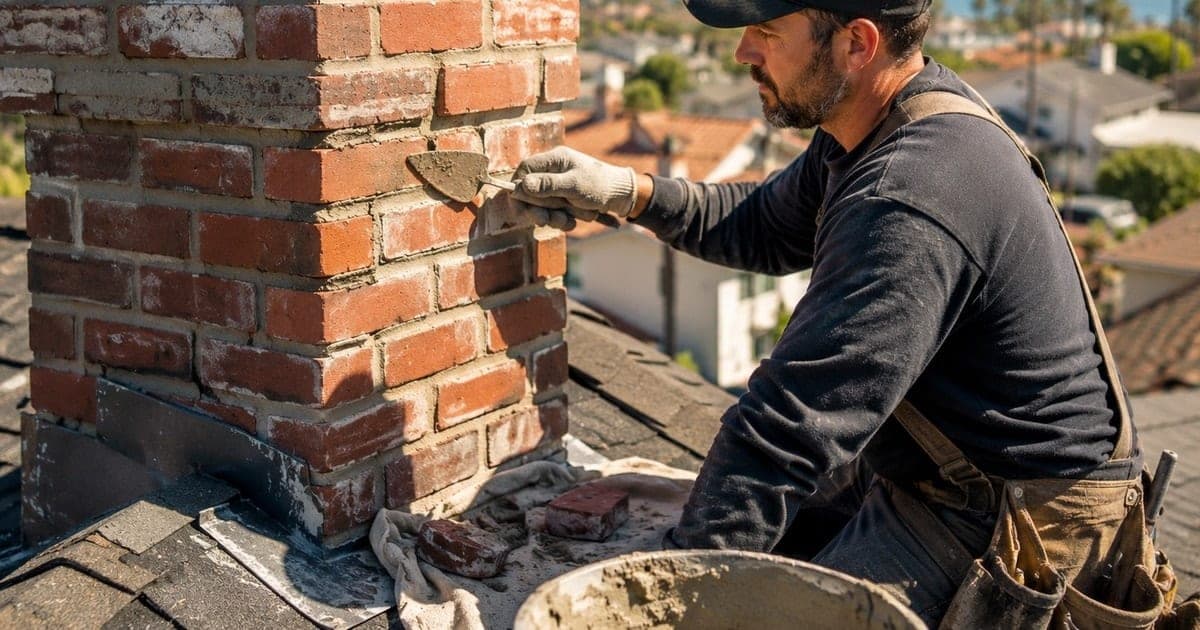
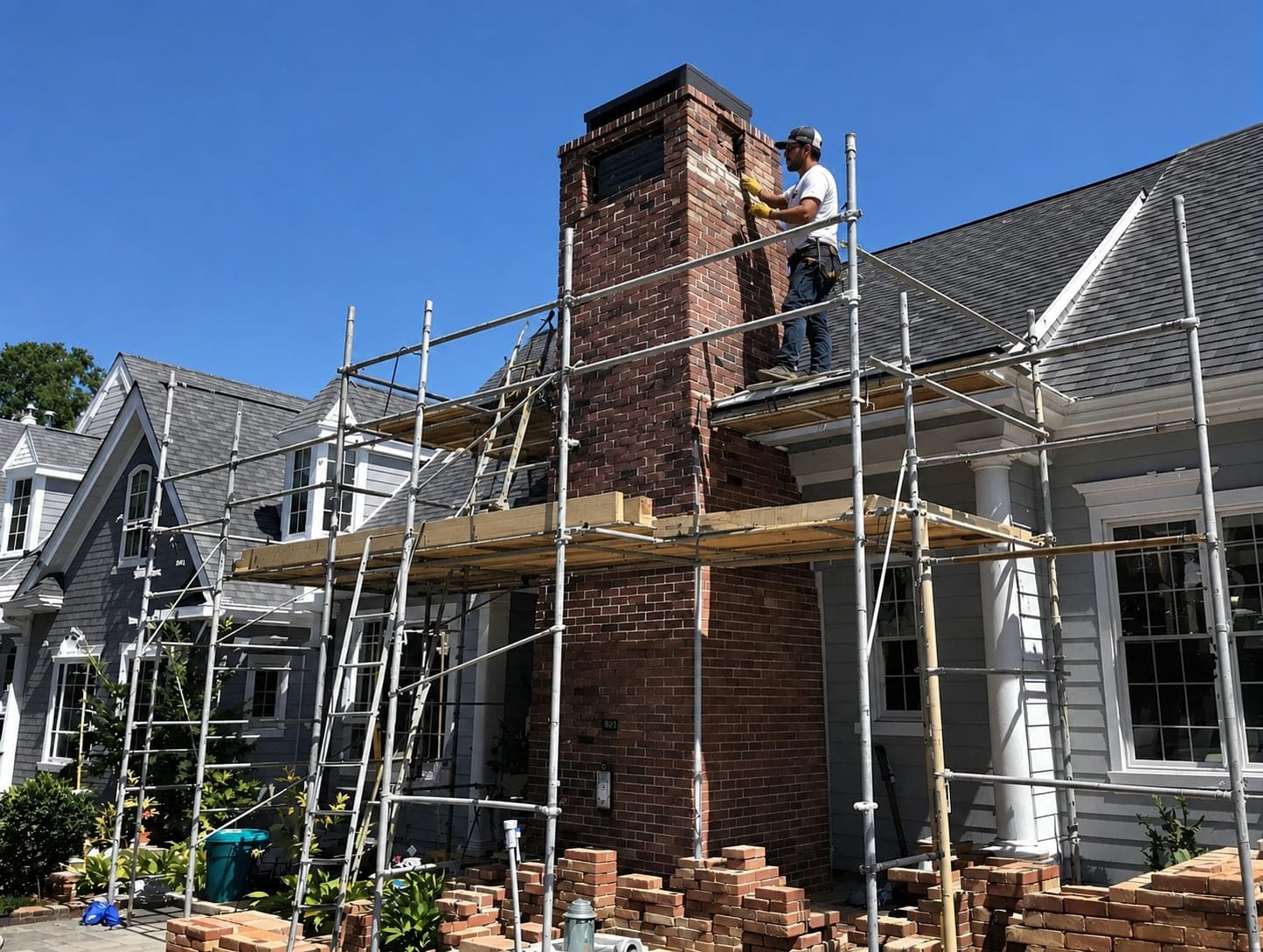
A chimney rebuild means taking down masonry that can no longer be saved and laying it back up sound. Depending on where the damage starts, that can be only the section above the roofline, or it can reach lower when the structure itself has failed. It fits a masonry chimney that leans, has loose or crumbling brick across large areas, or has cracks running through the stack rather than just along the mortar joints. The chimney rebuild service covers the steps, materials and what to expect while the work is underway.
What San Mateo's zoning code says about a chimney's position
Two sections of the San Mateo Municipal Code deal with where a chimney can sit on a lot. They matter when a rebuild changes the chimney's width, depth or location rather than replacing it brick for brick.
Projecting into a required yard
San Mateo Municipal Code 27.70.020 allows chimneys to project two feet or less into a required yard, provided the outside face of the chimney stays at least three feet from the property line (source: City of San Mateo Municipal Code - Section 27.70.020 Structures or Building Projections in Required Yards).
For a rebuild, take two measurements before the old chimney comes down. First, measure how far the existing chimney extends into the side or rear yard. Second, measure how close its outside face sits to the property line. A wider base, thicker walls or an enclosure around the stack can push either number past those limits, even if the chimney goes back in the same spot.
The daylight plane on single-family lots
San Mateo Municipal Code 27.18.050 sets a daylight plane for R1 single-family lots, 12 feet high at each side property line and angled at 45 degrees, and lists chimneys and flues among the allowed encroachments (source: City of San Mateo Law Library - Municipal Code 27.18.050 Building Height and Daylight Plane).
The daylight plane is the sloped limit that keeps a house's upper walls and roof stepping back from the side lot lines. Because chimneys and flues are on the list of allowed encroachments, a rebuilt chimney on an R1 lot can extend through that plane. If the rebuild adds height or moves the chimney toward a side line, check the plan against the terms of that section before the work is scheduled.
Same footprint or a new one?
If the rebuilt chimney keeps its existing width, depth and location, its distances to the yard lines and the property line stay as they are. If the plan changes any of them, measure against both code sections first.
When a rebuild is the right call, and when it isn't
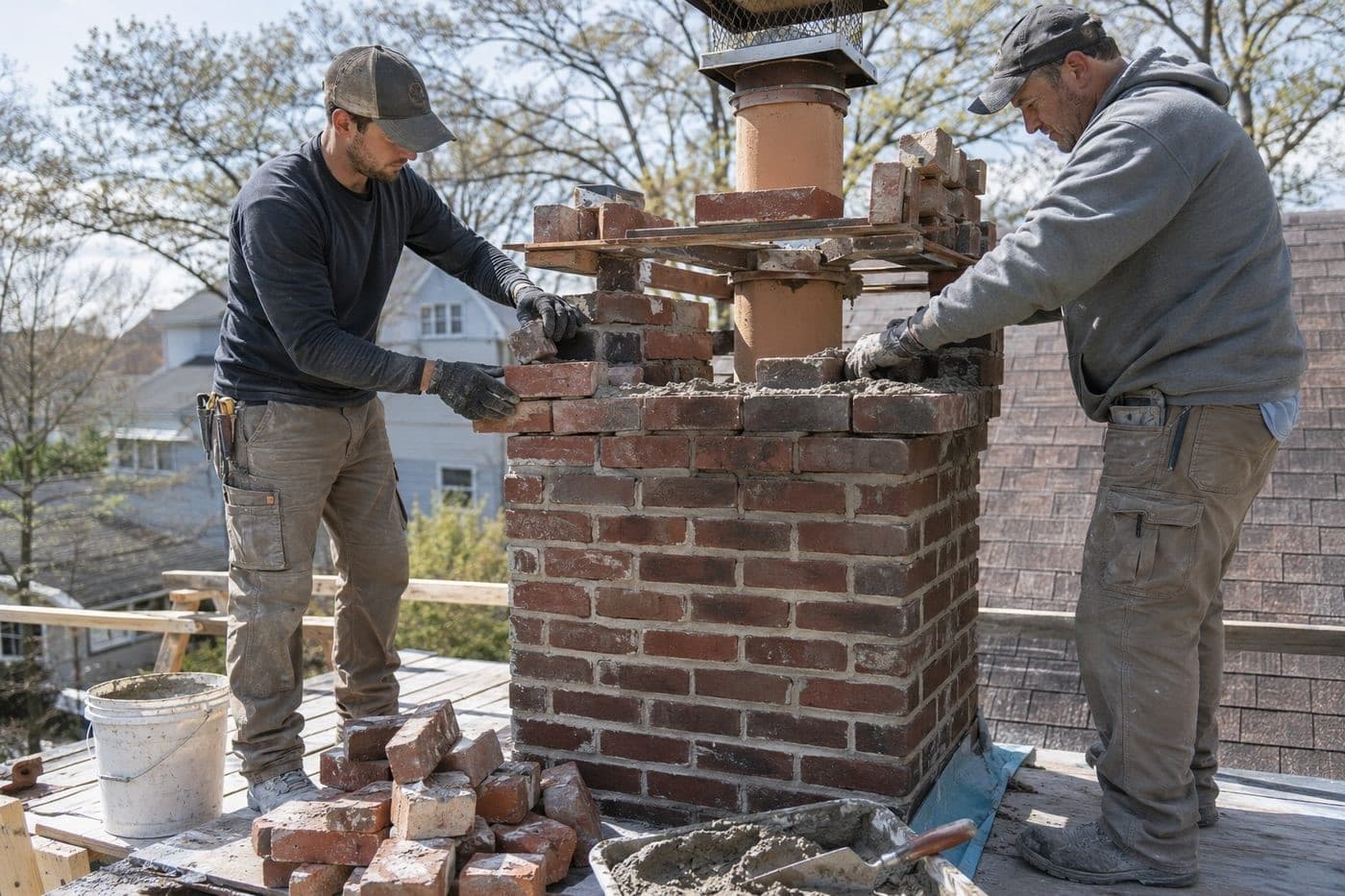
A rebuild fits when the masonry itself has failed. Signs include a leaning chimney, brick that shifts when pushed, or cracks running through the stack. Leaning chimney repair usually means taking the stack down past the point where it shifted and laying it back up plumb on sound masonry.
When the damage is limited to mortar joints, the crown or a few bricks, masonry repair is often enough. Our guide to chimney repair vs rebuild explains how to tell the two situations apart. If the trouble is inside the house, such as cracked firebox walls, a damaged smoke chamber or a stuck damper, fireplace repair in San Mateo is the better starting point.
Booking your rebuild
The estimate is a good time to settle whether the chimney stays in its current footprint or changes shape, so that the yard and daylight-plane questions above are answered before work begins. For the full sequence of the job, read how chimney rebuild works. For other chimney, fireplace and dryer vent work available locally, see everything we do in San Mateo.
Commercial and property-manager work is offered, so owners of rental homes can request an estimate the same way.
Sources (1)
The sources of the San Mateo facts on this page.
- 1City of San Mateo Municipal Code - Section 27.70.020 Structures or Building Projections in Required Yards; City of San Mateo Law Library - Municipal Code 27.18.050 Building Height and Daylight Plane