Piedmont's tree clearance rule and what a chimney inspection checks
Piedmont's City Code 8.14.030 (Ordinance 755 N.S.) requires owners of developed parcels to remove all portions of trees within 10 feet of functioning chimneys or stovepipe outlets. Piedmont City Code 8.14.030 designates the entire City of Piedmont as Wildland Urban Interface, and 8.14.040 (Ord. 787 N.S., December 2025) requires all properties to meet the adopted Wildland Urban Interface Code's construction and vegetation rules.
Source
City of Piedmont - Ordinance No. 755 N.S.; City of Piedmont - City Code Chapter 8, Division 8.14 Fire Hazard Abatement.
Who the rule applies to
- Owners of developed parcels. The code puts the tree clearance duty on the property owner.
- Functioning chimneys and stovepipe outlets. This includes a masonry chimney you still burn in and the stovepipe from a wood stove.
- Every property in the city. The Wildland Urban Interface designation covers all of Piedmont, not only some parts of it.
What it changes about the inspection
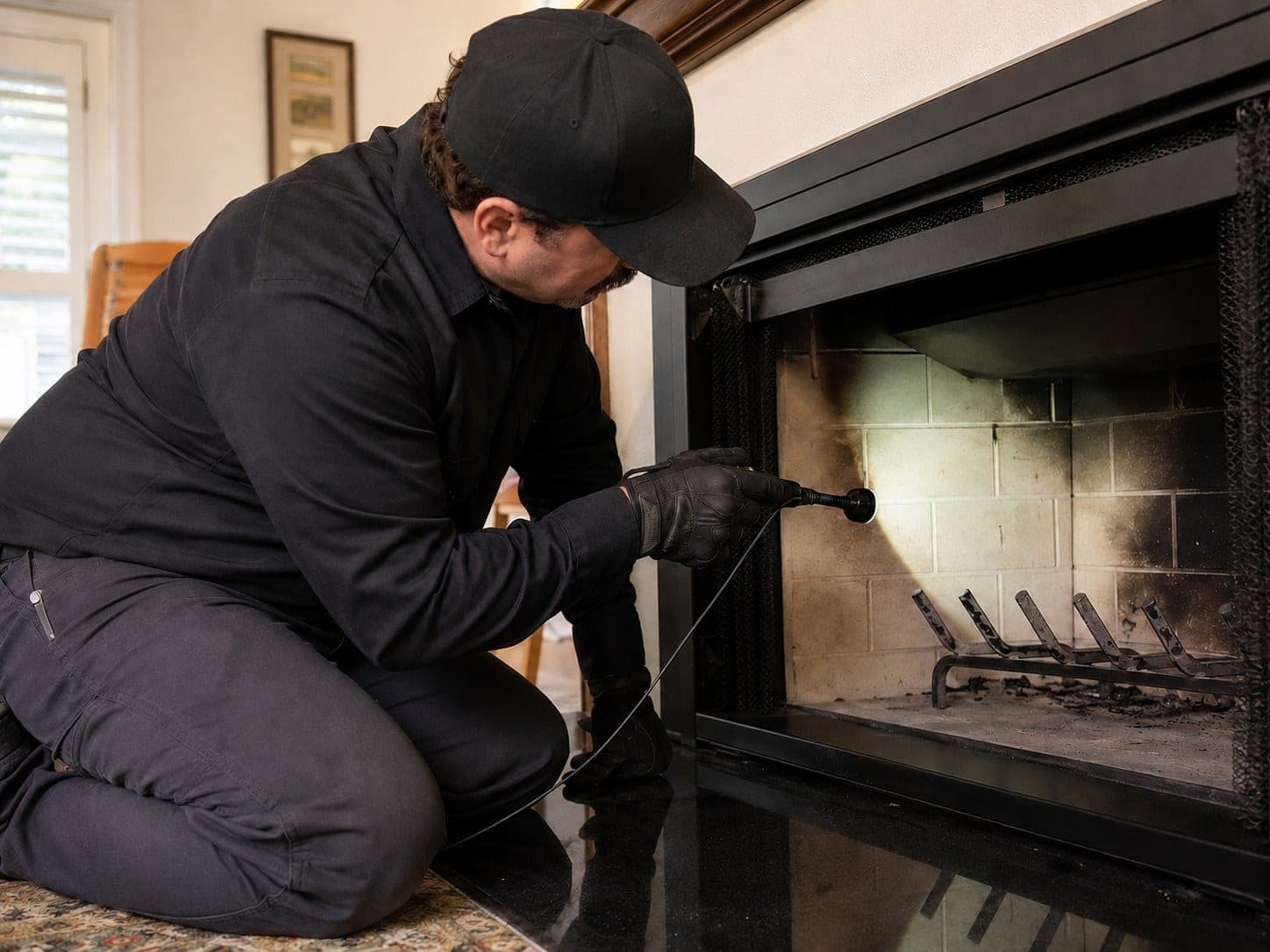
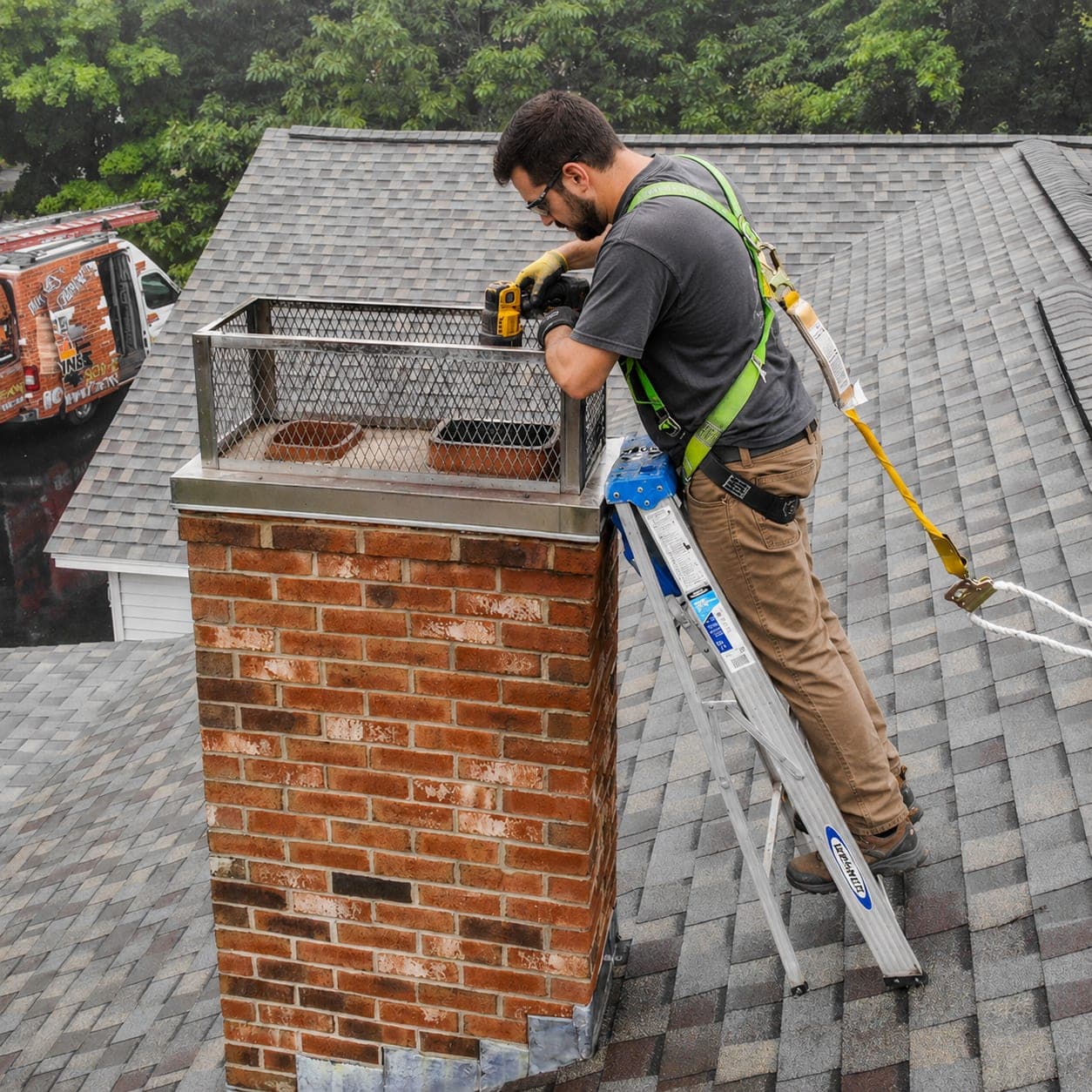
A standard inspection covers the flue, liner, damper, smoke chamber, firebox, crown and cap. Because of the clearance rule, the exterior check also covers the area around the chimney top. We look for branches hanging over the outlet, limbs growing toward it, and leaves or needles packed onto the crown or into the cap. Anything we see goes into your inspection results, so you know where things stand before the next fire.
Clearing the trees is the owner's job under the code, and tree work is not part of our service. Debris that has already fallen into the cap or flue is chimney work, though. If the inspection finds a blockage or heavy buildup, a cleaning or blockage removal can follow. An inspection report describes the chimney's condition. It is not a city compliance sign-off.
Chimney inspection in brief
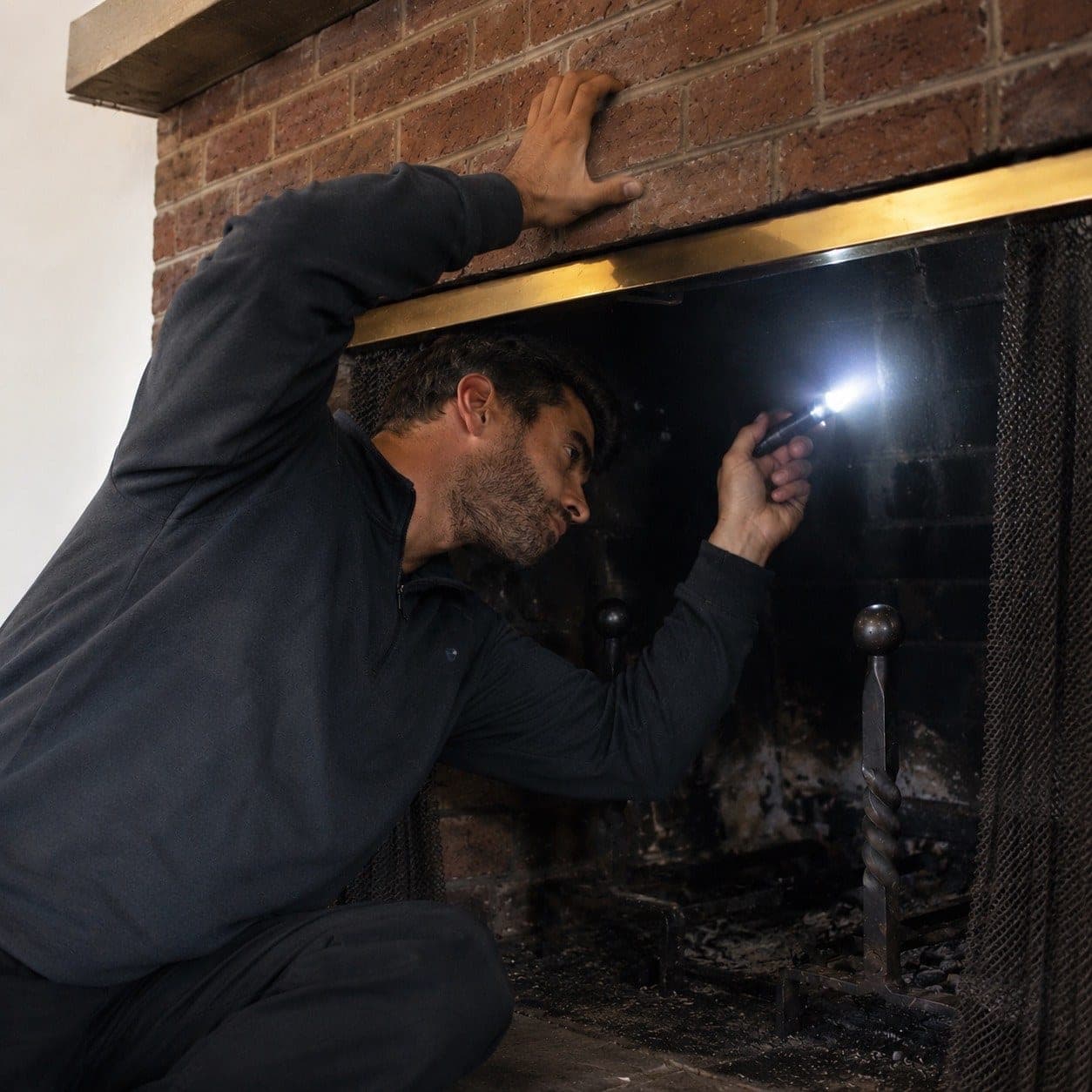
An inspection starts with a visual check of the firebox, damper and the parts of the chimney exterior that can be seen from the ground or roof. A Level 2 inspection goes further. It adds a camera run through the flue and a check of attic and crawl-space areas where the chimney passes, so cracked flue tiles, liner gaps and hidden water damage show up. Wood stoves, fireplace inserts and gas fireplaces are covered too. For the full details, read how chimney inspection works.
When to book an inspection, and when another job fits better
- Before the first fire of the season, or when a fireplace or stove hasn't been used in a while.
- After a quake. If you suspect chimney damage after an earthquake, a Level 2 inspection with a camera is the usual first step.
- When buying or selling a home and you want the chimney's condition in writing.
- After a storm, or after a limb has come down on the roof near the chimney.
- When you notice smoke spilling into the room, a lingering odor or a weak draft.
If you already know the cap is missing, broken or rusted through, you don't need an inspection first. Go straight to chimney cap installation in Piedmont.
Booking and next steps
Gas fireplace and gas appliance work is offered, and we work on all major brands. Commercial and property-manager work is offered as well.
For the scope, the inspection levels and what you receive afterward, read about our full chimney inspection service. For repairs, liners, caps and gas fireplace work, browse everything we do in Piedmont.
Free estimates.
Call or request an estimate to book a chimney inspection for your Piedmont home.
Sources (1)
The sources of the Piedmont facts on this page.
- 1City of Piedmont - Ordinance No. 755 N.S.; City of Piedmont - City Code Chapter 8, Division 8.14 Fire Hazard Abatement