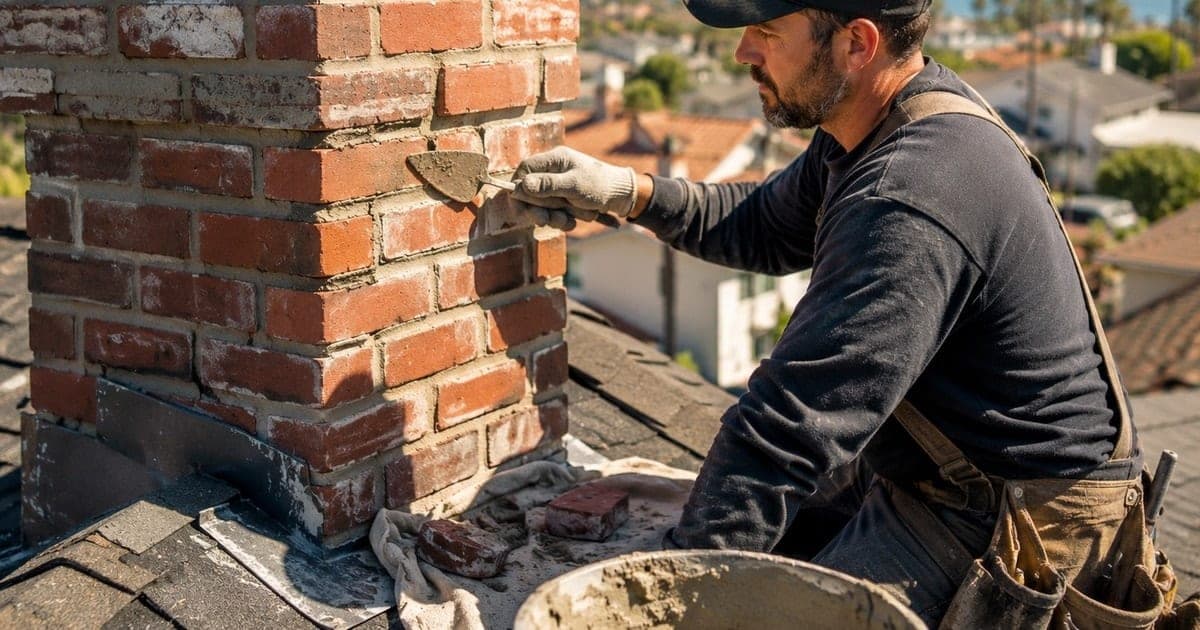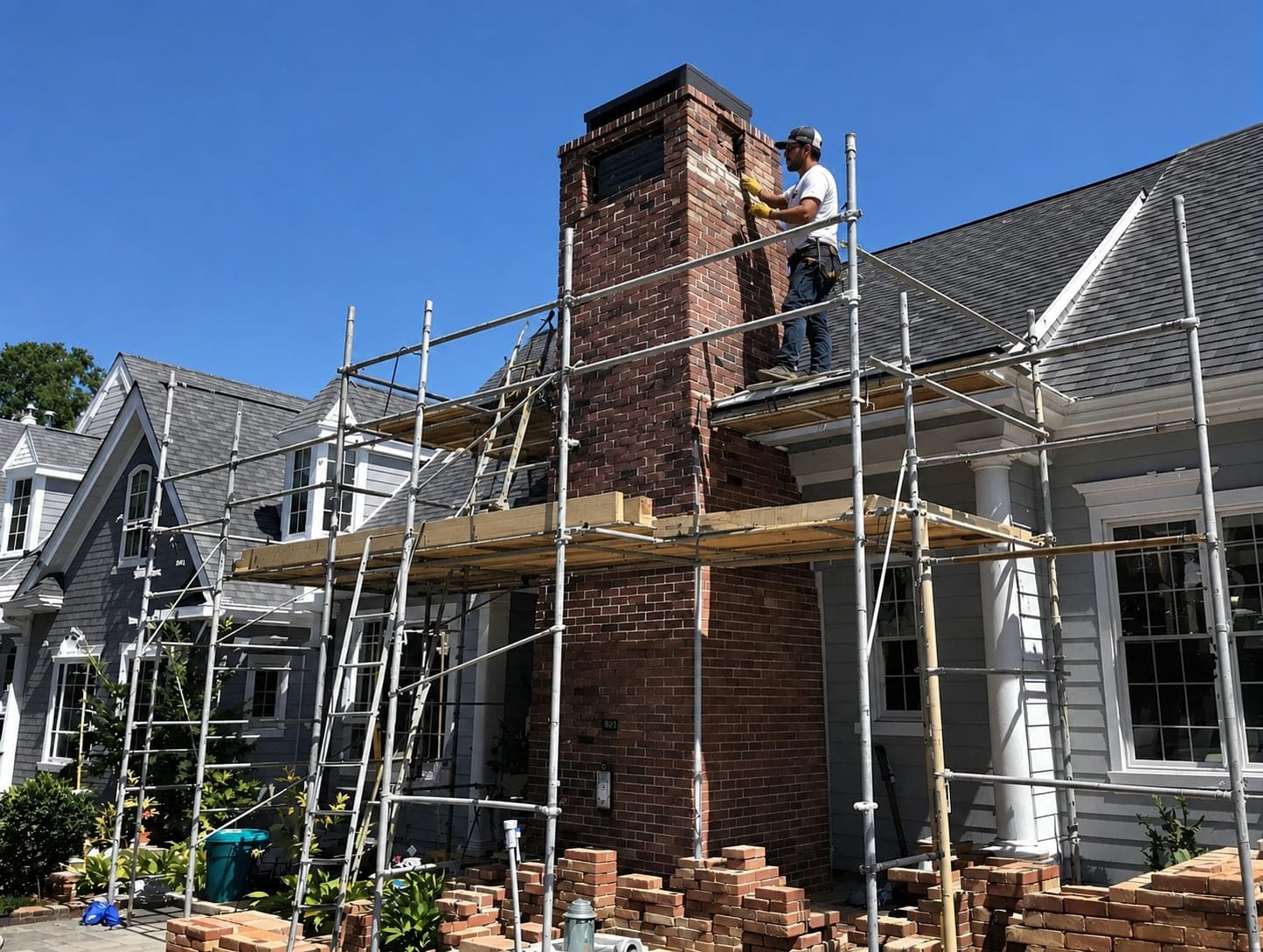
A chimney that sways, sheds bricks or has mortar failing across whole sections is past the point where small fixes hold. A rebuild deals with the problem at its source. Several city rules decide how the rebuilt chimney is inspected, whether it can be made taller and what happens when a reroof turns up a problem.
What affects chimney rebuild in Palo Alto
- Palo Alto's residential construction guide requires that all flues, vents, heating ducts and chimneys be inspected and approved by city building inspection after installation and before they are covered up. Palo Alto's Fireplace Chimney Transition Frame guideline requires a city-approved, stamped engineered detail of the framing and bracing method, including the chimney's allowable maximum height above the fireplace shoulders. Palo Alto Ordinance 5554 (2022) lets chimneys and flues up to 5 feet wide extend beyond the daylight plane in the city's multiple-family (RM) districts, within limits set by the building code chapter. Palo Alto's roofing inspection guideline for new roofs and reroofs states that when inspection finds an existing fireplace chimney unsafe, it must be repaired, rebuilt or replaced with an approved factory-built chimney. Palo Alto Development Services' Fireplace Chimney Transition Frame inspection guideline lists chimney flue liners as not allowed for this work and requires the chimney to be removed to the fireplace shoulders. Source: City of Palo Alto Development Center - Residential Construction Guide (7-2020); City of Palo Alto Development Services - Inspection Guidelines: Fireplace Chimney Transition Frame; City of Palo Alto - Ordinance No. 5554 (Title 18 zoning amendments); City of Palo Alto Development Services - Inspection Guidelines: Roofing (New and Reroofs).
- Palo Alto's Fireplace Chimney Transition Frame inspection guideline states that unreinforced chimneys are not allowed to be extended. Source: City of Palo Alto Development Services - Inspection Guidelines: Fireplace Chimney Transition Frame.
Chimney rebuild in brief
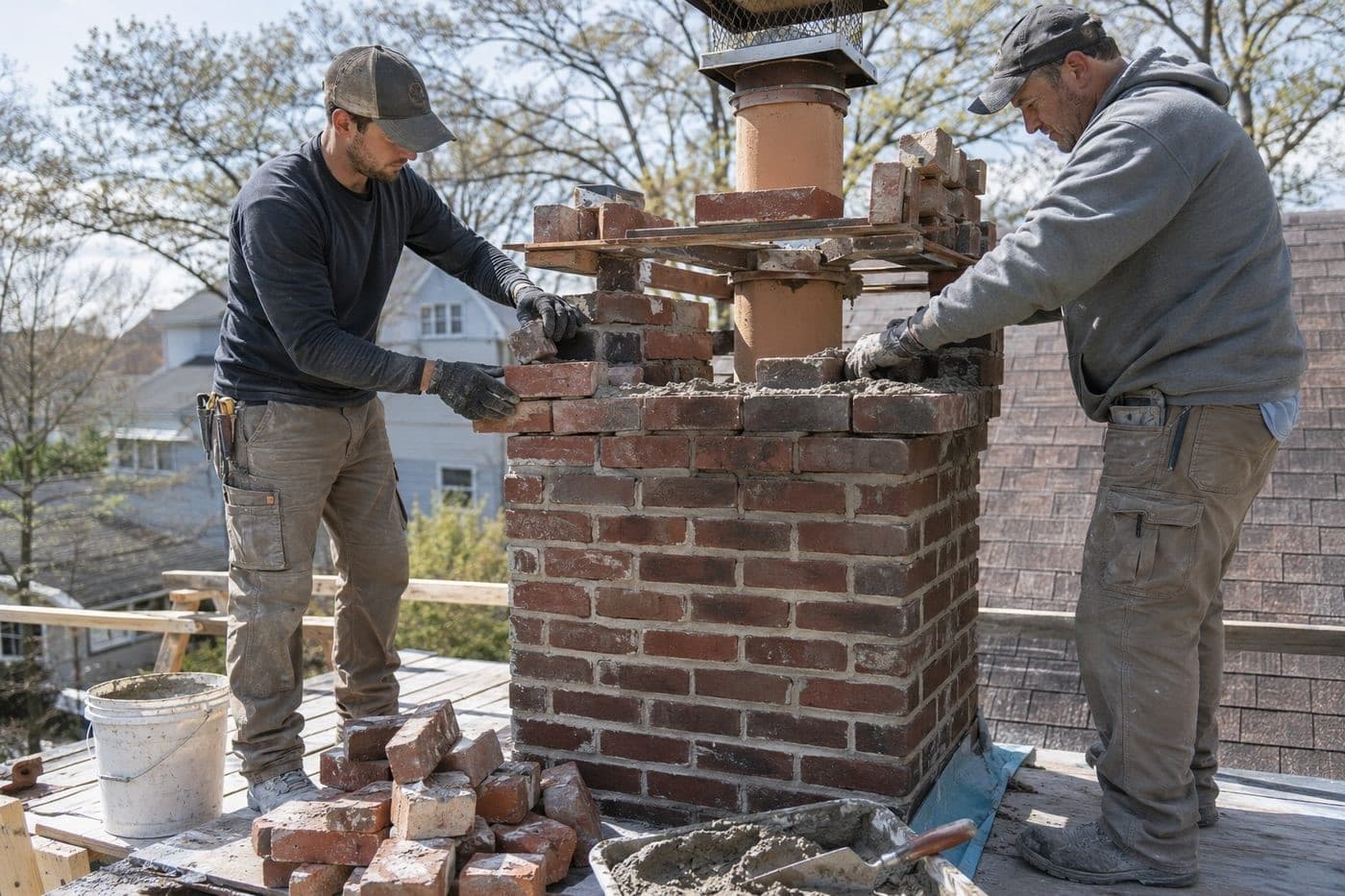
A masonry chimney rebuild takes down the damaged part of the chimney, often everything above the roofline and sometimes more. It then builds that part back with sound masonry, fresh mortar and a new crown on top. It fits when bricks are loose, the stack is leaning, or the mortar has failed so widely that tuckpointing would only buy time. We first find out how far the damage goes, then recommend how much needs to come down. Our chimney rebuild service explains the full process and what to expect on site.
Palo Alto building rules that shape a chimney rebuild
The points below come from City of Palo Alto building documents: the Development Center's residential construction guide, Development Services inspection guidelines and city ordinances. Each one is listed with its source.
City inspection before the work is covered
The city's residential construction guide requires that all flues, vents, heating ducts and chimneys be inspected and approved by city building inspection after installation and before they are covered up (source: Development Center, Residential Construction Guide, 7-2020). For a rebuild, this affects scheduling. Framing, roofing or interior finishes that would hide the chimney should not close over it until the city inspector has approved it.
When a reroof inspection flags the chimney
The city's roofing inspection guideline for new roofs and reroofs states that when inspection finds an existing fireplace chimney unsafe, it must be repaired, rebuilt or replaced with an approved factory-built chimney (source: Development Services, Inspection Guidelines: Roofing (New and Reroofs)). If a new roof is planned, it helps to know the chimney's condition before roofing starts. A chimney inspection for homes in Palo Alto ahead of the reroof shows whether repair will do or a rebuild is the realistic choice.
Taking the masonry down to the fireplace shoulders
Some projects remove the masonry down to the fireplace and frame the chimney above it. For that work, the city's Fireplace Chimney Transition Frame guideline requires a city-approved, stamped engineered detail of the framing and bracing method, including the chimney's allowable maximum height above the fireplace shoulders. The same guideline lists chimney flue liners as not allowed for this work and requires the chimney to be removed to the fireplace shoulders (source: Development Services, Inspection Guidelines: Fireplace Chimney Transition Frame). In practice, the old masonry above the shoulders comes off entirely. It is not relined and kept in place.
Adding height to an older chimney
The Fireplace Chimney Transition Frame inspection guideline states that unreinforced chimneys are not allowed to be extended (source: Development Services, Inspection Guidelines: Fireplace Chimney Transition Frame). If an older brick chimney needs more height and it is unreinforced, adding courses on top of it is not an option. A rebuild becomes the option to discuss instead.
Multiple-family (RM) properties
Ordinance 5554 (2022) lets chimneys and flues up to 5 feet wide extend beyond the daylight plane in the city's multiple-family (RM) districts, within limits set by the building code chapter (source: Ordinance No. 5554, Title 18 zoning amendments). Owners and property managers rebuilding a chimney on an RM-zoned building should check the planned design against that width. Commercial and property-manager work is offered.
| Rule | Source | What it changes |
|---|---|---|
| Chimneys inspected and approved before being covered up | Residential Construction Guide (7-2020) | Finishes wait until the city signs off |
| Unsafe chimney found at reroof must be repaired, rebuilt or replaced with an approved factory-built chimney | Inspection Guidelines: Roofing (New and Reroofs) | A reroof can trigger chimney work |
| Stamped engineered detail; no flue liners; chimney removed to the fireplace shoulders | Inspection Guidelines: Fireplace Chimney Transition Frame | Masonry above the shoulders comes off entirely |
| Unreinforced chimneys not allowed to be extended | Inspection Guidelines: Fireplace Chimney Transition Frame | Extra height on an unreinforced chimney means a rebuild |
| Chimneys and flues up to 5 feet wide may extend beyond the daylight plane in RM districts | Ordinance No. 5554 (2022) | Sets the width to check on multiple-family buildings |
Is a rebuild the right job?
Some signs usually point to a rebuild: a leaning chimney, bricks that move by hand, and masonry that keeps failing after earlier patching. Isolated cracks, a damaged crown or eroded mortar joints are often fixed with masonry repair, crown repair or tuckpointing instead. Our guide to chimney repair vs rebuild walks through those signs in more detail. If you can't tell which side of the line your chimney is on, an inspection first gives you an answer before any masonry comes down.
If the chimney is leaning
A leaning chimney can drop bricks onto the roof or the ground below. Stop using the fireplace and keep people and pets away from the area under it.
Requesting a rebuild estimate
Free estimates. Call or request an estimate and describe what you're seeing, such as leaning, loose bricks or a problem found during a reroof. To read up before the visit, how chimney rebuild works covers the process step by step, and you can browse everything we offer in Palo Alto.
Sources (2)
The sources of the Palo Alto facts on this page.
- 1City of Palo Alto Development Center - Residential Construction Guide (7-2020); City of Palo Alto Development Services - Inspection Guidelines: Fireplace Chimney Transition Frame; City of Palo Alto - Ordinance No. 5554 (Title 18 zoning amendments); City of Palo Alto Development Services - Inspection Guidelines: Roofing (New and Reroofs)
- 2City of Palo Alto Development Services - Inspection Guidelines: Fireplace Chimney Transition Frame