What Hillsborough's roofing requirements mean for a leaking chimney
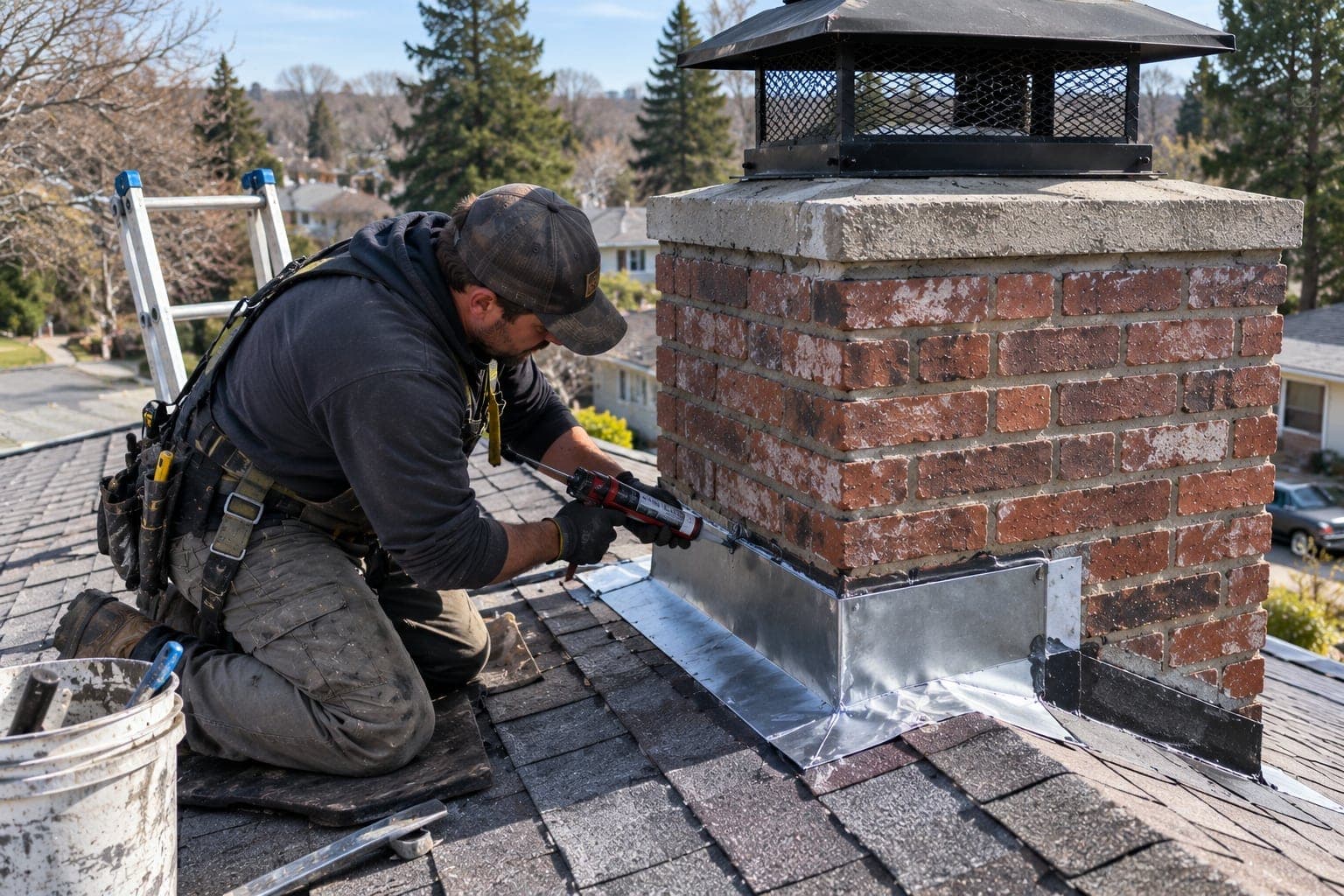
The Town of Hillsborough Building & Planning Department's roofing requirements cover the roof-to-chimney junction directly. That junction is one of the most common places for rain to get past a chimney, so these rules affect how a repair there is planned and carried out. They apply to roofing work where a chimney meets the roof.
Flashing on homes with stucco walls
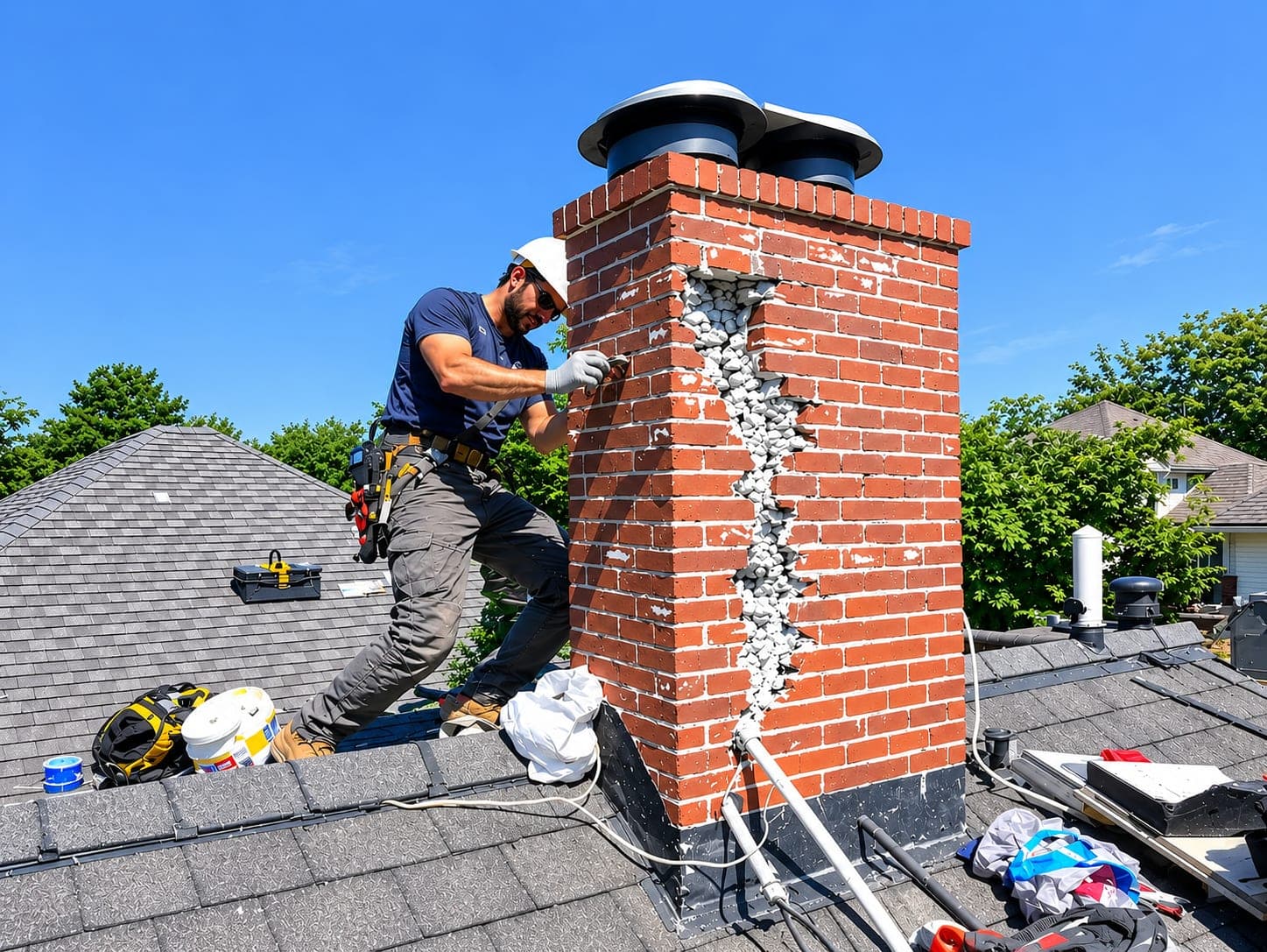
The roofing requirements handout requires flashing at roof-to-chimney junctions to be installed under lathing paper where exterior walls are stucco. Flashing that is surface-mounted or caulked onto the face of the stucco doesn't meet that requirement. The repair has to reach the paper layer behind the finish. That can mean opening a strip of stucco along the joint and patching it afterward.
Flashing on homes with wood siding
Hillsborough's roofing requirements state that at a roof-to-chimney junction on a home with wood siding, the flashing must be installed behind the siding and paper. In practice, the siding boards next to the chimney may need to be loosened or removed so the new flashing can be lapped correctly. The boards are then reset over it.
Crickets behind wider chimneys
A cricket is a small peaked section of roof built on the uphill side of a chimney. It sends water around the chimney instead of letting it sit against the masonry. The Town's roofing requirements require crickets on flat areas larger than 24 inches behind fireplace chimneys. If water is pooling behind a wide chimney and there's no cricket, building one is part of the fix. More sealant won't solve it.
Rusted or damaged flashing is replaced
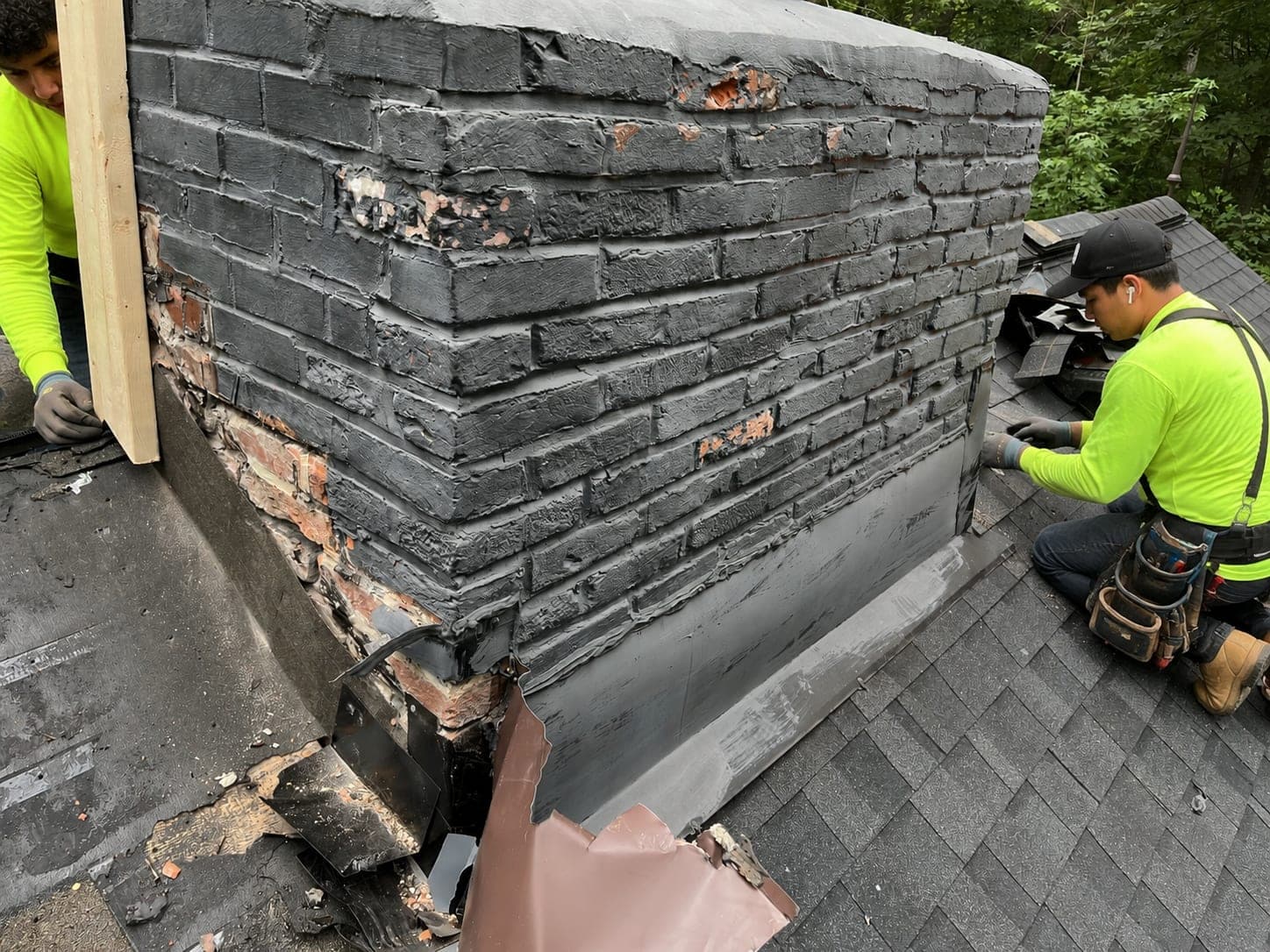
Hillsborough's roofing requirements state that rusted or damaged flashings, vent caps, roof jacks and edgings must be replaced with new materials. If corroded or bent flashing is behind the leak, the repair is new flashing. Patching the old metal isn't the answer.
Source
Town of Hillsborough Building & Planning Department – Roofing Requirements (handout).
How these requirements shape the repair
Identify the wall finish
Stucco, wood siding or exposed masonry at the chimney determines how the flashing has to be lapped.
Measure behind the chimney
If the flat area behind a fireplace chimney is larger than 24 inches, a cricket is required.
Check the condition of the metal
Rusted or damaged flashing, vent caps and edgings are marked for replacement with new materials.
Look past the flashing
The crown, mortar joints, cap and brick face are checked too, so the repair isn't limited to the first problem found.
Chimney leak repair in brief
This job finds where water is getting past the chimney and closes that path. Common entry points are the flashing at the roof, a cracked crown, open mortar joints, a missing or damaged cap, and brick that soaks up rain. The fix matches the cause. It might be new flashing, crown repair, repointing, a new cap, or waterproofing the masonry. Interior stains are traced back to their source before any work begins. For the full process, read how chimney leak repair works.
When leak repair is the right job, and when something else fits better
Leak repair fits when you see water stains on the ceiling or wall beside the chimney, damp masonry inside, or water in the firebox after a storm. If the problem only appears during wet weather, start with what causes chimney leaking when it rains. It helps you notice where and when the water shows up.
Sometimes the water is coming straight down the flue because the chimney has no cap, or the cap is broken. In that case a new cap may be the main fix, and chimney cap installation in Hillsborough covers that job. When the masonry itself is crumbling, a broader chimney repair may come before or alongside the leak work.
Useful details when you request an estimate
- Whether the walls around the chimney are stucco, wood siding or brick
- Where the stains or drips appear, and on which floor
- Whether the leak shows up only in heavy rain or in any rain
- Whether the chimney is wide enough that water can collect behind it
- Any rust, gaps or bent metal you can see at the roof line
More chimney and fireplace work in Hillsborough
To see every service offered here, visit the Hillsborough area page. For details on materials and methods, the chimney leak repair service page covers the job step by step.
Get a leaking chimney looked at
Call or request an estimate, and mention your wall finish and where the water is showing up.
Sources (1)
The sources of the Hillsborough facts on this page.
- 1Town of Hillsborough Building & Planning Department - Roofing Requirements (handout); Town of Hillsborough Building & Planning Department - Roofing Requirements