On this page
What fireplace glass replacement & door repair covers
The glass and door on a fireplace keep sparks and embers in the firebox. On most gas fireplaces they are also part of a sealed system that keeps combustion air and exhaust out of the room. When the glass cracks or the door stops sealing, the fireplace can no longer do either job properly. The repair usually involves one or more of the following:
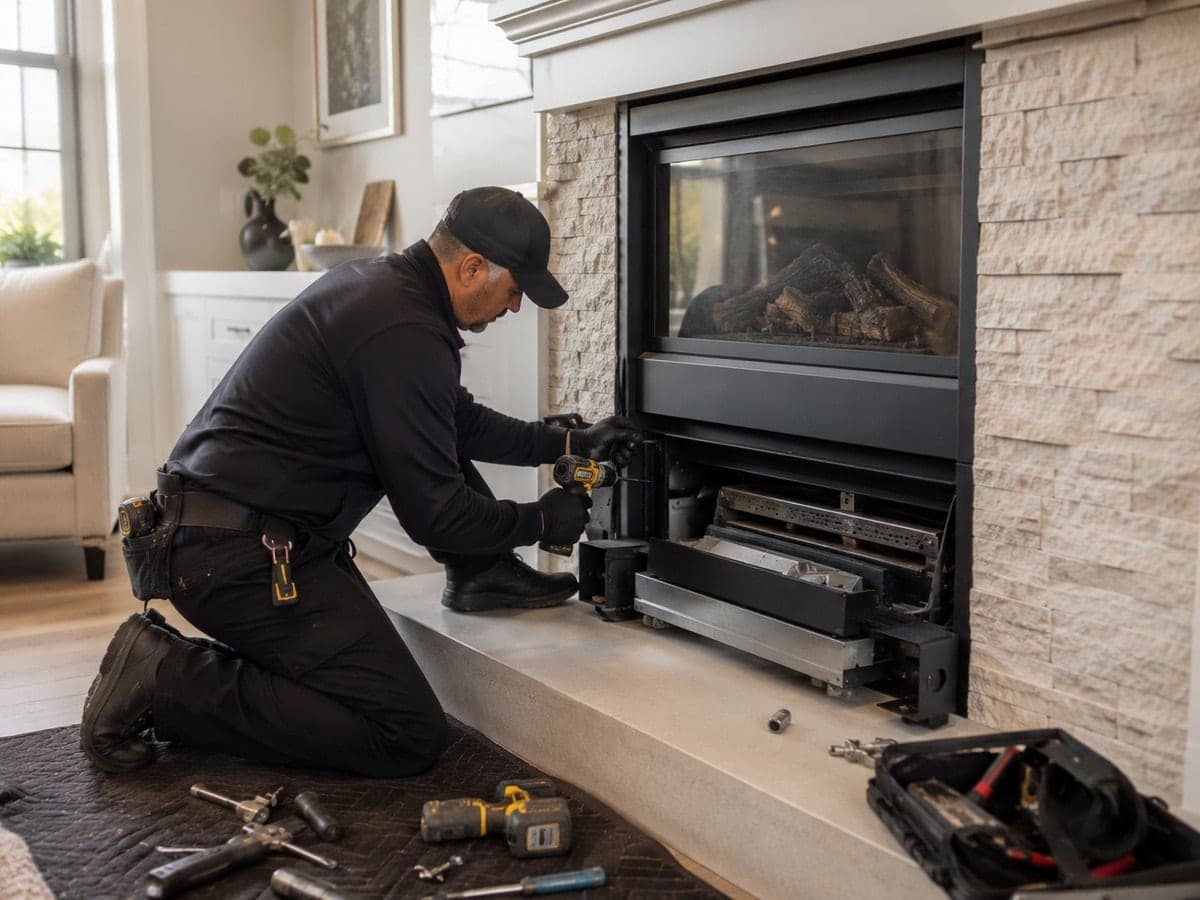
- Replacing broken or damaged glass with heat-rated glass made for fireplaces, never ordinary window or picture glass.
- Replacing gaskets, the fiberglass rope or tape that seals the glass to its frame and the door to the fireplace opening.
- Fixing door hardware, including hinges, latches, handles, clips and the spring-loaded or bolted fasteners on gas units.
- Straightening or refitting frames that have loosened or shifted so the door no longer sits flush.
If the door assembly is too far gone to repair, a new door may make more sense. Our fireplace door installation service covers fitting a complete new set. If the problem goes past the door into the firebox, damper or burner, that falls under general fireplace repair.
Signs your fireplace glass or door needs attention
Have it looked at if you notice any of these
- A crack, chip or star break anywhere in the glass, even a small one at the edge
- Gas fireplace glass with a white or hazy film that comes back right after cleaning, or that won't come off at all
- A door that won't latch, swings open on its own or has to be forced shut
- Gaps between the door and the fireplace face where you can see light or feel a draft
- Frayed, flattened or missing gasket around the glass or the door edge
- Loose, wobbly or broken handles and hinges
- Soot streaks around the edge of the glass, which can point to a seal that isn't holding
- Glass that rattles in its frame
Stop using the fireplace if the glass is cracked
Don't light a gas fireplace, or build a fire behind glass doors, while the glass is cracked or the door won't seal. Heat can make a crack spread or shatter the panel, and on a sealed gas unit a broken seal can let exhaust into the room. Leave it off until the glass has been replaced.
Wood-burning doors and gas fireplace glass are different jobs
| Feature | Wood-burning fireplace doors | Gas fireplaces and inserts |
|---|---|---|
| What the glass does | Screens sparks and cuts down on room drafts when the fire is out | Usually part of a sealed front that separates the flame and exhaust from the room |
| Typical glass | Tempered glass on many door sets | Ceramic glass rated for higher, sustained heat |
| Common failures | Cracked panels, loose frames, worn hinges and latches | Cracks, etching or cloudiness, worn gaskets, loose fasteners |
| Normal use | Doors are often open while the fire burns, depending on the maker's instructions | Glass stays closed and sealed whenever the unit runs |
What the glass does
- Wood-burning fireplace doors
- Screens sparks and cuts down on room drafts when the fire is out
- Gas fireplaces and inserts
- Usually part of a sealed front that separates the flame and exhaust from the room
Typical glass
- Wood-burning fireplace doors
- Tempered glass on many door sets
- Gas fireplaces and inserts
- Ceramic glass rated for higher, sustained heat
Common failures
- Wood-burning fireplace doors
- Cracked panels, loose frames, worn hinges and latches
- Gas fireplaces and inserts
- Cracks, etching or cloudiness, worn gaskets, loose fasteners
Normal use
- Wood-burning fireplace doors
- Doors are often open while the fire burns, depending on the maker's instructions
- Gas fireplaces and inserts
- Glass stays closed and sealed whenever the unit runs
Because the requirements differ, replacement glass has to match the fireplace it goes into. If you're still deciding which kind of fireplace suits your home in the long run, our guide to gas vs wood burning fireplace sets out the trade-offs. On factory-built units where the whole firebox is failing, prefab fireplace replacement may be worth weighing against another round of repairs.
What happens during the visit
From first look to a working door
Inspect the glass, door and seals
We check the panel, frame, gaskets, hinges and latches, and look at the surrounding fireplace for anything that may have caused the damage, such as a warped frame or a burner problem on a gas unit.
Identify the unit and measure
On gas fireplaces and inserts, the model and serial information on the rating plate tells us which glass and gasket the unit needs. For wood-burning door sets, we measure the opening and the panels.
Explain what it needs
We tell you whether the glass, the gasket, the hardware or the whole door needs work, and what a full door replacement would involve if repair isn't practical. The estimate is free.
Replace and reseal
We remove the damaged glass and old gasket, clean the frame, fit the new heat-rated glass and gasket, and reattach or adjust the hardware.
Check the fit and test
We confirm the door closes and latches evenly and the seal sits flush. On gas units, we fire the fireplace and check that it runs properly with the glass back in place.
Keeping the new glass and door in good shape
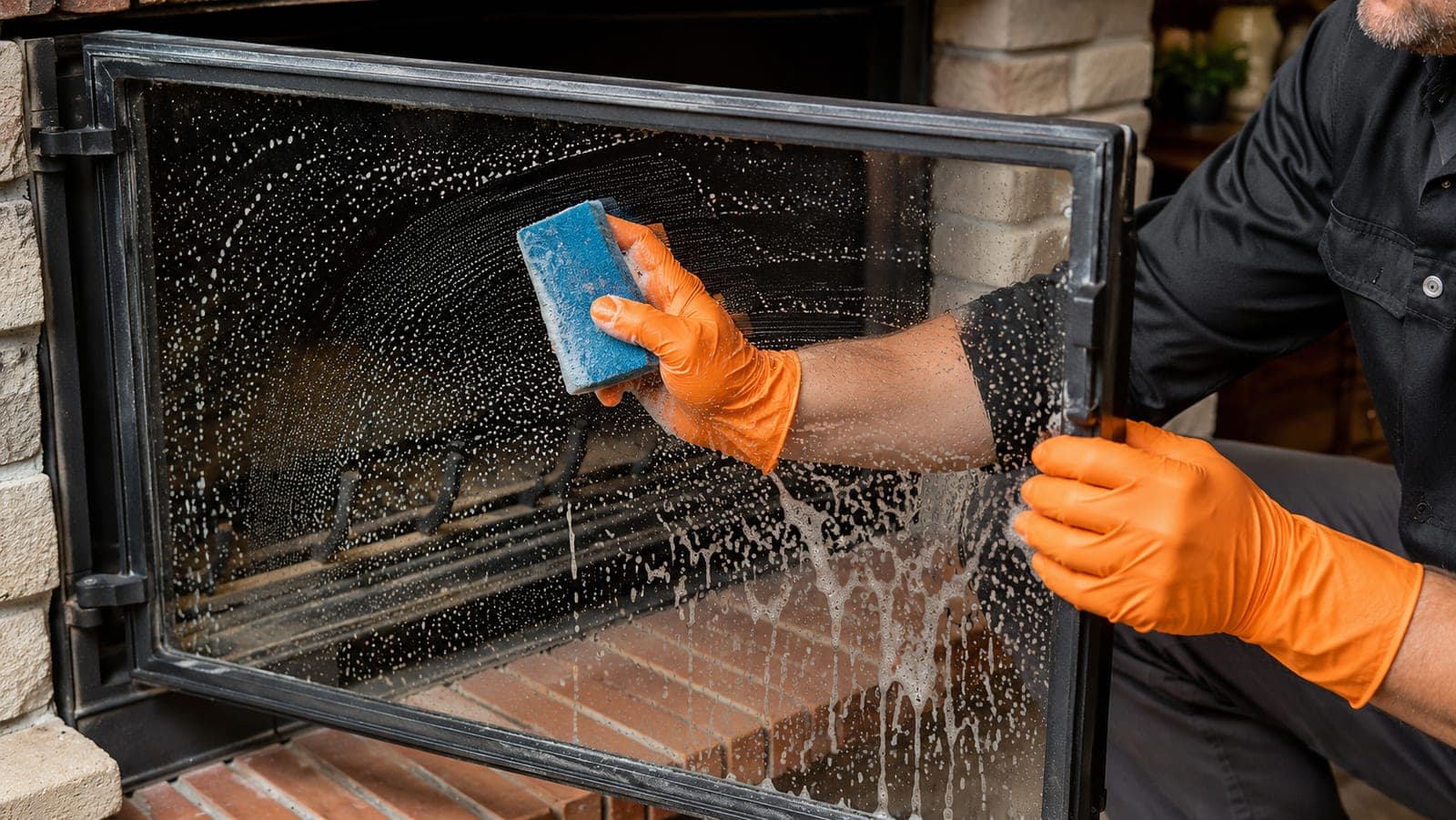
- Let the glass cool completely before cleaning it. Cold cleaner on hot glass can crack it.
- Use a cleaner made for fireplace glass, not ammonia-based household glass cleaner or anything abrasive.
- Close doors gently. Slamming them is a common cause of loose frames and chipped edges.
- On gas fireplaces, a haze that builds up quickly can point to a burner or air-mix problem worth having checked rather than just wiping it off again.
Booking a fireplace glass or door repair
Get in touch and tell us what you're seeing: a crack, a cloudy panel, a door that won't latch. If you can, include a photo of the fireplace and its rating plate.
Free estimates
Call or request an estimate for cracked, cloudy or loose fireplace glass and doors on wood-burning and gas fireplaces. Commercial and property-manager work is offered.